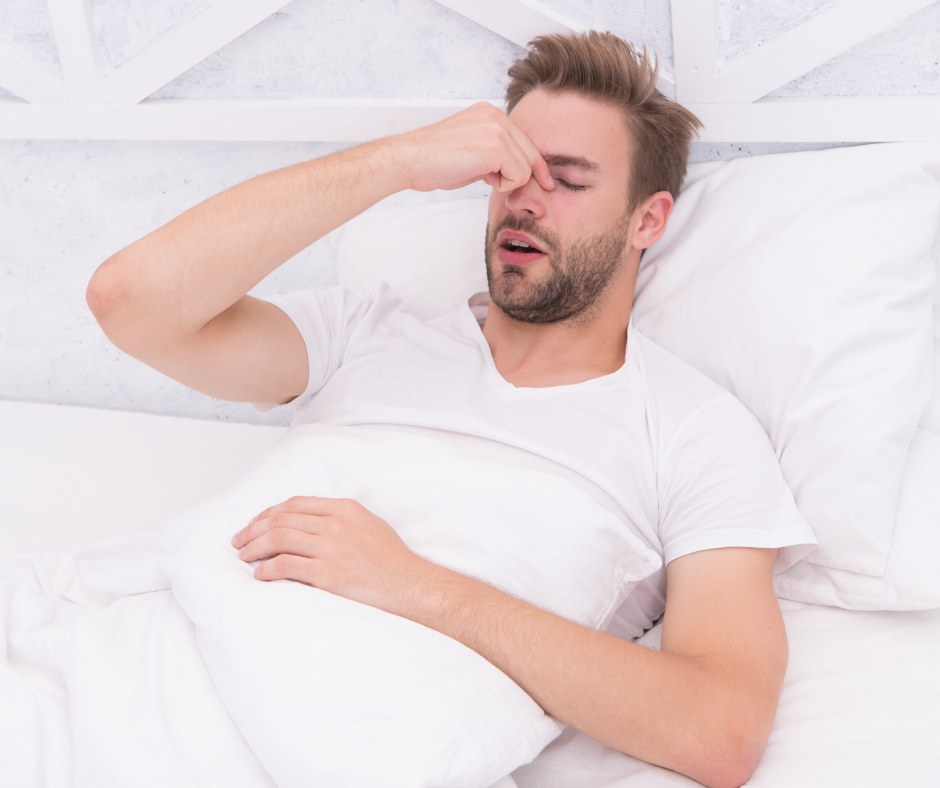
Sleep apnoea is a dangerous, noisy and health-threatening snoring, disturbed by repeated and irregular pauses in breathing or episodes of shallow breathing.
During sleep, the muscles controlling the upper airway relax and narrow the airway. Too much narrowing of the upper airways causes breathing problems. Complete blockage results in respiratory arrest, known as 'respiratory arrest'. obstructive sleep apnoea. Such pauses in breathing can last from a few seconds to several hundred times a night.
Sleep apnoea - causes
Causes of sleep apnoea are numerous. The most common are anatomical defects: curvature of the nasal septum, hypertrophy of the root of the tongue or uvula, excessively flaccid and elongated soft palate. In addition, hypertrophy and swelling of the nasal auricles, hypertrophy of the palatine tonsils or nasal polyps are causes. Sleep apnoea is also influenced by: obesity, overweight and hypertension.
Sleep apnoea - symptoms
OBS manifests itself primarily by a loud and irregular snoringwhich is punctuated by episodes of breath-holding. Patients also often complain of restless sleep, excessive sweating and experience sudden awakenings with a feeling of breathlessness.
Sleep apnoea- effects
Effects of sleep apnoea is the hypoxia of the entire body and its organs. The effects can be felt throughout the day in the form of fatigue, drowsiness, irritability, headaches or problems with concentration, among others.
Patients struggling with apnoea have an increased risk of developing cardiovascular diseases (e.g. hypertension, heart failure, cardiac arrhythmias). These individuals also often experience metabolic disorders, such as diabetesor insulin resistance.