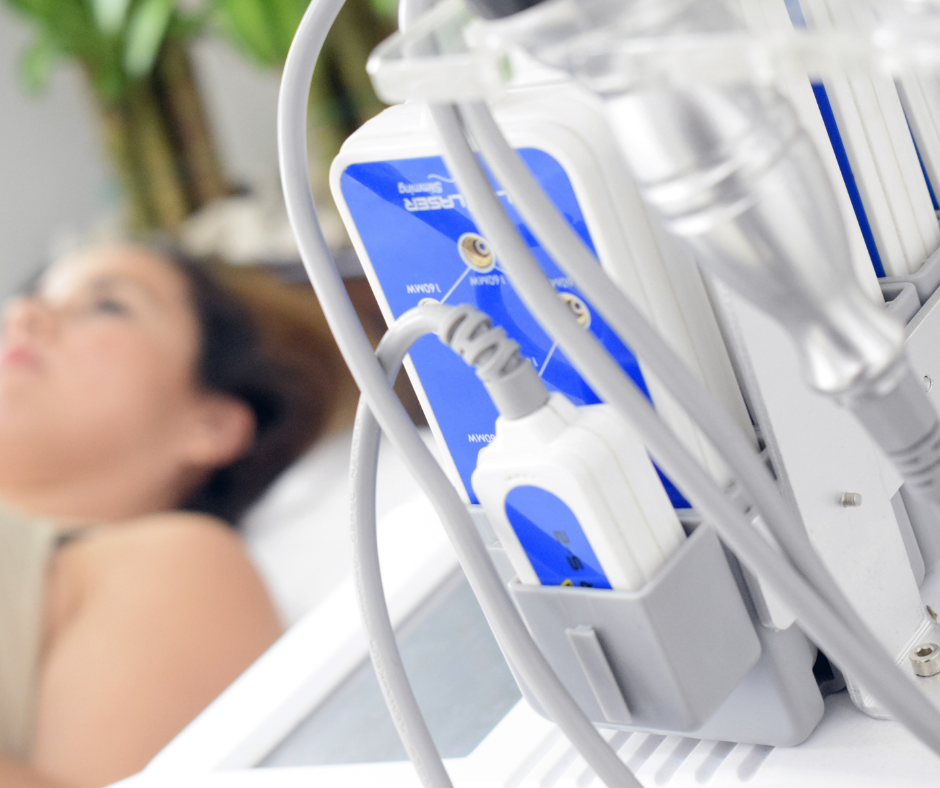
Laser liposuction This is a minimally invasive procedure that uses laser energy to reduce localised fat deposits. The procedure can be used, amongst other things, in the area of the chin, face, tummy, thighs and love handles. The laser energy breaks down and liquefies fat cells, and can also stimulate the tissues to regenerate and improve skin firmness.
After the crash fat cells Their contents can be eliminated from the body through metabolic processes or suctioned out using a fine cannula. The procedure is usually carried out under local anaesthetic, and the recovery time is shorter than with conventional surgical liposuction.
Laser liposuction It combines the reduction of localised fat with a treatment aimed at improving skin firmness. The results appear gradually and depend, amongst other things, on the area treated, the amount of fat and the patient’s individual characteristics.
In aesthetic medicine, other methods of fat reduction are also used, including, amongst others, injection lipolysis i cryolipolysis. They differ in terms of their mechanism of action, the extent of tissue reduction and the course of treatment. Laser liposuction is a more invasive method than non-invasive procedures, but it allows for direct treatment of localised fat deposits.
The procedure begins with a consultation and an assessment of the area to be treated. A laser fibre is then inserted through a small incision in the skin. Laser energy It acts on fat cells, causing them to break down and become liquefied. Depending on the extent of the procedure, the resulting emulsion may be suctioned out.
Following the treatment, you may experience temporary swelling, bruising, tenderness or a feeling of tightness in the treated area. The time taken to resume daily activities depends on the extent of the procedure and the individual’s response. The final results develop gradually over the following weeks and months.
Find out more about laser lipolysis and find out what the procedure involves, what results you can expect, and how the technology used at Wellclinic works. Read the article on our blog: Laser abdominal liposuction - what does it involve, what are the results and why is it worth it?