Individual spots can develop into a bigger problem over time. Initially, isolated blemishes appear, but as the condition progresses, they may be joined by blackheads, inflammatory lesions, painful lumps, post-inflammatory hyperpigmentation, and in some cases also acne scars.
Many people start by changing their skincare routine, trying out new products or starting pharmacological treatment of acne. Some of these methods help to alleviate the symptoms, but in many patients the lesions reappear after a while. This is because acne It is a disease with a 1TP4-related aetiology and requires treatment targeted at the mechanisms responsible for its development.
Acne It is not merely an aesthetic problem. It is a chronic skin condition associated with excessive activity sebaceous glands, abnormalities in the keratinisation process of the epidermis and chronic inflammation within the hair follicles. Bacteria also play a role Cutibacterium acnes, hormonal changes and individual genetic predispositions.
Effective acne treatment should take into account the cause of the changes, rather than focusing solely on their temporary reduction. Reducing activity sebaceous glands, reducing inflammation and improving skin regeneration are key elements of the treatment.
W Wellclinic we use state-of-the-art laser technologies to support treatment of active acne. The treatment targets the skin structures involved in the development of inflammatory lesions, whilst also helping to improve the skin’s quality and appearance.
Why does acne keep coming back?
Recurrent acne This is often due to the fact that the methods used focus mainly on visible symptoms. Simply improving the appearance of the skin does not always mean that the processes leading to the development of further lesions have been halted.
Acne lesions develop within hair follicles and sebaceous glands. Excessive sebum production and disturbances in the lipid metabolism of epidermal cells can cause the follicular openings to become blocked. This then leads to blackheads, which create conditions conducive to bacterial growth Cutibacterium acnes.
This results in an inflammatory reaction of the skin. Redness, papules, pustules and deeper inflammatory lesions appear. If the inflammatory process persists for a long time, it may lead to damage to the skin’s structures and the development of acne scars.
Therefore acne treatment requires a number of factors to be taken into account. Proper skincare remains an important part of the treatment, but where the condition is severe, it may be necessary to use methods that act more deeply.
Home remedies for acne as a complement to treatment
Proper skincare helps keep your skin in good condition and can support the effects of your treatment. Products containing, amongst other things, acids, niacinamide or zinc they help regulate sebum production, support the skin’s natural oil-balancing process and improve its appearance problem skin.
It is also important to cleanse your skin daily and use products suited to its current condition. Overly harsh skincare routines can lead to irritation and make the problem worse.
In the case of active acne In more severe cases, skincare alone is often not enough. Cosmetics primarily act on the surface of the skin and do not always affect the processes taking place in the deeper layers, where inflammation develops.
Pharmacological treatment of acne It brings about an improvement in many patients, but requires appropriate management and regular monitoring. In some people, the symptoms may return after treatment has finished.
For this reason, technologies that support this are also being used more and more frequently acne treatment, which enable us to influence specific mechanisms responsible for the development of skin lesions.
Laser treatment for acne at Wellclinic
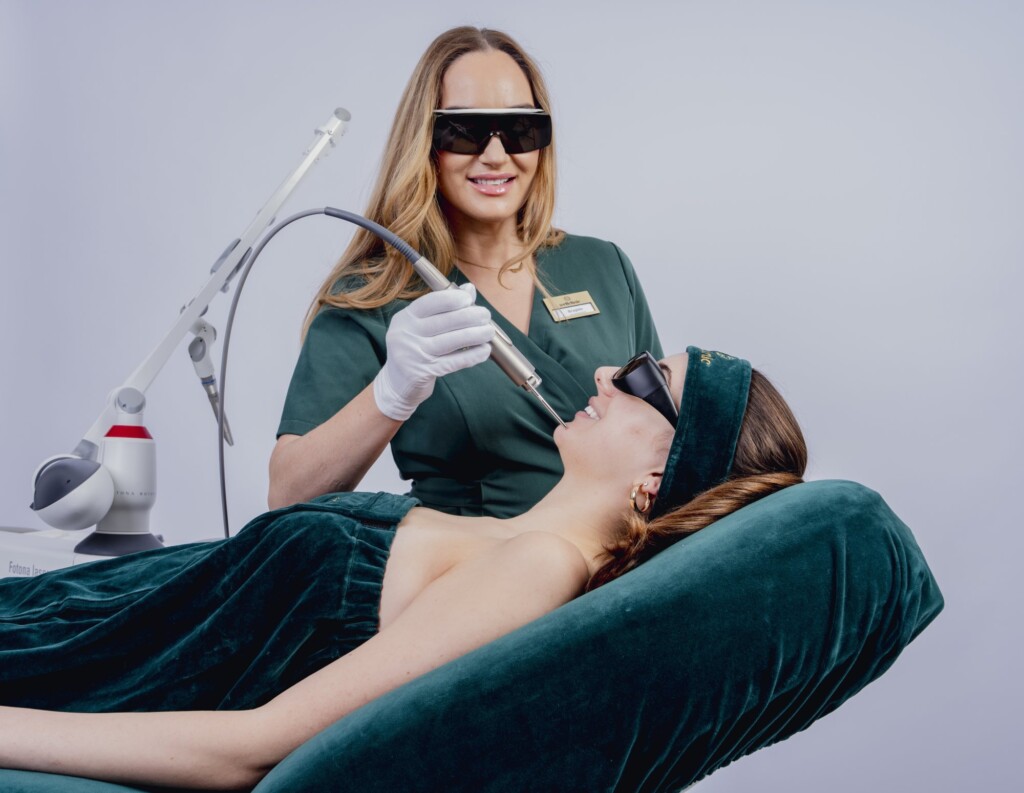
One of the methods used in Wellclinic is laser acne treatment using the platform Fotona® Dynamis SP PRO. This technology has been developed to precisely target the skin structures involved in the development of acne lesions.
Unlike methods that act solely on the skin’s surface, the laser energy penetrates to deeper layers, where it can influence activity sebaceous glands, to limit the growth of bacteria associated with inflammation and to support the skin’s regenerative processes.
The treatment helps to reduce the visibility of active lesions, improve skin texture and minimise the factors that contribute to the development of further imperfections. The laser’s range of action means that the method can be used both for people with milder inflammatory lesions and for patients with more severe active acne.
Each treatment is preceded by a consultation, during which a specialist assesses the condition of the skin and the nature of the lesions, and selects the treatment parameters appropriate to the patient’s individual situation.
In the case of laser treatment for acne It is not only the technology itself that is important, but also how it is used. At Wellclinic, we analyse the current condition of the skin and, based on this, draw up a treatment plan tailored to the patient’s needs.
Platform Fotona® Dynamis SP PRO It acts on several factors linked to the development of acne – reducing the activity of the sebaceous glands, reducing the number of bacteria responsible for inflammation, and stimulating the skin’s natural repair processes.
Brygida Kasperowicz, a Master-level beautician at Wellclinic, explains
„Patients come to our clinic who have often spent many years battling acne. They have tried various skincare products, changed their skincare routines, undergone cosmetic treatments, and some of them have also had experience with pharmacological treatment. Often, the problem would return after a while. In such cases, we look for a solution that goes beyond mere surface-level skincare. The platform Fotona Dynamis SP PRO enables treatment of the skin structures associated with the development of acne lesions. The laser energy affects the activity of sebaceous glands, helps to reduce the bacteria responsible for inflammation and stimulates the skin’s natural regenerative processes. As a result, the treatment can help to soothe active lesions and improve the overall condition of the skin.”.
How does laser acne treatment work?
Effectiveness laser treatment for acne This is due to its ability to influence the processes taking place in the deeper layers of the skin. It is precisely there that the mechanisms responsible for the development of inflammatory lesions occur.
Unlike topical cosmetics, laser energy reaches the structures that have a direct impact on the course of the disease. This makes it possible to target, amongst other things, sebaceous glands, the skin’s microenvironment and inflammatory processes.
W Wellclinic we use the platform Fotona® Dynamis SP PRO, which operates on the basis of the phenomenon selective photothermolysis. A suitably selected light beam is absorbed by specific structures in the skin, producing a controlled thermal effect.
The laser treatment makes it possible to reduce activity sebaceous glands, reducing the number of bacteria associated with the development of inflammatory lesions, and supporting regenerative processes.
Laser therapy also promotes skin remodelling. Stimulation of the production of collagen, improved microcirculation and the repair processes taking place in the tissues may help to improve its structure and reduce its visibility acne scars.
The treatment works in several areas simultaneously: it helps to prevent the formation of new lesions, regulates sebum production, reduces inflammation and improves the condition of the skin.
Fotona® Dynamis SP PRO technology for the treatment of acne
Effects laser treatment for acne depend on a number of factors – including the specialist’s experience, the patient’s suitability for the procedure, and the capabilities of the technology used during the procedure.
W Wellclinic we work on the platform Fotona® Dynamis SP PRO, which is used in the fields of aesthetic medicine and dermatology. The device allows for the precise adjustment of treatment parameters depending on the type of skin condition and the current condition of the skin.
Each case requires an individual assessment. A person with isolated inflammatory lesions may require a different course of treatment to a patient with advanced active acne, post-inflammatory hyperpigmentation or acne scars.
Platform Fotona® Dynamis SP PRO It enables treatment aimed at both active changes and improving skin quality. Stimulating collagen production supports regenerative processes, improving the skin’s structure, elasticity and appearance.
Depending on the patient’s needs, the technology can also be used in therapies aimed at acne scars and skin irregularities resulting from previous inflammation.
At Wellclinic, every treatment begins with a consultation and a thorough assessment of the skin. It is only on this basis that the specialist selects the treatment parameters and determines the next steps. Technology is a tool that supports the treatment – its effectiveness depends on the specialist’s expertise and the appropriate care provided to the patient.
The effects of laser treatment for acne
Results laser treatment for acne These effects appear gradually, as the inflammatory process subsides and the skin’s function improves. The initial effects of the treatment may include a reduction in the number of new lesions, a reduction in excessive sebum production, and an improvement in the overall appearance of the skin.
As the treatment progresses, the skin may become more even-toned, calmer and less prone to developing further imperfections. The appearance of redness, unevenness and post-inflammatory marks may be reduced.
The laser’s action also affects the regenerative processes taking place in the deeper layers of the skin. Stimulation of the production of collagen It helps to improve the skin’s structure, elasticity and density. For patients with post-acne scarring, the treatment may form part of a regimen aimed at reducing acne scars.
Treatment outcomes depend, amongst other things, on the type of acne, the severity of the lesions, the condition of the skin and the individual’s response. Therefore, the number of sessions and the scope of treatment are determined during the consultation.
In many cases laser acne treatment It involves a series of treatments carried out at specific intervals. This approach makes it possible to gradually influence the processes taking place in the skin and to monitor its response to the treatment.
Course of acne treatment
Every treatment at Wellclinic This is preceded by a consultation during which a specialist assesses the condition of the skin, the nature of the lesions and takes a history of previous treatment. This makes it possible to determine whether laser acne treatment is the appropriate method in this case.
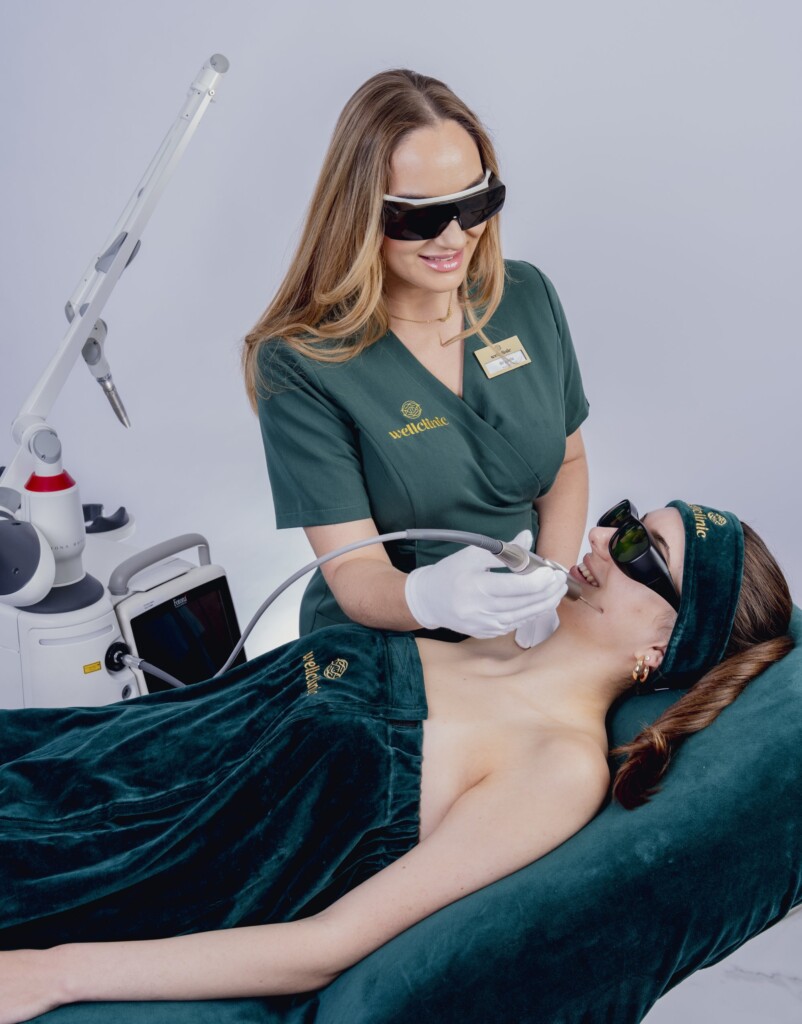
Before the procedure begins, the skin is prepared accordingly. The specialist then selects the settings The Fotona® Dynamis SP PRO laser, taking into account, amongst other things, the type of changes, the treatment area and the current condition of the skin.
During the treatment, the laser energy is precisely directed at the areas affected by inflammation. The laser beam targets the structures responsible for the development of acne lesions and helps to reduce their activity sebaceous glands and stimulates the skin’s natural regenerative mechanisms.
The procedure is generally well tolerated by patients. During the treatment, patients may feel a sensation of warmth or a slight tingling. The technological solutions used help to minimise discomfort during the treatment.
After the treatment, the skin may be temporarily red or slightly swollen. These symptoms usually subside within a short time. Most patients can resume their daily activities without the need for a long recovery period.
The duration of the treatment depends on the size of the area being treated and the extent of the procedure. The patient will be given detailed recommendations on post-treatment skincare during their appointment.
Different types of acne require an individual approach
Acne It can take various forms and have different causes. In some people, minor imperfections predominate and blackheads, whilst others develop painful lumps, pustules or deep inflammatory lesions, which increase the risk of scarring.
The problem does not affect young people alone. Increasingly, adult acne Patients aged 25 and over are affected. In this case, factors such as hormonal changes, chronic stress, lifestyle and individual skin predispositions may play a role.
Given the variety of causes and the varying course of the condition, there is no single method suitable for every patient. The treatment plan should take into account the type of lesions, their severity and the current condition of the skin.
W Wellclinic Every course of treatment begins with a thorough assessment of the patient’s needs. This enables us to select the appropriate course of action and utilise the potential of technology in a way that is tailored to the specific case.
Types of acne – different forms require an individual approach
Acne It can present in various ways. In some people, it mainly involves blackheads and isolated inflammatory lesions, whilst in others the condition takes a more advanced form, with painful papules, pustules or deep infiltrates.
The most common variety is acne vulgaris, which may include non-inflammatory lesions, such as blackheads, and inflammatory lesions appearing on the face, back or chest.
One of the more severe forms is pustular acne, in which deep, painful lesions containing pus develop. Due to the severe inflammation, this type of acne may increase the risk of permanent marks and scars.
Acne scarring It is characterised by the skin’s tendency to produce excessive scar tissue at the site of previous lesions. It requires particular attention, as the resulting scars may be more difficult to reduce.
The type of acne, the severity of the lesions and the current condition of the skin all influence the choice of treatment. In Wellclinic The treatment plan is tailored to each individual – to address their specific skin concerns and current needs.
The location of acne lesions and the most common areas where they occur
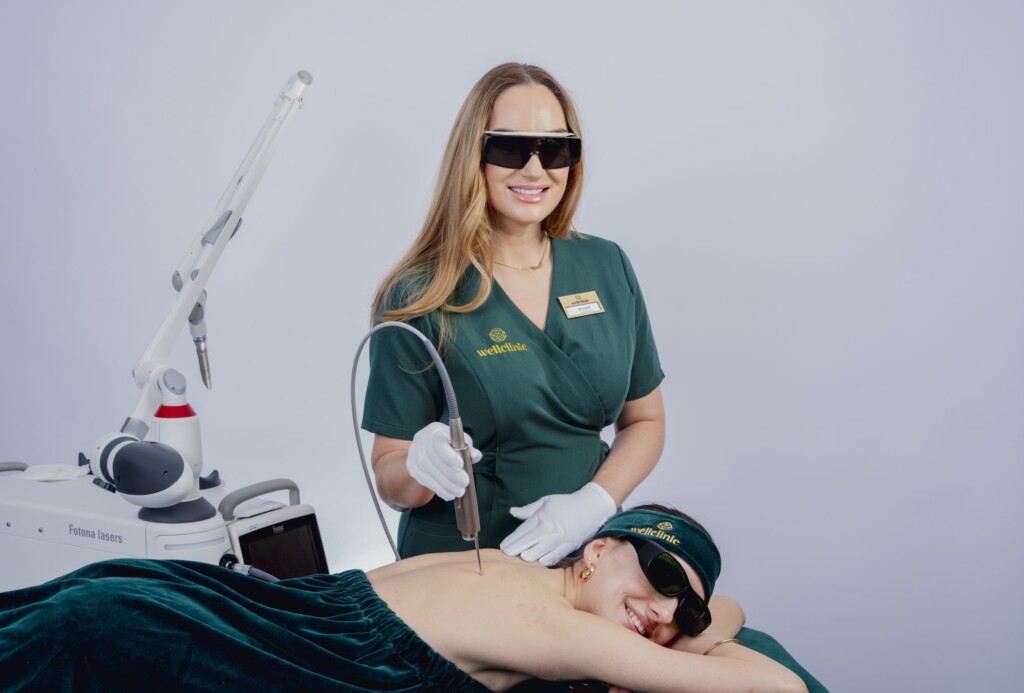
Acne It most commonly develops in places where there is a lot of sebaceous glands. The changes are most noticeable on the face, but may also appear on the lower jaw, back, arms and chest.
Acne on the face is the most common site of lesions. Depending on the course of the condition, blackheads, papules, pustules and deeper inflammatory lesions may occur. The condition often affects the forehead, cheeks, chin and the area around the nose.
In adults, a common site for lesions is the jaw and the lower part of the face. Acne on the lower jaw It is sometimes linked, amongst other things, to hormonal fluctuations and often takes the form of painful, deep-seated lesions that take longer to heal than superficial blemishes.
Acne on the back and shoulders may be more widespread than the lesions that appear on the face. In these areas, the skin also contains numerous sebaceous glands, which is why both small pustules and larger inflammatory lesions may develop.
The location of the lesions helps to determine the nature of the problem and plan further treatment. In Wellclinic During the consultation, not only is the area affected by acne assessed, but also the type of lesions, their severity and the condition of the skin.
Early treatment reduces the risk of acne scars
Active inflammatory changes can lead to permanent changes in the structure of the skin. Long-term inflammation affects regenerative processes and increases the risk of acne scars and post-inflammatory hyperpigmentation.
The longer acne remains untreated or poorly managed, the greater the likelihood of permanent scarring. For this reason, it is advisable to start appropriate treatment as early as possible.
Laser treatment of acne It can help to reduce active lesions and improve skin quality. Depending on the patient’s needs, the treatment can also be targeted at post-acne issues, such as uneven skin texture or scarring.
A properly planned treatment programme allows you to focus not only on current skin conditions, but also on long-term improvement in the condition of your skin.
Laser therapy for the treatment of acne scars and post-inflammatory lesions
Acne scars are often a problem that persists long after the active phase of the condition has ended. Acne scars, uneven skin texture and post-inflammatory hyperpigmentation may affect the patient’s appearance and comfort.
Laser therapy harnesses the skin’s natural ability to regenerate. It stimulates tissue remodelling processes and the production of collagen It may help to improve the skin’s texture and reduce the appearance of post-acne marks.
When it comes to scars, it is particularly important to have the right expertise and to choose the appropriate treatment for the specific problem. During the consultation, the specialist assesses the depth and nature of the lesions in order to plan a treatment programme tailored to the skin’s needs.
Skin care following laser treatment for acne
Proper aftercare is important for the skin’s recovery process and for maintaining the results of the treatment. After laser treatment for acne Your skin may be more sensitive, so during the first few days you should avoid anything that might cause further irritation.
The basis of skincare is gentle cleansing, adequate moisturising and daily protection against UV radiation. Using creams with a high sun protection factor SPF helps to reduce the risk of post-inflammatory hyperpigmentation and supports the skin’s natural healing process.
During the post-treatment period, it is advisable to avoid intensive exfoliation, skincare products containing potent active ingredients, and treatments that may place additional strain on the skin. Specific recommendations depend on the laser settings used and the individual’s skin response.
W Wellclinic The patient is given advice on post-treatment care and what to do next. A carefully tailored home care routine helps create the right conditions for the skin to regenerate and supports the results of the treatment.
Who is laser acne treatment suitable for?
Laser treatment of acne It is intended for people who are struggling with active skin lesions and are looking for a method to support the treatment of the condition. The therapy can be used, amongst other things, for acne vulgaris, inflammatory changes, excessive sebum production and a tendency to develop blemishes.
The treatments are suitable for young people who acne It appeared during puberty, as well as in adult patients struggling with lesions that have persisted for many years or have recurred.
Laser therapy can also form part of a treatment programme for people who have been left with acne scars, uneven skin texture or post-inflammatory hyperpigmentation. In such cases, the aim of the treatments is to support the skin’s regenerative processes and improve its appearance.
Before starting treatment, a consultation and assessment of the current condition of the skin are required. A specialist analyses the type of lesions, their severity and the patient’s needs in order to determine whether laser acne treatment will be the appropriate course of action.
W Wellclinic The treatment plan is tailored to each individual. It takes into account both the nature of the problem and the patient’s expectations. As a result, laser treatment becomes part of a carefully planned course of treatment, rather than a one-off procedure carried out without a specific aim.
Laser treatment for acne – an effective therapy tailored to the skin’s needs
Laser treatment of acne This is a modern method that supports the treatment of active skin lesions and improves skin quality. The laser’s action targets processes occurring in the deeper layers of the skin – it influences the activity sebaceous glands, helps to reduce inflammation and stimulates the body’s natural healing process.
W Wellclinic The treatment is based on an individual assessment of the skin and the use of technology Fotona® Dynamis SP PRO. The selection of procedure parameters and the treatment plan allows the approach to be tailored to the nature of the problem and the patient’s current needs.
Skin affected by acne requires patience and a well-planned approach. A properly selected treatment can help reduce active breakouts, improve the skin’s texture and minimise the appearance of marks left behind by previous inflammation.
Would you like to find out more about laser acne treatment at Wellclinic? Consult with our medical team. Based on a detailed assessment of your skin’s condition, its needs and the severity of your acne, our specialists will draw up a personalised treatment plan and select the appropriate technologies to maximise the effectiveness of your treatment and minimise the risk of recurrence.
Sources:
- PubMed „A systematic review of efficacy and adverse events of various laser treatments for acne vulgaris in diverse skin types” – 2026
https://pubmed.ncbi.nlm.nih.gov/42055294/ - PubMed „A comprehensive systematic review on the efficacy, safety, tolerability, and relapse rates of modern procedural therapies for inflammatory and non-inflammatory acne vulgaris” – 2025
https://pubmed.ncbi.nlm.nih.gov/40993442/ - PubMed „Laser and Energy Treatments for Acne Scarring: A Review of Clinical Trials” – 2024
https://pubmed.ncbi.nlm.nih.gov/39630683/ - PubMed „To evaluate the efficacy and safety of laser interventions for facial acne scars: a systematic review and Bayesian network meta-analysis”
https://pubmed.ncbi.nlm.nih.gov/36660635/ - American Academy of Dermatology „Acne: Diagnosis and treatment”
https://www.aad.org/public/diseases/acne/derm-treat - American Academy of Dermatology „Acne scars: Diagnosis and treatment”
https://www.aad.org/public/diseases/acne/derm-treat/scars