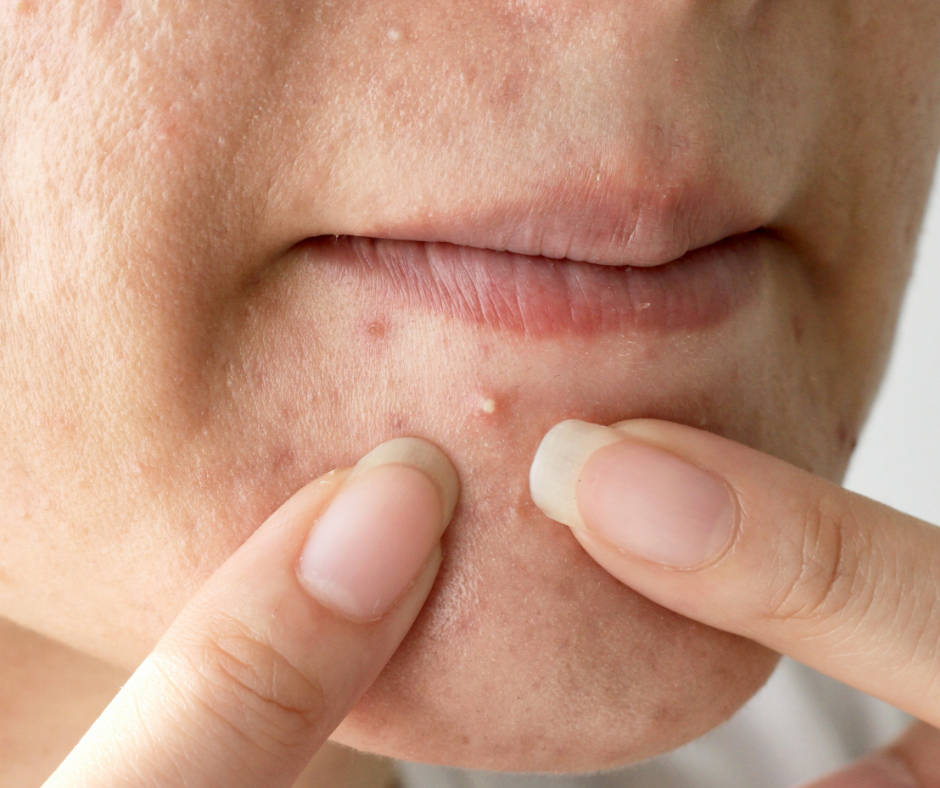
Acne vulgaris It is one of the most common skin conditions. Lesions appear mainly on the face, back, chest and other areas where there are a large number of sebaceous glands. The characteristic symptoms are blackheads open and closed lesions, as well as papules, pustules and nodules. The lesions may vary in severity and occur individually or in larger clusters.
One of the factors contributing to the development of acne is excessive activity of the sebaceous glands, leading to increased sebum production. Abnormal keratinisation of the hair follicle openings, bacterial proliferation and inflammatory processes also play a role. Seborrhoea It may contribute to the development of acne, as excess sebum makes it easier for the follicle openings to become blocked.
Hormonal, genetic and environmental factors can also influence the development and severity of acne. The relationship between the state of the gut microbiota and skin condition is also being studied with increasing frequency. Imbalances in gut bacteria may influence inflammatory processes and the functioning of the immune system; however, the link between the microbiota and acne is the subject of further research.
Acne vulgaris can leave lasting effects, such as discolouration and acne scars. Depending on the type and severity of the lesions, various methods are used acne treatment. Treatment options may include, amongst other things, topical preparations, dermatological procedures and laser therapy. The choice of the appropriate method depends on the type of lesions, their severity and the condition of the skin.
Further information on acne can be found on our blog: How to get rid of spots? Causes, treatment and effective therapies