Almost all of us have had at least one instance in our lives rashes acne-prone. The condition mainly affects teenagers going through puberty, young people and adults. The onset of acne It is influenced not only by hormonal fluctuations, but also by stress, poor skincare, zła diet and environmental pollution. It is a multifactorial condition.
Sometimes, years later acne It goes away on its own, but leaves the skin in a terrible state: permanent scars i discolourations, which result from chronic inflammation. Therefore Acne needs to be treated, as soon as symptoms appear. Then acne treatment It does not put as much strain on the body. The later it is, the greater the risk of complications. Acne It also involves chronic stress linked to an unattractive appearance, which leads to poorer relationships with those around them. People with acne are seen as shy, unkempt and withdrawn.
How does acne develop?
Acne vulgaris It develops in an environment of increased sebum production. This is accompanied by excessive keratinisation at the openings of the sebaceous glands and glandular hyperplasia resulting from the accumulation within them of sebum, which is an ideal breeding ground for bacteria Propionibacterium acnes. A build-up forms around the sebaceous glands inflammation. As a result, the following are created blackheads (open and closed), papules and pustules. Effective treatment for acne This involves tackling all its causes.
Acne often develops on skin that has been altered by other medical conditions, such as hormonal disorders (thyroid disease, polycystic ovary syndrome), allergies or atopy. A holistic approach and the simultaneous treatment of co-existing conditions yield the best and most long-lasting results. If we cannot identify the cause acne, ", so there’s no point in following standard treatment regimens," says Dr Ewa Rudnicka, a dermatologist from Warsaw.
Acne treatment depends on the type of condition
Mild acne is treated topically. Recommendations of the Polish Dermatological Society i European guidelines indicate that first-line treatments are topical retinoids (vitamin A derivatives) in combination with benzoyl peroxide, which inhibits drug resistance and acts on various causes acne. In more advanced cases, topical antibiotics (erythromycin and clindamycin) are used, sometimes in combination with tretinoin, zinc acetate or benzoyl peroxide, and azelaic acid - says Dr Rudnicka. The medicines have 1TP4slimming, anti-blackhead, anti-inflammatory, antibacterial and anti-seborrhoeic effects. Antibiotics are not used as the sole treatment, as this increases the risk of bacterial resistance and limits the options for further treatment.
In cases of moderate severity acne Topical treatment (with adapalene, benzoyl peroxide or azelaic acid) is combined with an oral antibiotic from the tetracycline or macrolide group - adds Dr Rudnicka.
Severe acne
If the antibiotic fails to treat acne, remains isotretinoin - a vitamin A derivative taken orally for severe forms of the condition papulopustular acne or pustular psoriasis, as well as moderate cases of the condition in people for whom previous treatment has been ineffective, or where the condition is having a negative psychological impact. It is the only medicine that inhibits seborrhoeic dermatitis and addresses all the causes of the condition. To be effective, it must be used for up to several months. It requires daily commitment, so before starting treatment, patients should be fully informed about the details of taking the medicine.
Treatment may be ineffective if it is stopped too early. We continue treatment until the therapeutic dose is reached, i.e. 120 mg of the medicine per 1 kg of body weight. The daily dose depends on body weight, tolerance of the treatment, the results of follow-up tests, and any adverse effects (e.g. dryness and cracking of the lips, nosebleeds, dry skin and dry eyes). Acne may recur as a result of hormonal imbalances or the use of certain medicines - says Dr Rudnicka.
In around 70 per cent of patients receiving treatment isotretinoin acne disappears completely. To maintain the effects for two years, topical treatment is used retinoids or a retinoid combined with benzoyl peroxide.
Holistic acne treatment
Just like 1TP4, the formation process is complex and involves multiple factors acne, that is how comprehensive the treatment at our Clinic is. We are ready to meet any challenge posed by this disease. Starting with the treatment of the active, inflammatory phase acne, to alleviate and eliminate its effects in the form of scars or post-inflammatory hyperpigmentation. We design treatment programmes with the patient’s overall wellbeing, health and the needs of their skin in mind. What matters is a thorough medical history, drawing up a balanced diet and addressing any deficiencies with dietary supplements from Wellclinic - he says Brygida Kasperowicz, Master-level Beautician.
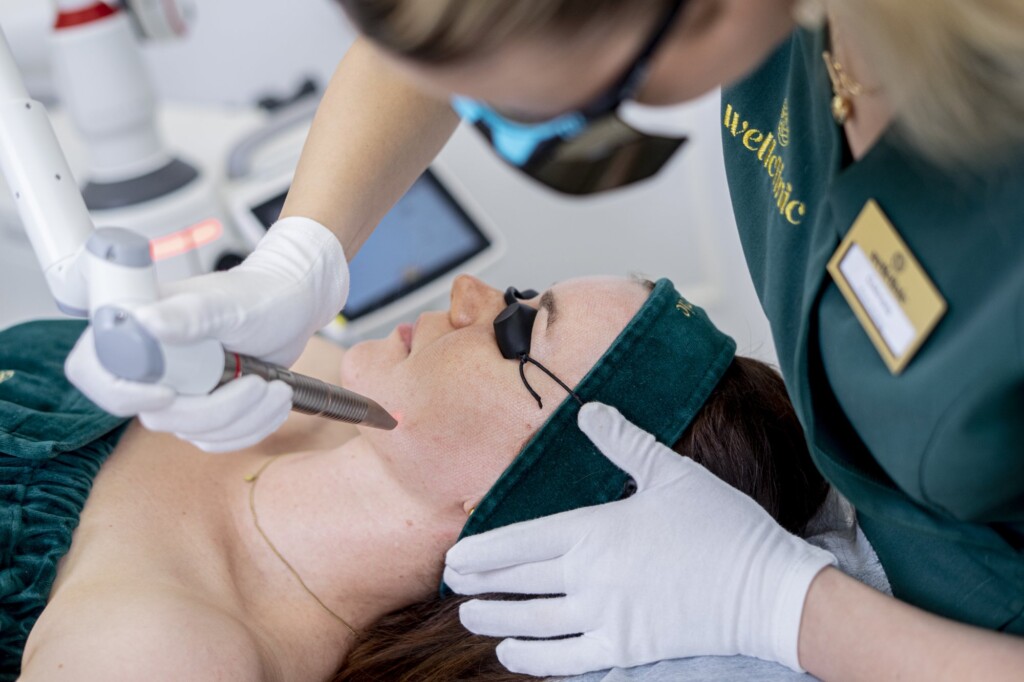
The basis of the treatment Sentiq Skin is laser therapy. The laser beam penetrates the skin to the appropriate depth and heats the tissue, causing thermal damage to the sebaceous glands and destroying the bacteria that cause acne and inhibits the production of sebum. We also select gentle skincare products containing ingredients that do not irritate the skin, but instead strengthen the skin’s hydrolipid barrier, which protects against harmful factors.
The effect of diet on acne
Some populations did not used to have acne: the Canadian Inuit, the South African Zulus, the Japanese people of Okinawa, the Aché of Paraguay and the inhabitants of the Kitavan Islands in Papua New Guinea. The condition emerged following the adoption of a Western diet, including processed foods, dairy products and refined sugar.
The importance of eating is best documented today milk and products with a high glycaemic index (GI). The link between consumption milk a acne Adebamowo established this in 2005, having studied over 47,000 female patients with this condition. In 2020, Hilary Baldwin and Jerry Tan pointed out that acne reduces the intake of fatty acids omega-3 and low-calorie diets IG.
In 2022, Bartosz Pałdyna and his team stated in a letter Paediatrics and Family Medicine, that although there is currently no basis for issuing clear recommendations for patients, there is evidence to suggest that eating meals with a low IG, with a reduction in the intake of dairy products, sweets, saturated fats and salt, and an increase in the intake of fatty acids omega-3, may have a positive effect on the course of acne and his treatment.
Gut microbiota and acne
It has been shown that the metabolites produced by the impaired gut microbiota affect the skin microbiome, skin condition and the formation of acne. Probiotics offer hope of reducing the changes acne-prone, but they are still the subject of research. The most important minerals that support therapy acne are zinc i selenium. Zinc It has a bacteriostatic effect, reduces the production of inflammatory cytokines and has antioxidant properties. Selenium It regulates sebum production and has anti-inflammatory properties. It is used in combination with vitamin E and zinc because of their antioxidant properties.
Effective treatment of acne requires a comprehensive approach
Acne treatment It requires time, consistency and a personalised approach. The earlier treatment begins, the greater the chance of bringing the inflammatory changes under control and reducing the risk of permanent acne scars and discolouration. The best results are achieved through a combination of appropriately selected medication, modern dermatological and cosmetic treatments, proper skincare, and supporting the body through a healthy diet and the elimination of factors that exacerbate the condition. A holistic approach not only allows for more effective control of acne, but also to improve the condition of the skin and reduce the risk of recurrence.
If you’d like to find out which acne treatment is right for you, book an appointment consultation at Wellclinic. A specialist will assess the condition of your skin, determine your treatment needs and select the appropriate course of action. We carry out treatments at our clinics in Warsaw, Gdańsk and Cracow.
Sources:
- PubMed „Guidelines for the management of acne vulgaris”
https://pubmed.ncbi.nlm.nih.gov/38300170/ - PubMed „Acne and diet: a review”
https://pubmed.ncbi.nlm.nih.gov/34423427/ - PubMed „Acne and the cutaneous microbiome: A systematic review of mechanisms and implications for treatments”
https://pubmed.ncbi.nlm.nih.gov/39269130/ - American Academy of Dermatology (AAD) „Clinical Guideline on Acne”
https://www.aad.org/member/clinical-quality/guidelines/acne - European Dermatology Forum (EDF) „European S3 Guideline on the treatment of acne”
https://www.edf.one/home/Guidelines/Guideline-for-the-Treatment-of-Acne.html - DermNet „Acne”
https://dermnetnz.org/topics/acne