
 Katarzyna Pawłowska

 28.10.2026
Table of contents
Small, white or yellowish spots on the lips can be a cause for concern. Sometimes they resemble spots, whilst at other times they look like tiny lumps under the skin. Many people wonder whether Fordyce spots are a sign of an illness, whether they are contagious, and how to get rid of them.
Fordyce spots are benign, visible sebaceous glands that occur in areas without hair follicles. They most commonly appear on the vermilion border of the lips, the inside of the cheeks, and in the genital area. They do not usually cause pain or itching and do not require treatment. However, if they are clearly visible, they may cause cosmetic discomfort.
How can you recognise Fordyce spots? How do they differ from acne, cold sores and other skin conditions? And are there ways to make them less noticeable?
What are Fordyce spots?
Fordyce spots, also known as Fordyce’s papules, these are visible sebaceous glands located outside their usual sites, i.e. outside the hair follicles. They produce sebum, but their presence does not indicate a medical condition or poor hygiene.
The lesions usually take the form of small, slightly raised nodules that are whitish, cream-coloured or yellowish in colour. They are most commonly around 1–5 mm in size. They may occur individually, although they more often form clusters.
Fordyce spots are very common. They become more noticeable during puberty and adulthood, partly due to hormonal changes.
It is worth noting that they are neither a contagious disease nor a sexually transmitted infection. You cannot catch them through kissing, skin-to-skin contact or sexual intercourse. They do not usually cause any health problems either.
What do Fordyce spots look like?
The most characteristic features are small, pale nodules that stand out clearly against the surrounding skin or mucous membrane. Their surface is usually smooth, and their colour may vary depending on the natural pigmentation of the tissues.
Typical Fordyce spots:
- they are white, cream-coloured or yellowish;
- they are usually between 1 and 5 mm;
- they occur individually or in larger clusters;
- they do not usually cause pain or itching;
- They do not contain sebum and do not behave like typical acne lesions.
The bumps may be more visible if the skin is gently stretched, particularly around the mouth. Their number and distribution vary from person to person.
However, the appearance of the lesions alone is not always sufficient to make a diagnosis. Other skin and mucous membrane conditions may present in a similar way. If the papules have appeared suddenly, are changing, are painful or are bleeding, it is advisable to consult a doctor.
Where do Fordyce spots most commonly appear?
The location of the lesions depends on the area where the sebaceous glands are visible.
Fordyce spots on the lips
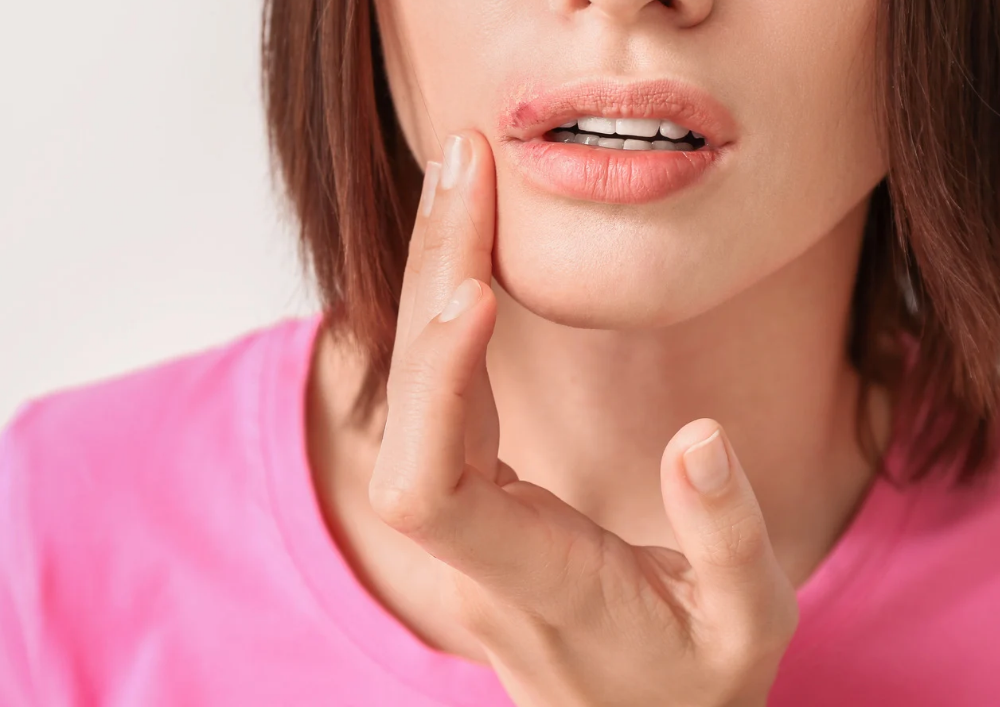
This is one of the most common sites. Small, pale lumps appear on the red part of the lips, particularly on the upper lip, and sometimes on the lower lip as well. They may be visible when smiling broadly or when pursing the lips.
They do not usually cause pain or a burning sensation. The main concern is usually their appearance, particularly when there are numerous lesions that stand out clearly against the natural colour of the lips.
Fordyce spots in the mouth
Lesions may also appear on the inside of the cheeks and on the oral mucosa. They take the form of tiny, yellowish-white spots.
They are often noticed by chance, for example whilst brushing one’s teeth or looking inside one’s mouth. If they do not cause any discomfort and look typical, they do not usually require treatment.
Fordyce spots in the genital area
Fordyce spots may also appear on the penis, scrotum and vulva. In these areas, they are sometimes mistaken for genital warts or other lesions associated with infections.
The mere presence of Fordyce spots does not indicate a sexually transmitted infection. However, if the lesions are new, are increasing rapidly in number, or are accompanied by pain, ulceration or discharge, a medical assessment is necessary.
What causes Fordyce spots?
Fordyce spots are linked to the natural structure of the sebaceous glands. They occur in areas where these glands are not connected to hair follicles. They are not caused by poor skincare or a lack of hygiene.
These changes often become more noticeable during puberty, when there are significant hormonal changes. In many people, they persist for a long time without causing any health problems.
There is no single specific cause that can be eliminated to make the spots disappear completely. Nor are they a typical consequence of eating certain foods, using cosmetics or coming into contact with pollutants.
It is worth bearing in mind that Fordyce spots are not the same as the excessive production of sebum that leads to acne. Sebaceous glands are present in both cases, but the nature of the lesions and the mechanism by which they develop are different.
Fordyce spots versus acne – how can you tell them apart?
Light-coloured lumps on the skin may resemble closed comedones or small acne lesions. This is a common cause of misdiagnosis, particularly when the lesions are located around the mouth.
In the case of acne Blackheads, inflammatory papules and pustules may appear; in more severe cases, nodules and cysts may also develop. These lesions are often accompanied by redness and, occasionally, tenderness.
Fordyce spots They are usually a uniform, light colour and do not show the typical signs of inflammation. Nor are they lesions that need to be cleaned or squeezed.
The key difference is that Fordyce spots are a variant of the normal structure of the sebaceous glands, whilst acne is an inflammatory condition of the pilosebaceous unit.
If you are unsure what type of lesion you are dealing with, it is not advisable to start acne treatment on your own. Some products may irritate the delicate skin of the lips and the mucous membranes.
Fordyce spots versus cold sores, milia and warts
Not every pale lump around the mouth is a Fordyce spot. When making a diagnosis, one must also take into account other lesions that may look similar.
Cold sores It usually starts with a tingling, burning or itching sensation, followed by clusters of blisters. Over time, these may burst and form scabs. Unlike Fordyce spots, cold sores are contagious.
Millet These are small, hard, whitish lumps caused by a build-up of keratin beneath the skin’s surface. They often appear on the cheeks and around the eyes. They may resemble Fordyce spots, but have a different cause.
Viral warts and genital warts They may take the form of small lumps, which become more raised or irregular over time. Depending on their location and the type of lesion, they may require testing for human papillomavirus (HPV) infection.
Acne scars These, in turn, are permanent changes in the structure of the skin, most commonly in the form of depressions or raised areas. They are not clusters of sebaceous glands and usually have a different surface texture to typical Fordyce spots.
Other benign skin lesions, epidermal cysts or certain diseases of the mucous membranes may also have a similar appearance. If in doubt, a dermatologist should make the diagnosis; for lesions inside the mouth, a dentist specialising in mucosal diagnostics may also be of assistance.
Are Fordyce spots dangerous?
In most cases, no. They are benign, pose no health risk and do not require treatment. They do not develop into acne, nor are they cancerous lesions.
This does not, however, mean that every new lump can automatically be considered a Fordyce spot. Particular attention should be paid to lesions which:
- have appeared suddenly or are growing rapidly;
- cause pain, itching or a burning sensation;
- they bleed, develop sores or become covered in scabs;
- change colour or shape;
- they are accompanied by other worrying symptoms.
In such situations, it is worth booking a consultation. The aim is to determine the cause of the changes and rule out other conditions, rather than to treat the Fordyce spots themselves.
Do Fordyce spots need to be treated?
If the changes have been correctly diagnosed and do not cause any symptoms, treatment is not necessary. There is no need to remove them for health reasons.
The situation is different when lumps They are highly visible and cause aesthetic discomfort. In such cases, you can discuss with your doctor the options for reducing their visibility.
The choice of treatment depends on the location, the number of lesions, the condition of the skin and the patient’s expectations. Not every method will be suitable for the delicate red area of the lips or the mucous membrane.
How do you remove Fordyce spots?
In certain cases, a specialist may consider treatments such as:
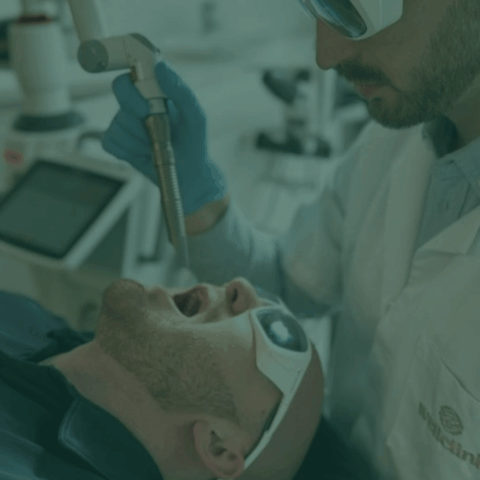
- Ablative laser therapy, for example, by using CO₂ laser, which allows you to target specific changes with precision.
- Electrosurgery or electrodessication, which involves the controlled use of electrical energy to remove tissue.
- Other treatment methods, selected on a case-by-case basis following an assessment of the changes and their location.
There is no single method that is suitable for every patient. Before the procedure, the expected results, the number of sessions that may be required, the recovery period and the risk of side effects should be discussed.
In sensitive areas, particularly on the lips and mucous membranes, one must take into account the risk of irritation, discolouration, scarring and incomplete removal of lesions. The procedure should not be carried out solely on the basis of a self-assessment of the appearance of the papules.
Can Fordyce spots be removed using home remedies?
It is not advisable to squeeze, prick or scratch the lumps. Such actions do not address the underlying cause and may lead to irritation, bleeding, infection and scarring.
Care should also be taken when using acids, anti-acne products and home remedies for zł. It is particularly easy to damage the delicate skin of the lips in this way.
Regular skincare helps keep your skin in good condition, but does not guarantee that Fordyce spots will disappear. If you want to get rid of them, it is safer to consult a specialist first rather than experimenting with treatments on your own.
How should you look after skin affected by Fordyce spots?
Skincare should be gentle and tailored to the area affected. Its aim is to maintain the skin’s healthy condition, rather than to mechanically remove the sebaceous glands.
It is worth bearing in mind a few rules:
- Wash your skin using gentle products, without rubbing too hard.
- Avoid squeezing or pricking the lumps.
- For your lips, use protective products that do not cause irritation.
- Do not apply strong acids or retinoids to the lips or mucous membranes unless specifically advised to do so by a doctor.
- If the lesions start to change or new symptoms appear, consult a specialist.
There is no need to follow a special diet or undergo a rigorous skin-cleansing regime simply because you have Fordyce’s spots.
When should you consult a dermatologist about Fordyce spots?
A consultation is particularly advisable if you are unsure whether the changes are actually Fordyce spots. This applies in particular to lumps in the genital area, where infectious lesions may also have a similar appearance.
It is also worth seeing a doctor if the spots are very noticeable, are affecting your well-being, or if you would like to find out how to make them less visible.
The doctor will assess the appearance, location and nature of the lesions. In typical cases, a diagnosis can be made on the basis of a clinical examination. Further tests are carried out if the findings are inconclusive.
If the issue is purely aesthetic, a consultation helps to determine whether the treatment is justified and whether the potential benefits outweigh the risks. An individual assessment helps to avoid unnecessary treatments and to select a solution appropriate to the location and nature of the changes.
Source:
- DermNet – Fordyce spots – https://dermnetnz.org/topics/fordyce-spots
- Cleveland Clinic – Fordyce Spots: Symptoms, Causes, Treatment – https://my.clevelandclinic.org/health/diseases/24140-fordyce-spots
- Primary Care Dermatology Society – Fordyce spots (syn. Fordyce’s granules) – https://www.pcds.org.uk/clinical-guidance/fordyce-spots-syn-fordyces-granules
- Cleveland Clinic Journal of Medicine – The Clinical Picture: Fordyce Spots – https://www.ccjm.org/content/89/12/676.full-text.pdf
- Consultant – Fordyce Spots – https://www.consultant360.com/articles/fordyce-spots
- PubMed Central (PMC) – Penile warts: an update on their assessment and management – https://pmc.ncbi.nlm.nih.gov/articles/PMC6302884/





 +48 600 100 177