It might not just be snoring. If you snore loudly every night and wake up in the morning feeling tired, with a headache, or as though you’re still lacking energy despite having had a full night’s sleep, it’s not worth ignoring it. Behind this seemingly harmless sound may lie a problem with breathing whilst you sleep.
Regular, loud snoring It is not merely a problem that disturbs the sleep of the person sleeping next to you. It may be a sign that airflow through the upper airways is restricted during sleep. When the upper airways narrow, airflow becomes turbulent and the soft tissues of the throat begin to vibrate.
Sometimes the reason is simple: a blocked nose, an infection, alcohol consumed in the evening, or sleeping on one’s back. In other cases, the cause lies in permanent anatomical changes or sleep-related breathing disorders. That is why treatment of snoring It should start by establishing where the problem actually stems from.
What causes snoring?
During sleep, the tension in the muscles of the throat, tongue and soft palate decreases. In some people, this leads to a partial narrowing of the upper airways. The air must then flow through a narrower space, and its movement causes the tissues to vibrate.
The soft palate and the uvula are the parts that vibrate most frequently. The position of the tongue also affects the flow of air. If the tongue moves backwards during sleep, the space in the throat may become even narrower.
The anatomy of the nose also plays a part in how the problem develops. Crooked nasal septum, phypertrophy of the nasal turbinates or chronic swelling of the mucous membrane They can make it difficult to breathe through the nose. The body then begins to breathe through the mouth, which may contribute to increased vibrations in the throat tissues.
Causes of snoring
Causes of snoring They are rarely limited to a single factor. The anatomical structure of the airways is just as important as lifestyle and the quality of sleep.
One of the problems might be abnormal structure of the nose. Narrowing of the nasal passages increases the resistance to airflow. A similar effect can be caused by chronic rhinitis, an allergy or an infection, during which the mucous membrane becomes swollen.
It is also important that anatomy of the throat. An elongated or flaccid soft palate, a larger uvula or excess tissue in the throat may increase the likelihood of these structures vibrating during sleep. In some people, a receded lower jaw also plays a role, as it restricts the space available for the tongue and may contribute to a narrowing of the throat.
Snoring It may become more severe as body weight increases. Extra tissue around the neck can narrow the passage through which air flows. However, this does not mean that every overweight person snores, nor that losing weight will solve the problem in every case.
What makes snoring worse?
At severity of snoring The way the body functions before bedtime also plays a role. Alcohol reduces muscle tone, so drinking it in the evening can cause the tissues in the throat to collapse. Certain sedatives and sleeping pills have a similar effect.
The sleeping position is also important. For some people, sleeping on their back causes the tongue to slide further back towards the back of the throat. In such cases, sleeping on one’s side may help to alleviate the symptoms.
Snoring It often occurs or worsens during upper respiratory tract infections. A blocked nose hinders the free flow of air, whilst swelling of the mucous membranes increases resistance in the airways.
The quality of sleep is also a factor. Prolonged fatigue and an irregular circadian rhythm can affect muscle tone and the pattern of breathing during the night.
How to treat snoring?
How to treat snoring, if the problem occurs regularly? First and foremost, you need to identify the cause. Snoring caused by a blocked nose requires a different approach to that caused by lax soft palate tissue, and yet another approach is needed for accompanying symptoms sleep apnoea.
In mild cases, lifestyle changes, cutting down on alcohol before bed, weight loss for those who are overweight, and changing sleeping position may help. If the problem has an anatomical cause, treatment targeting a specific structure may be considered.
Depending on the cause, treatments may include, amongst others, intraoral appliances, surgical treatment and selected laser techniques. Treatments for snoring They should be selected on a case-by-case basis, as the sound of snoring alone does not necessarily indicate its cause.
Snoring and sleep apnoea
Samo snoring It does not necessarily indicate sleep apnoea, but it may be one of its symptoms. Particular attention should be paid to situations where loud snoring is accompanied by pauses in breathing, sudden awakenings, a feeling of breathlessness or a lack of air whilst sleeping.
Sleep apnoea It can also cause morning headaches, a dry mouth, difficulty concentrating and excessive drowsiness during the day.
In that case, the very treatment of snoring It may not solve the problem. It is essential to establish whether the symptoms are caused by a sleep-related breathing disorder. Diagnostic tests enable us to determine the nature of the problem and select the appropriate course of action.
Diagnosis of snoring
The first stage involves a consultation and a thorough medical history. The specialist assesses, amongst other things, breathing patterns, nasal patency, the structure of the mouth and throat, and factors that may exacerbate symptoms.
It is also important to assess the structure of the facial skeleton and the lower jaw. If a problem with nasal patency is suspected, the structure of the nasal septum and the nasal turbinates is examined.
In certain cases, a nasal and throat fibroscopy is carried out. The examination allows the individual structures to be viewed and the site where a narrowing may be occurring to be assessed.
If the symptoms suggest obstructive sleep apnoea, your doctor may recommend a suitable sleep study. This allows your breathing patterns to be assessed during the night and helps distinguish between isolated snoring and a more serious condition.
Treating snoring starts with simple changes
Not every case requires treatment. If snoring is primarily linked to lifestyle or temporary factors, the first step is to minimise these.
If you are overweight, reducing body fat may alleviate the strain on the tissues in the neck area. It is also advisable to cut down on alcohol before bedtime, ensure you have a regular sleep schedule, and monitor whether changing your sleeping position affects the severity of your symptoms.
It is also important to ensure that the nose is clear. If the problem is caused by an allergy, an infection or chronic swelling of the mucous membrane, it may be necessary to treat the underlying cause of the blockage.
Intraoral devices for the treatment of snoring
In some patients, intraoral appliances are used. Their purpose is to keep the lower jaw in a forward position whilst sleeping. This increases the space in the oropharyngeal region, and the tongue is less likely to slide backwards.
This approach may be considered, amongst others, for people whose mandibular structure and soft tissues contribute to airway narrowing.
The appliance should be properly fitted. Not every model will be suitable for every person, so it is advisable to undergo a dental or specialist assessment before using it.
Surgical treatment for snoring
If the problem is caused by permanent anatomical changes, the doctor may consider surgical treatment. This applies primarily to cases where the narrowing of the airways is linked to the structure of the nose or throat.
If the nasal septum is malformed, it can be corrected. If the problem is enlarged turbinates, treatments aimed at improving nasal airway patency are considered.
In certain cases, the procedures also involve the soft palate. Their aim is to reduce excessive tissue laxity and minimise vibrations caused by airflow.
Laser treatment of snoring
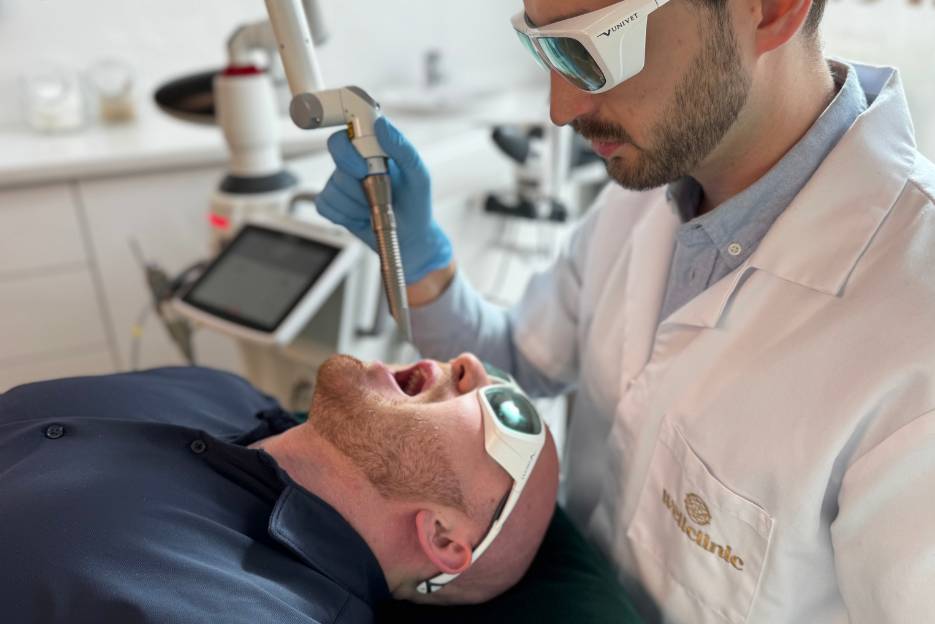
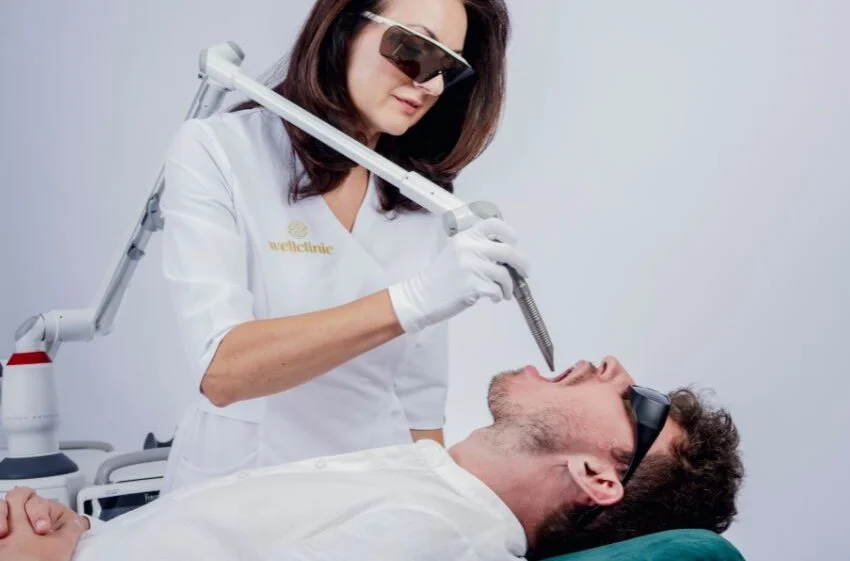
One of the methods used in certain cases is laser treatment of snoring. At Wellclinic, the following procedure is used NightLase, based on the use of Erbium-YAG laser.
The laser acts on the soft tissues of the palate and throat. The controlled heating of these tissues triggers a process of tissue remodelling, which can lead to improved tissue tone and reduced susceptibility to vibration.
The treatment does not involve the mechanical removal of tissue. It works by applying controlled thermal energy to stimulate collagen remodelling processes.
The results are not usually immediate. The changes take place gradually, which is why the procedure is carried out as a series of sessions, and the treatment plan is tailored to each patient’s individual circumstances.
Laser treatment for snoring – who is it for?
Not everyone who snores is a suitable candidate for laser therapy. First, the cause of the problem must be identified.
If snoring is associated with significant nasal obstruction, it may be necessary to address this specific cause. If, however, the symptoms are part of a picture of sleep apnoea, the priority remains the proper diagnosis and treatment of sleep-related breathing disorders.
Laser treatment for snoring It may be considered primarily when the problem involves soft tissue laxity and excessive vibration. A specialist’s assessment determines eligibility.
Ways to tackle snoring and lifestyle
Even a well-chosen course of treatment may not bring about the expected improvement if factors that exacerbate snoring persist at the same time.
Factors such as body weight, the amount of alcohol consumed in the evening, sleeping position and the regularity of rest are important. It is also worth paying attention to whether your nose is clear and the conditions in the bedroom.
Dry air can make your nose and throat feel more irritated. Maintaining the right level of humidity in a room can make breathing more comfortable, particularly during the heating season.
However, the point is not to look for a single, universal cause. Ways to cure snoring should take into account what is actually causing the problem.
Sleep hygiene and prevention
Regular bedtimes and wake-up times help to maintain a healthy circadian rhythm. It is also important to ensure you get enough sleep, as chronic sleep deprivation can affect the quality of your night’s rest and your breathing patterns.
It may also be helpful to observe your own sleep. Information on whether you snore every night, or whether it gets worse after drinking alcohol or in a particular sleeping position, can be valuable during a consultation.
If the problem only occurs during an infection or a seasonal allergy, the approach will be different from that for chronic snoring, which occurs regardless of the circumstances.
Effective treatment for snoring
There is no single method that will be effective for every patient. Effective treatment for snoring depends, above all, on correctly identifying the root cause of the problem.
For some people, simply changing their sleeping position and minimising factors that exacerbate their symptoms may be sufficient. For others, it will be necessary to improve nasal airway patency, use an intraoral appliance or undergo surgical treatment.
If the cause is vibrations in the soft tissues of the palate and throat, appropriately tailored laser therapy may be considered. In every case, however, the starting point remains the same: determining where and why the normal flow of air is being restricted.
Snoring is a warning sign. The question is, how long do you intend to ignore it?
If snoring If it occurs regularly, is loud and lasts for a long time, it should not be treated as a mere nuisance. This is particularly true if it is accompanied by pauses in breathing, sudden awakenings, a feeling of breathlessness, morning headaches or daytime drowsiness.
A sudden occurrence may also be cause for concern severity of snoring. The causes may include both lifestyle factors and changes within the nose or throat. Therefore, treatment for snoring should begin by determining the actual source of the problem.
You may get used to snoring and stop noticing it. However, this does not mean that the problem has gone away. Every night from now on may be just the same unless you find out what is causing it.
Would you like to find out more about Snoring treatment at Wellclinic? Make an appointment for a consultation – We will investigate the cause of the problem and determine the appropriate course of action. We carry out treatments at our clinics in Warsaw, Gdańsk and Cracow.
Sources:
- PubMed „Obstructive sleep apnoea and the risk of cardiovascular disease and all-cause mortality: a meta-analysis of prospective cohort studies”
https://pubmed.ncbi.nlm.nih.gov/24161531/ - PubMed „Obstructive sleep apnoea and cardiovascular risk: a systematic review and meta-analysis”
https://pubmed.ncbi.nlm.nih.gov/41303825/ - PubMed „Meta-analysis of all-cause and cardiovascular mortality in obstructive sleep apnoea with or without continuous positive airway pressure treatment”
https://pubmed.ncbi.nlm.nih.gov/27502205/ - PubMed „Oropharyngeal and tongue exercises (myofunctional therapy) for snoring: a systematic review and meta-analysis”
https://pubmed.ncbi.nlm.nih.gov/29275425/ - PubMed „Er:YAG laser for snoring: a systematic review and meta-analysis”
https://pubmed.ncbi.nlm.nih.gov/32112250/ - PubMed „Er:YAG laser treatment for snoring: a systematic review and meta-analysis”
https://pubmed.ncbi.nlm.nih.gov/40566115/ - PubMed „Association of obstructive sleep apnoea with the risk of serious cardiovascular events: a systematic review and meta-analysis”
https://pubmed.ncbi.nlm.nih.gov/22828826/ - PubMed „Correlations between Obstructive Sleep Apnoea Syndrome and Daytime Sleepiness and the Risk of Car Accidents in the Adult Working Population”
https://pubmed.ncbi.nlm.nih.gov/35887735/ - NHS „Snoring"
https://www.nhs.uk/symptoms/snoring/ - American Academy of Sleep Medicine (AASM) "Clinical use of a home sleep apnoea test: An updated position statement from the American Academy of Sleep Medicine"
https://aasm.org/advocacy/position-statements/clinical-use-of-a-home-sleep-apnea-test-an-updated-american-academy-of-sleep-medicine-position-statement/