
 Katarzyna Pawłowska
 03.11.2026
Table of contents
Radiofrequency is a technology that utilises energy radio waves for controlled tissue heating. In aesthetic medicine It is primarily used to improve skin tone, firmness and quality, and, depending on the type of device, also to target deeper structures. Energy cieplna It affects the collagen fibres, which provide structural support for the skin and are responsible for its elasticity.
As time goes by, natural collagen and elastin productionIt gradually decreases. The supporting fibres weaken, and the skin loses its density, becomes less elastic and may begin to sag. These changes do not always involve the appearance of deep wrinkles. Sometimes the first sign of ageing is a loss of skin firmness, a loss of the defined facial contour, or sagging around the abdomen, arms and thighs.
Radiofrequency uses the energy required to trigger a controlled reaction in tissues. A suitably selected temperature may lead to the contraction of existing collagen fibres and the initiation of skin remodelling processes. Over the coming weeks and months, there may be a gradual improvement in its structure, firmness and elasticity.
Technology radio waves is used in treatments aimed at skin firming and non-invasive fat reduction, as well as in treatments designed to improve the appearance of skin with visible cellulite. However, the range of possible effects depends on the type of device, the treatment parameters, the area being treated and the individual characteristics of the tissues.
What is radiofrequency and how does it affect the skin?
Radiofrequency, also known as abbreviated as RF, uses radio-frequency electromagnetic energy. The flow of energy through tissues causes them to heat up. Unlike light-based methods, such as lasers, radio waves do not work through the selective absorption of light by a specific chromophore. Their effect stems primarily from the electrical properties of the tissues and the way in which the device transmits energy.
During the procedure, the following occurs: an increase in temperature in a selected layer of the skin or subcutaneous tissue. Properly controlled heating affects the structure collagen, causing it to shrink slightly. At the same time, repair processes are set in motion, involving, amongst others, fibroblasts – cells responsible for the production of extracellular matrix components, including collagen.
That is precisely reconstruction of the skin’s supporting matrix is important for the long-term improvement of its quality. Newly established collagen fibres They can gradually increase the density and elasticity of tissues. The full effects do not become apparent immediately, as regenerative processes take time.
The effect of temperature on collagen fibres
Collagen It is one of the skin’s most important structural proteins. It forms a network of fibres that provides the skin with mechanical strength and helps maintain its proper tone. With age, its quantity and organisation change, leading to a loss of firmness and the appearance of signs of ageing.
Under the influence of controlled heating, the structure of existing collagen fibres may change and they may contract. This reaction is one of the mechanisms utilised in treatments radiofrequency. Later on, the body initiates remodelling processes that may support the formation of new collagen.
However, it is important to monitor the temperature and depth of penetration of the energy appropriately. Excessively intense heating can cause tissue damage; therefore, the treatment parameters should be adjusted to suit the specific technology and area of the body.
Radiofrequency and microcirculation
Tissue heating It may also affect local blood circulation. An increase in blood flow in the treatment area is one of the physiological responses to heat. However, this does not mean that improved microcirculation is the primary mechanism of action for all RF devices, nor does it guarantee a specific aesthetic outcome in its own right.
The outcome of the treatment depends primarily on the method of energy delivery, the temperature achieved, the duration for which it is maintained, and the tissues’ response.
Types of radiofrequency – how do RF technologies differ?
Not all treatments that use radio waves They work in the same way. The differences relate, amongst other things, to the design of the handpiece, the arrangement of the electrodes, the depth to which energy is delivered, and whether the skin remains intact or is subjected to controlled puncturing.
Monopolar radiofrequency
Monopolar radiofrequency It utilises a system comprising two electrodes with different functions: a treatment electrode, which delivers energy to the tissues, and a return electrode positioned elsewhere on the body. Radio-frequency current flows between them through the area being treated, causing it to controlled heating. This method of energy transfer makes it possible to influence relatively the deep layers of the skin and subcutaneous tissue, although the actual temperature distribution depends on the design of the device, the size of the electrodes, the frequency and the parameters used.
In aesthetic medicine monopolar radiofrequency is used primarily in treatments aimed at improved skin tone and firmness. The energy from cieplna can cause existing collagen fibres to contract, thereby promoting their remodelling. Depending on the technology and treatment protocol, the method can be used on the face, neck and selected areas of the body.
Bipolar and multipolar radiofrequency
W bipolar radiofrequency Electric current flows between two electrodes located within the treatment head. In multipolar systems, a greater number of electrodes are used, which allows for different methods of energy distribution within the treatment area.
Compared with monopolar technology, heating is usually more confined to the area between the electrodes. However, the actual temperature distribution depends on their positioning, spacing, power and the design of the device.
Bipolar and multipolar radiofrequency It is used in treatments designed to improve the skin’s quality, firmness and elasticity. Depending on the system, it can be used on the face and body.
Micro-needle radiofrequency
Micro-needle radiofrequency It combines the action of radiofrequency energy with mechanical puncturing of the skin using fine needles. During the treatment, the needles are inserted to a specific depth, and the RF energy is delivered directly to selected layers of tissue.
The combination of micro-punctures and controlled heating triggers a local repair response. This may help to collagen remodelling and to improve the skin’s texture. This method is used, amongst other things, in treatments aimed at reducing the appearance of acne scars, enlarged pores, fine lines and sagging skin.
Micro-needle radiofrequency It differs from conventional radiofrequency not only in the way energy is delivered, but also in the degree of skin penetration. As it involves punctures, it may be associated with a longer recovery period and a different profile of side effects.
Fractional radiofrequency
Fractional radiofrequency It involves delivering energy to the skin in the form of numerous small, separate treatment areas. Depending on the device, it may use surface electrodes or a microneedle system.
Fractional mode of operation It allows some of the surrounding tissue to remain outside the area of direct treatment, which is important for the healing process. The technology is primarily used in treatments designed to improve the skin’s structure, firmness and the appearance of scars.
Indications for radiofrequency treatment
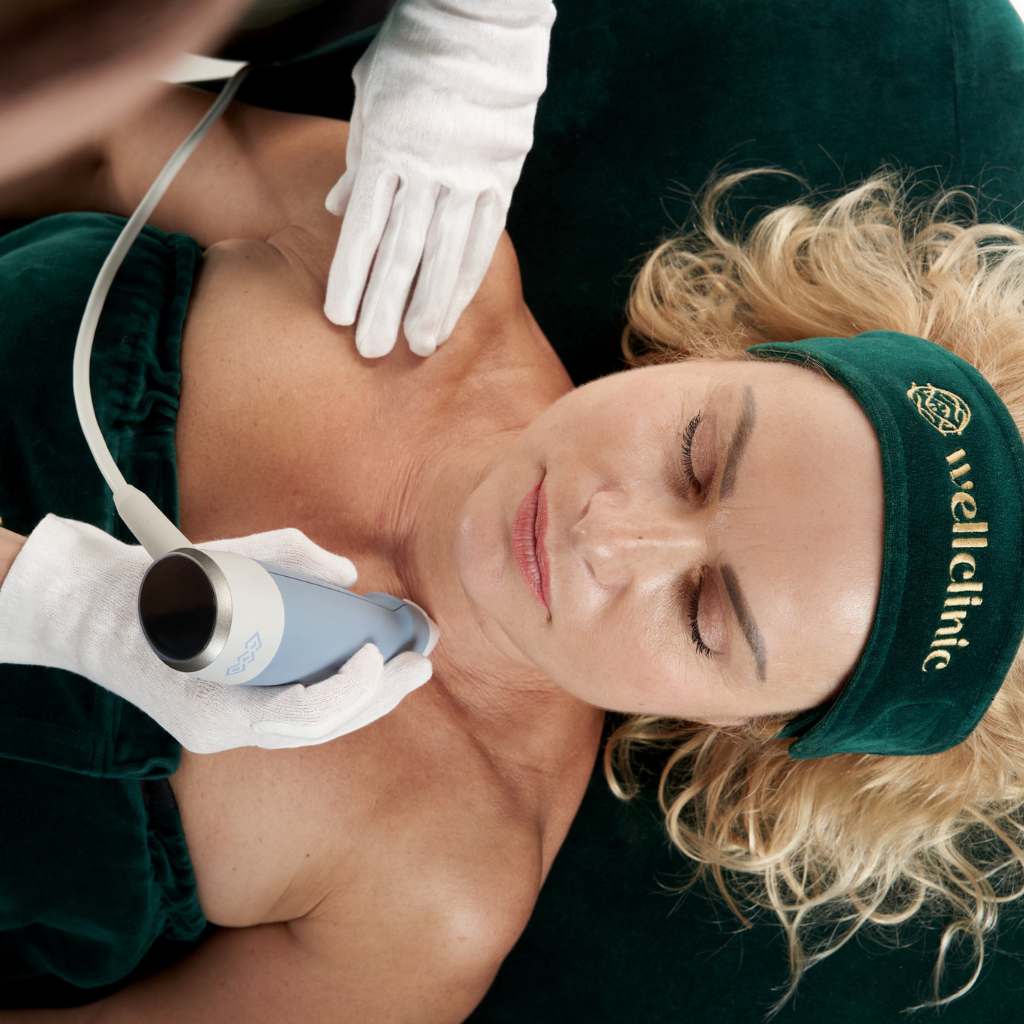
Treatments using radio waves may be considered in people who have a deterioration in the skin’s firmness, elasticity or texture. However, the indications depend on the type of device. Conventional superficial radiofrequency offers different possibilities to microneedle systems or devices designed to treat subcutaneous tissue.
The most commonly cited aesthetic problems include:
- sagging and loss of skin firmness face and body,
- a less defined facial contour and sagging of the tissues,
- fine lines and a loss of skin elasticity,
- an uneven skin texture and visible enlarged pores,
- acne scars, particularly when using certain microneedling techniques,
- skin irregularities associated with cellulite,
- localised fat deposits, provided the device is intended for such use.
Radiofrequency It is not a one-size-fits-all solution to every problem associated with ageing. In cases of pronounced sagging of the tissues or significant loss of volume, it may be necessary to use a different type of treatment.
Radiofrequency treatment for the face – improving skin firmness and quality
The ageing process on the face involves more than just the formation of wrinkles. A reduction in collagen, changes in the distribution of fat tissue and a weakening of the supporting structures all affect the facial contours, skin firmness and the visibility of furrows.
Radiofrequency treatment for the face It can be used to improve skin firmness and reduce the appearance of fine lines. Depending on the technology used, the treatment may target the cheeks, jawline, chin area, forehead or selected areas of the lower face.
For skin that has lost its elasticity RF treatment may support her restructuring and voltage optimisation. The effectiveness depends on the degree of laxity, the quality of the skin, the biological age of the tissues and the parameters used.
Radiofrequency treatment for the body – stomach, thighs and arms
Radio waves They are also used in body treatments. In these areas, the aim of the treatment may be to improve skin firmness, reduce the appearance of unevenness and, with the right equipment, target the subcutaneous tissue.
Radiofrequency treatment for the abdomen
The skin on the abdomen It may lose its firmness following, amongst other things, pregnancy, significant weight loss or simply as a result of ageing. A reduction in collagen and the stretching of tissues can lead to sagging, which does not always resolve on its own.
Treatments radiofrequency may be considered in the case of slight or moderate loss of skin toney. However, they do not remove excess skin if there is a significant amount of it.
Radiofrequency treatment for the thighs and buttocks
On the thighs and buttocks radiofrequency It can be used in treatments designed to improve skin tone and the appearance of the skin’s surface. Depending on the device, the treatment may form part of a programme aimed at reduction in the appearance of cellulite.
Cellulite is related to the structure of the subcutaneous tissue and its distribution fat cells and the structure of connective tissue septa. It is not solely the result of excess body fat. Therefore, the effects of RF treatments They may vary and depend on the cause and the stage of the condition.
Radiofrequency treatment for the arms
Sagging skin on the arms may be due to the natural ageing process, changes in body weight or a loss of tissue elasticity. In certain cases radiofrequency It may help to improve skin firmness in this area. However, where there is a significant excess of skin, the options available with non-invasive methods are limited.
What results can you expect from radiofrequency treatment?
The effects of radiofrequency depend on the type of technology, the parameters, the number of sessions and the initial condition of the skin. In the case of methods aimed at improving skin firmness, the objective is the gradual remodelling of the tissues, rather than an immediate change in their volume.
Possible outcomes include:
- improvement skin firmness and tone,
- increasing its flexibility,
- improvement in skin density and texture,
- reduction in the appearance of fine lines,
- smoothing out selected irregularities,
- improving the appearance of skin affected by cellulite as part of a suitably tailored treatment programme.
Not every patient will experience all the effects listed. Radiofrequency Nor does it guarantee a reduction in body fat.
When do the effects of radiofrequency treatment become apparent?
Some people may notice an improvement in skin firmness relatively soon after the treatment, partly as a result of thermal reaction of collagen fibres. However, we will have to wait for a more complete regeneration of the tissues.
The processes involved in the formation and reorganisation of collagen take place gradually. Therefore, the results may become more noticeable over the coming weeks or months. How long the effects last depends on the technology used, age, skin condition, lifestyle and the individual’s response.
What does a radiofrequency treatment involve?
Before starting treatment, a consultation is required, during which a specialist assesses the condition of the skin, identifies the cosmetic issue and selects the appropriate technology. It is also important to rule out any contraindications and to determine whether radiofrequency will be the appropriate method in this case.
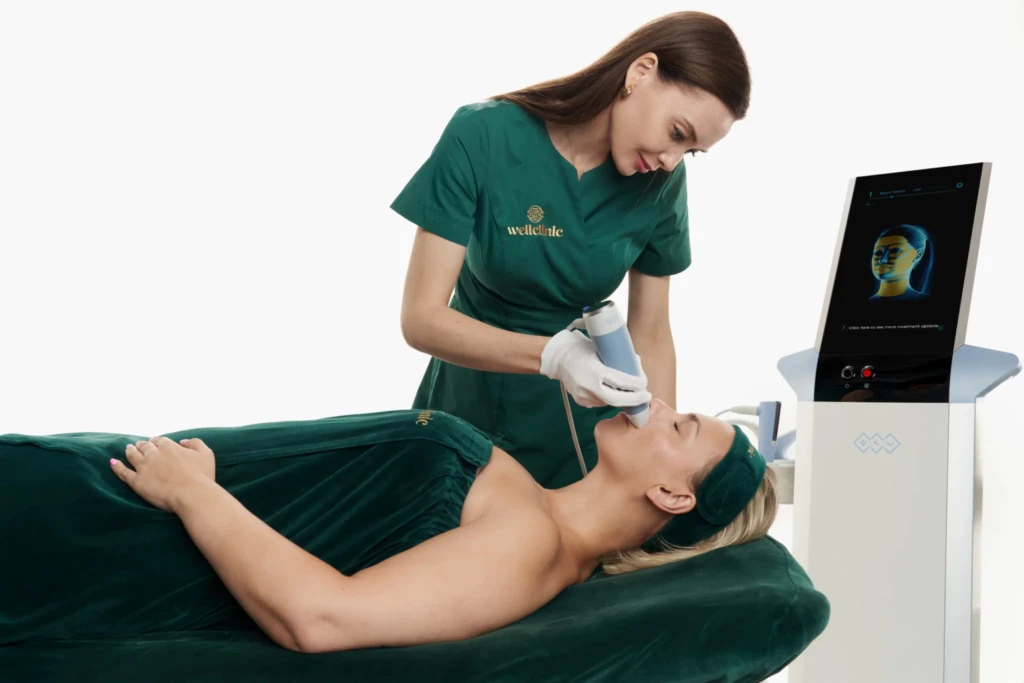
The procedure varies depending on the type of device. In conventional radiofrequency The skin is usually cleansed, and then a product is applied to its surface to help the treatment head glide over the skin and facilitate energy transfer. The practitioner performs the planned movements, monitoring the parameters and the skin’s response.
In the case of micro-needle radiofrequency A handpiece fitted with fine needles is used. These can be inserted to a specific depth, and radiofrequency energy is delivered to selected layers of tissue. Depending on the area and individual sensitivity, local anaesthesia may be required.
During the procedure, the patient may feel warmth, a pinching sensation or brief discomfort. With microneedling methods, the sensations may be more intense. The duration of the procedure depends on the size of the treatment area and the technology used.
How many radiofrequency treatments should be carried out?
Number of sessions It depends on the type of device, the indication and the expected outcome. Some technologies are designed for a single treatment, following which the extent of tissue remodelling is assessed. Others require a series of several sessions carried out at specific intervals.
In the case of micro-needle radiofrequency A series of treatments is often planned; however, the number and frequency of these should be based on an assessment of the skin and the device manufacturer’s recommendations. Repeating the procedures too frequently may hinder proper tissue regeneration.
Therapy plan It should also take into account the time needed to assess the results. It is worth bearing in mind that collagen remodelling does not cease immediately after the treatment; therefore, the ultimate effectiveness of the therapy is assessed after a suitable period of time.
Post-treatment recommendations following radiofrequency treatment
Post-treatment care depends on whether a non-invasive or microneedle method was used. Following the conventional radiofrequency You may experience temporary redness and a sensation of warmth. These usually subside relatively quickly.
After micro-needle radiofrequency The skin may be red, swollen and more sensitive. Small puncture marks may also appear. The recovery time depends on the depth of the needles, the intensity of the treatment and individual factors.
After the procedure, you should follow the specialist’s advice. This usually includes:
- gentle skincare and avoiding irritating cosmetics for the period recommended by a specialist,
- using sun protection,
- avoiding saunas, hot baths and intense heating of the skin during the recovery period,
- do not rub or irritate the treatment area,
- maintaining good skin hygiene, particularly after microneedling treatments.
You should not attempt to speed up the 1TP4 skin fattening process yourself, nor should you use strong active formulations without first consulting a specialist. If you experience increasing pain, blisters, sensory disturbances or any other worrying symptoms, you should contact a specialist.
Contraindications to radiofrequency treatment
Whether the treatment can be carried out depends on the type of device and the technology used. However, there are situations in which the application of thermal energy or the performance of micro-punctures may not be advisable.
Potential contraindications include:
- pregnancy and the breastfeeding period, in accordance with the instructions for the device in question,
- active infections and inflammation in the treatment area,
- skin damage, open wounds and active herpes lesions,
- cancer or ongoing cancer treatment – requiring an individual medical assessment,
- pacemakers and other implanted electronic devices, if they constitute a contraindication for a particular technology,
- coagulation disorders or the use of medicines that affect blood clotting, particularly in the case of microneedle radiofrequency therapy,
- a tendency to develop keloids and experience abnormal healing, particularly with methods that breach the integrity of the skin,
- certain chronic conditions and sensory disturbances in the treatment area.
The list of contraindications is not the same for all devices. Before the procedure, you should inform the specialist about any medical conditions, medication you are taking, implants and previous cosmetic procedures.
Is radiofrequency treatment safe?
Radiofrequency is used in aesthetic medicine for many years; however, the safety of the treatment depends on the correct choice of device, parameters and the patient’s suitability. The energy must be delivered in a controlled manner, as excessive heating can lead to damage to the skin and deeper tissues.
After the treatment, temporary redness, swelling, tenderness and a sensation of warmth may occur. In the case of microneedle radiofrequency, minor pinpoint bleeding, scabs and temporary pigmentation changes are also possible. Less commonly, burns, scarring, infections or undesirable changes in the subcutaneous tissue may occur.
It is therefore important that the treatment is carried out by a suitably trained person, in accordance with the device’s intended use and the manufacturer’s recommendations. Parameters should not be selected solely on the basis of the expected outcome. It is essential to take into account skin thickness, the treatment area, the history of previous procedures and the individual response of the tissues.
Radiofrequency versus other skin-firming methods
Radiofrequency It is not the only method used to improve skin firmness. Depending on the cosmetic issue, you may also wish to consider laser therapy or treatments involving the use of tissue biostimulators.
Radio waves They work primarily by applying controlled heat to the tissues. Lasers utilise light energy, which is absorbed by specific structures in the skin. Ultrasound technologies deliver acoustic energy to selected depths, and tissue biostimulators affect the biological processes involved in skin remodelling.
These methods are not interchangeable. The choice should be based on an assessment of the cause of the problem: loss of firmness, excess skin, uneven texture, wrinkles or loss of volume. In some cases, it is possible to combine different technologies, but the treatment plan should take into account their interactions and ensure appropriate intervals between treatments.
Radiofrequency – who is it suitable for?
Radiofrequency It may be considered for people who notice a gradual loss of skin firmness and elasticity, but who do not have any medical indications for more invasive methods. It can form part of a treatment programme to improve the quality of the skin on the face and body, if the problem primarily concerns skin tone or structure.
The most important thing is correct assessment. Where there is only slight sagging, a suitably chosen technique can bring about a noticeable improvement. In cases of significant excess skin, advanced tissue sagging or marked changes in the distribution of body fat, the results of non-invasive methods may be limited.
At Wellclinic, the selection of treatments aimed at improving skin firmness should take into account the patient’s individual needs, the condition of the tissues and the capabilities of the specific technology. A consultation helps to determine whether radiofrequency Will this be the right solution, or might another method – or a combination of several procedures – yield better results?.
Sources:
1. PubMed, Bonjorno A.R., Gomes T.B., Pereira M.C. et al., "Radiofrequency therapy in aesthetic dermatology: A review of clinical evidence", Journal of Cosmetic Dermatology, 2020
https://pubmed.ncbi.nlm.nih.gov/31691477/
2. PubMed, Rohrich R.J., Schultz K.P., Chamata E.S. et al., "A Minimally Invasive Approach to Skin Tightening of the Face and Body: A Systematic Review of Monopolar and Bipolar Radiofrequency Devices, Plastic and Reconstructive Surgery", 2022;
https://pubmed.ncbi.nlm.nih.gov/35877937
3. PubMed "Introduction and overview of radiofrequency treatments in aesthetic dermatology", Journal of Cosmetic Dermatology, 2022.
https://pubmed.ncbi.nlm.nih.gov/36459080/
4. "The Landscape of Radiofrequency Technology for Skin Rejuvenation", scientific review, 2025.
https://pmc.ncbi.nlm.nih.gov/articles/PMC12743727/
5. PubMed, Radiofrequency Microneedling for Facial Rejuvenation: A Systematic Review", Journal of Cosmetic Dermatology, 2026.
https://pubmed.ncbi.nlm.nih.gov/41947517/
6. PubMed "The Effectiveness of Radiofrequency Microneedling in the Treatment of Dermatological Conditions: A Systematic Review", Aesthetic Plastic Surgery, 2026.
https://pubmed.ncbi.nlm.nih.gov/42047762/
7. U.S. Food and Drug Administration (FDA), "Potential Risks Associated with Certain Uses of Radiofrequency (RF) Microneedling" – FDA Safety Communication
https://www.fda.gov/medical-devices/safety-communications/potential-risks-certain-uses-radiofrequency-rf-microneedling-fda-safety-communication



 +48 600 100 177