
 Katarzyna Pawłowska

 23.11.2026
A smile can add charm to a face, but over time it also leaves its mark. Fine lines radiating outwards from the outer corners of the eyes, known as chicken feet, initially they only appear when laughing or squinting. Over the years, they may also become visible when the face is at rest.
Why do crow’s feet appear so early? The area around the eyes is one of the most active parts of the face in terms of facial expressions, yet the skin covering it is thin and delicate. Intense muscle activity, gradual loss of collagen and elastin and UV radiation cause skin creases to become increasingly permanent over time.
Is it possible to smooth out crow’s feet without losing your natural facial expressions? Yes. There are several methods that can help reduce their appearance. However, choosing the right one depends on whether the main issue is expression lines, loss of skin firmness, or other signs of ageing around the eyes as well.
A voucher for you
Wellclinic gift vouchers from just 1,000 zł – treat yourself or your loved ones to health and beauty. Order by the end of November!
Collect your voucherTable of contents
What are crow’s feet and where do they form?
Crow’s feet are expression lines located at the outer corners of the eyes. They radiate outwards, resembling the tracks left by a bird’s feet. In medicine, they are referred to as wrinkles around the lateral canthus.
Their formation is primarily linked to the activity of the orbicularis oculi muscle. Among other things, this muscle is responsible for closing the eyelids, squinting and narrowing the palpebral fissure when smiling. Every time the muscle contracts, the skin folds in characteristic places.
In young people, the tissue usually returns quickly to its original position. This is because the skin retains sufficient elasticity and the ability to regenerate. With age, these processes gradually weaken. Collagen fibres lose some of their properties, and the decreasing amount of elastin means that the skin copes less well with repeated bending.
Why crow's feet Can they appear before the age of thirty? This is not always a sign of premature ageing. In people with expressive facial movements, the first lines around the eyes may become visible relatively early. Genetic predisposition, skin thickness and exposure to the sun also play a role.
Why do crow’s feet form? The 5 main causes
Wrinkles around the eyes They do not appear overnight. They are the result of several processes that gradually affect the structure and elasticity of the skin.
1. Expressive facial expressions
Smiling, squinting, laughing and reacting to light all involve the orbicularis oculi muscle. The skin regularly folds in the same places. Initially, the lines are only visible when the muscles move, but over time they can become permanent and remain on the face even at rest.
That is precisely why crow’s feet are often referred to as expression lines.
2. Loss of collagen and elastin
Collagen is responsible for the skin’s strength and support, whilst elastin ensures its elasticity. As we age, the body gradually reduces its production of these proteins, and the existing fibres undergo structural changes.
The skin becomes thinner, less elastic and more prone to the formation of permanent wrinkles. This process can be particularly noticeable around the eyes due to the naturally delicate structure of the tissue in that area.
3. UV radiation and photoageing
Ultraviolet radiation It accelerates the skin’s ageing process. It increases oxidative stress and triggers mechanisms that lead to the breakdown of collagen fibres. Prolonged exposure to the sun can therefore cause crow’s feet to become deeper and more noticeable.
An additional problem is squinting in bright light. Repeated contraction of the orbicularis oculi muscle increases the number of wrinkles in the skin.
4. Genetic predisposition
Some people naturally have thinner skin, a different structure of subcutaneous tissue, or more expressive facial expressions. Genes also influence the rate of ageing and the individual characteristics of the skin.
That is why two people of the same age may have a completely different number and depth of wrinkles around their eyes.
5. Smoking and environmental factors
Tobacco smoke exacerbates oxidative stress and has a negative impact on the condition of the skin. Environmental pollution, chronic sleep deprivation, improper skincare and frequent irritation of the delicate eye area also play a significant role.
Not all factors can be eliminated, but minimising their impact helps to keep your skin in good condition for longer.

Types of crow’s feet – how do dynamic and static wrinkles differ?
Not every wrinkle around the eyes requires the same treatment. It is essential to distinguish between dynamic and static lines.
Dynamic wrinkles – crow’s feet when smiling
Dynamic wrinkles They appear whilst the orbicularis oculi muscle is contracting. They are particularly noticeable when laughing, smiling or squinting. Once the muscles relax, they usually disappear or become much less pronounced.
This is the early stage of crow’s feet forming. The skin still retains a relatively good ability to return to its original position.
Static wrinkles – crow’s feet visible at rest
Over time, repetitive muscle movements and the gradual loss of skin elasticity lead to the formation of permanent creases and create static wrinkles. The lines become visible even when the face is relaxed.
In such cases, simply limiting muscle activity may not be enough. It is also worth considering methods that improve the quality, structure and tone of the skin.
Fine lines caused by dryness and photoageing
Not all lines around the eyes are the result of intense facial expressions. Some may be linked to dryness, a weakened protective barrier and damage caused by UV radiation.
In such cases, proper skincare, sun protection and, where appropriate, the use of methods to support skin regeneration are important.
How can you get rid of crow’s feet? The most effective methods
How to reduce crow’s feet should address the underlying cause. Some treatments are effective for dynamic wrinkles, whilst others are better suited to cases where the problem is a loss of firmness and set lines.
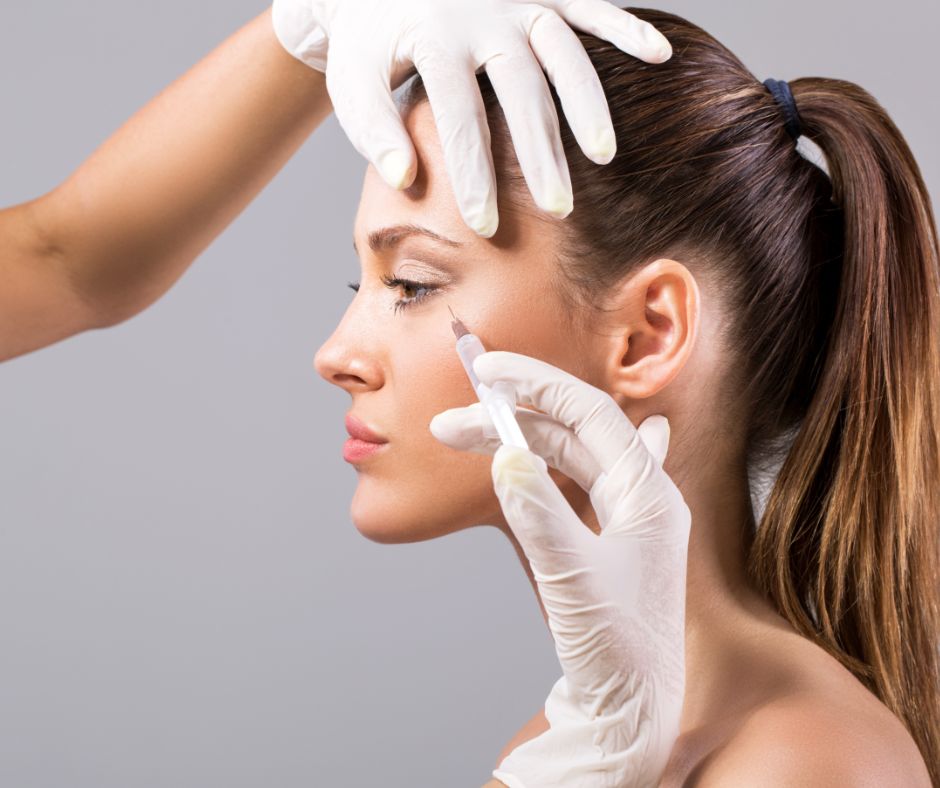
Botulinum toxin – reduction of expression lines
Botulinum toxin It restricts the transmission of nerve impulses to specific muscles. As a result, their activity is temporarily reduced, and the wrinkles caused by muscle contraction become less visible.
This method is used, amongst other things, to reduce crow’s feet. It can be particularly helpful when the lines mainly appear when smiling or squinting.
The effect is not permanent. Muscle activity gradually returns, which is why the results last for a limited time. Botulinum toxin also does not rebuild collagen or directly eliminate skin laxity.
Eye area requires a precise anatomical assessment. Incorrect administration of the product may lead to adverse effects, including an asymmetrical smile or temporary drooping of the eyelid.
Laser therapy – skin smoothing and stimulation of skin regeneration
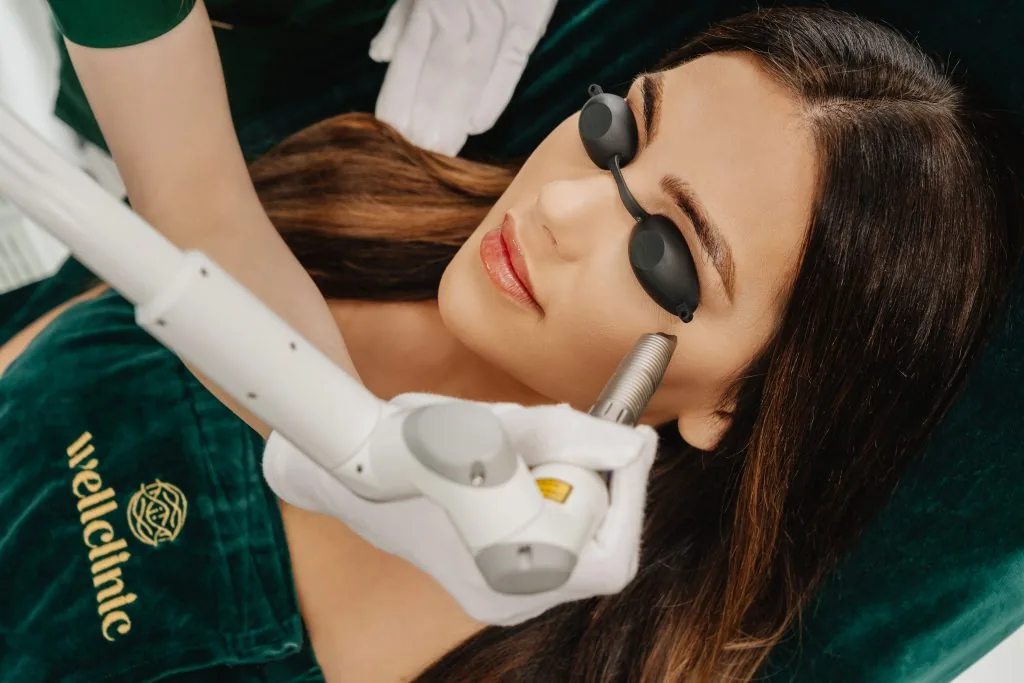
Laser therapy It uses light energy to exert a controlled effect on tissues. Depending on the type of device and the protocol used, it can promote skin renewal, improve skin texture and stimulate processes associated with collagen remodelling.
This is a treatment worth considering for fine lines, signs of photoageing and a deterioration in the condition of the skin around the eyes.
However, not every laser works in the same way. Ablative and non-ablative technologies They differ in terms of their mechanism of action, depth of penetration and recovery time. It is therefore essential to assess the skin and tailor the parameters to the specific problem before choosing a treatment.
Radiofrequency – improving skin firmness around the eyes
Radiofrequency It utilises electromagnetic wave energy, which results in the controlled heating of tissues. Carefully selected parameters can support collagen remodelling processes and improve skin firmness.
This method may be considered in cases of loss of firmness, fine lines and signs of sagging. Its effectiveness depends on the type of device, the depth of treatment and the protocol used.
However, radiofrequency is not the answer to every problem affecting the eye area. It cannot replace surgical correction of significant excess skin or fat hernias.
Skincare and retinoids – daily support for your skin
Cosmetics won’t remove deep, entrenched crow’s feet, but they can improve the condition of the skin and reduce the appearance of fine lines.
When it comes to skincare, it is worth bearing in mind:
- Sunscreen with SPF 30–50 - they help to reduce photoageing and damage caused by UV radiation.
- Moisturisers - they support the hydrolipid barrier and reduce the appearance of lines caused by dryness.
- Retinoids - they can support skin renewal and improve its structure, but care must be taken when selecting products for use around the eyes.
- Antioxidants - help to reduce the effects of oxidative stress.
The delicate skin around the eyes is easily irritated. Therefore, potent active ingredients should be introduced gradually and used in accordance with the manufacturer’s or a specialist’s instructions.
How can you smooth out crow’s feet without Botox?
Not everyone wants to restrict the activity of their facial muscles. Some patients are looking for treatments that focus primarily on improving the quality, firmness and elasticity of the skin.
In such situations, you might consider a suitably chosen laser therapy, radiofrequency or ultrasound-based technologies. Their aim is to act on the tissues and support remodelling processes, rather than to temporarily weaken muscle function.
It is worth bearing one thing in mind, however: if Crow’s feet are mainly caused by frequent facial expressions, simply improving skin firmness may not produce the desired result. Conversely, in the case of established superficial wrinkles, simply reducing muscle activity may also prove insufficient.
The best results depend on correctly identifying the problem, not on the popularity of a particular technology.
Laser blepharoplasty
Wrinkles at the outer corners of the eyes They are often not the only change that affects the appearance of the eyes. Over time, the skin of the eyelids may also become slack, the eyebrows may droop, the lower eyelid may lose its firmness, or visible hollows may appear under the eyes.
That is why Wellclinic offers a comprehensive approach to rejuvenating the eye area, comprising a protocol known as laser blepharoplasty.
This is a non-surgical procedure that utilises laser technology, radiofrequency and ultrasound. The scope of the treatment is tailored to the condition of the skin, the anatomy of the eye area and the patient’s expectations.
Fotona Dynamis SP Pro – laser treatment for the eye area
One of the components of the protocol is a laser platform Fotona Dynamis SP Pro. Depending on the procedure used, laser energy can help improve the firmness and quality of the skin around the eyes.
The aims of the therapy include, amongst other things:
- improvement in the firmness of the skin of the upper and lower eyelids,
- reduction in the appearance of fine lines,
- improvement in the appearance of the skin at the outer corners of the eyes,
- to achieve a more rested-looking appearance.
The results depend on the initial condition of the tissues and the individual’s response. Laser rejuvenation does not involve the surgical removal of excess skin; therefore, it should not be regarded as a substitute for surgery in every case.
OcuLume and OcuLume+ – two treatments for rejuvenating the eye area
Wellclinic’s range includes protocols OcuLume i OcuLume+, which allow the treatment programme to be tailored to the patient’s needs.
OcuLume includes laser lift of the upper and lower eyelids. It is designed to improve skin firmness and rejuvenate the eye area.
OcuLume+ It broadens the scope of treatment to include procedures aimed at improving the appearance of the skin under the eyes and reducing the visibility of dark circles. The choice of procedure depends on the cause of the unsightly appearance in this area.
It is worth bearing in mind that dark circles, tear troughs and bags under the eyes are not the same problem. They may result from different anatomical changes and therefore require an individual assessment.
Radiofrequency and ultrasound – additional support for skin remodelling
At Wellclinic, it is also possible to use monopolar radiofrequency and focused ultrasound. These technologies affect tissues in different ways, and combining them can form part of a personalised treatment plan.
Radiofrequency uses the energy of electromagnetic waves, whereas ultrasound They enable energy to be directed to specific depths. The aim is to support processes related to tissue remodelling and improving skin firmness.
This approach differs from the traditional method of filling the tear troughs with hyaluronic acid. Fillers restore volume, whilst stimulating technologies act on the tissues and processes occurring within the skin. These methods are not interchangeable, and the choice depends on the clinical indications.
What results can you expect from an eye area rejuvenation treatment?
Depending on the protocol used and the initial condition of the skin, the treatment may help to:
- reducing the appearance of fine lines, including crow’s feet,
- improving the firmness and elasticity of the eyelid skin,
- improving the appearance of the skin under the eyes,
- to achieve a more rested look in the eyes,
- a reduction in the appearance of certain signs of sagging.
This does not mean that every a change around the eyes may be corrected in the same way. Bags under the eyes may be caused, amongst other things, by fat hernias, oedema or skin laxity. Malar bags These, too, have complex underlying causes and require a separate assessment.
It is therefore important to determine, before starting treatment, which structures are responsible for the appearance of the eye area and what results can realistically be achieved.

Laser blepharoplasty versus surgical blepharoplasty – key differences
The term „blepharoplasty” is most commonly associated with surgical correction of the eyelids. However, it is worth distinguishing between surgical procedures and non-surgical rejuvenation methods that utilise energy from medical devices.
Surgical blepharoplasty involves surgical correction of the eyelids. Depending on the indications, the doctor may remove excess skin, reposition tissue or redistribute fat tissue as appropriate. The procedure is used, amongst other things, to treat pronounced eyelid laxity and fat hernias.
Non-surgical laser rejuvenation It uses laser energy to treat the skin and underlying tissues. It may be considered for milder signs of ageing, fine lines and loss of firmness.
Both methods have different indications, possibilities and limitations. A non-surgical procedure does not automatically mean there is no risk or recovery period. Possible reactions depend on the technology used and the patient’s individual sensitivity. If drooping of the eyelid restricts your field of vision, has occurred suddenly or is accompanied by visual disturbances, you should consult a doctor.
How many treatments are needed to reduce crow’s feet?
The number of treatments depends on the type of wrinkles, the condition of the skin, the technology used and the expected result. Wellclinic’s eye area rejuvenation protocols usually involve between one and three treatments, and any further adjustments may be considered after around a month. The exact plan is determined on an individual basis.
The procedure itself usually takes around 30–45 minutes, but this does not mean that the full effect is immediate. The processes involved in collagen remodelling take place gradually, which is why the result is assessed taking into account the time needed for the tissues to respond.
How can you prevent crow’s feet from forming?
The natural ageing of the skin cannot be stopped. However, it is possible to minimise the impact of factors that accelerate the loss of its elasticity.
Use sun protection. A sunscreen with SPF 30–50 helps to reduce photoageing. It is also worth remembering to protect the area around the eyes and to wear UV-protective sunglasses regularly.
Make sure you stay hydrated. Products tailored to the skin’s needs help maintain a healthy protective barrier and reduce the appearance of fine lines caused by dryness.
Gently remove your make-up. Rubbing and stretching the skin around the eyes vigorously can cause irritation. Make-up should be removed without applying excessive pressure.
Make sure you get enough rest. Getting enough sleep and leading a healthy lifestyle have an impact on your overall physical condition and, indirectly, on the appearance of your skin.
Cut down on smoking. Tobacco smoke increases oxidative stress and accelerates adverse changes in the skin’s structure.
Preventative care will not remove wrinkles that have already set in, but it can help slow down the appearance of further signs of ageing.
Crow’s feet – choose the method that suits your skin
Not every wrinkle around the eyes requires the same treatment. Sometimes the main problem is excessive facial expressions; at other times, it is a loss of firmness, photoageing or changes affecting the entire eye socket area.
That is why effective anti-ageing treatment should begin with an assessment of the skin and identification of the causes of wrinkles. Only then can a decision be made as to whether mesotherapy, botulinum toxin, laser therapy, or a combination of several methods would be the best option.
At Wellclinic, a consultation allows us to assess the condition of the skin around the eyes and determine whether the patient is a suitable candidate for non-surgical eye rejuvenation. Would you like to reduce the appearance of crow’s feet and improve the look of the area around your eyes? Book a consultation at Wellclinic. Find out which method is right for your skin and what results you can realistically expect.
Sources:
1. Frontiers in Medicine: "Periocular rejuvenation: current concepts and evidence-based management", 2026.
https://pmc.ncbi.nlm.nih.gov/articles/PMC13697260/
2. Journal of Cosmetic Dermatology: "Treatment of periorbital ageing with negative-pressure fractional microneedle radiofrequency: A self-controlled clinical trial", 2023.
https://pubmed.ncbi.nlm.nih.gov/38013586/
3. Dermatology Clinics: "Clinical Assessment, Diagnosis and Management of Infraorbital Wrinkles and Pigmentation", 2023.
https://pubmed.ncbi.nlm.nih.gov/37977688/
4. Journal of Clinical Medicine: "The Evaluation of the Efficacy and Safety of a Radiofrequency Hydro-Injector Device for the Skin around the Eyes", 2021.
https://pmc.ncbi.nlm.nih.gov/articles/PMC8230740/
5. American Academy of Ophthalmology: "Botulinum Toxin (Botox) for Facial Wrinkles", 2026.
https://www.aao.org/eye-health/treatments/what-is-botox-facial-wrinkles
6. American Academy of Dermatology: "How dermatologists treat sun-damaged skin".
https://www.aad.org/public/everyday-care/sun-protection/sun-damage-skin/wrinkles-sun-damage-can-be-treated
Book a consultation





 +48 600 100 177