
 Katarzyna Pawłowska

 23.11.2026
Discolouration, acne scars, uneven skin texture and the first signs of wrinkles. When these changes become increasingly noticeable, simple exfoliation may not deliver the desired results. In such cases, it is worth considering methods that stimulate the skin’s renewal processes.
One of them is TCA chemical peel, utilising the properties of trichloroacetic acid. This substance triggers a controlled chemical reaction in the skin, initiating repair processes. Depending on its concentration, formulation and method of application, it can affect different levels of tissue.
Wellclinic offers the TCA procedure, referred to as TCA REGEN PEEL. Its aim is to improve the condition of the skin, even out its texture and support regenerative processes. The range of possible results depends on the initial condition of the skin and individual suitability.
A voucher for you
Wellclinic gift vouchers from just 1,000 zł – treat yourself or your loved ones to health and beauty. Order by the end of November!
Collect your voucherTable of contents
TCA acid – why does it work more deeply than a standard exfoliation treatment?
Trichloroacetic acid (TCA) is one of the substances used in dermatology chemical peels. It works by coagulation, which is the controlled denaturation of proteins in tissues.
Once the product has been applied, a chemical reaction takes place which triggers repair processes. In the subsequent stages, the skin regenerates and its appearance may improve. The changes may affect the surface of the epidermis, the skin’s tone and its texture.
Depth of action TCA peel It depends primarily on the acid concentration, the type of preparation, the number of layers applied and the technique used. Therefore, TCA peels can act superficially or reach deeper layers of the skin.
A stronger treatment does not always mean a better result. When selecting the parameters, it is important to take into account the nature of the problem, skin type, susceptibility to discolouration and the skin’s previous reactions to exfoliating treatments.
TCA REGEN PEEL – improving skin quality without aggressive exfoliation
Chemical peelings They differ not only in the type of acid used, but also in the composition of the formulation and the way it works. This affects the intensity of the skin’s reaction, the visibility of exfoliation and the recovery time.
TCA REGEN PEEL This is a treatment designed to improve the quality of the skin and support its regeneration. It utilises the properties of TCA in a formula developed to improve the condition of the skin.
The skin’s reaction following such a procedure may differ from that seen after a traditional, deeper TCA peel. However, the absence of intense exfoliation does not mean that the product does not cause a reaction in the skin. The nature of this reaction depends on the specific formulation and the protocol used.
The aim of the treatment is to improve the appearance, texture and tone of the skin. It may be considered for uneven skin texture, fine lines, sun-induced discolouration and scars left by acne lesions.
What skin problems can be improved with a TCA peel?
TCA acid peels They are used to treat specific dermatological and aesthetic conditions. Their potential applications depend on the type of product, the depth of action and the condition of the skin.
Discolouration and uneven skin tone
Discolouration can be caused by UV radiation, inflammation, hormonal changes or the ageing process. TCA chemical peeling It may help to promote skin renewal and improve skin tone. However, not every case of discolouration is a suitable indication for this procedure. Particular caution is required in cases of a tendency towards post-inflammatory hyperpigmentation, as an overly intense inflammatory reaction may exacerbate the problem.
Acne scars and uneven skin texture
Acne scars are not always limited to changes in skin colour. They can also include indentations and unevenness resulting from damage to the skin’s structure. TCA for acne scars It is used in certain treatments to improve their appearance, but its effectiveness depends on the type and depth of the scars. Shallow irregularities require a different approach to deep, permanent defects.
The first wrinkles and loss of firmness
As we age, the activity of the processes responsible for maintaining the skin’s normal structure decreases. The quantity and organisation of collagen fibres change, causing the skin to gradually lose its elasticity and wrinkles to become more visible. A carefully selected TCA peel It may help to promote skin renewal and improve the skin’s surface. However, it is not a substitute for treatments designed to address advanced sagging or loss of tissue volume.
Oily, dull and lacklustre skin
Excessive sebum production and the build-up of dead skin cells can make the skin appear uneven and lacklustre. In certain cases chemical peeling It helps to improve the skin’s texture and tone. If there are active inflammatory lesions or irritation, the choice of treatment requires prior assessment by a specialist.
What does a TCA peel involve at Wellclinic?
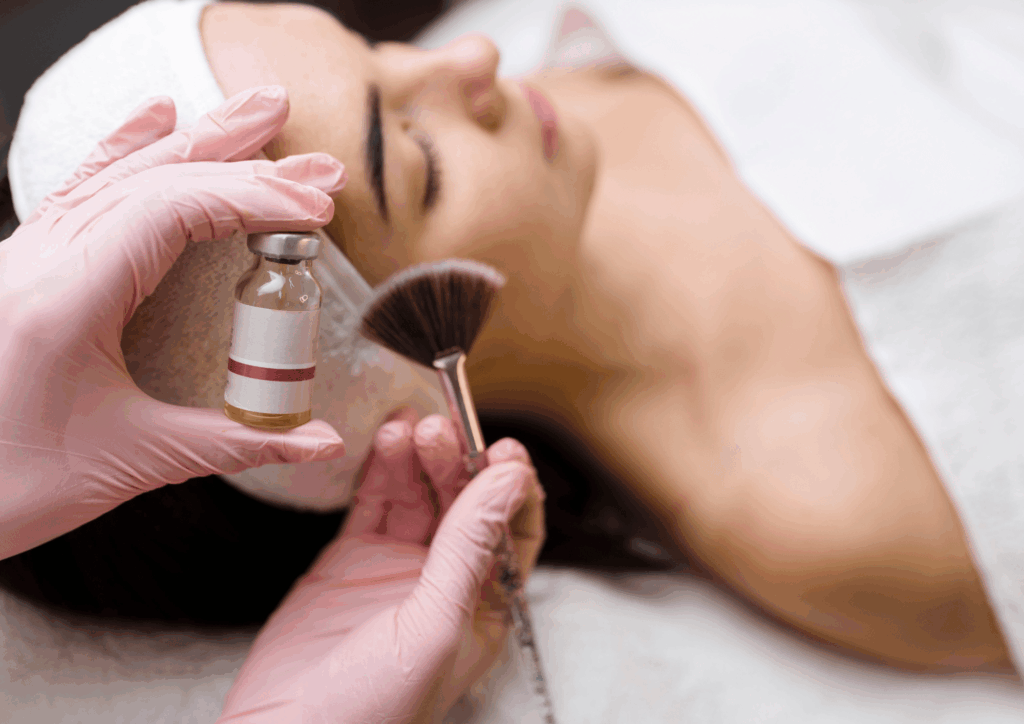
Before starting TCA peel A specialist assesses the condition of the skin and identifies the problem to be treated. They take into account, amongst other things, the skin’s sensitivity, phototype, the presence of discolouration and the patient’s current skincare routine.
Once the skin has been prepared, a suitably selected product is applied. The procedure itself takes approximately 15-20 minutes. The whole appointment may take longer due to the consultation and preparation.
The number of sessions depends on the skin’s needs. The information on the procedure usually specifies a course comprising 1–3 matches, but the final plan is drawn up on a case-by-case basis. Not every problem requires the same number of sessions or the same intervals between them.
You’ll have to wait to see the results. Immediately after application, the skin may be red or feel tight, and its appearance changes as it regenerates.
What does the skin look like after a TCA peel, and how long does it take to recover?
Skin reaction following TCA acid peel depends on the depth of the product’s action and the individual response of the tissues. Redness, a feeling of tightness, dryness, a slight stinging sensation or flaking may occur. In some people, the symptoms are mild, whilst in others they are more noticeable.
Following classic, deeper TCA peels, exfoliation may be pronounced and involve a longer recovery period. With other formulations, the post-treatment course may be milder. However, this does not mean that every procedure using TCA does not require a recovery period.
Skin regeneration time This depends on the product used, the parameters of the procedure and individual factors. During this period, you should not remove the flaking skin yourself. You must also follow the recommendations regarding skincare and sun protection.
How should you look after your skin after a TCA peel?
After TCA chemical peel Your skin may be more sensitive, and its protective barrier may be temporarily weakened. Therefore, for the first few days, your skincare routine should be gentle and limited to products that do not cause further irritation.
Following the procedure, the main recommendations are:
- gentle skin cleansing without vigorous rubbing;
- the use of moisturising products and those that help restore the skin’s protective barrier;
- avoiding mechanical and chemical exfoliants;
- temporary discontinuation of retinoids and other irritating ingredients – as recommended by a specialist;
- regular use SPF 50 sun cream;
- limiting exposure to the sun and avoiding sunbathing.
You should not speed up the exfoliation process by picking at the skin or applying strong cosmetic products yourself. Doing so may worsen irritation and increase the risk of post-inflammatory hyperpigmentation.
What are the contraindications for TCA peels?
TCA chemical peeling It is not suitable for everyone. Before undergoing the treatment, you need to assess the condition of your skin, your general state of health, any medication you are taking and any previous reactions to similar procedures.
Situations requiring the procedure to be abandoned or postponed may include:
- active herpes or other infections in the treatment area;
- skin damage, abrasions and active inflammation;
- a fresh tan and intense exposure to UV radiation;
- a tendency towards abnormal scarring;
- certain skin conditions;
- the use of selected dermatological medicines and treatments;
- hypersensitivity to any of the ingredients in the product.
Particular caution is required for people who are prone to post-inflammatory hyperpigmentation and patients with higher skin phototypes. A peel that is too deep or incorrectly selected may lead to prolonged redness, pigmentation disorders and, in rare cases, scarring.
The final decision on whether the procedure can be carried out is made by a specialist after assessing the skin and taking any individual contraindications into account.
When can you see the results of a TCA peel?
The effects of TCA peels They do not appear in everyone at the same time. Immediately after the procedure, the skin may be red, tight or irritated. It is best to assess its appearance once the initial reaction has subsided and the most critical stage of recovery is complete.
Over the coming days and weeks, you may notice that the skin’s surface becomes smoother, its tone improves and its appearance becomes more even. If the aim of the treatment is to improve the skin’s structure, the remodelling processes may take longer than the exfoliation itself.
The final result is influenced by the type of problem, the extent of the changes, the formulation used, the number of sessions and the skin’s individual ability to regenerate. It cannot therefore be assumed that a single treatment will produce the same result for everyone.
Can a TCA peel be carried out in the summer?
Feasibility TCA peels in the summer It depends on the type of treatment, the depth of its action and the individual risk of discolouration.
Following TCA peels, the skin may be more susceptible to UV radiation. Exposure to the sun during the recovery period increases the risk of pigmentation disorders; therefore, it is essential to consistently sun protection.
Not all procedures involving TCA have the same seasonal restrictions. The date of the treatment should be agreed during the consultation, taking into account planned sun exposure, lifestyle and the patient’s ability to follow post-treatment advice.
TCA chemical peels versus other peels – how do they differ?
Chemical peelings They differ in terms of the type of substance used, their mechanism of action and the depth to which they penetrate the skin. The most commonly used products include those containing AHA, BHA and TCA acids.
AHA acids, such as glycolic and lactic acids, are primarily used to improve the skin’s surface, tone and texture. Salicylic acid, which belongs to the BHA group, has lipophilic properties and is therefore used, amongst other things, in the care of oily skin and skin prone to blocked pores.
TCA acid It works differently – it causes protein coagulation, and its depth of action may be greater than that of many superficial peels. This requires the correct selection of parameters and experience on the part of the person performing the procedure.
Selection chemical peeling It depends on the skin condition, the desired result, tolerance to exfoliation and any individual contraindications. A product suitable for uneven skin tone may not be the best solution for acne scars.
Smooth skin isn’t just the result of exfoliation
Discolouration, acne scars and uneven skin texture have various causes. Therefore, effective treatment should take into account the type of lesions, their depth and the condition of the skin.
TCA chemical peeling It may be one way of improving its appearance and texture. However, it is not a one-size-fits-all solution. Appropriate assessment, selection of the right product and adherence to post-treatment instructions are crucial for safety and the potential outcome.
If you notice discolouration, uneven skin texture, acne scars or the first signs of loss of firmness, Discuss your treatment options with a Wellclinic specialist. During your visit, we will assess your skin’s needs and select a treatment plan suited to its condition.
Book a consultation at Wellclinic in Warsaw, Gdańsk or Kraków and find out which skin-improvement treatments would be suitable for you.
Sources:
1. PubMed Central (2021) - Trichloroacetic Acid Peeling for the Treatment of Photoageing: A Systematic Review.
https://pmc.ncbi.nlm.nih.gov/articles/PMC8423570/
2. Bookshelf (2023) - Chemical Peels for Skin Resurfacing.
https://www.ncbi.nlm.nih.gov/books/NBK547752/
3. JAMA Facial Plastic Surgery (2017) - Universal Trichloroacetic Acid Peel Technique for Light and Dark Skin.
https://pmc.ncbi.nlm.nih.gov/articles/PMC5815131/
4. Plastic and Reconstructive Surgery – Global Open (2019) - Jessner’s Solution with Trichloroacetic Acid Chemical Peel: Optimising Outcomes and Safety.
https://pmc.ncbi.nlm.nih.gov/articles/PMC6571353/
5. Journal of Cosmetic Dermatology (2023) - Treatment of Mild-to-Moderate Facial Skin Ageing Using a Combination Peel Containing 6 per cent Trichloroacetic Acid and 12 per cent Lactic Acid.
https://pubmed.ncbi.nlm.nih.gov/37227430/
6. Cochrane Database of Systematic Reviews - Topical Treatments and Skin-Resurfacing Techniques for Ageing Skin.
https://doi.org/10.1002/14651858.CD014391
Book a consultation






 +48 600 100 177