
 Katarzyna Pawłowska
 06.10.2026
 Table of contents
Brown patches on your face can appear sooner than you think. Sometimes, just a few days of intense sun exposure are enough for you to notice, upon returning from holiday, an uneven skin tone, darker patches on your cheeks or more pronounced changes on your forehead and temples.
At first, you might mistake them for a tan. The problem is that a tan fades over time, whereas post-sun discolouration they can remain on the skin for much longer.
Their formation is primarily linked to excessive melanin production caused by UV radiation. As we age, the skin regenerates more slowly, which is why discolouration can become increasingly visible and more difficult to reduce.
At Wellclinic reduction of post-sun discolouration takes place as part of therapy Quantum Face – a comprehensive programme that addresses skin tone, texture, firmness and signs of ageing all at once.
Sun-induced discolouration – what causes it?
The following is responsible for the colour of our skin melanin. Its production is increasing, partly as a result of ultraviolet radiation. This is the body’s natural defence mechanism.
The problem arises when melanin is produced in excess or unevenly.
In places like these, there are darker patches and discolouration on the skin.
The face is particularly vulnerable, as it remains exposed to the elements all year round UV radiation. It is not just about intense sunbathing. Daily exposure to the sun over many years also plays a significant role.
Therefore post-sun discolouration They may appear either after the summer holidays or develop gradually over the years.
Their development is also influenced by individual predispositions, skin phototype, hormonal balance and previous damage caused by .
What do sun-induced discolouration marks look like?
Facial post-sun discolouration They usually take the form of flat, brown or light-brown patches of varying sizes.
They may appear individually or form larger areas of uneven pigmentation. They most commonly occur on the cheeks, forehead, nose, temples and above the upper lip.
Their intensity may vary depending on exposure to the sun. They usually become more visible in summer, whilst in winter they may fade slightly.
It is worth bearing in mind, however, that not every brown patch on the skin is sun-induced discolouration. Others may look similar pigmentation disorders, which is why a proper assessment of the skin is required before starting treatment.
Sun-induced discolouration and photoageing of the skin
The sun is not solely responsible for the formation of sunspots. Over many years, exposure to UV radiation may also lead to photoageing of the skin. Over time, wrinkles, loss of firmness, an uneven texture, enlarged pores and more noticeable discolouration begin to appear.
Therefore, a person with a large number of pigmented lesions may also notice that their skin has become thinner, drier and less elastic.
This is important when planning treatment.
Simply lightening dark spots is not always enough if the skin also needs to improve its firmness and texture.
How do I get rid of post-sun discolouration?
Removal of sun-induced discolouration requires the treatment to be tailored to the type of skin condition and the condition of the skin.
In the case of superficial changes, appropriately selected skincare and cosmetic treatments may be used. For more persistent discolouration, the following are used: laser technologies and other methods used in aesthetic medicine.
What matters is depth of discolouration, their location, skin phototype, previous exposure to the sun and the presence of other signs of photoageing.
At Wellclinic reduction of discolouration is carried out as part of a comprehensive treatment programme Quantum Face, which means that other skin problems can also be addressed during a single treatment session.
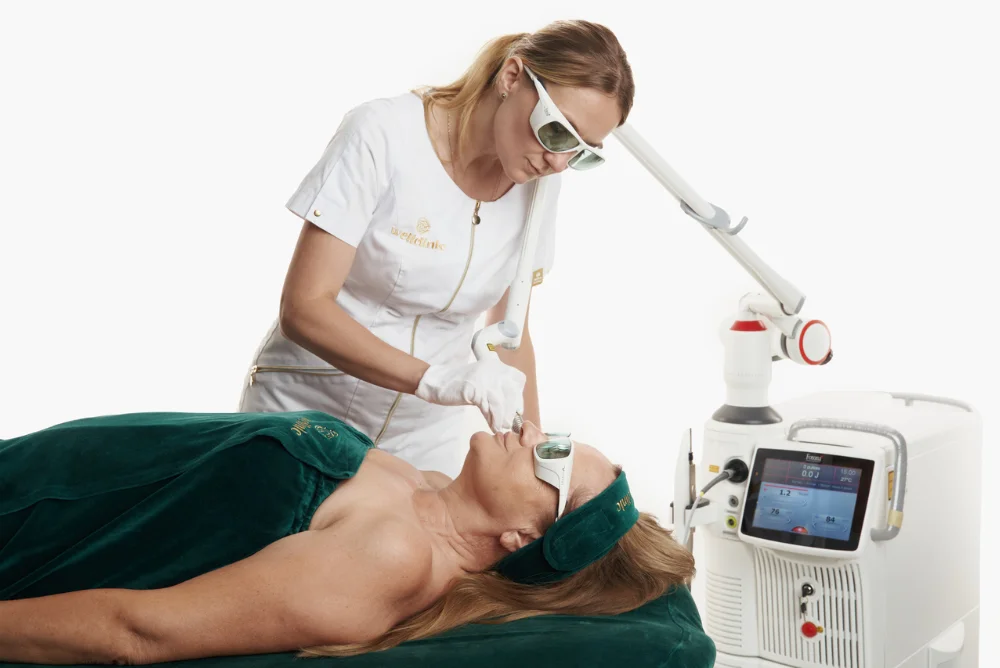
Quantum Face – treatment for pigmentation and signs of ageing
Quantum Face This is a proprietary, five-stage facial rejuvenation programme. The treatment has been designed to address various aspects of skin ageing – from its hydration and texture, through discolourations and structure, right up to the eye area, the tone of the facial muscles and the contours of the face.
For patients with discolouration, the stage is of particular importance Quantum Beam, but the entire course of treatment is tailored to the individual.
Quantum Face includes:
Pre-Activation – preparing and moisturising the skin.
Quantum Beam – advanced laser therapy aimed, amongst other things, at improving the skin’s tone and texture.
Oculum – revitalisation of the eye area.
Neuro Balance – exercises to tone the facial muscles.
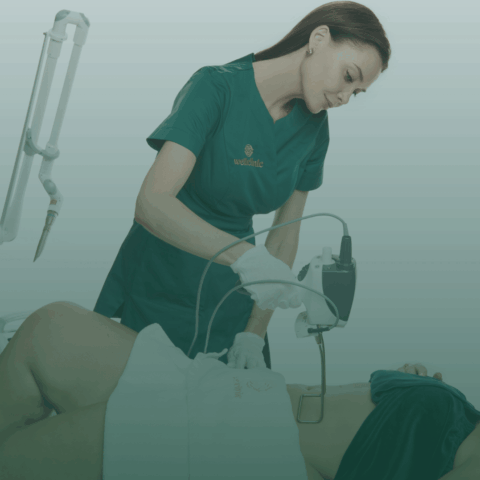
Contour Lift – improving the facial contour and reducing a double chin.
Thanks to this design post-sun discolouration are not treated as a separate problem, but as one aspect of the skin’s appearance that can be addressed as part of a broader anti-ageing treatment programme.
Pre-Activation – preparing the skin for treatment
The skin should be properly prepared before undergoing more advanced procedures.
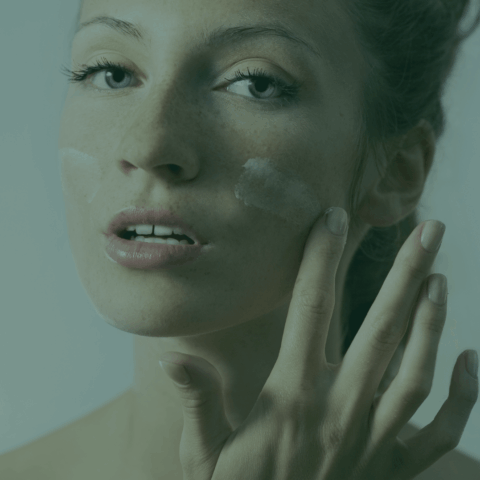
As part of this stage Pre-Activation A deeply moisturising mesotherapy treatment is carried out using a preparation containing calcium hydroxyapatite.
The patient also receives personalised home care.
The aim is to improve the skin’s moisture levels and prepare it for the next stages of treatment.
This is particularly important in the case of dry, dehydrated skin and skin weakened by many years of exposure to UV radiation.
Quantum Beam – reduction of discolouration and improvement in skin quality
Quantum Beam This is the stage at which we focus particularly on skin regeneration and the reduction of visible pigmentation changes.
It is used advanced laser therapy, which allows for precise treatment of the skin. The treatment supports regenerative processes, improves the skin’s structure and may help to reduce discolouration.
The treatment also involves the use of a biotechnological preparation based on exosomes.
The aim is not only to improve the complexion, but also to stimulate the skin to regenerate, improve its firmness and support collagen production.
This means that, during therapy, it is possible to work simultaneously on discolouration, uneven skin texture, loss of firmness and signs of photoageing.
Oculum – revitalisation of the eye area
The area around the eyes often gives away one’s age more quickly than other parts of the face.
The skin in this area is thin and delicate. Over time, wrinkles appear, the skin loses its firmness, and signs of tiredness become more noticeable.
Stage Oculum focuses on improving the appearance of this area.
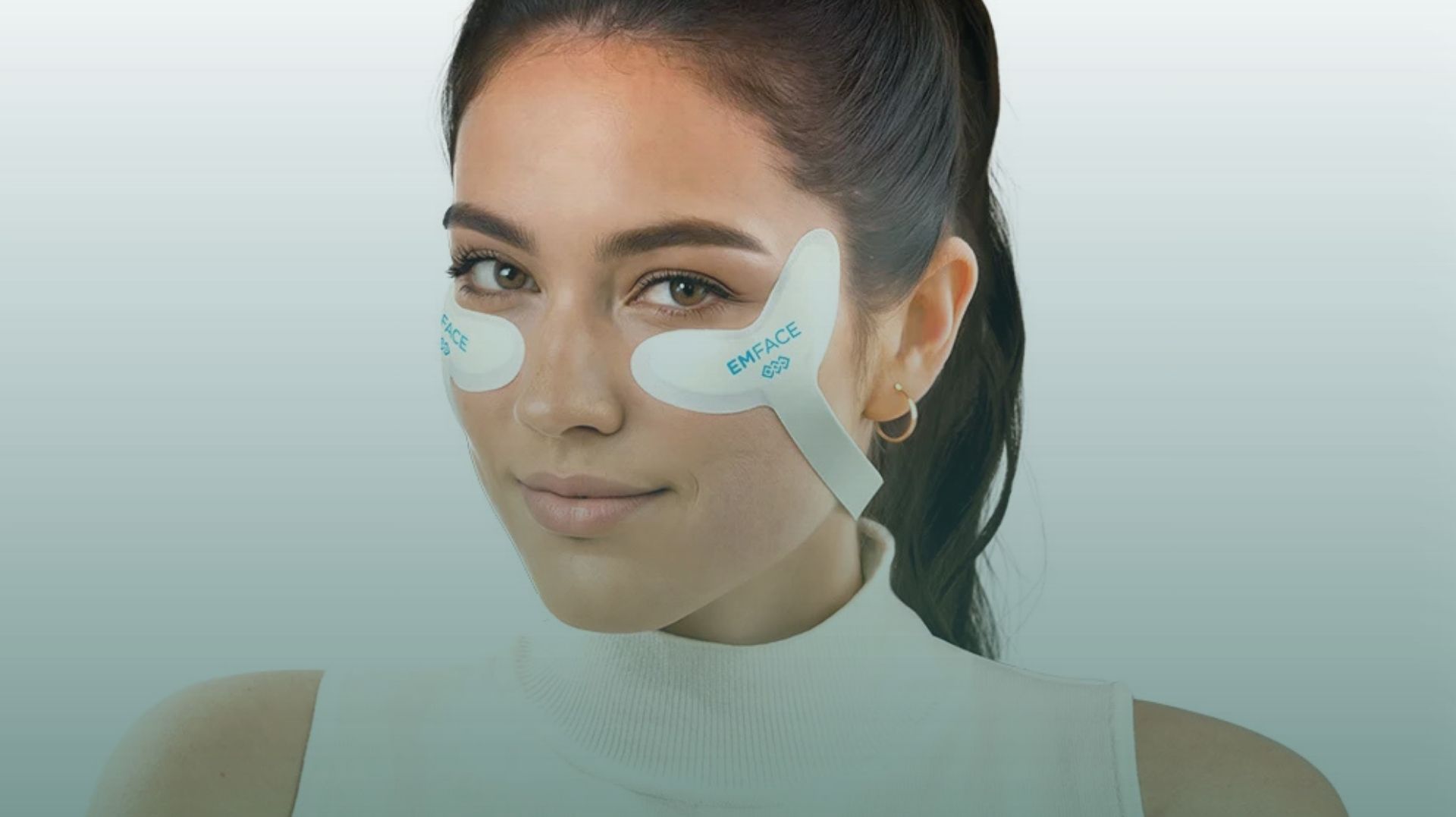
Advanced laser technologies are used to promote skin regeneration and improve skin firmness.
The aim is a gentle lift of the upper eyelid, opening of the eye and a brow lift without any mechanical interference with the tissues.
Neuro Balance – reduction of excessive facial tension
Muscle activity also affects the appearance of the face. Excessive tension in certain areas can deepen wrinkles and make the face look more tired.
Neuro Balance It focuses on improving muscle tone balance and reducing excessive tension in specific areas. This can make the face look calmer and more rested, whilst maintaining natural facial expressions.
Contour Lift – facial contouring
As we age, the proportions of the face change. The skin loses its firmness, tissues shift, and the jawline becomes less defined. A double chin may also develop.
Stage Contour Lift It focuses on improving the contour of the lower part of the face and sculpting the facial oval. When combined with the earlier stages, it takes into account not only the surface of the skin, but also its firmness and the proportions of the face.
Diagnosis prior to the start of treatment
Effective reduction of discolouration It starts with a proper assessment of the skin. As part of the preparation for Quantum Face, the following is carried out: facial analysis. Among other things, the assessment covers the condition of the epidermis and dermis, discolouration, wrinkles, pores, skin texture, moisture levels and signs of damage caused by UV radiation.
This makes it possible to identify the skin’s needs more accurately and to plan the subsequent stages of treatment accordingly. This is particularly important in the case of pigmentary changes, because whilst they may look similar, the cause is not always the same.
Can sun-induced discolouration be completely removed?
It depends on the type and depth of the lesions, as well as the individual characteristics of the skin. A suitably chosen treatment can significantly reduce the appearance of discolouration and improve skin tone evenness. However, it is not possible to guarantee the complete removal of every lesion, nor that the discolouration will not reappear.
Your skin will continue to react to UV radiation. Therefore, once treatment has finished, it remains very important to SPF 50 sun protection, limiting prolonged exposure to the sun and following the recommended skincare routine.
How can you prevent new patches of discolouration from forming?
The most important part of prevention is daily protection against UV radiation.
Sun cream with a high SPF It should not only be used during the holidays. Your skin is also exposed to UV radiation during everyday outdoor activities.
For skin prone to discolouration, consistency is particularly important. SPF 50, limiting exposure to strong sunlight and using a suitable skincare routine help to reduce the risk of further lesions developing.
After laser treatments You should also follow the advice on sun exposure provided by a specialist.
Sun-induced discolouration – when should treatment begin?
The sooner you notice any worrying changes in skin colour, the easier it will be to plan the appropriate course of action.
However, this does not mean that established discolouration cannot be treated.
In the case of visible blemishes, uneven skin tone or other pigmentation changes, it is advisable to start with a consultation and a thorough assessment of the skin. Only on this basis can it be determined which methods will be appropriate.
At Wellclinic removal of sun-induced discolouration can be carried out as part of therapy Quantum Face, which also involves improving the skin’s quality, firmness, texture and the overall appearance of the face.
Don’t let the sun stay on your face for too long
After-sun discolouration They are a common result of UV exposure, but you don’t have to accept them as a permanent feature of your appearance.
A properly planned course of treatment enables you to work on uneven skin tone whilst also improving other signs of photoageing.
As part of Quantum Face We combine the individual stages of the treatment to address the skin’s actual needs – from preparing and moisturising it, through reduction of discolouration, right through to improving skin firmness, the eye area and facial contours.
If, after the summer, you notice sun-induced discolouration on the face, uneven skin tone or increasingly visible signs of photoageing, Book a consultation at Wellclinic. During your appointment, we will assess the condition of your skin and determine which treatment options are suitable for you.



 +48 600 100 177