
 Katarzyna Pawłowska

 19.11.2026
You can lose a few, a dozen or so, or even several dozen kilograms, and still not be happy with what you see in the mirror. Your figure becomes slimmer, but your face loses its fullness. Your cheeks look sunken, the area around your eyes becomes more prominent, and your features appear sharper. This is exactly how it manifests itself sunken face, i.e. a sunken appearance of the face resulting from a loss of tissue volume.
The issue is coming up more and more often in discussions about slimming, including those supported by medication. Significant weight loss can alter not only waist circumference or body shape, but also facial proportions. Why does this happen? Is it possible to minimise these changes, and what can be done if the face has lost its former fullness?
Table of contents
Sunken face – what does the ‘sunken face’ effect mean?
Sunken face This term refers to changes in the appearance of the face that occur when the volume of subcutaneous fat decreases. They are most commonly visible around the cheeks, temples and under the eyes. The face may appear more tired, and natural hollows and furrows become more pronounced.
A voucher for you
Wellclinic gift vouchers from just 1,000 zł – treat yourself or your loved ones to health and beauty. Order by the end of November!
Collect your voucherFacial adipose tissue It is not distributed evenly. It forms several compartments which give it its shape and provide adequate support for the skin. As their volume decreases, the proportions of the individual areas change. The cheeks lose their fullness, the temple area may appear sunken, and the nasolabial folds become more pronounced.
This does not always mean that the skin has lost its firmness. Sometimes the main problem is actually a loss of volume, rather than an excess of loose skin. This is an important distinction, as the two situations require different approaches.
Why does the face lose volume after losing weight?
During weight reduction The body uses up its stored energy reserves, including body fat. This process also affects the face. It is impossible to pinpoint the exact area from which the body will lose fat first. This is influenced by factors such as genetics, age, the initial amount of body fat and the rate of weight loss.
For some people, the change is slight. For others, even a relatively large loss of body weight can noticeably alter their facial features. This may be particularly noticeable in people who, before starting to lose weight, had little body fat around their cheeks or temples.
Age is also a factor. As the years go by, it naturally decreases amount of collagen i elastins, the structure of the tissues changes, and the subcutaneous fat compartments may lose volume. If these processes are compounded by significant weight loss, the face may appear older and more tired.
Mounjaro and Ozempic and a sunken face – do weight-loss drugs change the appearance of the face?
Along with the popularity of weight-loss aids such as Mounjaro or Ozempic, the question of how they affect facial appearance is being raised more and more often.
Medicines alone do not cause the characteristic „ageing” of the skin. Change in appearance may be primarily linked to weight loss and the accompanying reduction in body fat. If the reduction is significant, the face may also become slimmer, and its previous proportions may change.
The results will not be the same for everyone. Factors such as the amount of weight lost, age, individual facial structure and skin condition all play a part.
If, whilst pharmacological weight loss If you notice any worrying changes, discuss them with your doctor. Do not stop taking the medicine or change the dose yourself.
How can you tell if your face has become gaunt following weight loss?
The ‘sunken face’ effect can affect several areas. The most common ones are:
- Sunken cheeks - the face loses its roundness, and the central part of the cheeks becomes less full.
- More pronounced hollows under the eyes - the area around the lower eyelid may look darker and more tired.
- Sunken temples - A reduction in volume in this area may alter the proportions of the upper face.
- Deep nasolabial folds - A loss of tissue support can make skin folds more noticeable.
- Changes to the shape of the face - the contours may be less defined, and the skin may appear less taut.
Not all of these symptoms need to occur at the same time. Their severity depends on the individual’s facial structure and the extent of volume loss.
Is it possible to prevent a loss of facial volume whilst losing weight?
It is not possible to completely control the areas from which the body will lose fat. However, you can ensure the right conditions are in place to help maintain healthy skin and your general well-being.
Avoid rapid weight loss. It is advisable to discuss the pace of weight loss with a doctor or dietitian, taking into account your state of health and your planned weight change. Losing several kilograms quickly may make changes to your facial appearance more noticeable.
Make sure you get enough protein. It is essential for the body to function properly and to maintain muscle mass. A weight-loss diet should also provide vitamins, minerals and an adequate amount of energy.
Turn on resistance training. Strength training helps to minimise muscle loss whilst losing weight. However, it will not prevent the loss of fat tissue in the face.
Look after your skin. Moisturising, sun protection and skincare products that support the hydrolipid barrier help to keep it in good condition. Ingredients such as hyaluronic acid, ceramides and retinoids can support skincare, but they will not restore lost fat tissue.
How can I improve the appearance of my face after significant weight loss?
If, after losing weight, your face it looks sunken, the course of action should depend on the cause of the changes. A loss of volume requires a different approach to reduced skin firmness, and a combination of both problems requires yet another.
At Wellclinic, the choice of treatment is preceded by an assessment of the skin’s condition, facial proportions and areas requiring improvement. As part of the WellEffect approach, various methods can be considered to support skin quality and firmness.
Tissue stimulators – supporting skin quality
Tissue stimulators They stimulate regenerative processes and can support skin remodelling. Depending on the product used and the indications, they help to improve the skin’s density, elasticity and firmness.
However, they should not be regarded as a direct substitute for lost body fat. Their use depends on whether the main problem is a deterioration in skin quality or a loss of volume.
Microneedle radiofrequency – improving skin firmness and texture
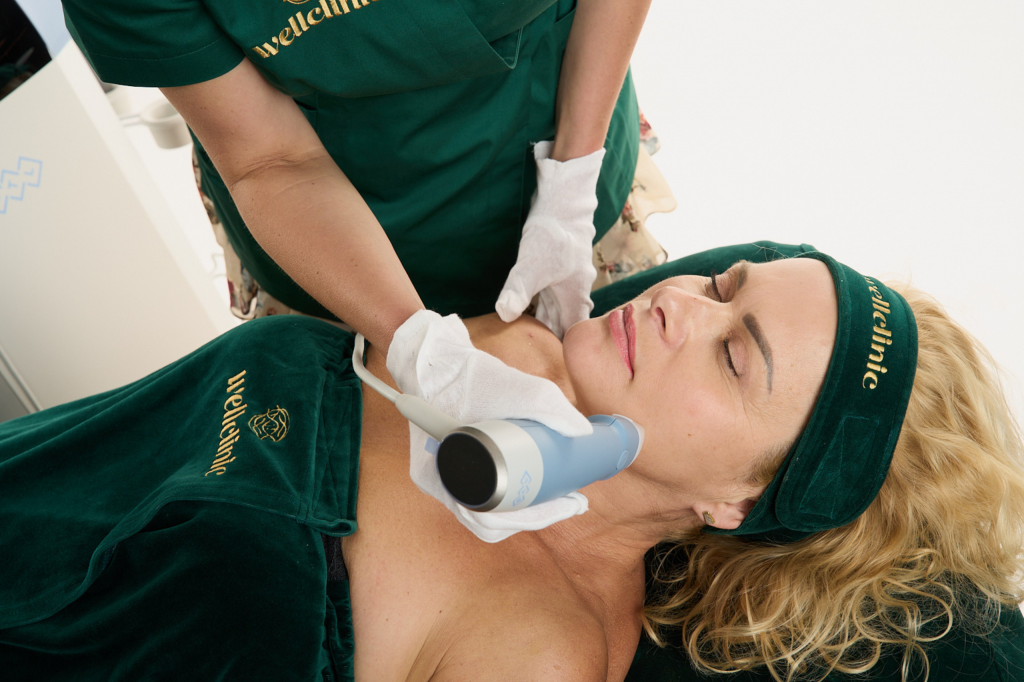
Micro-needle radiofrequency It combines micro-needling with thermal energy. The controlled stimulation of the tissues triggers remodelling processes, including collagen production.
The method may be considered when, after weight loss, skin It has lost its firmness and requires structural improvement. However, it does not restore volume to the cheeks or other areas where there has been a reduction in fat tissue.
Mesotherapy – skin hydration and revitalisation
Mesotherapy involves applying carefully selected products to the skin. Its aim may be to improve hydration, nourishment and the overall condition of the tissues.
This treatment is designed for people who, in addition to changes in volume, also show signs of a deterioration in skin quality. The results depend on the product used and individual needs.
Loss of facial volume – when should you consider volumetry?
If the main problem is sunken cheeks, temples or other areas where tissue volume has decreased, simply improving skin firmness may not be enough. In such cases, it is worth considering facial volumetrics, i.e. a method for shaping and restoring lost volume.
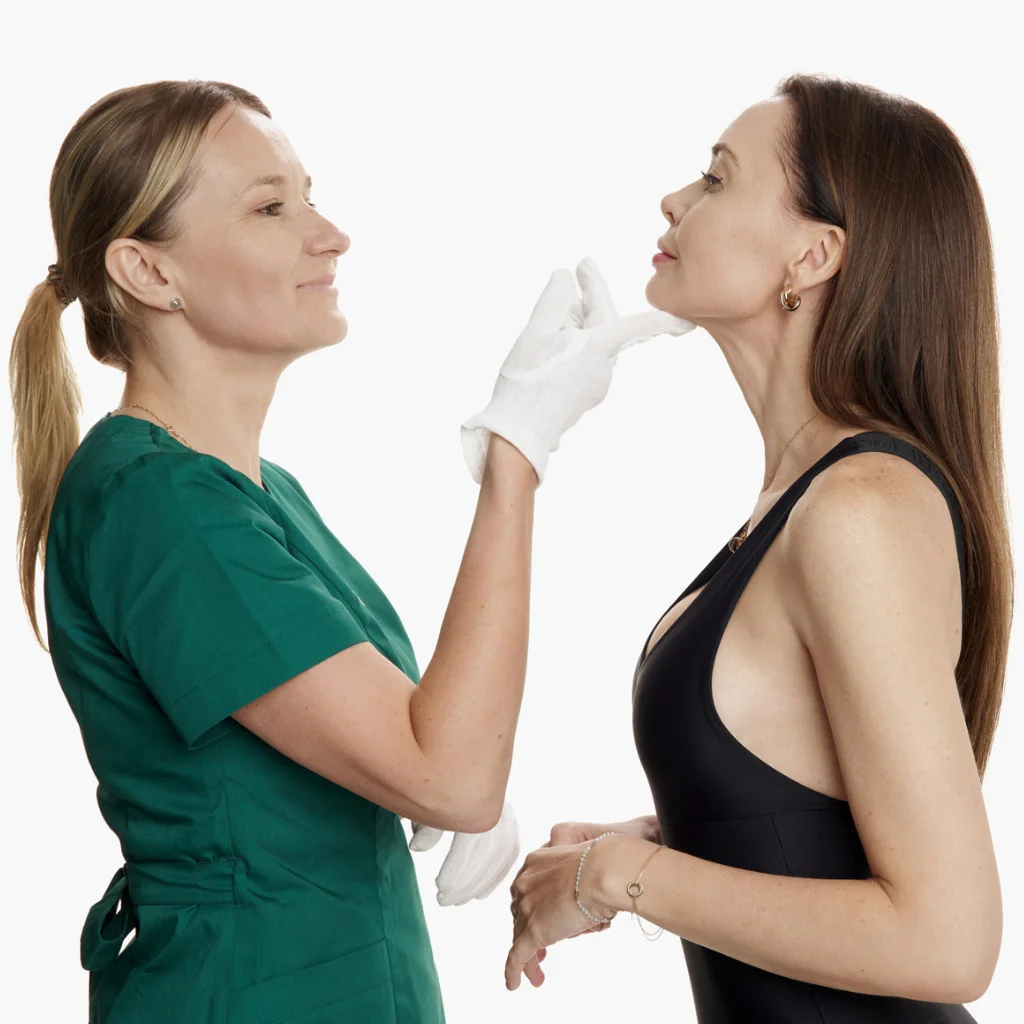
Volumetrics It involves injecting a carefully selected product, usually based on hyaluronic acid, into areas requiring restoration of volume. It helps to improve facial proportions, enhance the contour of the cheeks and reduce the appearance of specific hollows. The result can be a more rested appearance without significantly altering natural features.
The doctor tailors the treatment plan to each individual, taking into account the anatomy of the face, the degree of volume loss and the patient’s expectations. The aim is not to inject as much of the product as possible, but to subtly restore the harmony and proportions of the face.
Can the ‘sunken face’ effect be reversed?
In many cases, you can improve the appearance the face after losing weight. However, the extent of the possible change depends on the cause of the problem, the amount of volume lost, the condition of the skin and individual circumstances.
There is no single method that works for everyone. If the face has primarily lost volume, a different approach may be required than if sagging skin is the main issue. Often, the best results are achieved through a carefully selected combination of methods, rather than a single procedure.
It is therefore worth carefully assessing, before starting treatment, what has changed in the appearance of the face and what results can realistically be achieved.
Have you lost weight, but does your face look less fresh?
Losing weight can have a positive effect on your health and figure, but it can sometimes alter your facial features too. Sunken cheeks, more pronounced hollows under the eyes or a loss of firmness do not necessarily mean you have to accept your new appearance.
At Wellclinic, we tailor the treatment to the skin’s needs, the proportions of the face and the patient’s expectations. During the consultation, we can assess whether the issue is a loss of volume, reduced firmness, or a combination of both.
Book a consultation at Wellclinic and find out which options for improving your facial appearance would be suitable for you.
1. PubMed, "Radiographic Changes in Midfacial Volume in Patients Taking GLP-1 Agonists" (2025).
https://pubmed.ncbi.nlm.nih.gov/40407186/
2. PubMed, "Soft Tissue Facial Changes Following Massive Weight Loss Resulting from Medical and Surgical Bariatric Interventions: A Systematic Review" (2024).
https://pubmed.ncbi.nlm.nih.gov/39346804/
3. PubMed, "Morphological changes in the human face following significant weight loss resulting from bariatric surgery" (2020).
https://pubmed.ncbi.nlm.nih.gov/32513431/
4. PubMed, "Facial Ageing: A Quantitative Analysis of Midface Volume Changes over 11 Years" (2021).
https://pubmed.ncbi.nlm.nih.gov/33165293/
5. FDA, "Non-invasive body contouring technologies."
https://www.fda.gov/medical-devices/aesthetic-cosmetic-devices/non-invasive-body-contouring-technologies
Book a consultation



 +48 600 100 177