
 Katarzyna Pawłowska

 03.11.2026
Table of contents
You might weigh less but still not be happy with your figure. You might exercise for hours, cut down on food and consistently try to lose weight, yet still not achieve the results you really want. Why? Because a lower number on the scales doesn’t always mean better body proportions.
The problem is that many people focus solely on losing kilograms. However, there is more to it than that: how much body fat you lose, how much muscle you retain, and how your body composition changes. That is precisely why simply losing weight does not always lead to the figure you’ve always wanted.
One possible solution could be body recomposition, which is a process in which you aim to reduce body fat whilst maintaining or building muscle mass. It’s a different approach to body sculpting. It’s not about weighing less at any cost. It’s about changing your body proportions.
How can you achieve this result? When is exercise and a well-balanced diet enough, and when is it worth considering treatments to help sculpt your figure? We explain what actually works and what you shouldn’t expect from aesthetic medicine technologies.
What is body recomposition?
Body recomposition involves changing the ratio between adipose tissue and lean body mass, which includes, amongst other things, muscles. Its aim is to reduce body fat whilst maintaining or increasing muscle mass.
This is an important difference compared with traditional weight loss. When losing weight, we usually focus on reducing body weight. With body recomposition, what matters most is how your body composition changes, rather than just the number shown on the scales.
For example, you may lose a few centimetres from your waist circumference, improve your body’s firmness and build muscle, even though your body weight changes only slightly. That is why circumference measurements, body photos and body composition analysis are also important when assessing your progress.
A lower weight does not always mean a better figure. Sometimes what matters most is what you lose, and what you manage to keep or build upon.
How do you go about traditional body reshaping?
The basis for the reorganisation It is a combination of three elements: strength training, proper nutrition and recovery. Each of them is responsible for a different aspect of changing body composition. Neglecting any one of them may make it harder to achieve the desired results.
Strength training and muscle development
Resistance training stimulates the muscles to adapt and grow. In practice, this means regularly performing weight-bearing exercises such as squats, deadlifts, lunges, bench presses and rows. It is important to progress gradually, i.e. to adjust the load, number of repetitions or training volume to your body’s current capabilities.
Strength training It not only helps to build muscle, but also to minimise the loss of lean body mass whilst reducing body fat. The results depend on consistency, exercise technique, fitness level and a properly planned training load.
However, this does not mean that the harder you train, the quicker you will achieve your goal. Putting excessive strain on your body without adequate recovery can have the opposite effect to the one intended.
A diet tailored to your goal
There is no single dietary approach that works for everyone. Depending on your starting body composition, activity level and training experience, body recomposition can be achieved through a small calorie deficit or by maintaining an energy intake close to your requirements.
It is important to ensure an adequate supply proteins, which provides the amino acids needed for muscle recovery and growth. Other nutrients are also important, as is eating meals at regular intervals tailored to individual needs.
An energy deficit that is too large can hinder muscle growth and impair recovery. That is why a restrictive diet is not a good way to speed up body recomposition.
Recovery and consistency
Muscles need time to recover after exercise. Getting enough sleep, taking breaks between intense training sessions and avoiding putting too much strain on the body all play a part in your ability to make progress.
Body reshaping is a gradual process. The rate of change depends, amongst other things, on your initial body fat percentage, training experience, age, state of health and how consistently you follow your plan.
How long does body recomposition take?
It is impossible to specify a single timeframe within which everyone will see visible results. The first changes may become apparent after a few weeks of regular training, but a marked improvement in body proportions usually requires more time and effort.
Beginners, those returning to exercise after a break, or those with a higher body fat percentage may find it relatively easy to notice an improvement in muscle tone alongside fat loss. For advanced exercisers who have been training regularly for some time, the process can be slower.
It is worth remembering that Body recomposition does not always involve weight loss. If body fat decreases whilst muscle mass increases, the figure on the scales may remain similar.
So don’t judge your progress solely by what the scales say. Also pay attention to your body measurements, the appearance of your figure and changes in its proportions.
Body-contouring treatments as a complement to body recomposition
Exercise and diet affect body composition in a systemic way. However, they do not always result in the same improvement in appearance across all areas. It sometimes happens that, despite physical activity and maintaining healthy habits, localised accumulations of body fat or problems with skin firmness remain in certain areas.
In such situations, you might consider body contouring treatments. Their purpose is not to replace physical activity or build fitness, but to target specific tissues in a chosen area of the body.
The choice of procedure depends on the desired outcome: reducing localised body fat, improving skin firmness or stimulating the muscles. Not all technologies work in the same way, so they should not be regarded as interchangeable methods.
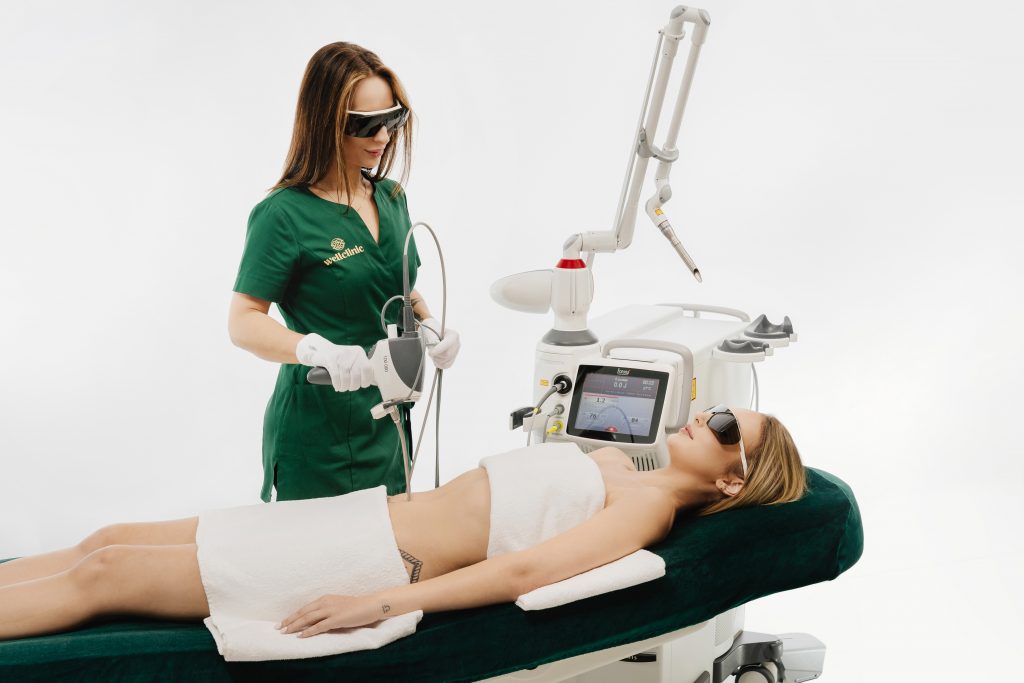
Laser lipolysis – reduction of localised fat deposits
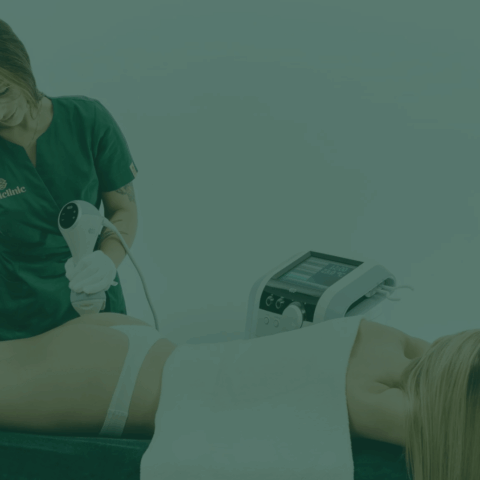
Laser lipolysis This term refers to procedures that use laser energy to target adipose tissue. At Wellclinic, the following technology is used for body contouring: TightSculpting™, carried out using the Fotona laser platform.
TightSculpting™ is a non-invasive body contouring method. It uses two wavelengths: Sun i Er. Their use is intended to target tissues at various depths and to improve the appearance and firmness of the skin in the treated area.
The treatment can be applied to specific areas of the body, including the abdomen, thighs and love handles. The final scope of the treatment and whether it can be carried out depend on an individual assessment of the patient.
However, one should not equate TightSculpting™ with surgical liposuction nor should one assume that the treatment will replace diet and exercise. Nor is it a method for building muscle mass. Its aim is to improve the contour and appearance of a specific area of the body.
Body Sculpt HI-EMT – muscle stimulation
Another approach used in body contouring involves technologies based on electromagnetic muscle stimulation. Body Sculpt HI-EMT belongs to this group of treatments.
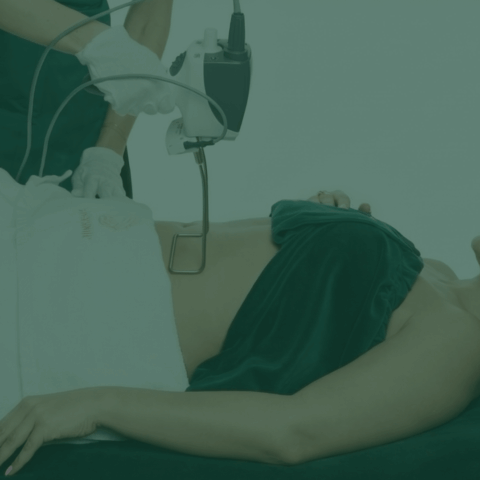
During the procedure, applicators placed on the selected area of the body generate an electromagnetic field which causes intense muscle contractions. The stimulation is targeted at specific areas, such as the abdomen or buttocks.
It is, however, important to keep things in perspective when assessing this method. The contractions induced by the device are not the same as strength training. They do not develop all aspects of physical fitness and are no substitute for regular exercise. Available research on electromagnetic body modelling points to possible changes in body fat and muscle mass, but also highlights the limitations in the quality and scope of the scientific evidence.
Body Sculpt HI-EMT may be considered as a complement to measures aimed at improving body shape, rather than as an alternative to physical activity.
Can these treatments replace traditional body recomposition?
No. These are two different approaches, the purpose and scope of which are not the same.
Traditional body reshaping It involves changing the composition of the entire body through training, nutrition and recovery. It can lead to improvements in strength, fitness, muscle development and a reduction in body fat.
Body-contouring treatments Instead, they target specific areas of the body. They can help improve body contour, skin appearance or muscle tone, but they do not provide all the benefits of regular exercise and a healthy diet.
The choice of method should depend on your needs, state of health and expectations. For some people, the best approach will be to work consistently on their body composition, whilst for others, a combination of healthy habits and a suitably chosen treatment may be worth considering.
Body contouring at Wellclinic
You could start another diet, increase the number of training sessions and wait for those problem areas to finally change. Or you could first find out what is actually preventing you from achieving the results you want.
Not every body type needs to lose weight. Sometimes it just needs a better-suited strategy. If, despite exercising and watching what you eat, you are still bothered by localised fat deposits, a loss of skin firmness or a lack of definition in certain areas of your body, it is worth looking into the available options.
At Wellclinic, you can discuss the possibility of undergoing treatments TightSculpting™ i Body Sculpt HI-EMT. During the consultation, we will assess your needs, expectations and any potential contraindications to determine whether this technology is suitable for you.
Stop wondering why your figure doesn’t look the way you’d like it to. Book a consultation at Wellclinic and find out which steps make sense in your particular situation. Instead of yet another random attempt, choose a plan based on your body’s actual needs.
Sources:
1. PubMed, "Factors Influencing the Effects of Resistance Training in Overweight and Obese Adults: A Systematic Review and Meta-analysis", 2022.
https://pubmed.ncbi.nlm.nih.gov/35977113/
2. PubMed, "The Effectiveness of Resistance Training on Body Composition and Body Weight Outcomes in Individuals Who Are Overweight or Obese Throughout Their Lives", A Systematic Review and Meta-analysis (2022).
https://pubmed.ncbi.nlm.nih.gov/35191588/
3. PubMed, "A Systematic Review of Electromagnetic Treatments for Body Contouring" (2023).
https://pubmed.ncbi.nlm.nih.gov/36688862/
4. PubMed, "Muscle Stimulation for Aesthetic Body Shaping: A Comprehensive and Critical Review" (2022).
https://pubmed.ncbi.nlm.nih.gov/35985005/
5. PubMed, "A Systematic Review, Meta-analysis and Meta-regression of the Effect of Protein Supplementation on Resistance Training-induced Gains in Muscle Mass and Strength in Healthy Adults" (2017).
https://pubmed.ncbi.nlm.nih.gov/28698222/
6. FDA, "Non-invasive body contouring technologies."
https://www.fda.gov/medical-devices/aesthetic-cosmetic-devices/non-invasive-body-contouring-technologies




 +48 600 100 177