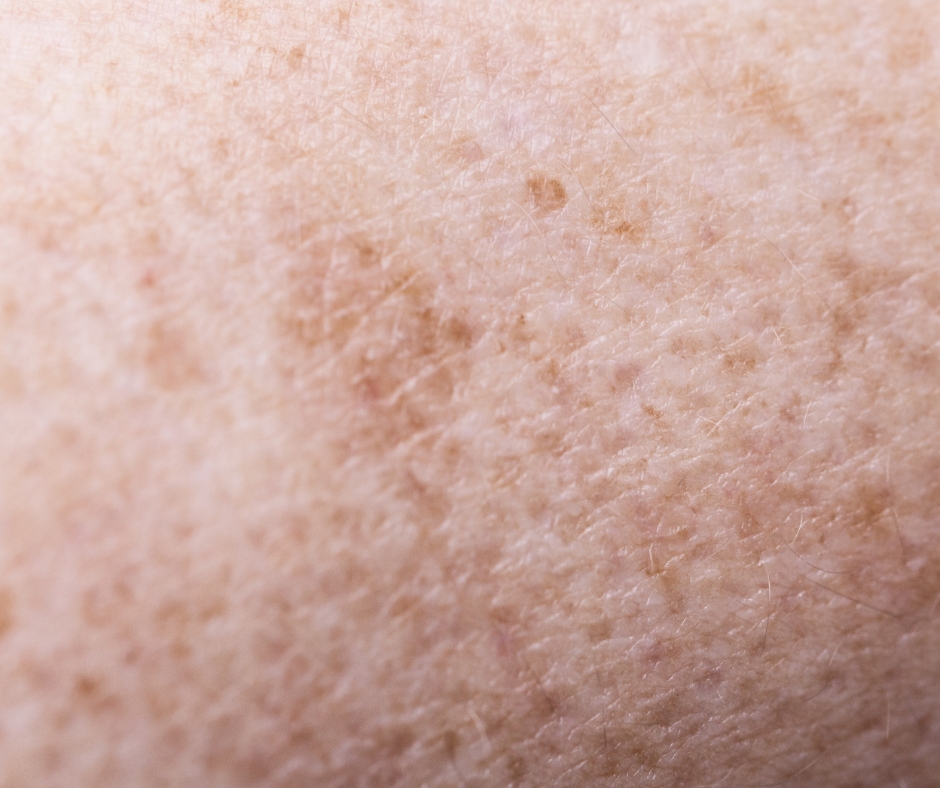
After-sun discolouration, also known as sunspots or lentigines, are flat, darker patches on the skin that develop in areas exposed to ultraviolet radiation over a long period of time. They are usually light brown, brown or a darker shade and appear on the face, hands, arms, neck and other areas exposed to the sun.
Skin discolouration on the face They are caused by increased production of melanin, the pigment responsible for skin colour. UV radiation stimulates melanocytes to produce melanin, and its localised accumulation can lead to the formation of visible patches. The risk of their occurrence increases with age and long-term exposure to the sun. People with fair skin may also be more prone to developing hyperpigmentation.
In the case of post-sun discolouration Prevention plays a key role. This includes limiting excessive exposure to UV radiation, using products with a high sun protection factor, and protecting the skin with suitable clothing and head coverings. Regular sun protection also helps to reduce the risk of new lesions developing.
How can you remove sun-induced discolouration? The course of treatment depends on the type, depth and location of the lesions. For home care, products containing skin-lightening ingredients such as vitamin C, kojic acid or retinol. In the case of more persistent changes, one might consider professional methods used in aesthetic medicine, including certain forms of laser therapy. Before choosing the right treatment, you should assess the type of discolouration and the condition of your skin. You can find more information about post-summer discolouration in our blog article: Post-sun discolouration - how to effectively reduce the problem after summer?