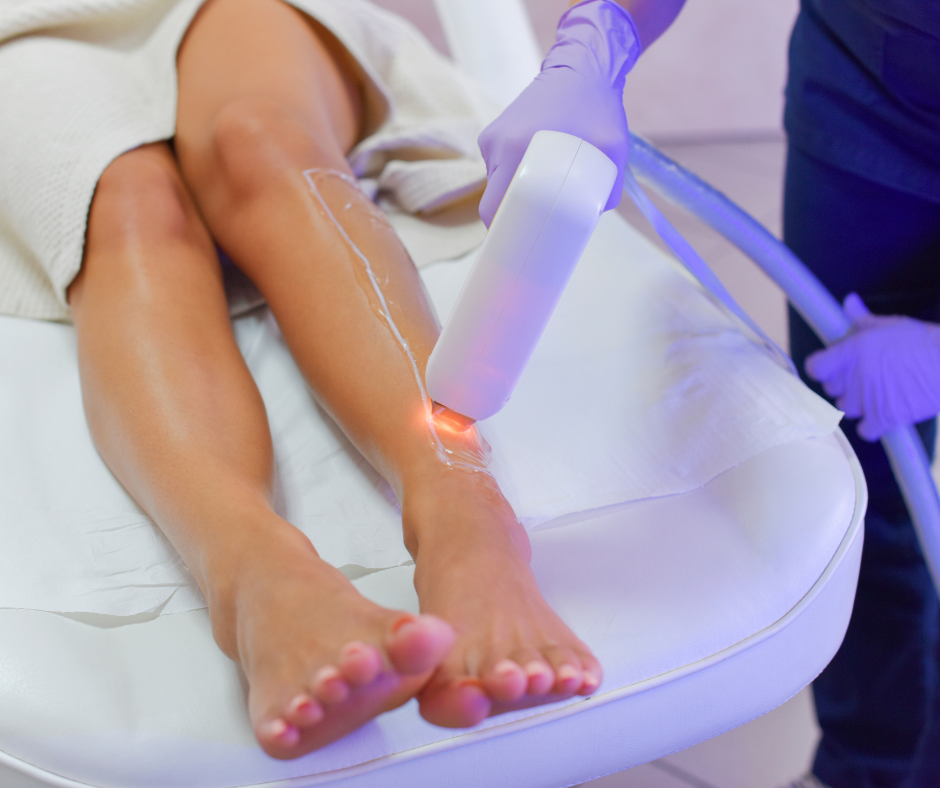
Laser depilation This is a method of long-term hair reduction that uses a laser beam. The laser energy is absorbed by the melanin in the hair shaft and hair follicle, and is then converted into heat. This damages the structures responsible for hair growth and gradually reduces regrowth. The treatment does not remove the hair mechanically, but acts on the hair follicle.
Laser depilation It can be carried out on various parts of the body, including the legs, underarms, face, back and bikini line. The effectiveness of the treatment depends, amongst other things, on the colour and thickness of the hair, skin phototype and the hair growth phase. As not all hairs are in the active growth phase at the same time, the treatment is carried out in a series of sessions.
At Wellclinic, you can laser depilation It is used, amongst other things,. Prime 3D laser, , whose head features a sapphire window and operates in In Motion. In Motion Technology It allows the treatment head to be moved smoothly across the treatment area whilst energy is being delivered, enabling successive areas of skin to be treated efficiently. This feature is particularly useful during treatments carried out on larger areas of the body. The comfort of the treatment is also enhanced by the system TEC Thermo-Electric Cooling, i.e. a head cooling system which helps to reduce the sensation of heat during energy emission.
Laser hair removal is primarily used to achieve long-term hair reduction. It can also be helpful in cases where traditional hair removal methods present problems, such as ingrown hairs, irritation or folliculitis. Before the treatment, any contraindications must be ruled out; these include, amongst others, a recent tan, active skin infections, the use of certain medicines and photosensitising substances, pregnancy, and certain medical conditions and treatments. Eligibility for the treatment is determined by taking into account the individual’s skin condition and general state of health.
Want to find out more? Read the article on our blog: Like How does laser hair removal work?