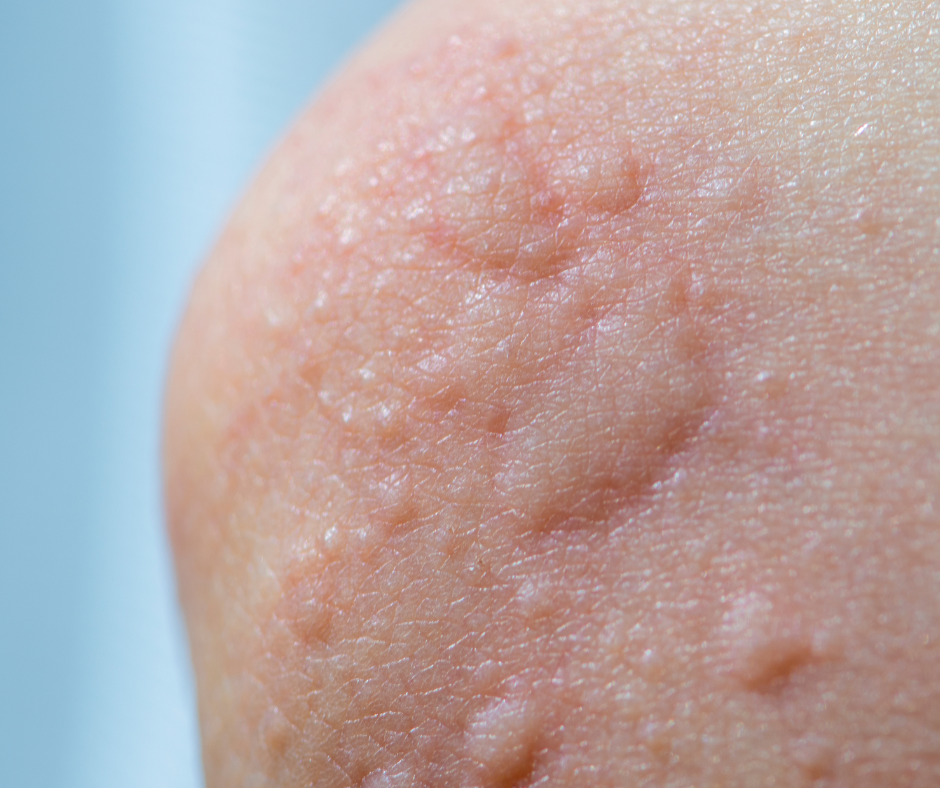
Urticaria It is a skin reaction characterised by the sudden appearance of itchy blisters and redness of the skin. The lesions can vary in size, often move rapidly and usually resolve spontaneously within a few hours or days, leaving no lasting marks.
The most common cause of hives is allergic reaction, although the symptoms may also be triggered by medicines, infections, physical factors (e.g. cold, heat, pressure or sunlight), stress or contact with irritants. Depending on the duration of the symptoms, urticaria is classified as acute or chronic.
A characteristic symptom is itchy urticarial wheals with clearly defined edges, which may be accompanied by a burning sensation or a feeling of skin tightness. Some people also experience angioedema affecting the deeper layers of the skin and subcutaneous tissue, most commonly around the eyelids, lips or throat.
Skin lesions associated with urticaria do not usually leave scars. However, in the event of intense scratching or concomitant skin inflammation, some people may develop post-inflammatory hyperpigmentation, which gradually fade over time.
The diagnosis of urticaria is based on a medical history and an assessment of the skin lesions. Treatment depends on the cause of the condition and primarily involves avoiding triggers and taking antihistamines. In the case of severe or recurrent symptoms, further diagnostic tests and a specialist consultation may be necessary.