Drooping eyelids They can change the appearance of the whole face. The gaze becomes heavier, the eyes appear smaller, and the face looks tired even after a good night’s sleep. The problem is not always purely aesthetic. For some people excess skin on the upper eyelids begins to restrict one’s field of vision and make it difficult to carry out everyday activities.
One solution is blepharoplasty, i.e. surgical eyelid correction. The procedure involves removing excess sagging skin and, where justified, correcting fat hernias. This makes it possible to restore a more open appearance to the eyes, improve the contour of the eyelids and restore comfortable vision.
Eyelid surgery is performed for both aesthetic and functional reasons. It is most commonly chosen by people aged 45 and over, in whom the natural ageing process is beginning to have a noticeable effect on the appearance of the eye area. However, this treatment is not intended solely for mature individuals. In some cases, the indications are anatomical in nature and arise much earlier.
Blepharoplasty – what does eyelid surgery involve?
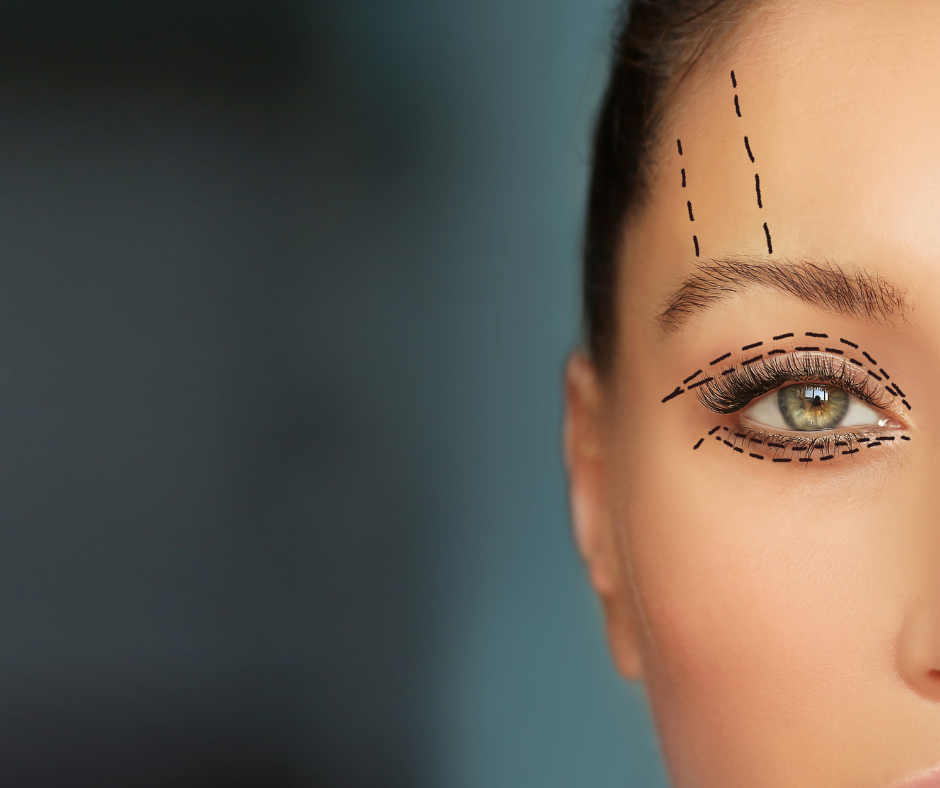
Blepharoplasty it's a surgical procedure involving the correction of the upper eyelids, the lower eyelids or both areas at the same time. The aim is to remove excess tissue that affects the appearance of the eye and, in some cases, also impairs vision.
As we age, the skin around the eyes gradually loses its elasticity. Production decreases collagen i elastins, i.e. the proteins responsible for its elasticity and strength. The structures that support the tissues also weaken. As a result, the skin of the eyelids becomes more flaccid, excess skin develops, and characteristic bulges associated with the displacement of fatty tissue may become visible under the eyes.
It is precisely these changes that can cause drooping eyelids, exacerbate asymmetry between the eyes and give the face a tired appearance.
During blepharoplasty The surgeon makes the necessary incisions, usually along the skin’s natural creases, so that the scars left after the procedure are as inconspicuous as possible. The surgeon then removes the excess skin and, depending on the clinical indications, also makes appropriate adjustments to the fatty tissue.
The procedure usually takes between 1 and 2 hours, depending on the extent of the operation and the patient’s individual anatomy. It is most commonly carried out under local anaesthetic.
The extent of the correction should always be tailored to the anatomical structure of the eye. The aim of the procedure is not to remove excessive skin or fat. The aim is to restore the correct proportions and achieve a natural result, without altering the individual facial features.
Upper and lower eyelid blepharoplasty – how do they differ?
Upper and lower eyelid surgery addresses slightly different anatomical issues.
Upper eyelid blepharoplasty It primarily involves removing excess loose skin, which can form a characteristic fold above the eye. In more advanced cases, the skin begins to obscure part of the field of vision. Correcting this reveals the natural contour of the eyelid and makes the eye appear more open.
Lower eyelid blepharoplasty It focuses primarily on correcting excess skin and fat herniations, which are responsible for the characteristic bags under the eyes. Depending on the patient’s anatomy, the surgeon may use various surgical techniques to improve the contour of the lower eyelid and the transition between it and the cheek.
However, not every problem around the eyes requires surgery. Thin skin, dark circles under the eyes or loss of volume may have other causes and require different treatments.
Laser blepharoplasty – a non-surgical alternative to eyelid surgery
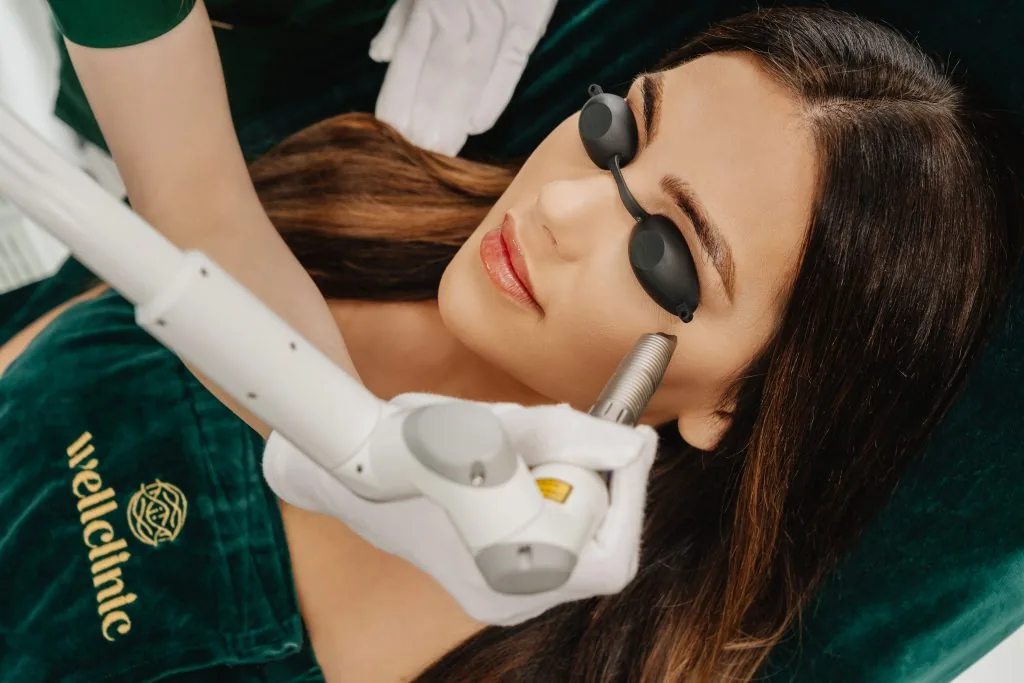
Not every case of drooping eyelids requires surgical intervention. For people whose problem is primarily due to a loss of skin tone and elasticity, an alternative may be laser blepharoplasty. The treatment uses Fotona laser technology Er:YAG, which allows the tissues to be treated in a controlled manner, stimulating regenerative processes and the remodelling of collagen fibres. As a result, the skin around the eyes may become firmer, and the appearance of fine lines and signs of sagging may be reduced.
Unlike classical blepharoplasty The procedure does not require a surgical incision or stitches, and the recovery period is usually shorter. The first signs of improved skin firmness may be noticeable relatively quickly, whilst the full effect develops gradually as collagen is remodelled.
Laser eyelid correction It is primarily intended for people with a slight or moderate excess of loose skin who wish to improve the appearance of the eye area without undergoing traditional surgery. However, it is not a substitute for surgical blepharoplasty in cases of significant excess skin or anatomical problems requiring surgical intervention. The choice of the appropriate method should be made by a specialist following an assessment of the condition of the skin and the anatomy of the eyelids.
Surgical blepharoplasty – indications for the procedure
Not every drooping eyelid requires surgical intervention. The decision on whether surgery is necessary depends primarily on the cause of the problem, the severity of the condition and its impact on daily life.
The most common indications for blepharoplasty include:
- excess loose skin on the upper or lower eyelids,
- loss of firmness in the tissue around the eyes,
- a drooping eyelid, which makes the eyes look heavy,
- restricted field of vision caused by excess skin,
- fat hernias causing characteristic bulges under the eyes,
- visible asymmetry of the eyelids,
- a change in the natural contour of the eye associated with the ageing process.
It is important to distinguish between excess eyelid skin and drooping of the eyelid itself, known as ptosis. These are two different anatomical problems which may require different treatment methods. It is therefore essential for a doctor to carry out a thorough assessment of the eye area before the procedure.
The procedure is preceded by a pre-operative consultation. During the consultation, the specialist assesses the condition of the skin, the position of the eyelids, the distribution of tissues and any functional abnormalities. They also discuss contraindications, possible complications and the expected course of recovery.
What are the results of blepharoplasty?
The most noticeable change following eyelid surgery The eyes appear more open and rested. Removing excess skin makes the eye area look lighter, and the contour of the eyelids becomes more defined.
The effects of the treatment primarily include:
- reduction of excess loose skin,
- improving the contour of the eyelids,
- reduction in the visibility of fat hernias, if they are included in the scope of the operation,
- optical opening of the eye,
- improving the proportions of the eye area,
- rejuvenation of the face,
- improvement in the field of vision, if the restriction was caused by excess eyelid skin.
In the case of people who sagging skin Although it obscured part of the field of vision, the benefits may extend beyond simply improving one’s appearance. It makes everyday activities, such as reading or driving, much more comfortable.
It is worth bearing in mind, however, that blepharoplasty It does not halt the natural ageing process. Nor does it remove all wrinkles around the eyes or correct every cause of drooping eyelids. The final result depends on the patient’s initial anatomy, skin quality, the extent of the operation and the patient’s individual predisposition.
Recovery following blepharoplasty
Eyelid plasty It is a surgical procedure and therefore requires appropriate the healing period. Immediately after the operation, you may experience swelling, bruising, a feeling of tightness in the skin and temporary discomfort around the eyes.
The severity of these symptoms varies from person to person and depends, amongst other things, on the extent of the correction carried out. In the first few days, it is particularly important to follow the doctor’s advice, avoid excessive exertion and protect the area that has been operated on.
The healing process It does not end once the initial swelling has subsided. The tissues need time to regain their natural appearance, and the scars gradually become less visible. The doctor will determine when you can resume full activity and when you can start wearing make-up during your post-operative check-up.
Like any plastic surgery, blepharoplasty also carries a risk of complications such as bleeding, infection, poor healing, asymmetry or temporary difficulties in closing the eyelids. This is why proper assessment and the choice of an experienced surgeon are so important.
Blepharoplasty – is it worth having eyelid surgery?
Excess skin around the eyes It can affect both the appearance of the face and day-to-day comfort. If drooping eyelids cause a feeling of heaviness, restrict your field of vision or make your gaze lose its natural lightness, it is worth consulting a specialist about the problem.
Blepharoplasty It enables the correction of anatomical changes that cannot be effectively addressed through skincare alone or non-surgical methods of improving skin firmness. However, the aim is not to bring about a radical change in appearance. A properly planned eyelid correction is designed to restore the natural proportions of the eye area, taking into account the individual facial structure.
Are you wondering whether blepharoplasty Will this be the right solution for you? Consult a specialist, who will assess the anatomy of your eyelids, determine whether you are a suitable candidate for the procedure, and outline the correction options tailored to your needs.
Sources:
1. PubMed – Blepharoplasty: An Overview, Seminars in Plastic Surgery, 2010. https://pmc.ncbi.nlm.nih.gov/articles/PMC2840922/
2. Springer Nature – Upper Eyelid Blepharoplasty: Surgical Techniques and Results – A Systematic Review and Meta-analysis, Aesthetic Plastic Surgery, 2023.
https://link.springer.com/article/10.1007/s00266-023-03436-6
3. PubMed – Aesthetic outcomes of upper eyelid blepharoplasty: a systematic review, 2020. https://pubmed.ncbi.nlm.nih.gov/31722817/
4. PubMed – Selecting the Best Eyelid Techniques, Facial Plastic Surgery, 2018. https://pubmed.ncbi.nlm.nih.gov/30296802/
5. PubMed – Evidence-Based Medicine: A Graded Approach to Lower Eyelid Blepharoplasty. https://pubmed.ncbi.nlm.nih.gov/28027251/
6. PubMed Central (PMC) – Periorbital rejuvenation in clinical practice: A state-of-the-art review, 2023. https://pmc.ncbi.nlm.nih.gov/articles/10541170/
7. CosmoDerma – Periorbital rejuvenation through blepharoplasty: Current concepts and surgical perspective, 2025. https://cosmoderma.org/periorbital-rejuvenation-through-blepharoplasty-current-concepts-and-surgical-perspective/
8. PubMed Central (PMC) – A Novel Technique for Eye Rejuvenation: A Case Series on the Combined Use of CO₂ Laser Blepharoplasty and Erbium:YAG Resurfacing, 2025.
https://pmc.ncbi.nlm.nih.gov/articles/PMC11806243/