
 Katarzyna Pawłowska
 19.09.2026
 Table of contents
You may be slim, active and exercise regularly, yet still notice the characteristic dimples on your thighs or bottom. Removal of cellulite It doesn’t start with the question of how to lose weight. Cellulite for it does not depend solely on the quantity body fat. Its appearance is also influenced by the structure of the skin, the structure of the connective tissue, the distribution of subcutaneous tissue, and the arrangement of the fibrous septa connecting the skin to the deeper tissues.
That is why diet and exercise can improve the appearance of your figure, but they are not always enough to make your skin completely smooth.
However, this does not mean that you have to simply put up with cellulite. A carefully chosen treatment can significantly reduce its appearance, improve skin firmness and smooth the skin’s surface. The aim need not be to promise the complete removal of cellulite, but a genuine improvement in the appearance of the skin and the quality of the tissues.
There is more than one cause of cellulite
This single term covers several different mechanisms. That is why cellulite It may look completely different for two people and require a different approach.
Depending on the nature of the changes, the following are distinguished, amongst others: adipose cellulite, water cellulite, fibrous cellulite i mixed cellulite. In the case of adipose cellulite, the amount and distribution of adipose tissue are more significant. In the case of water-based cellulite, fluid retention and changes in microcirculation may be significant. In the case of fibrous cellulite, changes in the connective tissue and fibrous septa beneath the skin play a greater role. The mixed form, on the other hand, combines several of these mechanisms.
Cellulite It is therefore not simply „excess fat”. Various layers of tissue are involved in its formation, and particular importance is attached to the fibrous septa, which may influence the characteristic indentations visible on the surface of the skin.
Therefore, effective treatment should be tailored to what actually determines the appearance of the lesions, and not just to the places where they are found.
Why doesn’t cellulite disappear as you lose weight?
A few kilograms lighter. More exercise. Stronger muscles.
Your figure changes, but the unevenness of your skin remains.
This is possible because weight loss does not automatically reshape all the structures responsible for the appearance of cellulite. A reduction in body fat may alter the proportions of the figure, but it does not necessarily eliminate the unevenness resulting from the structure of the connective tissue or reduced skin elasticity.
Cellulite can affect both overweight and slim people. Its visibility may also be affected by hormonal fluctuations, remaining in the same position for long periods, fluid retention or an individual’s connective tissue structure.
That is why the belief that „all you need to do is lose weight” is far too simplistic when it comes to cellulite.
Thighs and buttocks – why is cellulite most commonly visible in these areas?
Cellulite on the thighs i cellulite on the buttocks It is one of the most common forms of this problem. Unevenness can also occur on the hips, stomach or other parts of the body.
Thighs and buttocks They have a characteristic structure of the subcutaneous tissue. The pattern of the fibrous septa, the amount of adipose tissue and the skin’s tension all influence the appearance of its surface. When these individual structures are not evenly distributed, characteristic indentations and unevenness appear.
It is also important to distinguish between cellulite and localised excess body fat. Both conditions can occur at the same time, but they are not the same thing and do not always require the same treatment.
For one person, the biggest problem will be dimpled skin. For another, it will be a combination of cellulite and excess body fat, or reduced skin elasticity.
What can really be achieved with cellulite treatment?
Elimination of cellulite It does not refer to any one specific procedure. Nor is there a single technique that will be suitable for everyone.
Different methods may target different aspects of the problem. Some focus on improving skin tone and quality, whilst others act more deeply – on the subcutaneous tissue or the structure of the connective tissue. Much also depends on the parameters used, the number of treatments and the body’s individual response.
Therefore, the realistic aim of the therapy is reducing the appearance of cellulite, improving skin firmness and smoothing the skin’s surface.
Cellulite treatments – different technologies, different objectives
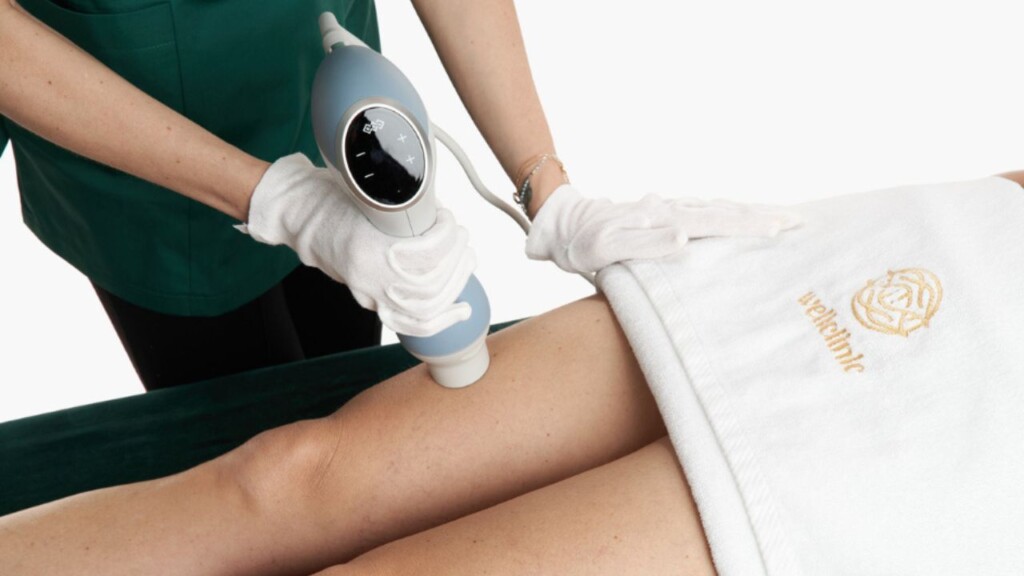
Treatments for cellulite They utilise different types of energy and different mechanisms of action. Depending on the requirements, techniques such as radiofrequency, acoustic waves and endermology are used, amongst others. Radiofrequency It works by applying controlled heat to the tissues. RF energy can support processes associated with collagen remodelling and improved skin firmness. In turn, acoustic wave transfers mechanical energy to the tissues. In cellulite treatment, it is used, amongst other reasons, because of its ability to affect connective and subcutaneous tissue.
Technologies utilising radio frequency They have been used in aesthetic medicine and cosmetology for years. ThermaClinic, Thermolipo, Meso Sense, Diathermy LavaTron, Focus RF+, Focus RF or ThermaRF These are examples of systems that use radio waves to heat tissue in a controlled manner.
With this type of therapy, it is not only the effect of the energy on the tissues that matters, but also the way in which it is delivered. Carefully selected parameters allow for precise control of the temperature and intensity of the treatment, thereby enabling it to be tailored to the patient’s needs.
A new approach to cellulite treatment involves combining two types of energy – monopolar radio wave and sound waves – in a single treatment. By combining both technologies, it is possible to work simultaneously on nskin firmness and quality, and the structure of the underlying tissues. The precision of energy delivery and the patient’s comfort during treatment also remain important.
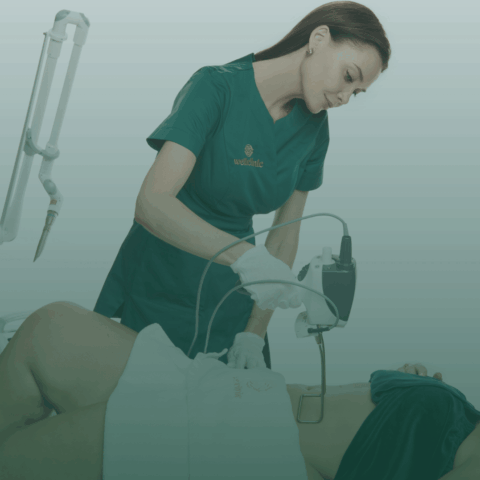
Wellclinic uses this technology in treatments designed to reduce the appearance of cellulite and to contour the thighs and buttocks.
Two mechanisms of action in a single treatment
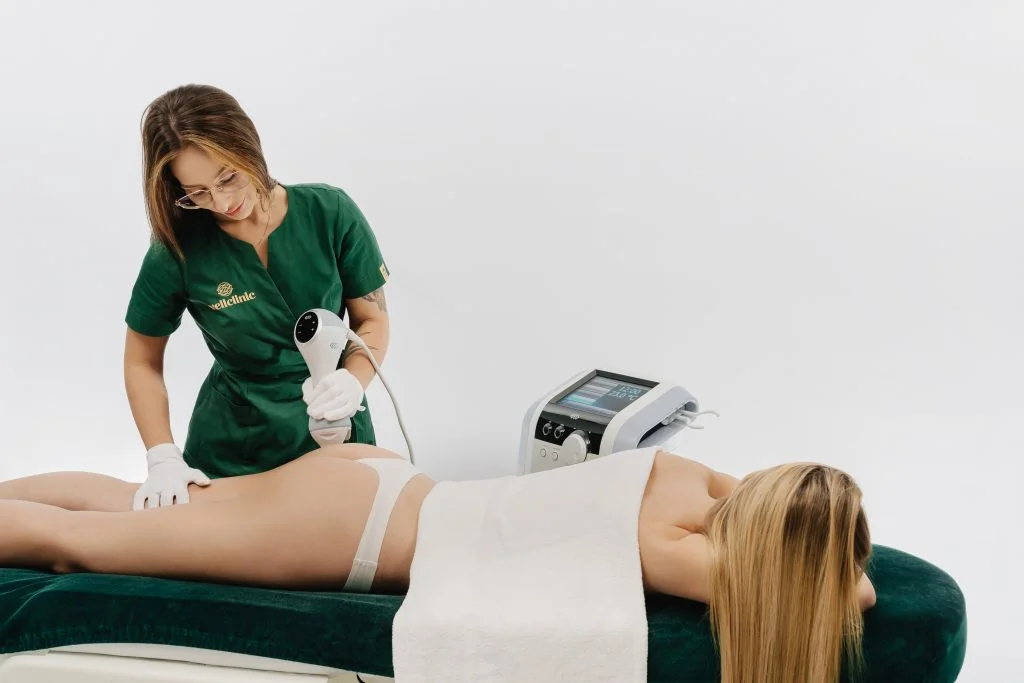
Cellulite removal treatment at Wellclinic uses two different mechanisms of action during a single treatment. In the case of cellulite, this is particularly important, as its appearance depends on several factors – including the condition of the skin, connective tissue and subcutaneous tissue. The use of monopolar radio wave and directed acoustic wave enables these areas to be influenced by thermal and mechanical energy.
Radiofrequency It is responsible for the controlled heating of tissues, which can support collagen remodelling and improve skin firmness. The acoustic wave acts mechanically on the tissues being treated, including connective and subcutaneous tissue. By combining both technologies, it is possible to simultaneously work on skin smoothness, firmness and texture, as well as the deeper tissues responsible for the appearance of cellulite.
This approach is particularly applicable when skin irregularities occur alongside skin laxity or changes in the subcutaneous tissue. The treatment is used to to reduce the appearance of cellulite and improve the appearance of the thighs and buttocks, with parameters tailored to the patient’s individual needs.
What results can you achieve?
In a clinical trial investigating the concomitant use of monopolar radio wave and directed acoustic wave A significant reduction in cellulite was observed in 93% women in the study. The greatest improvement was observed in patients with moderately severe cellulite. Following a course of treatment, the skin became smoother and the appearance of the characteristic dimples was significantly reduced.
The participants also recorded an average reduction in hip circumference of 2.31 cm, and each one takes about 2.13 cm. Importantly, these effects were achieved without any significant changes in body weight and without any additional diet. An ultrasound scan also revealed thickening and smoothing of the dermis, as well as a reduction in the thickness of the subcutaneous fat layer.
When do you start to see the first results of cellulite treatment?
Not every patient requires the same number of treatment sessions. It all depends on the type and severity of cellulite, the condition of the skin, the area being treated and the technology chosen. The treatment plan will differ depending on whether the main aim is to improve skin firmness, or whether we also want to reduce the appearance of unevenness and work on the subcutaneous tissue.
The first changes can be seen as the series progresses, but the full effect does not become apparent straight away. The technology stimulates the processes taking place in the tissues, and the results become increasingly visible over time.
Cellulite treatment – from a proper assessment to a well-chosen treatment
Cellulite can have various causes, which is why treatment should be tailored to the actual needs of the skin and subcutaneous tissue. Carefully selected technology can reduce the appearance of unevenness, improve skin firmness and smooth the skin’s surface. In the case of combination therapy, the use of monopolar radio wave and directed acoustic wave It allows two different mechanisms of action to be utilised during a single procedure.
If, despite exercising and looking after your figure, cellulite is still visible, it is worth finding out which treatment option is best suited to the specific area and type of changes. It is best to discuss the treatment options, the course of treatment and the expected results during a one-to-one a consultation with a beautician at Wellclinic.
Sources:
- PubMed „A Clinical Guide to the Treatment of Cellulite and a Comprehensive Review of the Aetiology, Pathophysiology and Utility of Intervention"
https://pubmed.ncbi.nlm.nih.gov/38057600/ - PubMed „Insights into the Pathophysiology of Cellulite: A Review"
https://pubmed.ncbi.nlm.nih.gov/32676142/ - PubMed „Cellulite and extracorporeal shockwave therapy (CelluShock-2009) – a randomised trial"
https://pubmed.ncbi.nlm.nih.gov/20977764/ - PubMed „Cellulite and focused extracorporeal shockwave therapy for non-invasive body contouring: a randomised trial"
https://pubmed.ncbi.nlm.nih.gov/24297647/ - PubMed „Comparative Analysis of Cellulite Treatment Methods: A Systematic Review"
https://pubmed.ncbi.nlm.nih.gov/39547984/ - Cleveland Clinic „Cellulite: What It Is, Causes, Where It Appears & Treatment"
https://my.clevelandclinic.org/health/diseases/17694-cellulite - American Academy of Dermatology (AAD) „Cellulite treatments: What really works?"
https://www.aad.org/public/cosmetic/fat-removal/cellulite-treatments-what-really-works



 +48 600 100 177