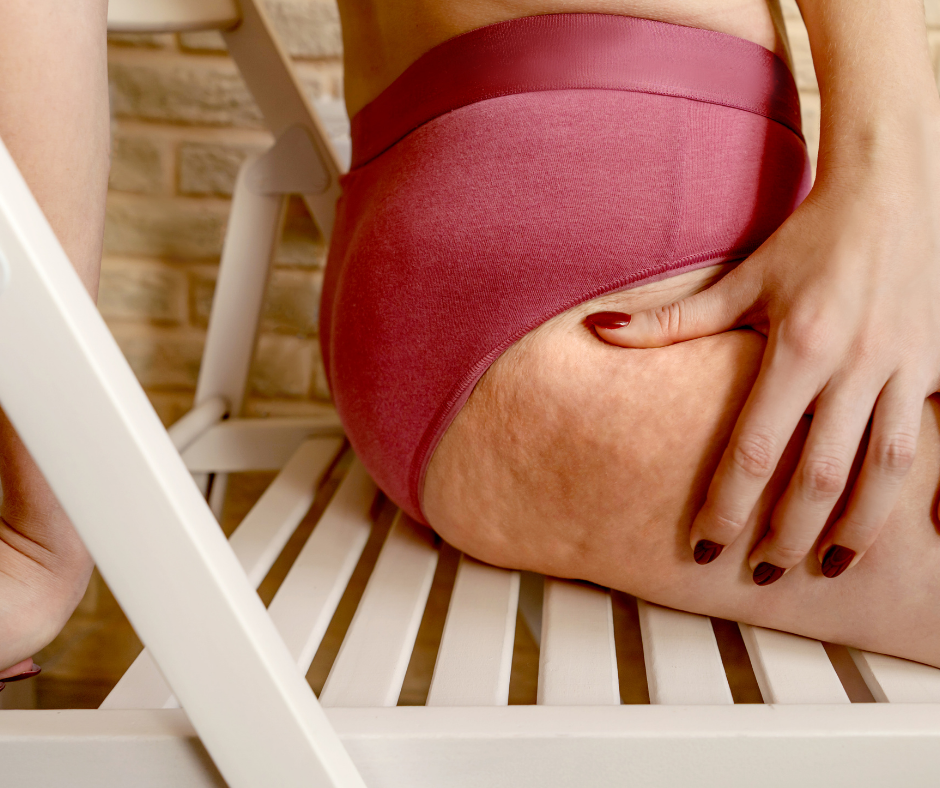
Fatty cellulite This is one of the more common forms of cellulite, primarily associated with changes in the adipose and subcutaneous tissues. It manifests as an uneven skin texture, most commonly in the area of thighs, buttocks, stomach and arms.
Development adipose cellulite It may be linked to an increased amount of body fat, low levels of physical activity and an unhealthy diet. Hormonal and genetic factors, as well as the individual composition of subcutaneous tissue, also play a role. Fatty cellulite may occur alongside other types of cellulite, including water-based cellulite and mixed cellulite.
Symptoms of adipose cellulite These include irregularities, depressions and thickened areas visible on the skin’s surface. Depending on their severity, these changes may be noticeable at rest or may primarily appear when pressure is applied to the skin. They most commonly affect the buttocks, thighs, abdomen and arms.
Procedure in the event of adipose cellulite It primarily involves regular physical activity, a balanced diet and measures to support healthy microcirculation. In the case of established changes, the following are also used: cellulite treatments, including, amongst other things, the use of acoustic waves and monopolar radiofrequency. These technologies can help to remodel subcutaneous tissue, improve skin firmness and reduce the appearance of unevenness.
Fatty cellulite It may be chronic and persist for a long time. Its severity depends, amongst other things, on the amount of body fat, the condition of the skin, lifestyle and individual predisposition.
You can find more information on the causes, types and stages of cellulite in the article Cellulite – causes, types and stages of development