
 Katarzyna Pawłowska
 06.10.2026
 Table of contents
Fibrous cellulite It is no longer just a slight unevenness of the skin. In more advanced stages, hard nodules, thickened areas and areas of fibrotic tissue that can be felt with the fingers appear. The skin loses its smoothness, and the changes may be visible even when the body is at rest.
That is precisely why fibrous cellulite requires a different approach to its milder forms. The problem is not confined to the surface of the skin. Changes also occur in the subcutaneous tissue and connective tissue.
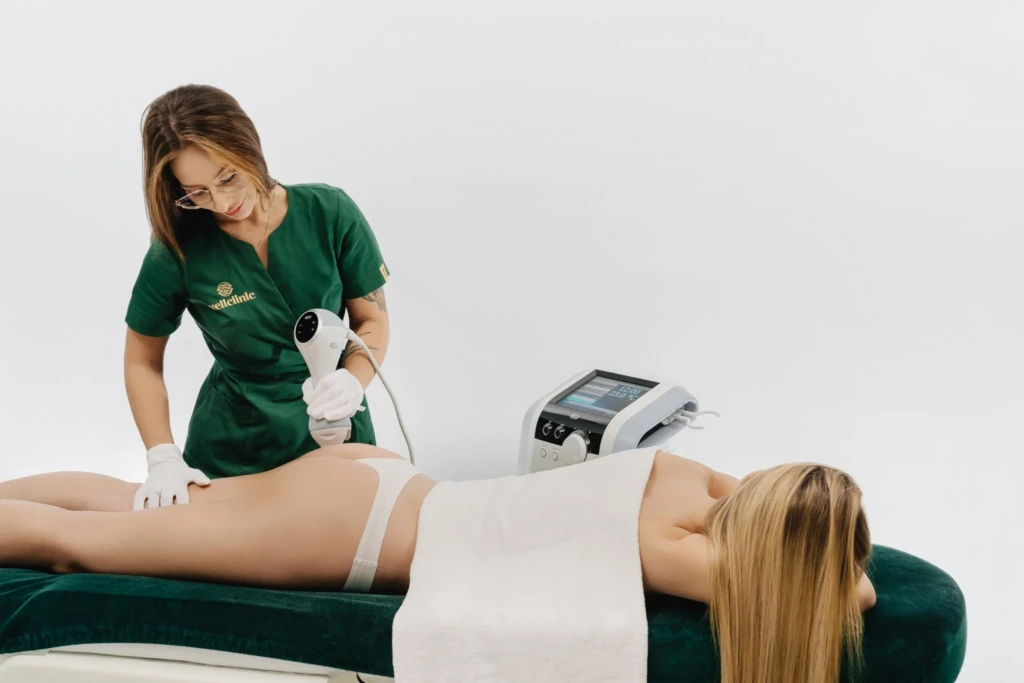
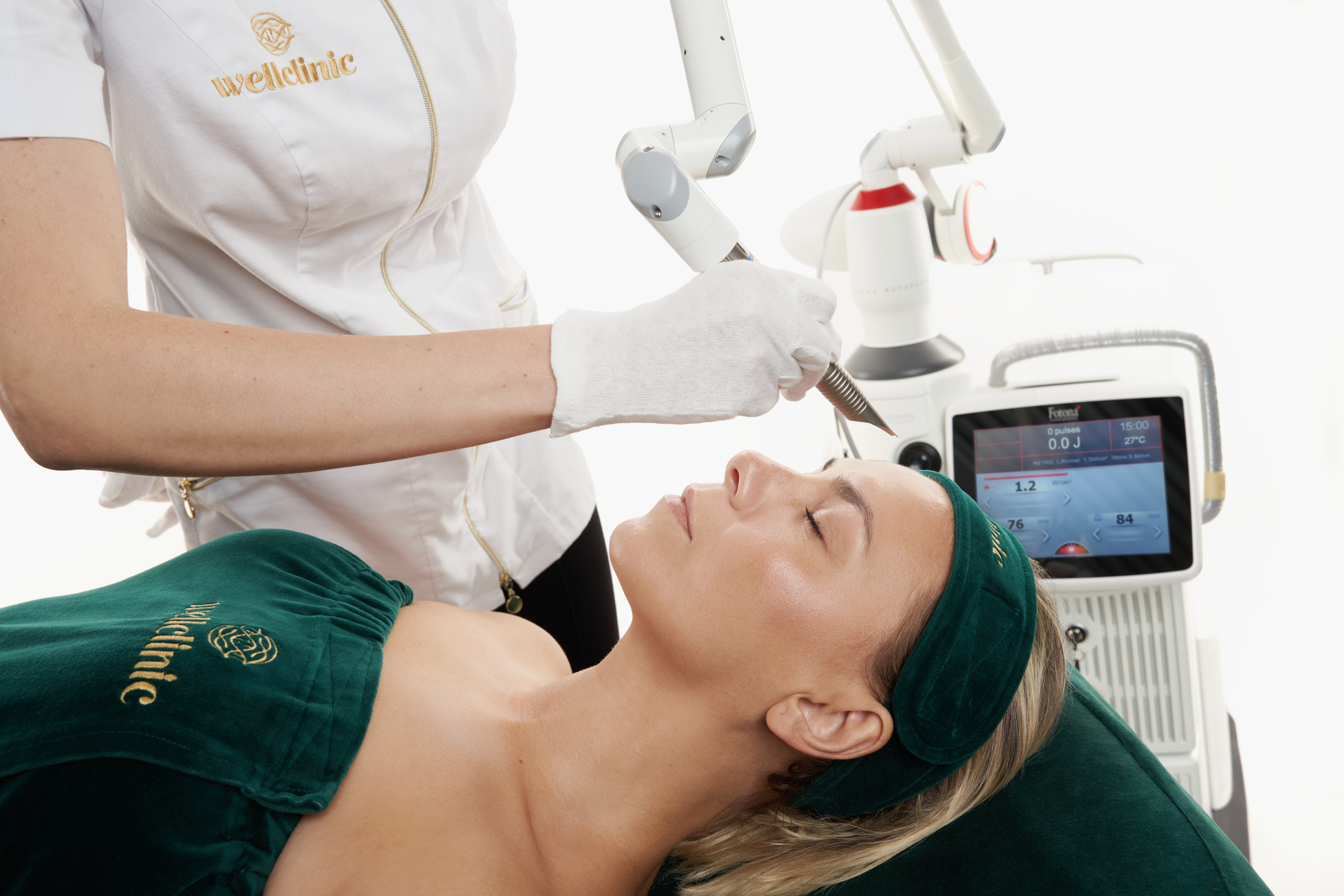
At Wellclinic, weight loss fibrous cellulite can be carried out using advanced technologies that affect deeper layers of tissue. One such technology is permanent removal of cellulite, linking radiofrequency and an acoustic wave.
When does cellulite cease to be merely a cosmetic problem?
To begin with skin irregularities They may be visible mainly when the skin is stretched or pinched. Over time, however, they become increasingly permanent.
In the case of fibrous cellulite Hard lumps and thickened areas can be felt. The skin becomes less elastic, and irregularities may be visible regardless of body position. Some people also experience tenderness or pain when pressure is applied.
This is the result of changes taking place at a deeper level. Connective tissue fibres they may lose their elasticity and form structures that perpetuate unevenness in the skin’s surface.
What causes fibrous cellulite?
Causes of fibrous cellulite They are usually złożone. Genetic predisposition, low levels of physical activity, diet, fluctuations in body weight and microcirculatory disorders may all play a role.
The following may also play an important role: lymphatic stasis. When blood and lymph flow is less efficient, tissues may receive less oxygen and nutrients. The conditions in which connective tissue functions also change.
Over time connective tissue fibres they may become thicker and less elastic. Around fat cells Structures form which increase the stiffness of the tissue and cement the characteristic irregularities in place.
Fibrous cellulite can also occur in slim people. It is therefore not solely a consequence of being overweight.
How can you recognise fibrous cellulite?
Symptoms of fibrous cellulite are more pronounced than in earlier forms of the condition.
The skin may become hard, uneven and less elastic. Lumps and indentations appear, which do not always disappear when the skin is stretched. On palpation, clusters of harder tissue can be felt.
Most often Fibrous cellulite occurs on the thighs, buttocks, hips and stomach. It is particularly common around the buttocks and the back of the thighs.
If these changes are accompanied by noticeable pain, it is worth consulting a specialist. Not every irregularity in the skin is necessarily fibrous cellulite.
Fibrous cellulite versus other types of cellulite
Cellulite can take various forms. Water cellulite is primarily associated with fluid retention and microcirculatory disorders. Fatty cellulite is associated with the uneven distribution and growth of adipose tissue. In turn, mixed cellulite combines the characteristics of several types of change.
Fibrous cellulite is more entrenched. In this case, the problem also affects the structure of the connective tissue, which is why simply reducing the amount of body fat may not resolve the issue of uneven skin texture.
Why is fibrous cellulite difficult to get rid of?
Because the problem runs deeper than the surface of the skin.
Creams, exfoliants and massages can improve the appearance of the skin, but in the case of long-standing changes, they are not always able to affect the structure of fibrotic tissue. Treatment of fibrous cellulite It therefore requires a proper assessment of the problem and the selection of a method appropriate to the severity of the condition.
Home care is still important. Regular exercise, staying well-hydrated, a balanced diet and looking after your skin create the right conditions for treatment.
However, in cases of more advanced cellulite, treatment targeting the deeper layers of tissue may be required.
What does the treatment for fibrous cellulite involve?
In therapy fibrous cellulite Methods are used which can affect the subcutaneous tissue, microcirculation and the structure of the skin.
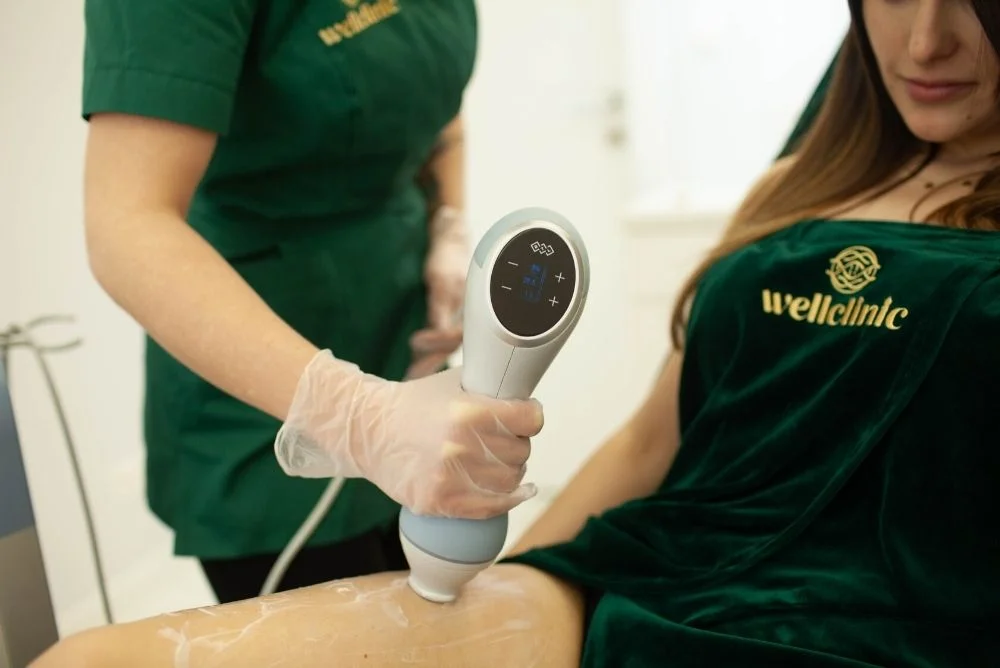
At Wellclinic, the following are used, amongst other things: BTL UniSon, which connects radio frequency combined with an acoustic wave. Radiofrequency It supplies thermal energy to the tissues, supporting their regeneration and improving skin quality. Acoustic wave It exerts a mechanical effect on connective tissue, supporting treatment of areas affected by fibrosis.
This combination allows us to address various aspects of the problem simultaneously. It is not just about smoothing the skin’s surface, but about improving the quality of the tissues.
Is it possible to completely remove fibrous cellulite?
It’s worth keeping your expectations realistic.
The aim of the therapy is, first and foremost, reduction in the appearance of cellulite, improvement in skin texture and reduction in unevenness. The range of possible outcomes depends on the severity of the condition and individual predispositions.
In cases of more persistent cellulite, treatment may require a course of sessions.
It is therefore not worth expecting a dramatic change after just one treatment. In the case of advanced conditions, what matters is a well-planned course of treatment and consistency.
What can you do on a day-to-day basis?
The treatment is no substitute for your daily routine.
Physical activity, adequate hydration, a balanced diet and maintaining a stable body weight help to keep the skin and tissues in good condition. Regular exercise improves muscle function and circulation, whilst proper hydration supports the body’s functions.
It is also worth bearing in mind that Cellulite can occur regardless of body weight. Losing weight alone does not therefore always mean that it is eliminated.
Professional treatment should be seen as part of a wider plan aimed at improving the quality of the skin and subcutaneous tissue.
Fibrous cellulite – when should treatment begin?
Fibrous cellulite is a more advanced form of cellulite. Its characteristic features are hard lumps, thickening, uneven skin and reduced tissue elasticity. In more advanced stages, the lesions are visible even without pressing on the skin and may cause discomfort.
The more established the changes are, the more important it becomes to correctly identify their nature and select the appropriate treatment.
The following are available at Wellclinic professional cellulite treatments. If you notice hard, persistent bumps on your skin and want to find out what’s causing them, book an appointment a consultation at Wellclinic. A specialist will assess the condition of the skin and subcutaneous tissue and select a treatment appropriate to the severity of the condition.
Sources:
- Bass LS, Kaminer MS. „Insights into the Pathophysiology of Cellulite: A Review.”
https://pubmed.ncbi.nlm.nih.gov/32976174/ - Tokarska K, Tokarski S, Woźniacka A, Sysa-Jędrzejowska A, Bogaczewicz J. „Cellulite: a cosmetic or systemic issue? Contemporary views on the aetiopathogenesis of cellulite.”
https://pubmed.ncbi.nlm.nih.gov/30429699/ - Luebberding S, Krueger N, Sadick NS. „Cellulite: An Evidence-Based Review.”
https://pubmed.ncbi.nlm.nih.gov/25940753/ - Menon A, Shauly O, Marxen T, Losken A, Faulkner HR. „A Clinical Guide to the Treatment of Cellulite and a Comprehensive Review of the Aetiology, Pathophysiology and Utility of Intervention.”
https://pubmed.ncbi.nlm.nih.gov/38057600/ - Bass LS, Hibler BP, Khalifian S, Shridharani S, Klibanov O, Moradi A. „Cellulite Pathophysiology and Psychosocial Implications.”
https://pubmed.ncbi.nlm.nih.gov/37000912/ - Arora G, Patil A, Hooshanginezhad Z, et al. „Cellulite: Presentation and management.”
https://pubmed.ncbi.nlm.nih.gov/35104044/




 +48 600 100 177