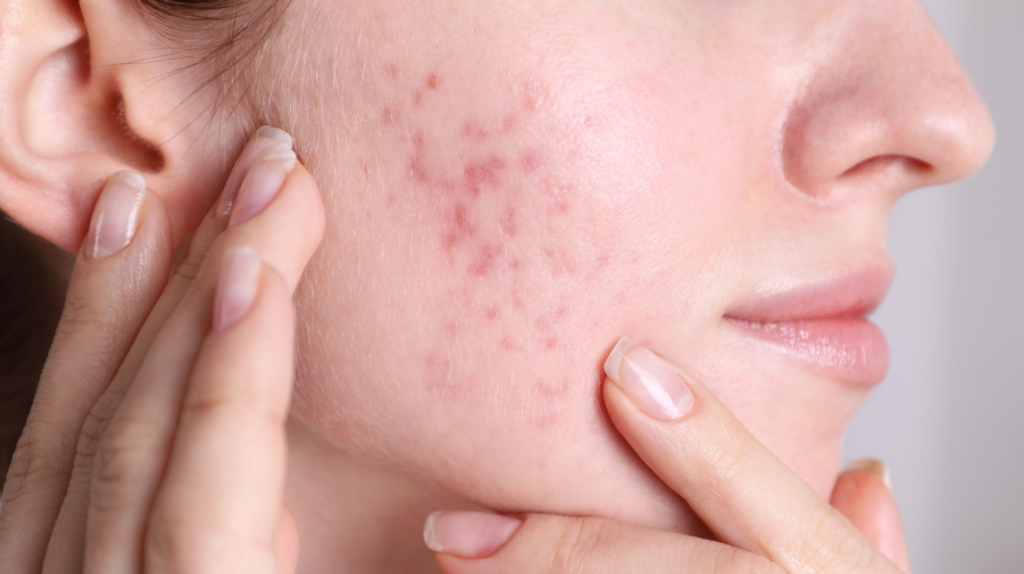
Facial scars They may be the result of acne, injuries, surgery or other skin damage. Their appearance depends, amongst other things, on the depth of the damage, its location and the course of the healing process. A scar may be flat, indented or raised, and may also differ in colour from the surrounding skin.
Lesions on the cheeks, forehead, temples or chin are particularly noticeable. Although complete scar removal It is not always possible to choose the right one scar reduction therapy It can significantly reduce its visibility, improve the appearance of the skin and smooth out its surface.
How do facial scars form?
A scar on the face It is formed as a result of the body’s natural healing process. When the skin is damaged, processes begin that lead to the closure of the wound and the regeneration of tissues. Scar tissue forms at the site of the injury, but its structure differs from that of healthy skin.
In healthy skin, the collagen fibres are arranged in an orderly fashion. In scar tissue, their arrangement is different, which is why a scar may be less elastic, harder or form a depression on the skin’s surface.
One of the most common causes scars on the face is acne. Severe inflammatory lesions can damage the deeper layers of the skin, and once they have healed, they leave behind uneven skin texture. Characteristic acne scars They usually arise as a result of tissue loss and take the form of atrophic scars.
Types of facial scars
Not all scars look the same, which is why their type is important when planning treatment. These include, amongst others,. atrophic and hypertrophic scars, and keloids. Atrophic scars create indentations in the skin’s surface and often appear following acne.
Hypertrophic scars are raised, but remain within the original site of the injury. In contrast, scarring may extend beyond the area of the original wound. Owing to their different nature, they require a different therapeutic approach.
Scars can also vary in colour. Initially, they are often pink or red, and they usually fade over time. Discoloured scars are lighter in colour than the surrounding skin, whereas mature scars przeszły have already passed the main phase of healing and are usually more stable.
Acne scars on the face
Acne scars They are among the most common types of facial scars. They can vary in shape, depth and extent, so the treatment approach should be tailored to the specific type of lesion.
Minor irregularities may be visible, particularly under certain lighting conditions. Deeper scars, on the other hand, are more noticeable and can significantly alter the texture of the skin. Their treatment requires time and a suitably tailored therapy.
It is also worth distinguishing between scars and post-inflammatory hyperpigmentation. Hyperpigmentation primarily alters the colour of the skin, whilst a scar involves a change in its structure. Both conditions may occur simultaneously, but require different treatment approaches.
If active inflammatory lesions are still present on the skin as part of acne vulgaris First and foremost, the inflammation must be treated appropriately.
How can I remove scars from my face?
The way to do this is, how to remove scars from the face, depends primarily on their type, depth, age and the condition of the skin. In the case of atrophic scars, particularly those caused by acne, the main aim of treatment is to regenerate the tissue and smooth the skin’s surface.
Depending on the nature of the changes, the following are used, amongst others:. micro-needle radiofrequency and laser therapy. The choice of method should be preceded by an assessment of the skin and the type of scar, as not every lesion will require the same treatment.
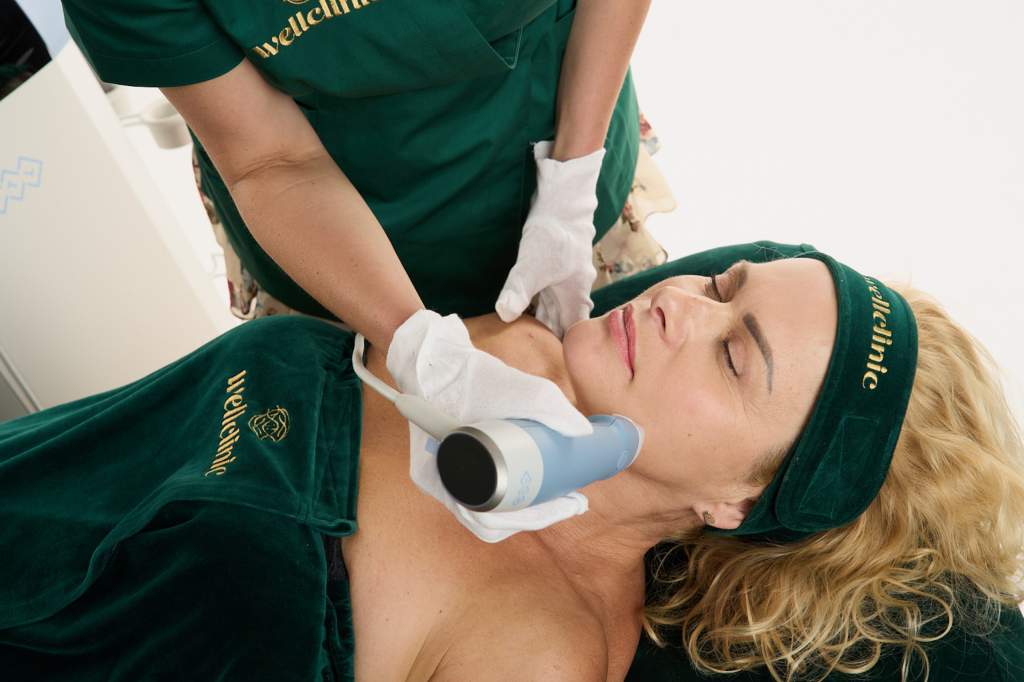
Microneedle radiofrequency for scar reduction
Facial scars They can vary in depth, structure and appearance, which is why their treatment requires a suitably chosen method. One of the approaches used in scar treatment is a combination of microneedle radiofrequency treatment using artificial intelligence technology, which allows for controlled stimulation of the deeper layers of the skin. Micro-needling stimulates the skin’s natural regenerative processes, whilst RF energy supports the remodelling of fibres collagen i elastins.
In therapy acne scars, including depressions and unevenness in the skin’s surface, it is essential to adjust the treatment parameters precisely to the type and depth of the lesions. System AI allows for the customisation of the operation RF energy, whilst the use of 36 ultra-thin microneedles enables controlled interaction with tissue.
How does AI technology support scar treatment?
Link micro-needle radiofrequency from artificial intelligence It allows the energy delivery to the treatment area to be precisely adjusted. The system analyses the information transmitted by the microneedles and, based on this, adjusts RF parameters, such as energy output, pulse duration and the rate at which the energy is delivered. This allows the treatment to be carried out in a more controlled manner, tailored to the individual needs of the skin.
This approach is particularly important in the case of atrophic scars, the depth and structure of which may vary even within a single area. Controlled micro-injuries and RF energy They support the process of tissue remodelling, which can lead to a gradual smoothing out of unevenness and an improvement in skin texture. The effects of the treatment become apparent as the skin regenerates and remodels over time; they are therefore assessed in the long term, rather than immediately after the procedure.
Laser treatment for facial scars
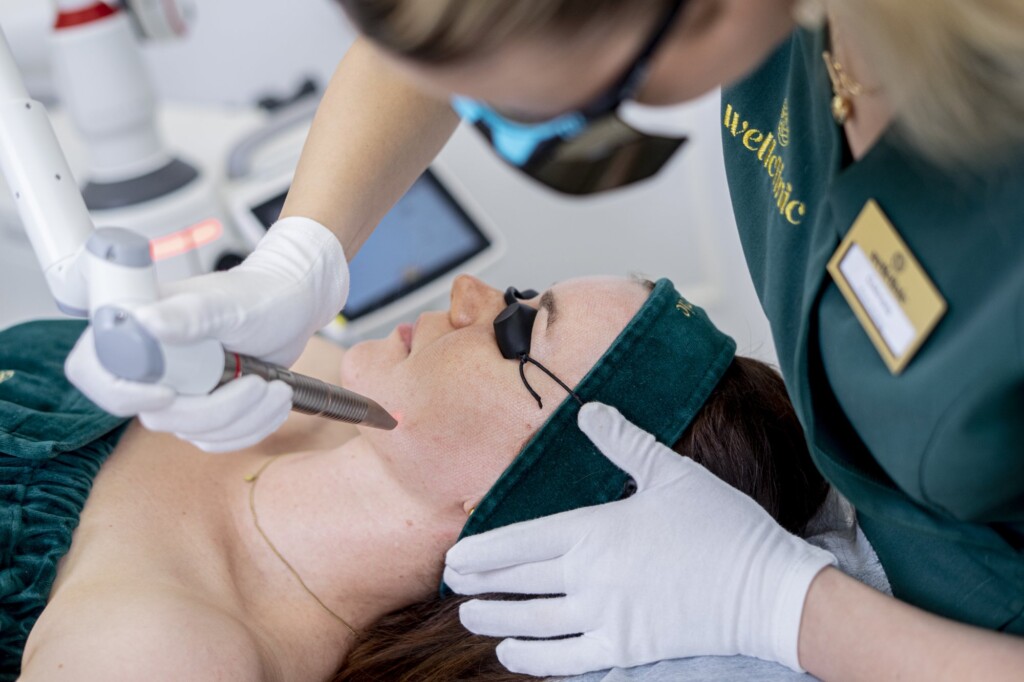
Another method used in scar treatment is laser treatment for acne and scars. Wellclinic uses a platform Fotona DYNAMIS SP PRO, the effects of which may be aimed at improving the skin’s structure.
In the case of procedures involving the use of fractional laser Energy is delivered to the skin with precision, creating microscopic areas of controlled treatment, with untreated tissue remaining between them. In the case of Er:YAG laser The energy is absorbed by the water present in the tissues, enabling the controlled evaporation of the surface layers of the skin and the gradual reduction of scar tissue. At the same time, the treatment stimulates regenerative processes and the production of new collagen, helping to regenerate and even out the skin’s texture.
Depending on type of scar Depending on the technique used, the laser energy can target specific layers of the skin, supporting regenerative processes and tissue remodelling. Gradual improvement in the skin’s structure can lead to a smoother skin surface and to reduce the visibility of the scar.
Reconstruction of a surgical scar
The effects of laser therapy They are not visible immediately after the treatment, as scar reduction occurs gradually as the skin regenerates and remodels. The treatment initiates a remodelling process that continues even after the session has ended. The skin needs time to regenerate and gradually reorganise its tissue structure.
For this reason, the results should not be assessed immediately after the procedure. As the scar continues to heal, it may become shallower, smoother and less visible.
In many cases, treatment involves a course of treatments. The final number of sessions depends on the type and depth of the scar, its location and the skin’s individual response to treatment.
Duration and number of treatments
Singles laser therapy session may last about 15-20 minutes, although the actual duration of the procedure depends, amongst other things, on the size and number of areas being treated.
In the case of scar treatment, it is often considered to perform approximately 3-4 sessions. However, this is not a one-size-fits-all approach for every patient. The treatment plan is determined on the basis of the scar’s appearance, its depth, its location and the skin’s response to previous treatments.
It is also important to allow sufficient time between treatments. The skin needs time to regenerate and for the remodelling processes to begin.
The safety of laser scar treatment
Laser treatment for scars should be preceded by an appropriate assessment. The type of change, the condition of the skin and the method used all influence the course of treatment and subsequent recovery.
After the treatment, the skin may require special care and protection from external factors. Post-treatment recommendations depend on the technique and parameters used, and are therefore determined on an individual basis.
Not every scar will be suitable for treatment using exactly the same method. Hypertrophic scars, keloids or very deep lesions may require a different approach to typical atrophic scars.
What results can you expect from scar removal?
The main aim of the treatment is to improve the condition of the skin at the site of the scar. In the case of atrophic changes This may mean that they become shallower and that the difference between the affected area and the healthy skin becomes less pronounced.
It is worth bearing in mind that improving the appearance of a scar does not always mean removing it completely. The results depend on the type of scar, its depth, how long it has been there, and the individual characteristics of the skin.
Mature scars may require a more extensive procedure than fresh scars, which is why the choice of treatment should take into account the type, depth and extent of tissue remodelling. The suitability of a treatment is best assessed during a consultation, rather than solely on the basis of photographs showing results in other people.
Preparation and eligibility for scar removal procedures
Before starting treatment, it is necessary to assess the scar and the condition of the skin. During the consultation, factors such as the type of lesion, its depth, colour, location and the time that has elapsed since it first appeared are taken into account.
It is also important to check that there is no active inflammation or other skin problems in the area to be treated, which could affect the safety of the procedure.
On this basis, it is possible to assess whether laser therapy or rmicroneedle radiofrequency will select the appropriate methods and tailor the treatment to the specific skin type. Individual assessment is particularly important for the face, where even minor imperfections can be clearly visible.
Treatment of acne scars at Wellclinic
In the case of acne scars, treatment focuses primarily on improving the skin’s texture and reducing the appearance of unevenness. At Wellclinic, the following is used for this purpose micro-needle radiofrequency and laser therapy using Fotona platforms.
Accurate assessment remains crucial. The type of scar, its depth and the current condition of the skin all influence the choice of parameters and the approach to treatment. For this reason, the treatment plan is tailored to each individual.
If you want to check whether treatment of facial scars involving laser therapy or micro-needle radiofrequency will be the right solution for you, whilst consultation A specialist will assess the type, depth and appearance of the scars, as well as the condition of the skin, and will then help you choose the appropriate course of treatment. We carry out the treatments at our clinics in Warsaw, Gdańsk and Cracow.