You’ll lose weight. The scales will go down. Your clothes will start to fit better. And yet certain parts of your body may still look as if nothing has changed.
That is precisely when the question arises: Injection lipolysis versus laser lipolysis - Which method might be more effective for localised fat deposits?
Both procedures have a similar aim, but employ completely different methods. One involves administering the preparation via injections, whilst the other utilises laser energy. However, the difference is not limited to the method of performing the treatment. The area being treated, the amount of fat tissue, the condition of the skin and the expected outcome are also significant factors.
That is why the answer to the question, laser lipolysis or injectable, should begin not by choosing a specific procedure, but by identifying exactly which problem we actually want to solve.
Injection lipolysis - what does it involve?
Injection lipolysis involves administering the preparation directly to the area where the locally accumulated fat tissue. The substances used are intended to lead to damage to fat cells, and their breakdown products are then metabolised and eliminated by the body.
This method may be considered, first and foremost, when the problem concerns a small, localised fat deposits. However, it is not a method for general weight loss and is no substitute for weight reduction if a person is overweight.
As the procedure involves making incisions, a localised tissue reaction may occur after the treatment. Swelling, redness, tenderness or bruising depend, amongst other things, on the area treated and the individual’s response.
Laser lipolysis - laser energy for fat reduction
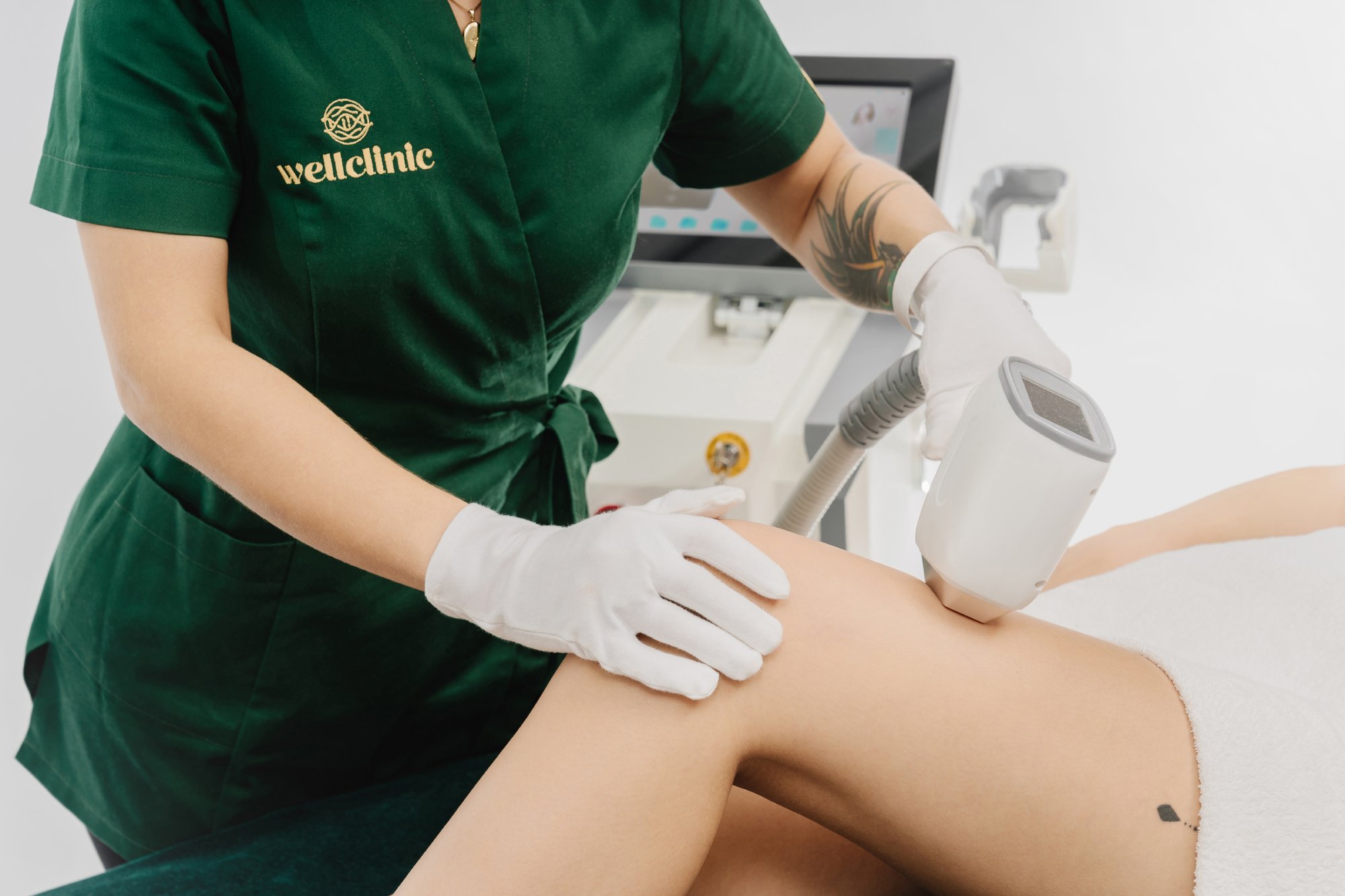
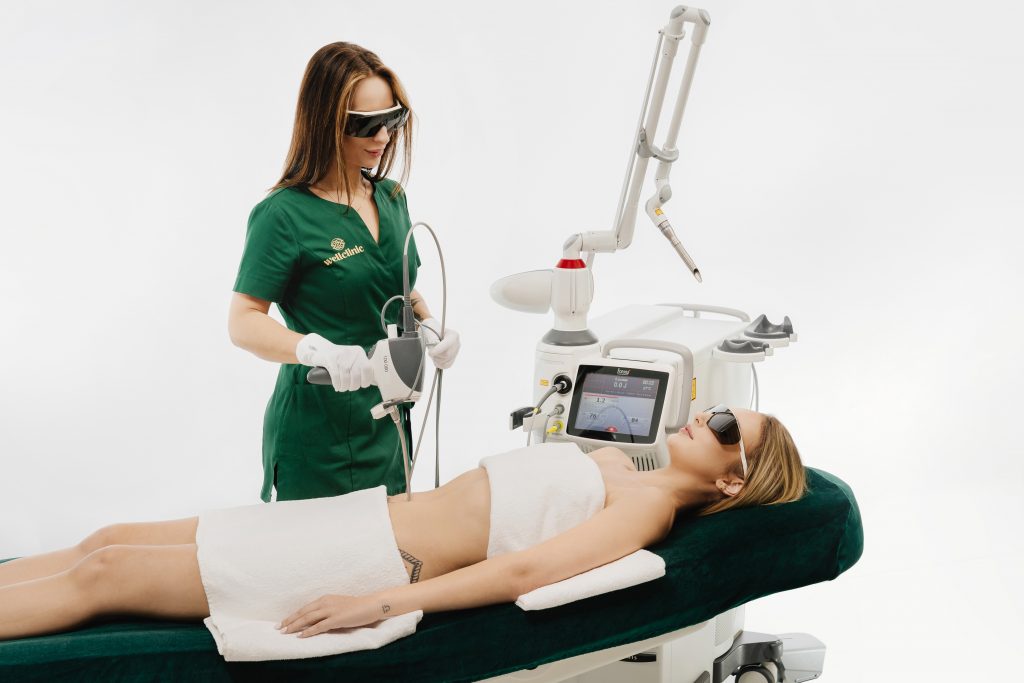
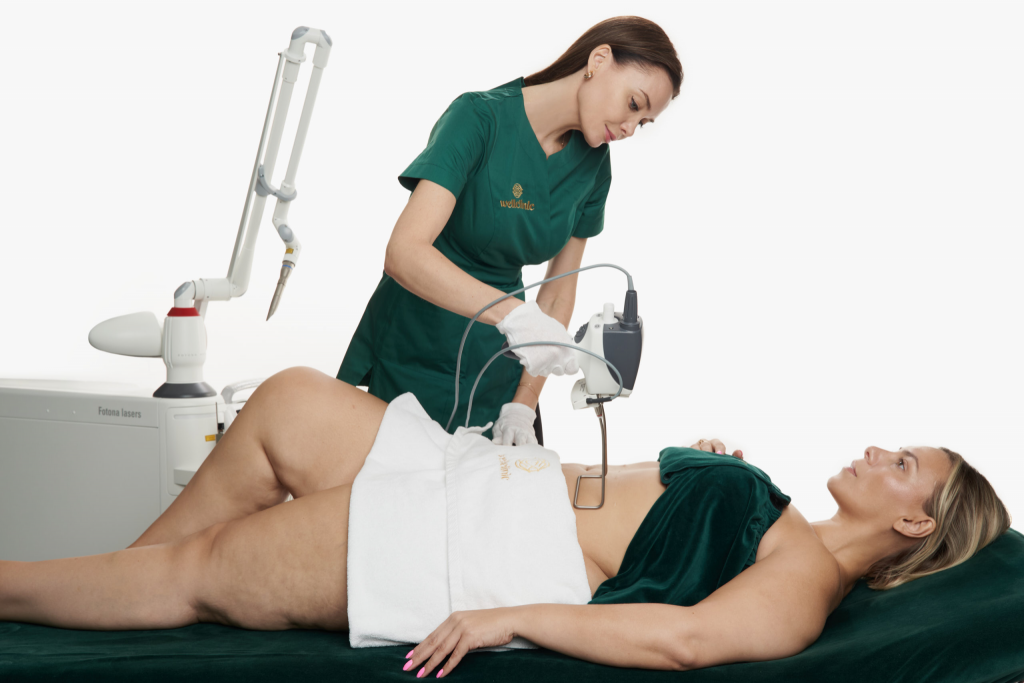
In the case of laser lipolysis Laser energy is used to target fatty tissue. The procedure can be used to reduce locally accumulated fat and to improve the contours of selected areas of the body. Unlike injection lipolysis, in which a carefully selected preparation is administered directly into the tissue, laser lipolysis utilises light energy as a factor affecting fat cells.
During the treatment laser energy It is directed at the area being treated, where it produces a localised thermal effect. Depending on the treatment parameters, this can affect the structure of fat cells and the processes taking place within the tissue. The aim of the procedure is reduction in body fat in the selected area, thereby improving the body’s proportions and contours.
Laser lipolysis is used primarily in the case of localised fat deposits, which can be difficult to reduce despite a healthy diet and physical activity. The treatment may target areas such as the abdomen, waist, thighs and arms, amongst others. However, it is not a treatment for obesity, nor is it a substitute for weight loss.
An important part of the assessment for the procedure is the evaluation of the amount and distribution of body fat, skin quality and general health. The selection of treatment parameters should take into account the patient’s individual characteristics and the area being treated. This makes it possible to determine whether laser lipolysis which approach would be appropriate and what sort of result can realistically be expected.
Injection lipolysis versus laser lipolysis - the key differences
The most significant difference lies in the way they affect adipose tissue. Injection lipolysis uses a preparation administered via injections, whereas laser lipolysis uses laser energy.
The procedure itself also varies. With the injection method, the skin is punctured, and a local tissue reaction may occur after the treatment. In the case of non-invasive laser methods There is no need to make any punctures or incisions.
The condition of the skin may also be a factor. If, in addition to localised fat, the skin is loose or has reduced firmness, it is worth taking this issue into account when planning treatment.
Laser or injection-based lipolysis for localised fat?
Localised accumulation of fat It can also occur in people who are of a healthy weight. The stomach, hips, thighs, arms or the area under the chin may remain problematic despite physical activity and a healthy diet.
In such a situation, losing more weight does not always solve the problem. If your body weight is within the normal range and the change is limited to a specific area, the aim may be to body modelling, i.e. improving the proportions and outline of the selected area.
That is precisely when the question arises: laser lipolysis or injection lipolysis?
There is no single answer that suits everyone. When choosing a method, the size of the area, the amount of body fat, the condition of the skin and the desired result are all important factors.
Localised fat is not always the only problem
The appearance of a particular part of the body does not depend solely on the amount of body fat.
Following significant weight loss, the skin may not fully adapt to the reduced volume of the tissues. As a result, the following may occur: skin flaccidity, reduced elasticity and loss of firmness.
The problem may also be due to the natural ageing process. Over time, the production of collagen and elastin decreases, which affects the structure and elasticity of the skin. Loss of skin tone It may be particularly noticeable in areas where there was previously a greater excess of body fat.
In such situations, simply reducing body fat is not always enough. It is therefore worth assessing both body fat and skin condition during the consultation.
Laser lipolysis and skin tightening
This is one of the factors that may be relevant when choosing a method. The technology used in laser lipolysis It may affect not only adipose tissue, but also the skin. Laser energy supports processes related to tissue regeneration and collagen production.
Collagen It is one of the skin’s essential structural proteins. Among other things, it is responsible for the skin’s proper structure, tone and firmness.
Body sculpting instead of yet another diet
Not every concern about one’s body shape requires further weight loss. If a person’s weight is within the normal range but there is still a small amount of fat on the stomach, thighs or hips, the aim may be to improve the proportions of that specific area. In such cases body contouring treatments enable the treatment to be focused on a specific area.
Body contouring may involve treatments aimed at both reducing localised fat deposits and improving skin firmness. The choice of treatment should depend on what actually needs to be corrected.
It is also worth distinguishing such procedures from general weight loss. Slimming treatments can help reduce body fat and improve body contour, but they are no substitute for a programme aimed at reducing excess body weight.
Injection-based or laser lipolysis - which should you choose?
If you’re wondering, injection lipolysis or laser lipolysis, the answer depends primarily on what you want to change.
In the case of a small, localised deposit of adipose tissue, an injection-based method may be considered. With certain laser technologies, however, it is possible to combine treatment targeted at adipose tissue with treatment aimed at improving the appearance of the skin. A good choice is one that addresses a real problem.
During the consultation, it is not only the amount of body fat that matters, but also its distribution, the condition of the skin, the treatment area and the expected result.
How many treatments are needed?
There is no single number of treatments that suits everyone.
In the case of injectable lipolysis, the scope of treatment depends, amongst other things, on the area being treated, the amount of fat tissue and the preparation used. With laser methods, however, the specific technology, the size of the area and the individual’s response are key factors.
It is therefore not worth assuming in advance that a specific number of treatments will produce the same result for everyone. The treatment plan should be drawn up on an individual basis following an assessment of the area to be treated.
Injectable versus laser lipolysis - similar aim, different mechanisms of action
Injection lipolysis versus laser lipolysis These are two different methods for treating localised fat deposits.
Injectable lipolysis involves the use of a preparation administered via injections. Laser lipolysis utilises laser energy and, with certain technologies, can also help to improve skin firmness and appearance.
There is therefore no single method that can be considered the best for everyone. In some cases, reducing localised body fat will be more important, whilst in others, improving skin firmness will be the priority. Sometimes, a more comprehensive approach to body contouring will be required.
It’s best to establish the cause first. Only then should you choose a treatment.
Don’t wait for yet another diet and yet another few kilos off to solve a problem that they don’t actually solve. If, despite your best efforts, your stomach, thighs, hips or any other part of your body still doesn’t look the way you’d like it to, it’s worth first finding out what is actually causing it to look that way. Book a consultation and discover the possibilities of a treatment tailored to your body shape.
Sources:
- PubMed „A Systematic Review of Injectable Lipolytic Agents for Nonsubmental Fat Reduction”
https://pubmed.ncbi.nlm.nih.gov/41296813/ - PubMed „Efficacy and safety of injectable deoxycholic acid for submental fat reduction: a systematic review and meta-analysis of randomised controlled trials”
https://pubmed.ncbi.nlm.nih.gov/33523775/ - PubMed „Efficacy, safety, and potential industry bias in the use of deoxycholic acid for submental fat reduction - A systematic review and meta-analysis of randomised clinical trials”
https://pubmed.ncbi.nlm.nih.gov/37806137/ - PubMed „Clinical Evaluation of the Safety and Efficacy of a 1060-nm Diode Laser for Non-Invasive Fat Reduction of the Abdomen”
https://pubmed.ncbi.nlm.nih.gov/33647960/ - PubMed „Clinical evaluation of the safety and efficacy of a 1060 nm diode laser for non-invasive fat reduction of the flanks”
https://pubmed.ncbi.nlm.nih.gov/37608607/