
 Katarzyna Pawłowska

 09.11.2026
Problem hair loss and thinning hair It affects both women and men. The causes may include genetic predisposition, hormonal changes, chronic stress, nutritional deficiencies or past illnesses. Whatever the cause, it is worth identifying what is weakening the hair, rather than focusing solely on masking the problem.
One way to keep your hair healthy is needle mesotherapy of the scalp. The treatment involves administering carefully selected preparations directly to the scalp, around the hair follicles. Depending on individual needs, platelet-rich plasma, vitamin preparations or peptide preparations are used. Mesotherapy It may form part of a supportive treatment for excessive hair loss, including androgenetic alopecia.
Table of contents
When does your hair need extra support?
Excessive hair loss does not always start with visible thinning patches. Often, the first sign is a loss of volume in the hair, hair becoming weaker, or a noticeably greater amount of hair left on the brush.
Over time, the parting may become wider and the scalp more visible. In some people, the problem affects the entire scalp, whilst in others it is mainly confined to the temple area or the crown of the head.
The most common causes of thinning hair and hair loss include:
- androgenetic alopecia related to genetic predisposition and the action of hormones,
- chronic stress and prolonged physical strain,
- nutrient deficiencies, including iron and protein,
- hormonal disorders,
- improper care and mechanical damage,
- age-related changes.
It is worth bearing in mind that there are various causes hair loss require a different approach. It is therefore important to identify the source of the problem before beginning treatment.
Scalp microneedling – what does the treatment involve?
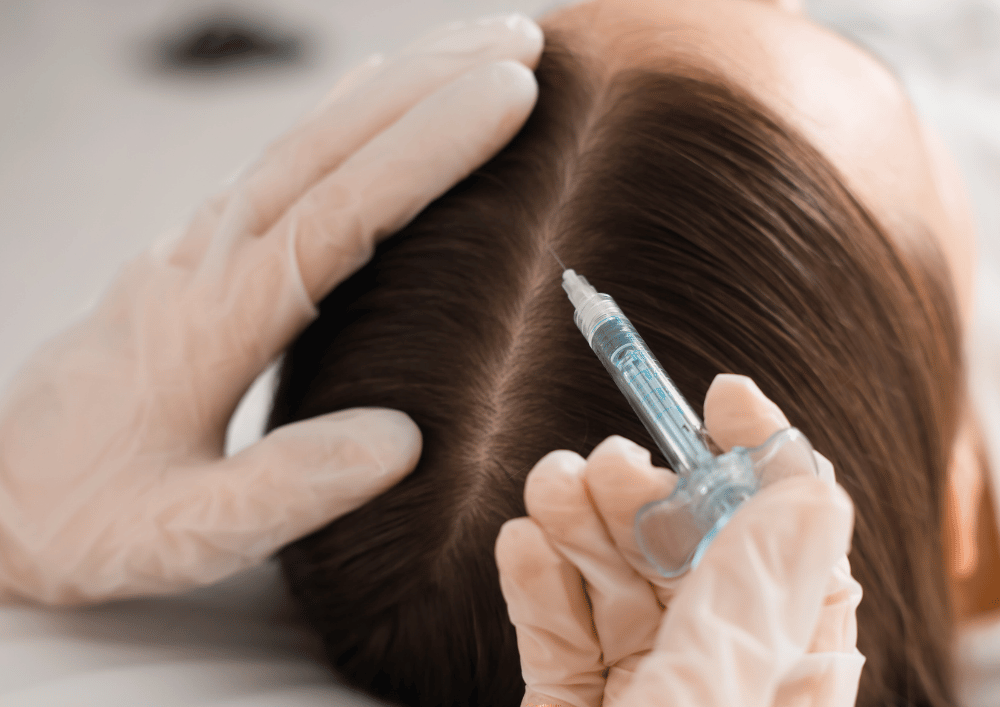
The treatment involves administering a series of small injections, through which the preparation is delivered directly into the scalp. Thin needles are used, and the type of substance administered is selected to suit the patient’s needs and the condition of their hair.
Depending on the method chosen, the following are used:
- platelet-rich plasma obtained from the patient’s blood,
- vitamin supplements containing ingredients that support the health of the scalp,
- peptide preparations, used in treatments aimed at improving the condition of the hair follicles.
The aim of the treatment is to improve the condition of the scalp and support the natural processes taking place within the hair follicles. Mesotherapy It may be used as a stand-alone treatment or to complement other methods of treating hair loss.
What results can scalp mesotherapy deliver?
The aim of the therapy is, first and foremost, supporting the scalp’s natural regenerative processes, strengthening the hair and reducing excessive hair loss. Depending on the cause of the problem and the product used, one may also aim to improving the density and quality of regrowing hair.
Patients most often expect:
- reducing excessive hair loss,
- to improve their condition and appearance,
- to support new hair growth,
- to improve the body of the hairstyle,
- better nourishment for the scalp.
The results will not be the same for everyone. The type of hair loss, the severity of the condition, the condition of the hair follicles and the individual’s response to the treatment are all important factors.
In cases of advanced hair loss, mesotherapy alone may not produce the desired results. In such situations, a more comprehensive assessment is required, followed by the selection of an appropriate treatment.
Serum, vitamins or peptides – which should you choose?
There is no single product that is suitable for everyone experiencing hair loss. The choice depends primarily on the cause of the problem and the desired results.
Platelet-rich plasma It is derived from the patient’s blood. It contains platelets that release growth factors, which play a part in the body’s natural repair processes. It is used in treatments designed to support scalp regeneration.
Vitamin supplements They provide active ingredients that may support the health of the skin and hair. Their composition is tailored to the patient’s needs. However, they are not a substitute for diagnosing deficiencies or treating the underlying conditions causing hair loss.
Peptide preparations contain compounds used in treatments designed to improve skin quality and support its natural regenerative processes.
Each of these methods has a different application. It is therefore advisable to consult a specialist and have your scalp assessed before deciding which product to choose.
How is scalp mesotherapy carried out?
Mesotherapy It is a non-surgical procedure and does not require hospitalisation. However, this does not mean that it is entirely risk-free. Like any injection procedure, it may be associated with temporary reactions such as redness, swelling, tenderness or minor bruising.
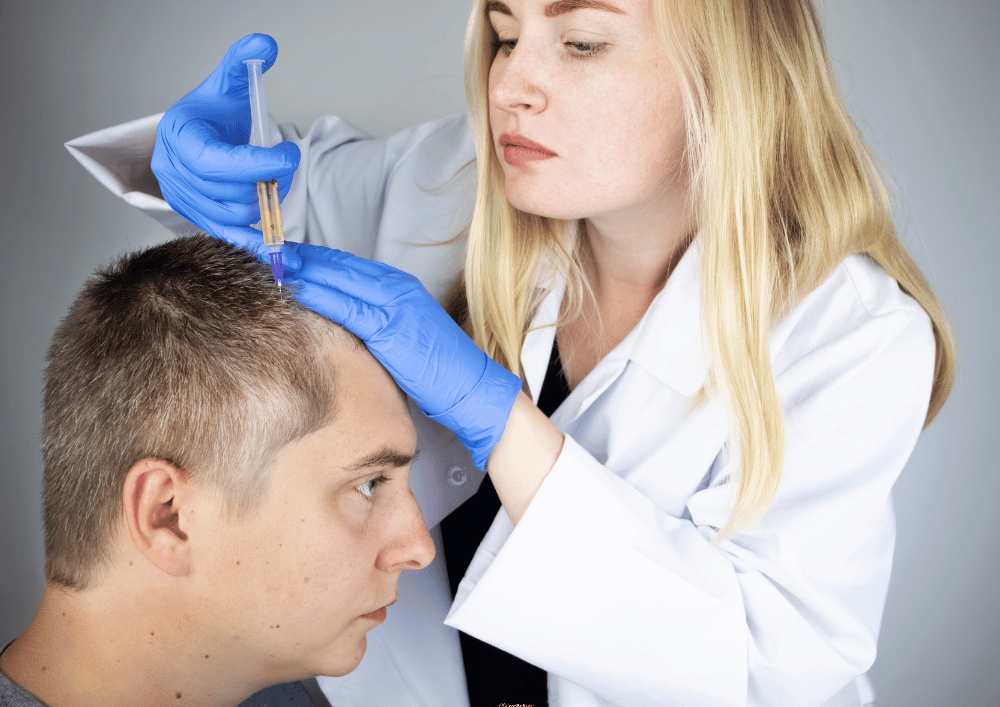
During the procedure, the preparation is administered via a fine needle into selected areas of the scalp. The type of substance, the amount used and the injection sites depend on the individual treatment plan.
At Wellclinic, the treatment takes about 30-45 minutes. The number of sessions and the intervals between them are determined on the basis of the patient’s needs and the method used.
After the treatment, you may experience slight redness, tenderness or swelling. These are usually temporary reactions.
When can you start to see the first results?
In the case of scalp mesotherapy You need to be patient. Hair has a mind of its own growth cycle, which is why their condition does not change from one day to the next.
The first changes may become noticeable after a few weeks, but it often takes longer to assess the results of the treatment. Much depends on the product used, the cause of the hair loss and individual factors.
The best results are achieved when treatments form part of a well-thought-out approach that also takes into account home care, diet and, where necessary, treatment of the underlying cause of the problem.
How should you prepare for the treatment, and what should you bear in mind after mesotherapy?
Before the procedure, you should inform the specialist about any medicines you are taking, any chronic conditions, any allergies and any potential blood clotting problems. This is important for the safety of the procedure.
After mesotherapy recommended:
- avoiding strenuous physical activity immediately after the procedure,
- not using the sauna or solarium,
- avoiding direct sunlight,
- do not apply cosmetics to the injection site for approximately 48 hours,
- adherence to individual post-treatment recommendations.
Contraindications include, amongst others, active infections, certain autoimmune diseases, blood clotting disorders, pregnancy and breastfeeding. A specialist carries out the final assessment of suitability for the procedure.
Is scalp microneedling right for you?
If you notice that your hair is becoming thinner, losing volume or falling out more than before, don’t put off getting it checked out.
Needle mesotherapy of the scalp can be one element of a treatment programme designed to support hair health, but first we need to establish why they have become weakened.
During the consultation, the specialist assesses the condition of the scalp, the nature of the problem and any possible contraindications. On this basis, it is possible to select the appropriate treatment and determine whether mesotherapy is the right course of action.
Don’t wait until your thinning hair becomes even more noticeable. Book a consultation and find out which treatment options would be suitable for you.
Sources:
1. PubMed: „Systematic Review of Mesotherapy: A Novel Approach to the Treatment of Hair Loss” (2023). https://pubmed.ncbi.nlm.nih.gov/37558233/
2. Polish Dermatological Society: „Androgenetic alopecia in women and men. Diagnostic and therapeutic recommendations of the Polish Dermatological Society” (2018).
https://pjp.termedia.pl/Lysienie-androgenowe-kobiet-i-mezczyzn-Rekomendacje-diagnostyczno-terapeutyczne-Polskiego-Towarzystwa-Dermatologicznego,56,32149,0,0.html
3. Polish Journal of Applied Sciences: „Review of Current Knowledge and Management of Androgenetic Alopecia” (2024). https://pjas.ansl.edu.pl/index.php/pjas/article/view/223
4. Polish Pharmacy: „Needle mesotherapy of the scalp as an adjunct to the treatment of hair loss” - Gabriela Osika, Anna Wesołowska (2021).
https://ptfarm.pl/wydawnictwa/czasopisma/farmacja-polska/103/-/29129
Book a consultation


 +48 600 100 177