
 Katarzyna Pawłowska
  16.10.2026
 Table of contents
Hair loss It isn’t always a problem that can be solved by a new shampoo, scalp treatment or supplement. Sometimes it’s the first sign that changes are taking place in the body which aren’t visible at first glance. Stress, hormonal imbalances, nutrient deficiencies, scalp conditions and genetic predispositions can gradually weaken the hair. The longer the cause remains undiagnosed, the more difficult it is to choose the right course of treatment.
Not every hair left on a brush is a cause for concern. Hair naturally goes through successive phases of growth, rest and shedding. However, a marked increase in hair loss, a reduction in hair density, a widening parting or a receding hairline should be cause for concern. The appearance of bald patches, itching, redness or excessive oiliness of the scalp is also significant.
In such situations, it is worth looking not only at the hair itself, but above all at the condition of the scalp and the possible causes of the problem. Early diagnosis hair loss helps to recognise type of hair loss and increases the likelihood of appropriate treatment being provided.
Why does your hair fall out, even when you look after it every day?
Good aftercare isn’t always enough. Causes of hair loss There are many different types, and each may require a different approach. Cosmetics help to keep hair in good condition, but they will not resolve hormonal imbalances or make up for all nutritional deficiencies.
One of the most common causes of hair thinning is androgenetic alopecia, linked to genetic predisposition and susceptibility hair follicles’ response to androgens. In men, it usually manifests as a receding hairline at the temples and thinning on the crown of the head. In women, it more often leads to a gradual reduction in hair density, particularly around the parting.
In women hair loss after pregnancy It may be linked to hormonal changes and a temporary disruption to the hair growth cycle. Similar problems may arise during the menopause. Thyroid disorders, iron deficiency, restrictive diets and rapid weight loss are also significant factors.
Sometimes hair starts to fall out a few weeks or months after severe stress, an infection, surgery or some other strain on the body. This may indicate telogenetic alopecia, in which a greater than usual number of hairs prematurely enter the resting phase and subsequently fall out.
Another reason is alopecia areata – an autoimmune condition that can cause the sudden appearance of clearly defined areas of hair loss. Meanwhile, certain inflammatory conditions of the scalp can lead to damage to the hair follicles and permanent hair loss.
The most important thing is to identify what caused the problem. Using one treatment after another without identifying the cause may not produce the desired results.
When does hair loss require a diagnosis?
A certain number hair loss Hair loss is a physiological phenomenon that occurs every day. However, there is no single figure that can be used on its own to determine whether hair loss is normal. Factors such as hair density, how the hair is washed, its length and individual growth cycle.
When should you see a specialist? It’s worth doing this when you notice:
- a noticeably greater amount of hair falling out than before;
- gradual thinning of the hair or a widening parting;
- a receding hairline at the temples or thinning on the crown of the head;
- the sudden appearance of round or irregular patches of hair loss;
- itching, pain, redness, scabs or increased flaking of the scalp;
- hair loss accompanied by weakness, changes in body weight or other worrying symptoms.
It is particularly important to seek medical advice promptly if the scalp is painful, there are signs of inflammation, or hair is falling out rapidly and in patches. Some forms of hair loss require early treatment to minimise the risk of permanent damage hair follicles.
Scalp diagnosis – that’s a good place to start
Rather than speculating about why your hair is losing its thickness, it’s worth checking the condition of your hair and scalp. Trichological consultation can help you assess the problem and plan your next steps.
During the consultation, the specialist takes a medical history regarding the duration of hair loss, past illnesses, medication, diet, stress and hormonal changes. Information about a family history of hair loss and previous hair care and treatment methods is also important.
A useful tool is trichoscopy, which is a non-invasive examination of the scalp and hair under magnification. It allows for the assessment of, amongst other things, the thickness of the hair shafts, variations in their diameter, the openings of the hair follicles, and characteristic features that may indicate a specific type of hair loss.
Depending on the clinical presentation, a dermatology consultation and laboratory tests may be required. The doctor may order, amongst other things, a full blood count, an assessment of iron status or thyroid function tests. Not every patient requires the same set of tests. The scope of these tests should be determined by the patient’s medical history and symptoms.
An accurate diagnosis is the basis for effective treatment of hair loss. It helps to distinguish between situations where the problem may resolve once the cause has been addressed and those that require long-term dermatological treatment.
How can hair loss be treated? The methods should be tailored to the cause
There is no single treatment that is effective for every type of hair loss. Hair loss caused by iron deficiency requires a different approach to androgenetic alopecia, which in turn requires a different approach to that for inflammatory or autoimmune conditions.
Pharmacological treatment
In certain cases, treatment is based on medication. In androgenetic alopecia Minoxidil, available in topical formulations, is one of the treatments used. Depending on the patient’s gender, state of health and clinical indications, the doctor may also consider other medicines, such as finasteride, for suitably selected patients.
The effects of drug therapy do not usually appear immediately. Assessing the response to treatment takes time, and the results achieved often depend on continuing the treatment. The choice of medication, the dosage and the assessment of possible side effects should be discussed with your doctor.
In the case of alopecia areata Treatment depends on the extent of the lesions and the activity of the disease. A dermatologist may recommend topical, injectable or systemic treatment. In more severe forms, specific therapies targeting immune mechanisms are also available.
Making up for deficiencies and changing habits
If the tests confirm iron deficiency or any other nutrient, taking a supplement may be an important part of treatment. However, taking high doses of supplements on your own is not a good idea. An excess of certain nutrients can also be harmful, and taking supplements without medical advice may not improve hair growth.
What matters is a diet providing adequate amounts of protein, iron, zinc and vitamins. It is also important to ensure an adequate energy intake, avoid restrictive diets and limit excessive damage to the hair caused by chemical treatments and high temperatures.
In the case of stress-related hair loss, an infection or rapid weight loss, improvement may occur gradually as the underlying cause subsides. Even once the cause has been addressed, it may take several months for the visible density of the hair to recover.
Mesotherapy of the scalp
Mesotherapy of the scalp involves administering preparations into the skin via injection. Depending on the product used and the treatment protocol, the procedure is designed to improve the condition of the skin and hair follicles.
It is important to bear in mind, however, that the effectiveness mesotherapy It depends on the type of treatment, the indications and the quality of the available research. Not all the treatments used have equally well-documented effects, and mesotherapy is not a substitute for treating the underlying cause of hair loss.
Platelet-rich plasma
Platelet-rich plasma (PRP) It is obtained from the patient’s blood and then injected into the scalp. The preparation contains platelets that release growth factors, which may influence tissue repair processes.
Research suggests that certain parameters of hair growth can be improved, particularly in cases of androgenetic alopecia. However, the results are not consistent across all studies, and the protocols for preparing and administering PRP vary between centres. The method therefore requires individual assessment and a realistic evaluation of the potential outcomes.
Low-level laser therapy (LLLT) and photobiomodulation
Low-level laser therapy (LLLT), also known as photobiomodulation, involves the use of light of a specific wavelength and energy parameters to elicit a biological response in tissues. In the treatment of hair loss, this method is intended to support the activity of hair follicles and the processes associated with hair growth. Research suggests that LLLT may increase hair density in some people with androgenetic alopecia. However, its effectiveness depends on the device used, the treatment parameters and the individual’s response. The method does not guarantee hair regrowth and is not a substitute for diagnosing the cause of hair loss.
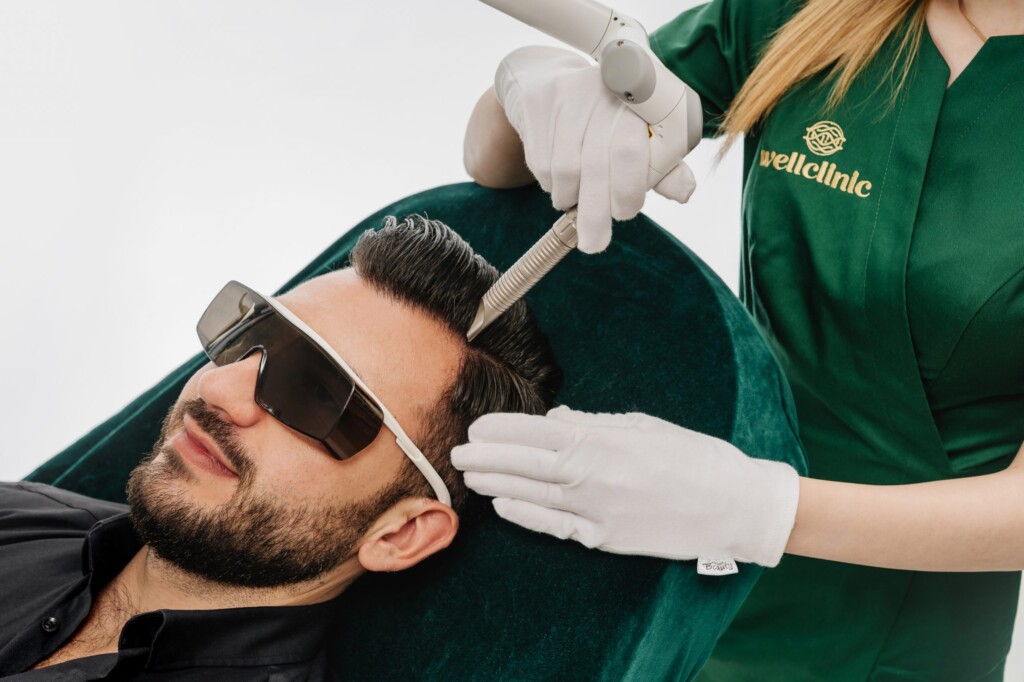
Laser treatment for hair loss – Fotona Hair Restoration and combination therapy
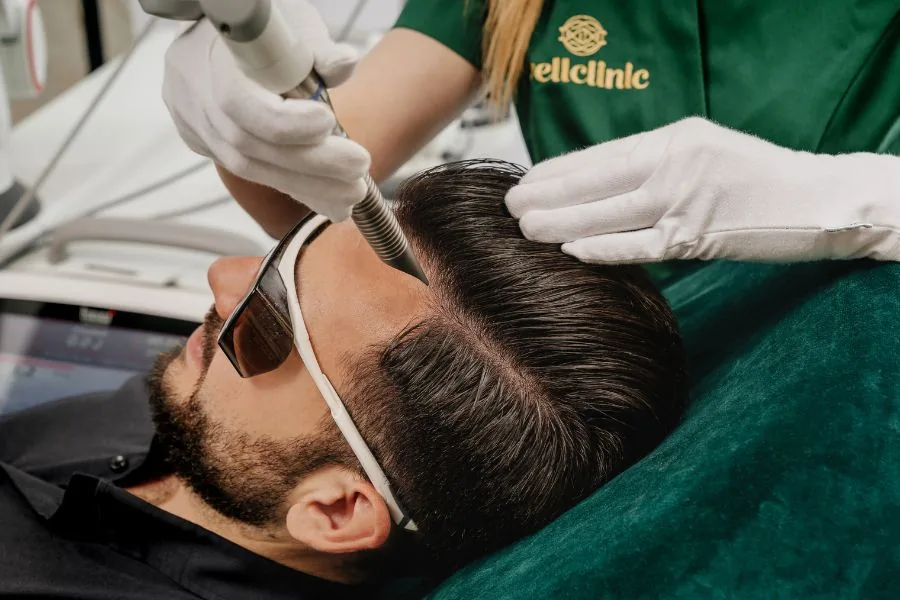
Laser treatment for hair loss may form part of a personalised treatment plan for people struggling with excessive hair loss and thinning hair. However, not all laser procedures should be equated with low-level laser therapy (LLLT), as they differ in terms of the technology used, their parameters and the way they affect tissues.
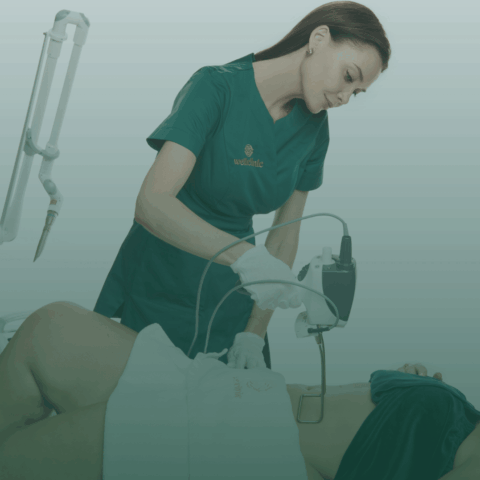
Wellclinic offers the Fotona Hair Restoration procedure, as well as the combined Well Hair Restoration therapy, which includes laser treatments and the administration of a tissue biostimulator containing polynucleotides. The aim of this treatment is to support the health of the scalp and improve hair growth parameters. A single session usually lasts around 15–20 minutes, depending on the scope of the procedure. The treatment plan should take into account the cause of hair loss, the condition of the scalp and any possible contraindications.
Is laser treatment for hair loss Is it effective? The results depend on the type of hair loss and the individual’s response. Before starting treatment, it is worth carrying out a trichological consultation i trichoscopic examination, and then discuss the expected benefits, the limitations of the treatment and the number of appointments required. Progress can be assessed on the basis of follow-up examinations and images taken under comparable conditions.
Tissue biostimulants and polynucleotides
Polynucleotides They are used in selected regenerative procedures, including treatments carried out on the scalp. Their potential effects are linked, amongst other things, to their influence on tissue repair processes.
Research into the application of polynucleotides in androgenetic alopecia are promising, but still limited. The available literature includes, amongst other things, small-scale clinical trials; therefore, this method should not be presented as a solution with a proven advantage over all other therapies.
At Wellclinic, polynucleotides are used as part of a combination therapy with laser therapy. A specialist should determine eligibility for the procedure following an assessment of the scalp, a medical history and a discussion of the expected results and the limitations of the method.
Hair transplantation
Hair transplantation may be a solution for suitably selected patients, particularly those with certain forms of androgenetic alopecia. The procedure involves transferring hair follicles from the donor area to the areas requiring restoration.
Not every patient is eligible for a hair transplant. Factors such as the cause of hair loss, the stability of the condition, the availability of a donor area and the patient’s general state of health are all important. In cases of active inflammatory conditions or certain forms of hair loss, the procedure may not be recommended.
Non-surgical methods may be considered as an alternative or a complement to treatment, but there is no guarantee that they will replace a hair transplant. The decision depends on the type of hair loss, its severity and the patient’s expectations.
How can you encourage hair growth on a daily basis?
Hair care for hair loss It should protect the scalp and hair shafts from further damage. It is not a substitute for treatment, but can be a valuable addition to it.
It is worth bearing in mind a few rules:
- Make sure you eat a balanced diet. Make sure you provide your body with sufficient protein and energy. Make up for any deficiencies in accordance with medical advice.
- Avoid restrictive weight-loss diets. Rapid weight loss can exacerbate hair loss.
- Minimise mechanical damage. Avoid tight updos, tugging whilst combing your hair, and frequent use of high heat.
- Choose the right scalp care. If you experience itching, flaking or excessive oiliness, it is worth identifying the cause of the symptoms rather than using random products.
- Don’t take supplements blindly. An excess of certain ingredients can be harmful.
- Follow the treatment advice. Many treatments need to be used regularly for several months before their effectiveness can be assessed.
It is also worth bearing in mind that improvement is not always immediate. Hair grows slowly, so the first signs of improvement may only become visible after a few months. The time needed to assess the results depends on the cause of the hair loss and the method used.
When can you expect to see the results of hair loss treatment?
The time it takes to see an improvement depends primarily on the diagnosis. In the case of temporary hair loss linked to stress, infection or nutritional deficiencies, the problem may improve once the underlying cause has been addressed. It usually takes longer for the visible density of the hair to be restored.
W androgenetic alopecia Long-term treatment is often necessary, as the condition may progress without treatment. In the case of inflammatory scalp conditions, the most important thing is to diagnose the condition quickly and halt its progression.
The effects of treatment should be assessed on the basis of specific changes, rather than solely on subjective impressions. Photographs, an assessment of hair density and follow-up examinations are helpful. A lack of rapid improvement does not always mean that the treatment is ineffective, but it should prompt a discussion with a specialist about the next steps.
Hair loss – don’t wait until thinning becomes noticeable
Hair loss There may be many causes, and effective treatment begins with identifying the correct one. Sometimes, it is sufficient to treat the underlying condition or to address any confirmed deficiencies. In other cases, long-term medication, supportive treatments or a consultation regarding a hair transplant may be required.
If you notice that your hair is falling out more than usual, losing volume or that there are visible thin patches, don’t just change your shampoo. Start with a diagnosis.
Book a consultation at Wellclinic. A scalp assessment and a consultation with a specialist will help you determine what next steps are worth considering in your case. Explore the available treatment options and choose a course of action tailored to the cause of the problem, the condition of your hair and your needs.
Sources:
- PubMed „Evaluation and diagnosis of patients with hair loss”
https://pubmed.ncbi.nlm.nih.gov/25128119/ - American Academy of Dermatology (AAD) „Hair loss: Diagnosis and treatment” https://www.aad.org/public/diseases/hair-loss/treatment/diagnosis
- American Academy of Dermatology (AAD) „Hair loss: Causes”
https://www.aad.org/public/diseases/hair-loss/causes/18-causes - PubMed „Low-level laser therapy as a treatment for androgenetic alopecia” https://pubmed.ncbi.nlm.nih.gov/27114071/
- PubMed „Low-Level Laser and LED Therapy in Alopecia”
https://pubmed.ncbi.nlm.nih.gov/39404126/ - PubMed „Polynucleotides as a novel therapeutic approach for androgenetic alopecia” https://pubmed.ncbi.nlm.nih.gov/39951159/



 +48 600 100 177