
 Katarzyna Pawłowska

 12.11.2026
Wrinkles are just one of the signs of the passing of time. We often notice much earlier that our face looks different from how it did just a few years ago. The skin loses its elasticity, the cheeks become less firm, the facial contours are no longer as defined, and the complexion looks tired – even when we make sure we get enough sleep and look after our skin.
So it is not always a question of smoothing out a single wrinkle. Sometimes the aim is to improve the quality of the skin; at other times, it is to restore its density, reduce the signs of photoageing or restore harmony to the facial features. Facial rejuvenation treatments They address a specific problem and are tailored to the patient’s skin condition, anatomy and expectations.
What options are worth considering? Here are five methods used in modern aesthetic medicine – from laser therapy, radiofrequency, mesotherapy, tissue stimulators following a multi-stage Quantum Face programme.
A voucher for you
Wellclinic gift vouchers from just 1,000 zł – treat yourself or your loved ones to health and beauty. Order by the end of November!
Collect your voucherTable of contents
Why does the face age? It’s not just about wrinkles
The ageing process It comprises several layers of tissue. Not only does the surface of the skin change, but so too do its structure, the subcutaneous fat, the supporting ligaments and the underlying bone.
One of the most important processes is the gradual reduction in activity fibroblasts, i.e. the cells responsible, amongst other things, for collagen production i elastin. Support fibres become fewer in number and less organised. The skin loses its ability to maintain its firmness, and its regeneration slows down.
It is also important that photoageing. UV radiation accelerates the degradation of collagen fibres, It contributes to the development of discolouration and leads to an uneven skin texture. Over time, this is compounded by changes in facial volume – some areas lose their support, whilst others may appear heavier.
That is precisely why facial rejuvenation treatments should be chosen taking into account the cause of the problem. A method that works well for fine lines and uneven skin texture will not necessarily be suitable for a marked loss of volume in the cheeks.
1. Laser therapy – improving the structure and quality of the skin
If your skin is uneven, lacks radiance, has visible discolouration or fine lines, one of the methods you might consider is facial laser therapy.
Laser light energy affects specific skin structures. Depending on the type of device, the settings and the procedure used, this can lead to controlled damage to selected areas or the heating of deeper tissues. This triggers repair processes which can support skin remodelling and improve its appearance.
Rejuvenation treatments utilise, amongst other things, Er:YAG and Nd:YAG lasers. These differ in the way they affect tissue and should therefore not be regarded as interchangeable alternatives.
Wellclinic uses a platform Fotona DYNAMIS SP Pro, which enables treatment using various wavelengths and operating modes. The choice of a specific treatment depends on the condition of the skin, the indications and the intended scope of treatment.
When might laser therapy be a good option?
- For uneven skin texture and visible pores.
- For selected types of discolouration and signs of photoageing.
- For fine lines.
- When the aim is to improve the quality and texture of the skin.
Carefully selected laser therapy parameters make it possible to target different layers of the skin. The use of Er:YAG and Nd:YAG technology It can help improve skin firmness, smooth the skin’s surface and enhance the overall quality of the skin. As a result, the complexion may appear more even, firmer and refreshed. The extent of the results depends on individual skin characteristics and the chosen treatment protocol.

2. Radiofrequency – when the skin loses its firmness
Loss of firmness It often doesn’t start with deep wrinkles. At first, you may notice that your skin is becoming less supple, and that your jawline and facial contours are losing their definition.
In such cases, consideration is given to radiofrequency (RF) - a technology that uses radio-frequency energy to heat tissue in a controlled manner.
The right temperature affects collagen fibres, and can then trigger the processes involved in their remodelling. Over the following weeks and months, there is a gradual improvement in the skin’s structure, firmness and elasticity.
Not all RF devices They work in the same way. They differ in terms of their design, the way energy is delivered, the depth of penetration and the parameters used. Therefore, the choice of technology should be based on an assessment of the skin, rather than solely on the name of the method.
When should you consider radiofrequency treatment?
- When the skin loses its firmness and elasticity.
- Where there is visible sagging in certain areas of the face.
- When the aim is to improve skin firmness and quality.
- For selected skin conditions characterised by an uneven texture.
The results may not be immediately visible. The process collagen remodelling It takes time, and the result depends on the type of device, the settings, the number of sessions and the individual response of the tissues.
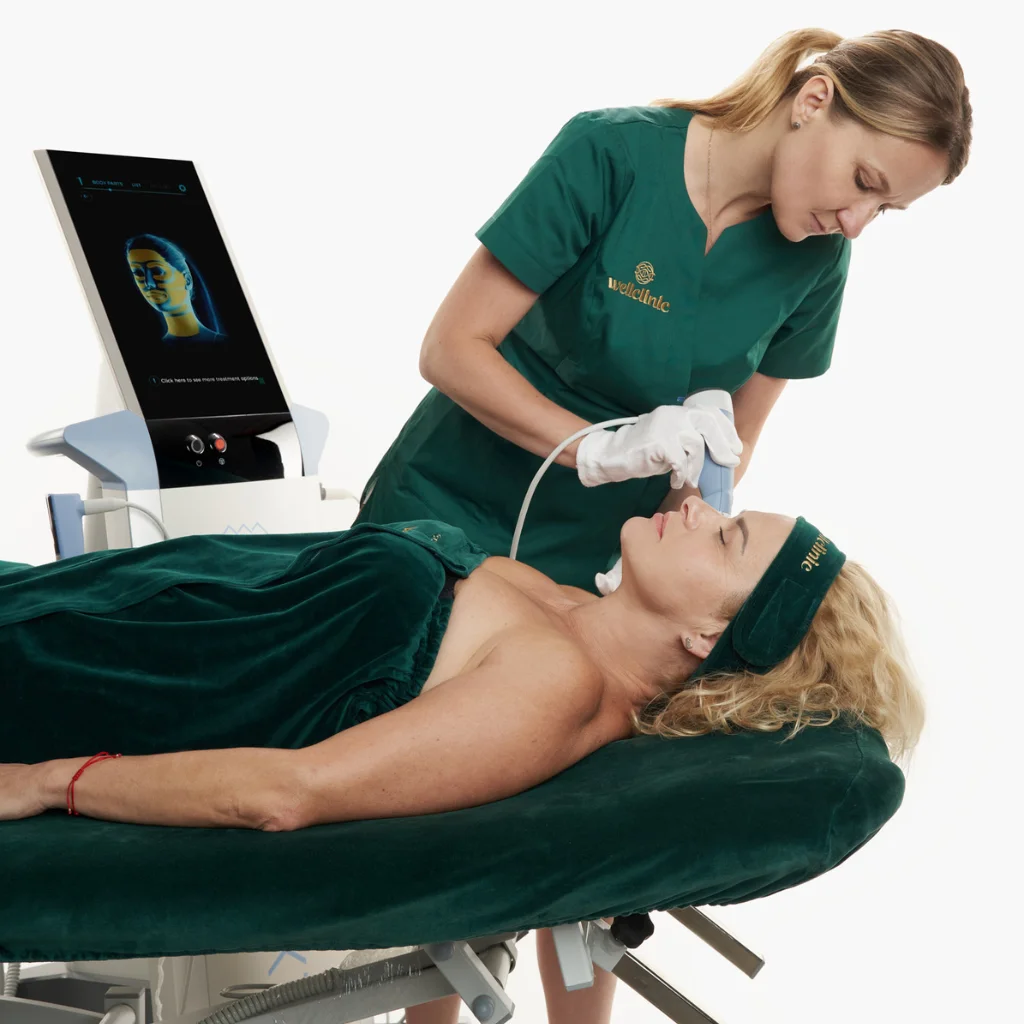
3. Mesotherapy and tissue biostimulators – supporting skin health
Not every face needs an intensive facelift. Sometimes the main problem is dryness, a loss of radiance, fine lines and a deterioration in the skin’s overall condition.
In such situations, you might consider mesotherapy or carefully selected tissue biostimulators.
Mesotherapy involves the topical application of active substances to the skin. Depending on requirements, these may include preparations containing, amongst other things, hyaluronic acid, vitamins, amino acids or other ingredients used in treatments designed to improve the condition of the skin.
Its aim may be to improve the skin’s hydration, elasticity and appearance. However, one should not expect every form of mesotherapy to produce the same result. The outcome depends on the type of preparation, the administration technique, the number of sessions and the individual’s response.
Another group consists of tissue biostimulators. These are preparations used to support skin remodelling processes and improve skin quality. They differ in terms of their composition, mechanism of action and indications. Some are primarily designed to improve tissue density and elasticity, whilst others may also affect volume.
It is therefore important, before choosing a product, to assess whether the skin primarily needs moisturising, revitalising, an improvement in density or the restoration of lost volume.
When should you consider mesotherapy or stimulators?
- When your skin is dry and looks tired.
- When fine lines and signs of loss of elasticity become visible.
- When the aim is to improve the quality and firmness of the skin.
- When a treatment is needed to complement other anti-ageing methods.
In the case of injection methods The possibility of swelling, redness, bruising or other post-treatment reactions should be taken into account. The product and technique should be selected by a specialist following an assessment of the skin’s condition and after ruling out any contraindications.
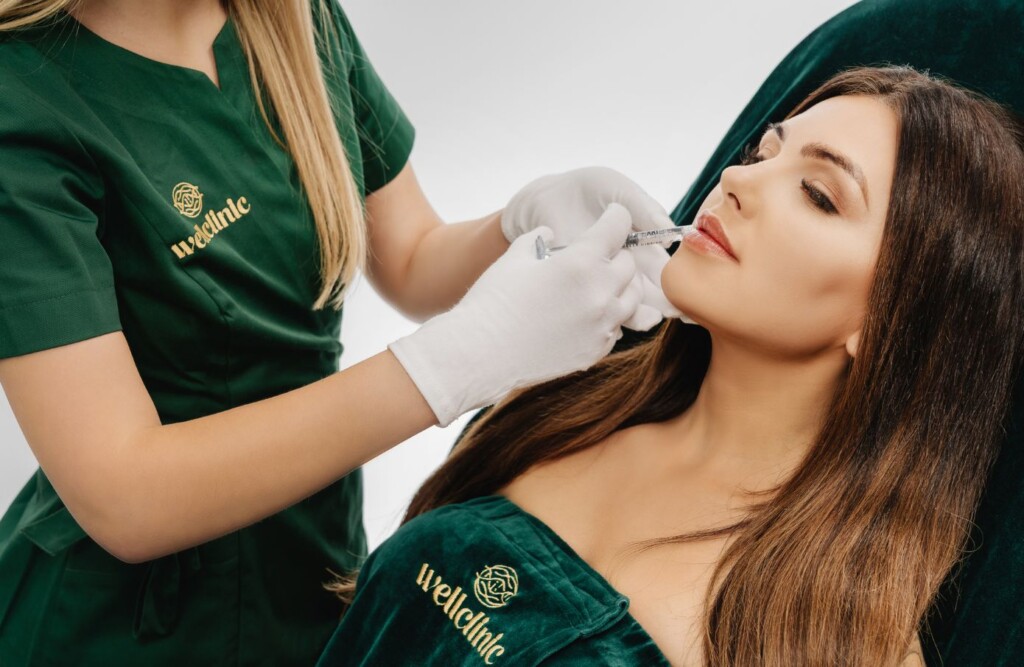
4. Botulinum toxin and hyaluronic acid – two different approaches to tackling the signs of ageing
Facial wrinkles i loss of volume Facial treatments may look similar, but their causes are different. Therefore, botulinum toxin and hyaluronic acid should not be treated as methods with the same effect.
Botulinum toxin – reducing excessive muscle activity
Botulinum toxin It temporarily restricts the transmission of nerve signals to selected muscles. This reduces their activity, meaning that the skin in that area does not wrinkle as much.
The method is primarily used to reduce selected expression lines, such as wrinkles between the eyebrows, on the forehead or around the eyes.
This is not a method for filling in cavities or restoring volume. It works by temporarily modifying muscle function, which is why it is important to strike the right balance between reducing wrinkles and maintaining natural facial expressions.
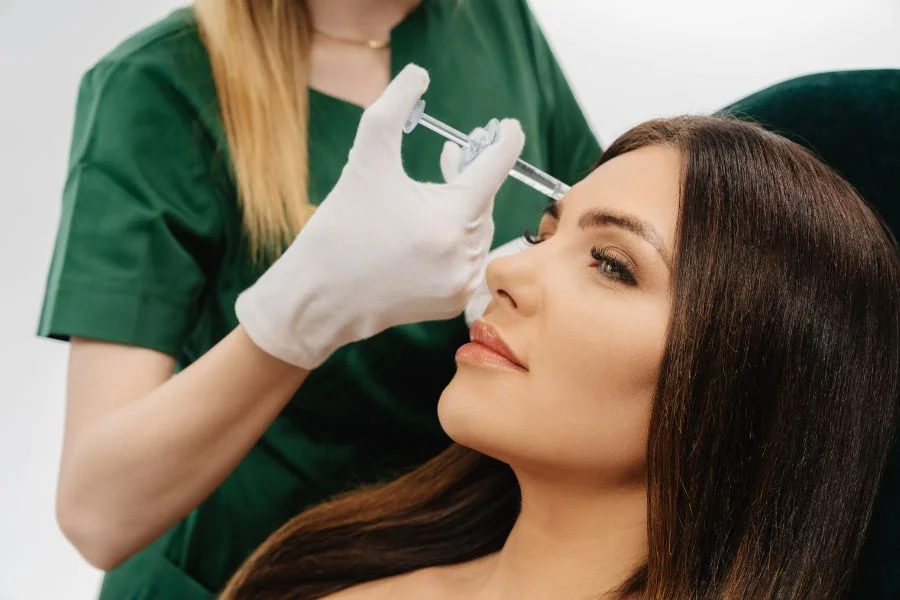
Hyaluronic acid modelling – restoring volume to tissues
Hyaluronic acid is used in aesthetic medicine, amongst other things, for volume restoration, facial modelling and to improve the proportions.
Depending on the type of preparation and the method of administration, it can be used in various areas, for example in the region of cheeks, chin or lips. Its purpose is not always simply to fill in a wrinkle. Sometimes, restoring tissue support and the harmony of facial features proves to be more important.
In this case, a good understanding of anatomy and the ability to assess proportions are particularly important. Using too much of the product or applying it in the wrong place can lead to an unnatural result.
5. Quantum Face – a multi-stage facial rejuvenation programme at Wellclinic
Facial ageing It rarely affects just one layer. At the same time, one may observe a loss of firmness, a deterioration in skin texture, expression lines, changes around the eyes and a loss of facial contour definition.
It was precisely with a view to taking a multidimensional approach to these changes that Quantum Face - Wellclinic’s proprietary, five-stage facial rejuvenation programme. It is not a single treatment or a single technology. It is a planned sequence of procedures designed to address different areas of the face and various signs of ageing.
The programme comprises five stages: Pre-Activation, Quantum Beam, Oculum, Neuro Balance and Contour Lift.
Stage 1. Pre-Activation – preparing the skin
The first stage focuses on preparing the skin for subsequent treatments. It involves deep moisturising using a product containing calcium hydroxyapatite. The gel base of the product provides a visible increase in tissue volume and a reduction in wrinkles and furrows immediately after administration.
Calcium hydroxyapatite microspheres stimulate fibroblasts for the production of new collagen and elastin, helping to gradually improve the skin’s firmness and texture. The aim is to improve the condition of the skin before the next stage of the treatment.
Stage 2. Quantum Beam – laser treatment to improve skin quality
Quantum Beam combines precision laser therapy involving exosomes. They are used in cosmetology and regenerative medicine because of their role in intercellular communication and repair processes.
The main objectives of Quantum Beam:
- Improving skin firmness and tone - supporting the processes that determine its structure and flexibility.
- Stimulation of collagen production - stimulating the skin’s natural regenerative processes.
- Improving skin tone - reduction in the appearance of selected discolouration and signs of photoageing.
- Facial contouring - support for treatments aimed at improving facial contours and reducing localised fat deposits, where clinically indicated.
- Rskin regeneration - a comprehensive approach aimed at improving its quality and appearance.
Quantum Beam combines the precision of laser technology with the potential of biotechnological components. As a result, it forms part of a multi-stage approach to rejuvenation, in which the individual steps complement one another, addressing the skin’s various needs.
Depending on the indications, this stage may be targeted at specific signs of photoageing, uneven skin tone and loss of firmness. It is particularly important to tailor the parameters to the condition of the skin and the area being treated.
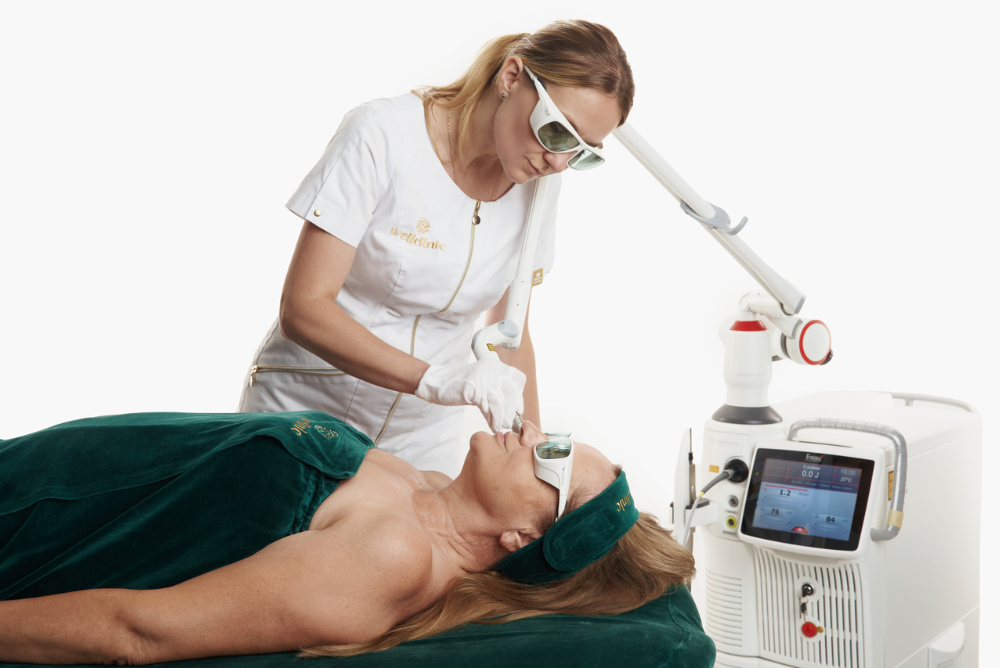
Stage 3. Oculum – rejuvenation of the eye area
The area around the eyes is often the first to show signs of tiredness and the passage of time. The skin in this area is thin and delicate, and its condition affects how the whole face is perceived.
Oculum’s main objectives:
- Upper eyelid lift - helps to improve the tone and position of the structures around the eye.
- Opening the eye - optical enlargement and opening up of the eye, giving the gaze a fresher look.
- Eyebrow lift - a subtle lift of the brow area and an improvement in the proportions of the upper face.
- Revitalisation of the eye area - improving the quality, firmness and appearance of the delicate skin around the eyes.
- Stimulating natural regeneration - stimulating regenerative processes that help improve the condition of tissues.
Oculum It combines the precision of advanced laser technologies with targeted treatment of the delicate eye area. As a result, it forms part of a multi-stage approach to rejuvenating the eyes, aimed at restoring a more open, rested and harmonious appearance.
Depending on individual circumstances, this stage focuses on tightening of the upper eyelid, a subtle lifting of the eyebrows and revitalisation of the eye area. It is crucial to tailor the operating parameters precisely to the anatomy and condition of the tissues.
Stage 4. Neuro Balance – harmonising facial expressions
Not every wrinkle is caused by a loss of skin firmness. Some of them are linked to the repeated activity of facial muscles.
Neuro Balance is a stage focused on addressing muscle tension and dynamic wrinkles. The protocol utilises neuromodulator, which works by temporarily restricting the activity of selected muscles.
The main objectives of Neuro Balance:
- Harmonisation of facial expressions - restoring balance to muscle tension and a more natural facial expression.
- Reduction of expression lines - reducing the appearance of wrinkles caused by repetitive muscle activity.
- Relaxation of overactive muscles - reducing excessive tension in selected facial muscle groups.
- Smoothing facial features - improving the appearance of the skin by reducing the intensity of facial expressions.
- Preserving natural expression - a subtle effect designed to refresh the appearance without compromising the individual character of facial expressions.
Depending on individual requirements, this stage focuses on selected areas of the face where excessive muscle activity affects the visibility of wrinkles and the nature of facial expressions. It is crucial to select the treatment area with precision, so as to preserve natural facial expressions.
Stage 5. Contour Lift – improving facial contours
The main objectives of Contour Lift:
- Shaping the facial contour - improving the definition of the contours and restoring a more defined jawline.
- Double chin reduction - targeted action on localised fat deposits in the chin area.
- Skin firming - the use of thermal energy to help improve tissue tone and elasticity.
- Improving facial proportions - harmonising the lower part of the face and emphasising its natural contours.
- Further revitalisation of the eye area - continuing work on skin firmness and texture to achieve a consistent rejuvenating effect.
Contour Lift combines precision laser technology with targeted contouring and firming effects. It therefore forms part of a multi-stage approach to improving facial contours and proportions, in which the individual steps complement one another to create a harmonious whole.
Depending on individual requirements, this stage focuses on enhancing the contours of the face, firming the chin area and further revitalising the eye area. It is crucial to precisely tailor the treatment parameters to the anatomy of the face and the condition of the tissues.
What makes Quantum Face stand out?
The most important feature of the programme is a combination of several areas of research into the signs of ageing: the condition of the skin, its texture, the area around the eyes, facial expressions and the contours of the face.
The programme includes a skin and facial analysis, which enables an assessment of, amongst other things, wrinkles, discolouration, pores, skin texture, moisture levels and firmness level. On this basis, the specialist can assess the appropriateness of each stage and tailor the treatment to the patient’s needs.
How do you choose the right rejuvenation treatment for your problem?
When choosing a method, one should start by identifying what it is we actually want to improve. The table below shows which solutions might be considered, depending on the main problem.
| Problem | Methods to consider |
|---|---|
| Fine lines and signs of photoageing | Laser therapy, appropriately tailored skincare |
| Uneven texture and enlarged pores | Selected laser treatments, microneedle radiofrequency |
| Loss of skin firmness | Radiofrequency, selected tissue stimulators |
| Drying out and loss of freshness | Mesotherapy and individually tailored treatments |
| Facial wrinkles | Botulinum toxin |
| Loss of volume and changes in facial proportions | Hyaluronic acid and selected contouring techniques |
| Several signs of ageing at the same time | A personalised combination treatment, including Quantum Face |
Home care – without it, it’s difficult to maintain the results
Even the best-chosen procedure cannot replace daily skincare. Skincare is important both before starting treatment and during the period of maintaining the results achieved.
Sun protection is particularly important. Regular use of products containing SPF 50 helps to reduce the effects of UV radiation, which accelerates the photo-ageing process and contributes to the development of discolouration.
It is also worth including the following in your daily routine:
- Retinoids - ingredients used in the care of mature skin, which support epidermal renewal and improve the skin’s appearance. They should be introduced gradually, taking into account the skin’s tolerance and any contraindications.
- Vitamin C - an ingredient with antioxidant properties, used, amongst other things, in skincare for uneven skin tone.
- Ceramides - which support the hydrolipid barrier and reduce water loss.
- Moisturising ingredients - such as hyaluronic acid, glycerine and panthenol.
Everyday habits are also important: getting enough sleep, eating a balanced diet, taking exercise and avoiding smoking. They won’t stop the natural ageing process, but they can help keep your skin in good condition and improve your overall quality of life.
Facial rejuvenation after the age of 40 and 50 – are other methods needed?
Age may be a factor, but it should not be the sole determining factor when choosing a procedure.
After the age of 40 in many people, the following are becoming more noticeable changes associated with a loss of elasticity, uneven skin tone and a gradual weakening of the skin’s structure. During this period, one might consider methods aimed at improving tissue quality and tone.
After the age of 50 It is common for several processes to overlap: changes in skin structure, loss of volume, changes to the facial contour and the deepening of wrinkles. In such a situation, it is particularly important to take a holistic view of the face.
However, this does not mean that everyone over the age of 50 needs more intensive treatment than someone in their 40s. What matters is the actual condition of the skin, the anatomy and the desired result, not the age on one’s birth certificate.
Well-planned rejuvenation treatments for people over 40 or after the age of 50, they should enhance the appearance of the face without detracting from its natural character.
How does Wellclinic go about selecting a rejuvenation treatment?
The starting point is consultation and assessment of the patient’s needs. The specialist assesses the condition of the skin, visible signs of ageing, facial proportions, previous treatments and expectations regarding the results.
Next, a treatment method or plan is selected. For patients exhibiting several signs of ageing simultaneously, a multi-stage programme may also be considered Quantum Face.
The aim is not to change one’s facial features at any cost. It’s about pthe texture, proportions and firmness of the skin, in a way that complements the body’s natural anatomy.
If you notice that your skin has lost its firmness and your face looks more tired, it’s worth starting with a consultation. This will help you determine which treatments to improve facial firmness or other rejuvenation methods may be appropriate in your case.
Book a consultation at Wellclinic and find out which treatment plan is right for your skin.
Sources:
1. "What can aesthetic medicine do to rejuvenate the skin?" Milena Deptuła, Małgorzata Zawrzykraj, Karolina Kondej, Michał Pikuła, Space, 2023.
https://kosmos.ptpk.org/index.php/Kosmos/article/view/2971
2. ""An assessment of the efficacy of the synergy between monopolar radiofrequency and electroporation in anti-ageing therapy, based on selected biophysical parameters of the facial skin" - Karolina Mirosława Marcinkowska, 2021. https://www.wbc.poznan.pl/publication/646661
3. ""A review and evaluation of treatments used in anti-ageing skin care" - Aleksandra Skarżyńska, Jagiellonian University, 2023.
https://ruj.uj.edu.pl/handle/item/316665
4 "Non-surgical methods for delaying the skin’s ageing process" - Gabriela Osika, Anna Wesołowska, Polish Pharmacy, 2020.
https://doi.org/10.32383/farmpol/119054
Book a consultation

 +48 600 100 177