
 Katarzyna Pawłowska

 02.10.2026
Scars on the legs They may be the result of cuts, grazes, burns, surgical procedures, skin inflammation or improper hair removal. Whatever the cause, some of them become less visible over time, whilst others remain on the skin for many years. They may take the form of discolouration, indentations, thickening or unevenness, which alter its structure.
Is it possible to remove scars on the legs or at least significantly reduce their appearance? Modern aesthetic medicine offers several methods for improving the appearance of the skin, including laser therapy. However, choosing the right treatment depends on the type of scar, its depth, your age and your individual skin characteristics.
Table of contents
Where do the scars on my legs come from?
Scar is the result of a natural healing process that begins when the skin is damaged. At the site of the wound, the body activates repair mechanisms, including the production of collagen fibres. However, the regenerated tissue does not always have the same structure and appearance as undamaged skin.
The most common causes of scars on the legs belong:
- cuts, grazes and mechanical injuries,
- abrasions caused by everyday activities,
- burns and other skin damage,
- surgical procedures,
- inflammation of the hair follicles,
- ingrown hairs and changes resulting from incorrect hair removal,
- skin lesions accompanied by severe inflammation.
Special cases include marks left by ingrown hairs. Recurrent inflammation can lead to the formation of post-inflammatory hyperpigmentation, and sometimes also changes in the structure of the skin. It is worth distinguishing between a scar and hyperpigmentation – these are two different conditions that may require different treatments.
How can you tell what type of scar you have on your legs?
Not every scar looks the same, and not every scar requires the same treatment. Before choosing a method Scar reduction It is worth determining what sort of change we are dealing with.
Atrophic scars – indentations in the skin
Atrophic scars, also known as atrophic scars, take the form of indentations on the skin’s surface. They develop when, during the healing process, there is insufficient regeneration of tissue and supporting fibres. They may appear, amongst other things, following inflammation, smallpox or injuries.
They are characterised by an uneven skin surface and visible lesions.
Mature scars – pale marks left by healed wounds
Mature scars They are usually flat, lighter in colour than the surrounding skin, soft and elastic. They may develop following injuries, burns or operations. Although the healing process is now complete, their appearance may still differ from that of healthy tissue. You can find out more about this type of lesion by learning about its characteristics mature scars.
Keloids – raised and spreading lesions
Scarface, also known as a keloid, is caused by excessive growth of connective tissue during the healing process. It may be hard, raised and extend beyond the area of the original skin injury. It is sometimes accompanied by itching, tenderness or pain.
This is a specific type of scar that requires an individual medical assessment. One should not assume that every method used for other types of scars will also be suitable in the case of scars.
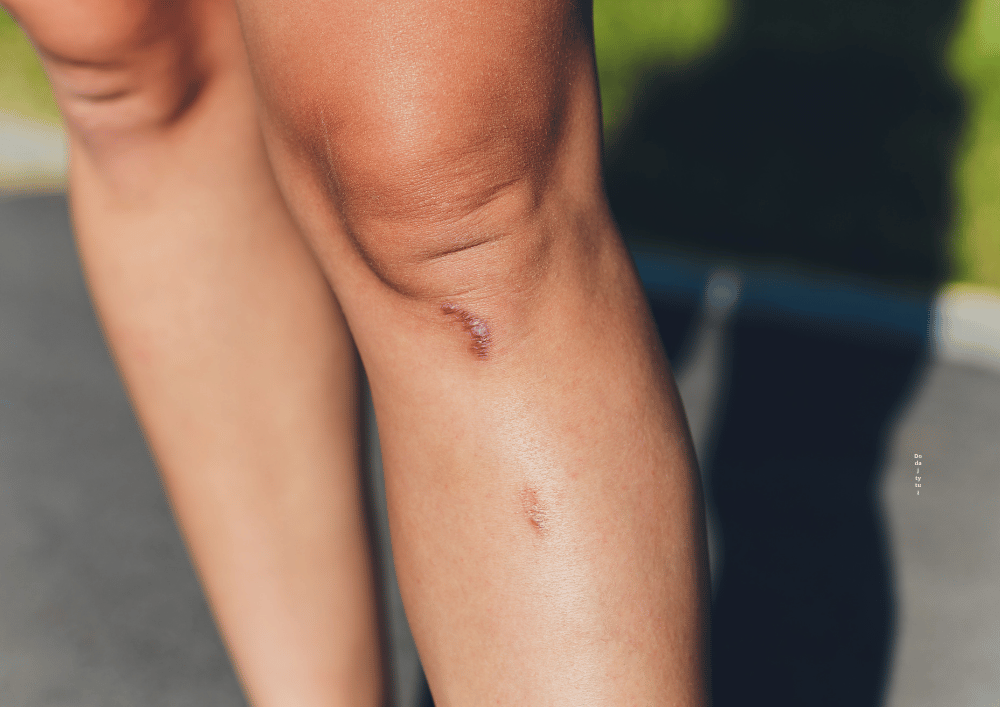
Scars or discolouration on the legs – how can you tell the difference?
Dark marks on the legs do not always mean that a scar will form. Following an injury, irritation or inflammation, the skin may be left with non-inflammatory discolouration. In such cases, it is primarily the colour of the skin that changes, rather than its structure.
A scar, on the other hand, can cause a visible indentation, thickening or a change in the elasticity of the tissue. It also happens that both problems occur at the same time – the skin is uneven, and a darker mark remains at the site of the injury.
Discolouration is linked, amongst other things, to uneven accumulation melanins, i.e. the pigment responsible for skin colour. Identifying the type of lesion is important for choosing the right treatment. A method aimed at the remodelling of the skin’s structure It may not be the best solution for discolouration alone.
How can you remove scars on your legs? Available methods for reducing them
The course of treatment depends on the nature of the scar. In aesthetic medicine, the following methods are used, amongst others: laser therapy, chemical peels, microneedling and micro-needle radiofrequency. In certain cases, a doctor may also consider surgical options.
The aim of the therapy is reducing the visibility of the scar, improving the skin’s texture, reducing unevenness or evening out its tone. Not every scar can be completely removed, so the realistic extent of possible improvement should be determined during a consultation.
Laser scar removal – how does it work?
Laser scar removal uses light energy to exert a controlled effect on selected skin structures. Depending on the type of device and the parameters used laser therapy It may support regenerative processes and tissue repair.
One of the key elements of these processes is collagen - a structural protein responsible, amongst other things, for the skin’s strength, elasticity and proper organisation. During tissue healing and remodelling, its fibres undergo reorganisation, which may affect the appearance and structure of the scar.
Different laser devices use different wavelengths and methods of interacting with tissue. Therefore, the choice of technology should take into account type of scar, its depth and the expected effect.
Fotona Dynamis SP PRO – technology used in scar treatment
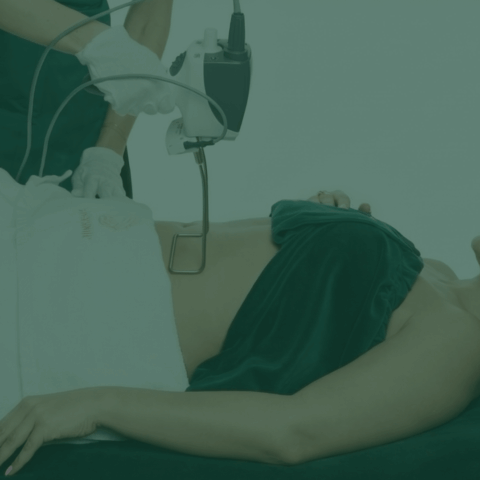
At Wellclinic, we use a laser platform for scar treatment Fotona Dynamis SP. The device allows you to work with different wavelengths and modes, enabling you to adjust the settings to suit the skin type and the aim of the treatment.
Laser energy can help tissue remodelling and the processes involved in the production of new collagen. Depending on the type of scar and the settings used, the treatment may be targeted at improvement in skin structure and a reduction in the visibility of the changes.
How many treatments are needed to reduce scarring on the legs?
The number of sessions depends on several factors: type of scar, its depth, extent, age and the individual’s skin’s response to treatment. Small, superficial lesions may require a different approach to extensive, established scars with pronounced irregularities.
In some cases, an improvement may be noticeable after just one session. For more advanced conditions, a course of treatments or a combination of different methods is usually considered. The final scar treatment plan This is determined by a specialist following a skin assessment.
It is also worth bearing in mind that tissue remodelling It is a gradual process. The results may not be visible immediately after the session, as the skin needs time to initiate and carry out its regenerative processes.
Is laser scar removal painful?
Feelings during laser scar removal These depend on the device used, the settings, the location of the scar and the patient’s individual sensitivity. During the procedure, you may experience a sensation of warmth, a burning sensation or brief discomfort.
The use of appropriate cooling systems can enhance comfort during the session. After the treatment, the skin may be temporarily red, sensitive or slightly swollen. Detailed post-treatment recommendations are tailored to the method used and the skin’s reaction.
What determines how effective scar reduction on the legs is?
There is no single method that will produce the same result for everyone. As for the results, reducing scars on the legs The main factors influencing this are:
- the type and depth of the scar,
- the time that has elapsed since its inception,
- the extent of the change,
- location on the body,
- the skin’s individual capacity for regeneration,
- the correct selection of technology and parameters,
- following the specialist’s advice.
It is also important to diagnose the lesion correctly. Keloid requires a different approach to a mature flat scar, and post-inflammatory hyperpigmentation is not the same problem as a defect in the skin’s structure.
Scar reduction on the legs at Wellclinic – a personalised approach to skin care
Scars on the legs They may vary in appearance, cause and depth. Therefore, treatment should begin with an assessment of the skin, rather than by choosing a device.
At Wellclinic, the choice of treatment takes into account the nature of the condition, the condition of the skin and the patient’s expectations. During the consultation, the specialist assesses whether laser therapy will be the right solution, what possibilities the technology in question offers, and what level of improvement can realistically be expected.
The aim of the therapy is reducing the visibility of scars and improving the appearance and texture of the skin. A carefully tailored treatment plan allows us to address a specific problem, taking individual needs into account.
If scars on legs are a source of discomfort for you, book a consultation at Wellclinic. During the consultation, you’ll find out about the treatment options available and discover which solution might be right for your skin.
Sources:
1. PubMed: "Laser Treatment of Traumatic Scars and Contractures: 2020 International Consensus Recommendations" (2020).
https://pubmed.ncbi.nlm.nih.gov/31820478/
2. PubMed: "Laser Scar Revision", StatPearls, NCBI Bookshelf.
https://www.ncbi.nlm.nih.gov/sites/books/NBK539686/
3. PubMed: "Laser treatment of specific scar characteristics in hypertrophic scars and keloids: A systematic review" (2021).
https://pubmed.ncbi.nlm.nih.gov/33645505/
4. PubMed: "S2k guidelines for the treatment of pathological scars (hypertrophic scars and keloids) – 2020 update" (2021).
https://pubmed.ncbi.nlm.nih.gov/33015930/
5. PubMed: "Laser therapy for the treatment of hypertrophic and keloid scars" - Cochrane Review (2022).
https://pubmed.ncbi.nlm.nih.gov/36161591/
6. Journal of the German Dermatological Society: "S2k guideline: Laser therapy for the skin" (2022).
https://doi.org/10.1111/ddg.14879
7. American Academy of Dermatology (AAD): "Keloid scars: Diagnosis and treatment".
https://www.aad.org/public/diseases/a-z/keloids-treatment
Book a consultation






 +48 600 100 177