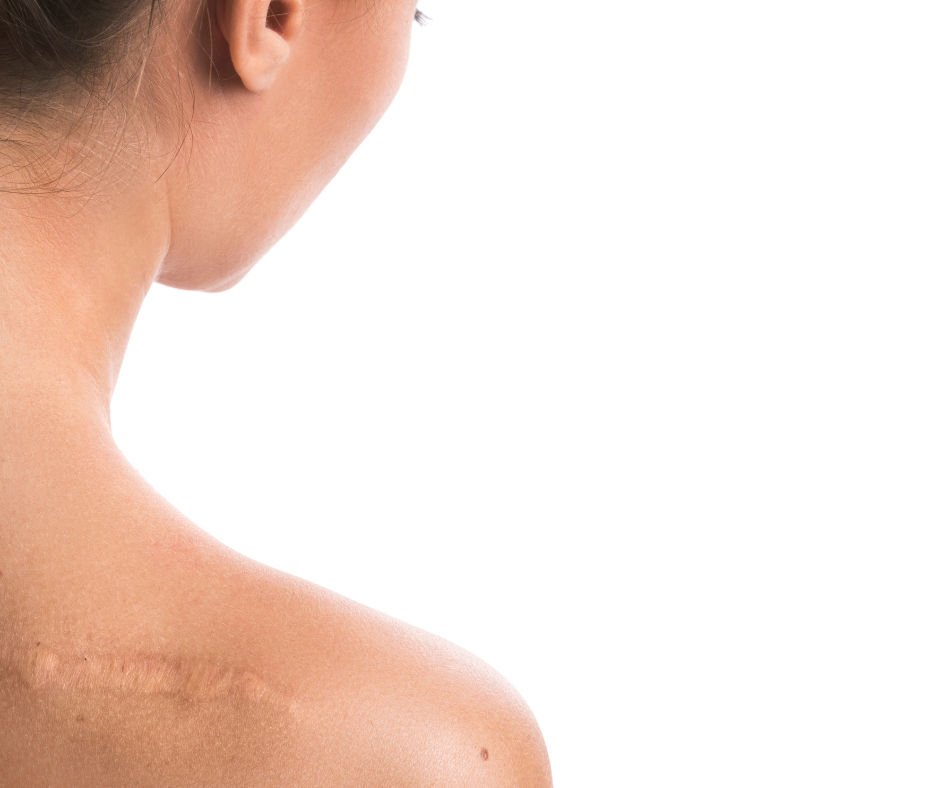
Scars on the body are the result of skin damage and the natural healing process. They form when damaged tissue is replaced by fibrous connective tissue. They can be caused by injuries, burns, surgical procedures, inflammation, as well as changes associated with acne vulgaris (e.g. on the back or neckline). Depending on the type of injury, a scar may vary in colour, shape, thickness, elasticity and texture.
Not all scars look the same, and not all require treatment. Fresh scars are often red, pink or purple, and gradually fade over time. The healing process scars on the body It can take many months to heal, and its final appearance depends, amongst other things, on the depth of the injury, its location, skin tension and the individual’s physical constitution. In some cases, the scar remains clearly visible, causes unevenness on the skin’s surface or becomes a source of discomfort.
Scars on the body - causes
Among the most common causes of scarring These include mechanical injuries, post-operative wounds, burns and skin damage associated with inflammatory conditions. Surgical scars They form at the site of a surgical incision, and their appearance depends, amongst other things, on the type of procedure, the location of the wound and the course of the healing process. Scars may also appear following deep injuries that affect not only the epidermis but also the deeper layers of the skin.
Individual factors also influence the healing process. In some people, the body produces a greater amount of connective tissue, which can lead to the formation of raised lesions. Other important factors include proper wound care, the risk of infection, the condition of the skin and its elasticity. This is why two people with a similar injury may end up with scars that look completely different.
Types of scars on the body
Scars on the body They can be categorised according to their appearance and how they are formed. Mature scars They are usually paler, softer and less noticeable than fresh lesions. As time goes by, their vascularisation decreases and the scar tissue undergoes remodelling.
Hypertrophic scars They are raised and hard, but remain confined to the area of the original skin lesion. The following are of a different nature: scarring, i.e. keloids, which can grow beyond the boundaries of the original wound. In the case of raised lesions, an accurate diagnosis is essential, as different types of scars may require different treatments.
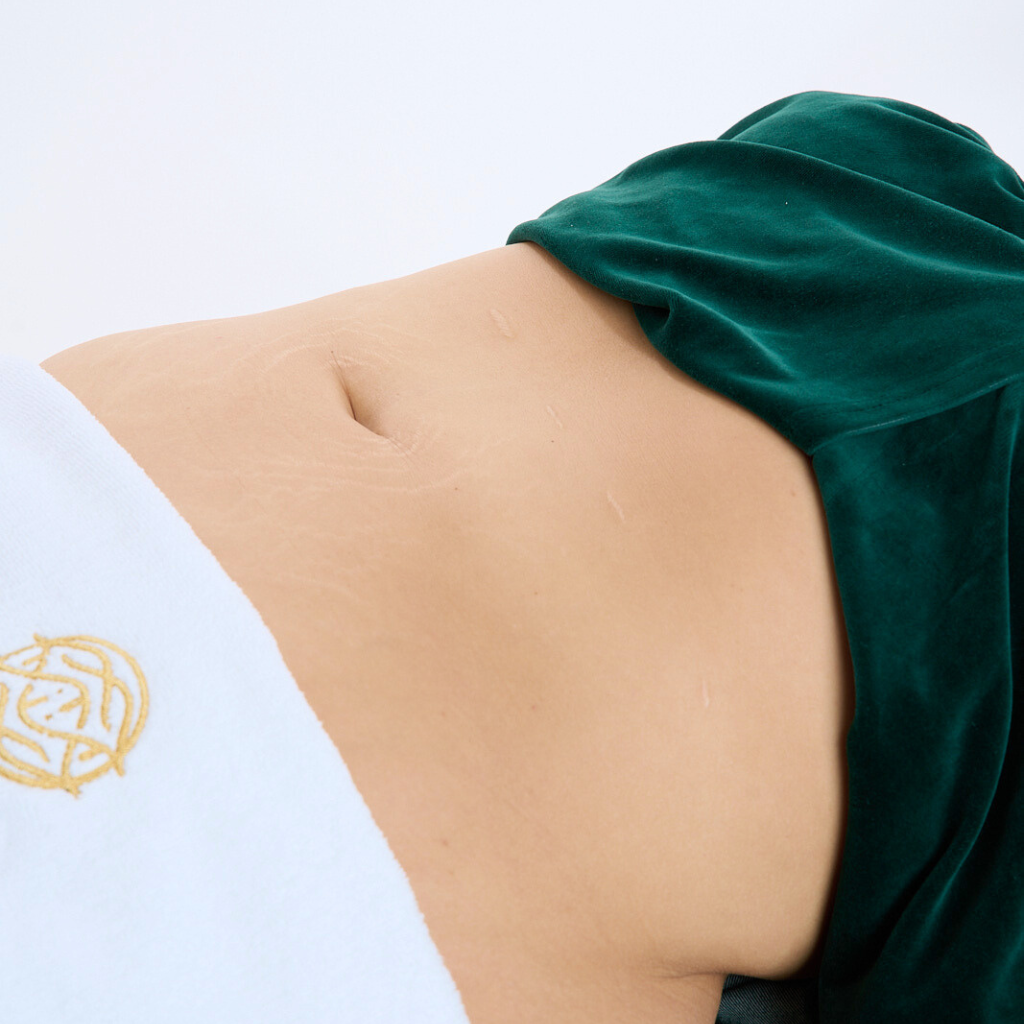
Atrophic scars They take the form of indentations in the skin’s surface. They develop when tissue volume is not fully restored during the healing process. They may occur following inflammation, injuries and other forms of skin damage. Their depth and shape affect the visibility of the lesion, particularly when viewed under side lighting.
Other characteristic changes include acne scars. They are most commonly associated with the face, but can also occur on the back, arms, chest and other parts of the body. Depending on the course of previous inflammatory lesions, they may take the form of indentations, irregularities or lesions with a different structure.
The process of scar formation and maturation
Scar formation is part of the body’s natural healing process. Once the skin is damaged, the inflammatory phase begins; the body then forms new tissue, which undergoes remodelling over the following months. An important role in this process is played by collagen, which is responsible for the strength and structure of the tissue.
Scar tissue However, it differs from normal skin. The collagen fibres are arranged differently, and there may be fewer sebaceous glands, hair follicles and other structures characteristic of healthy skin within the scar. For this reason, a scar may be less elastic, or lighter or darker than the surrounding skin.
At the scar healing process Factors such as its location, size and depth, as well as the degree of skin tension, all play a role. It is also important to protect a fresh scar from UV radiation, which can contribute to the persistence of differences in skin tone.
Scars on the body caused by burns
Burn scars They result from damage to the skin caused by high temperatures, chemicals or other sources of energy. Their appearance depends primarily on the depth of the burn and the extent of tissue damage. With deeper burns, the scar may be hard, raised, less elastic and clearly distinguishable from healthy skin. In some cases, it may also cause a feeling of tightness or restrict the skin’s mobility.
Reduction burn scars requires an individual approach. Depending on the nature of the scar, various methods are used, aimed at improving the elasticity, structure and appearance of the scar. The time that has elapsed since the burn occurred is also of significant importance, as the treatment approach may differ for fresh and mature scars.
Scars after laparoscopy
Scars after laparoscopy They form at the sites where small incisions were made in the skin during surgery to allow instruments to be inserted. They are usually small, but their appearance may vary depending on individual predisposition, the healing process and the location of the incisions. In some people, the scars remain thin and barely visible, whilst in others they may become more raised, hard or discoloured.
In the case of permanent changes, it is possible to reduction of scars following laparoscopy using methods employed in aesthetic medicine. The choice of the appropriate procedure depends on the scar’s structure, colour, depth and degree of maturity. The primary aim of the treatment is to reduce the visibility of the scar and improve the appearance of the skin at the site of the previous incision.
Reducing scars on the body
Reducing scars on the body This may include appropriate skincare as well as specialist dermatological and aesthetic medicine treatments. The course of treatment should be tailored to the type of scar, its age, location and the extent to which the skin’s structure has been altered.
In the case of fresh lesions, proper skin care and sun protection are important. When permanent scars, vast or those causing noticeable unevenness, one might consider treatments designed to improve the skin’s texture, tone and elasticity.
Treatment of scars It may utilise various technologies. Depending on the type of modification, the following are used, amongst others:. laser therapy, treatments that stimulate skin remodelling and other procedures selected during the consultation. There is no single method suitable for all types of scars, which is why a specialist’s assessment is crucial for planning the treatment correctly.
Fotona Dynamis SP for scar reduction
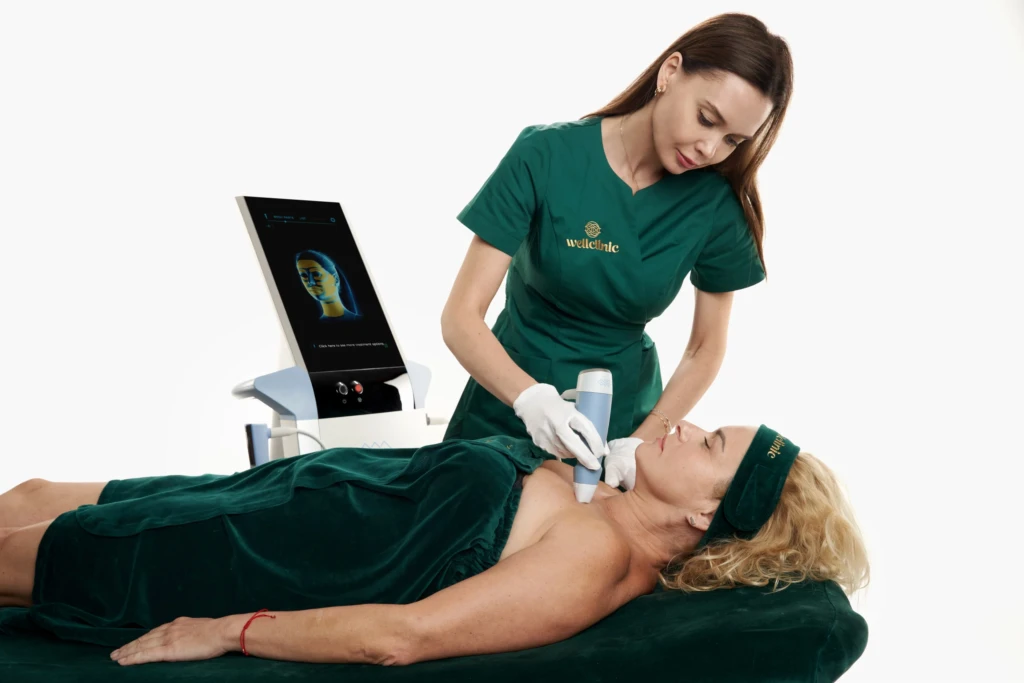
One of the technologies used in the treatment of certain types of scars is Fotona Dynamis SP. The laser platform allows the treatment parameters to be precisely adjusted to the type, size and location of the lesion. The laser energy acts on the scar tissue, stimulating regenerative processes and collagen remodelling. As a result, the skin may become more even in texture and the scar less visible.
At Wellclinic, the treatment programme is tailored individually to the skin’s needs. During the treatment, the heat felt is reduced by a cooling system, which makes the procedure more comfortable. The number of sessions required depends, amongst other things, on the type and extent of the scar. The results appear gradually, as the skin undergoes regeneration and remodelling processes.
Laser scar removal is a method used to improve their appearance and structure. Carefully selected laser energy can affect both the surface and deeper layers of the skin, promoting its regeneration. The treatment can help to smooth out unevenness, reduce the visibility of scars and even out skin tone.
The choice of treatment parameters depends on the individual characteristics of the lesion, such as its type, depth, age and location. For some scars, it is necessary to carry out a series of treatments at appropriate intervals. The aim of the treatment is not always to remove the scar completely, but above all reducing its appearance and improving the quality of the skin. The final results develop gradually, as the tissue remodelling process continues even after the treatment has finished.
The effects of reducing scars on the body
The result of a correctly chosen course of treatment may be scar reduction, smoothing its surface, reducing colour variation and improving the overall appearance of the skin. The extent of the improvement that can be achieved depends on the type of scar, its age, its size and the individual characteristics of the skin.
For certain conditions, it may be beneficial to combine several methods. This applies in particular to scars that cause both unevenness in the skin’s surface and a difference in skin tone. The treatment plan can be adjusted depending on the skin’s response and the results achieved.
Before you begin removal of scars on the body It is advisable to consult a specialist. During the consultation, the type of scar, its depth, location, degree of maturity and the condition of the surrounding skin are assessed. On this basis, treatment options can be identified and a method selected that is appropriate for the specific lesion.
If the scars on your body are clearly visible, cause discomfort or do not fade over time, it is worth consult a specialist. During a consultation, we can assess the type, depth and condition of the scar and select the appropriate method for reducing it. We carry out treatments to improve the appearance of scars on the body at our clinics in Warsaw, Gdansk i Krakow.
Sources:
- PubMed „A systematic review of comparative clinical trials on the efficacy, safety and patient satisfaction of ablative and non-ablative laser therapies for atrophic, hypertrophic and keloid scars”
https://pubmed.ncbi.nlm.nih.gov/40515775/ - PubMed „Laser Therapy in Hypertrophic and Keloid Scars: A Systematic Review and Network Meta-analysis”
https://pubmed.ncbi.nlm.nih.gov/38760539/ - PubMed „The use of laser monotherapy in the treatment of keloids and hypertrophic scars: A look at the carbon dioxide laser. A systematic review and meta-analysis”
https://pubmed.ncbi.nlm.nih.gov/40962972/ - American Academy of Dermatology, „Scars: Diagnosis and Treatment”
https://www.aad.org/public/diseases/a-z/scars-treatment - DermNet „Keloid and hypertrophic scar”
https://dermnetnz.org/topics/keloid-and-hypertrophic-scar - Cochrane „Laser therapy for hypertrophic and keloid scars”
https://www.cochrane.org/evidence/CD011642_laser-therapy-hypertrophic-and-keloid-scars