
 Katarzyna Pawłowska
 06.05.2026
 Table of contents
Laser depilation is a very convenient hair removal treatment, the results of which can be enjoyed especially in summer. Areas such as the calves, bikini or underarms have sensitive skin, and shaving with a razor during the holidays usually ends up with pimples on the body. Laser hair removal saves a lot of time and the visual effect after laser therapy is much better than with home hair removal. Laser hair removal with the Prime 3D device at the medical clinic leaves your skin perfectly smooth with no ingrown hairs. It is advisable to familiarise yourself with its contraindications before the session so as not to expose your skin to irritation or complications.
Permanent laser hair removal versus sunbathing is one of the most frequently searched topics by people planning a series of appointments at the clinic. Most concerns arise in summer, when the skin is more likely to come into contact with the sun. In this context, it is crucial to understand how the laser works and why proper skin preparation directly affects the safety and effectiveness of the entire treatment.
Tanning before laser hair removal
Laser depilation In summer, it can be just as high as at other times of the year. However, you should follow the advice on avoiding sunbathing and ensuring adequate protection of the skin against UV radiation. Do not sunbathe immediately before the procedure. Ignoring this recommendation may end up with hyperpigmentation. This is due to the laser's mechanism of action, which acts on the melanin in the hair follicle. When the skin is tanned, it contains more pigment, which makes it more difficult for the laser light to work precisely and increases the risk of irritation. Tanned skin conducts laser energy to the hair follicle less well, so the effects of laser hair removal therapy may be weaker. It is best to schedule laser hair removal when the laser has not yet been triggered in the skin the process of melanogenesis, which begins with the appearance of the tan.
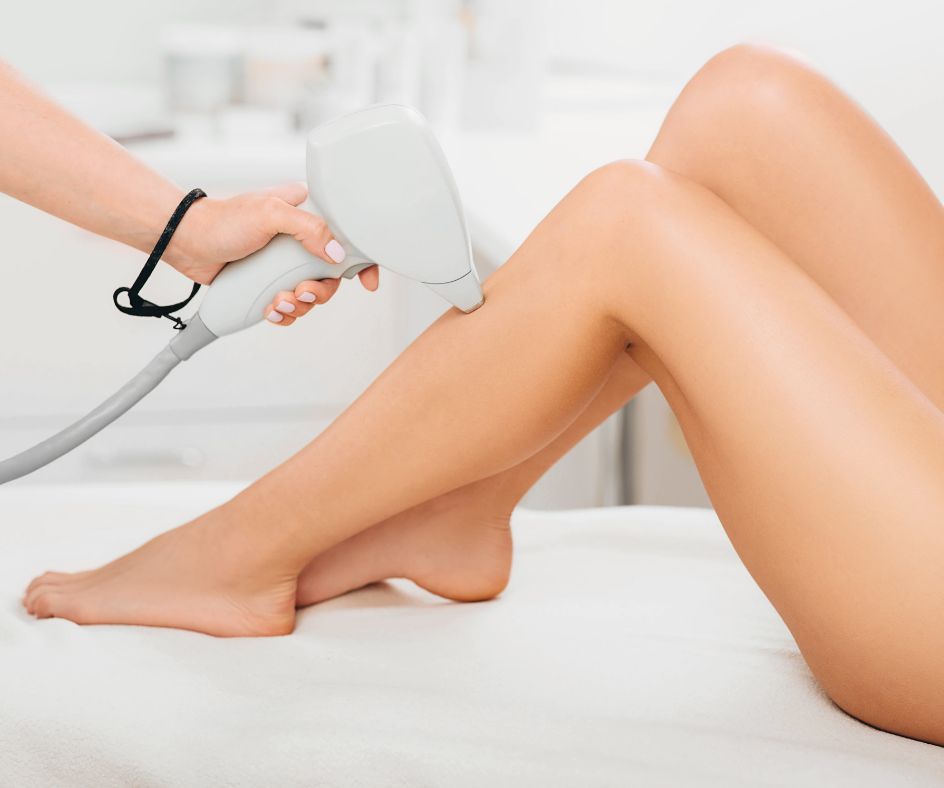
Laser hair removal versus spray tanning
It is worth remembering that at this time self-tanners, bronzing lotions and solarium visits should also be avoided. Such body preparations affect the level of skin pigmentation. This also applies to spray tanning, which, although not related to UV radiation – artificially colours the epidermis and may interfere with the laser’s operation. A change in skin tone makes it difficult to select the precise treatment parameters. This may increase the risk of irritation and lead to uneven results in the areas being treated. It is therefore recommended that you wait until your artificial tan has completely faded and your skin has returned to its natural colour before starting a course of treatments.
Tanning after laser hair removal
The areas undergoing laser epilation may be slightly reddened, slightly swollen and warmer to the touch. These symptoms are usually temporary and disappear spontaneously within a few hours. The following day, there is usually no trace of the treatment. Despite this, ni t is recommended to sunbathe after a laser hair removal session for a further 2 weeks. Exposure to sunlight can lead to microdamage in the epidermis, which increases its sensitivity and thus raises the risk of adverse reactions.
UV radiation may exacerbate irritation and increase the risk of hyperpigmentation. The reaction of the skin is individual - some people will not show visible effects, others may develop permanent pigmentation changes. This is why prevention and the use of adequate protection is so important.
After a laser hair removal treatment during the summer, you should:
When can you sunbathe after laser hair removal?
- use soothing and regenerating skincare products.
- use creams with a high SPF 50 sun protection factor,
- avoid direct exposure to the sun,
- avoid saunas and hot baths for a few days,
After a laser hair removal session You should take a break from sunbathing for 2 weeks. This interval allows the skin to return to its natural balance and minimises the risk of side effects. Immediately after the treatment, the skin is prone to discolouration. This doesn’t mean you should shut yourself away at home and not go outside. After laser depilation of the legs You must avoid the sunniest hours at all costs, namely between 12:00 and 15:00.
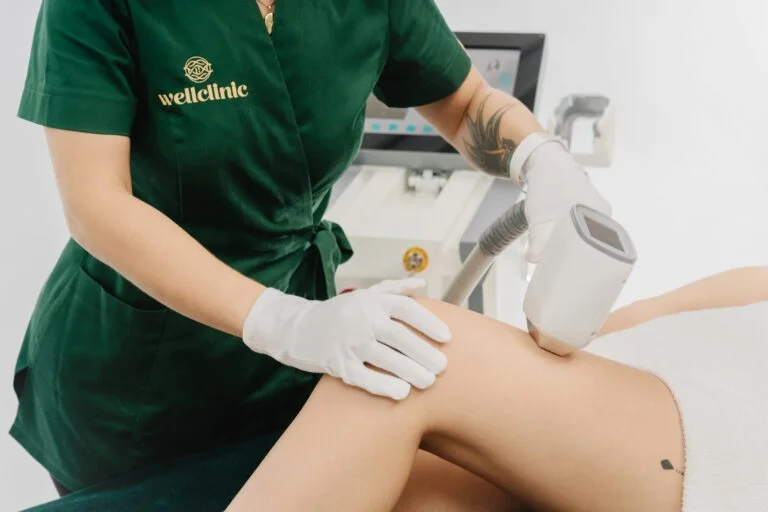
Does laser hair removal in summer make sense?
The first session of laser hair reduction therapy and subsequent sessions can be performed in the summer, but this requires more discipline and conscious care. The key is consistent use of sunscreens i avoiding intense exposure to the sun.
Active people who spend most of the day in the office can safely prepare for laser epilation even during the summer season. Limited contact with the sun during the day, working indoors and the possibility of controlling exposure to UV radiation make it much easier to maintain the right conditions for the skin. In such cases, it becomes crucial to consciously avoid sunbathing at weekends, use of high SPF protection and appropriate care. By adhering to such principles, it is possible to continue with the laser therapy series without having to postpone it until the autumn.
Even in summer, it is possible to effectively limit skin exposure to the sun through appropriate clothing. Airy, linen trousers or longer dresses are a simple and comfortable way to protect your legs from UV radiation. Natural, lightweight materials allow the skin to breathe. At the same time, they form a physical barrier that supports safe preparation for permanent laser hair removal.
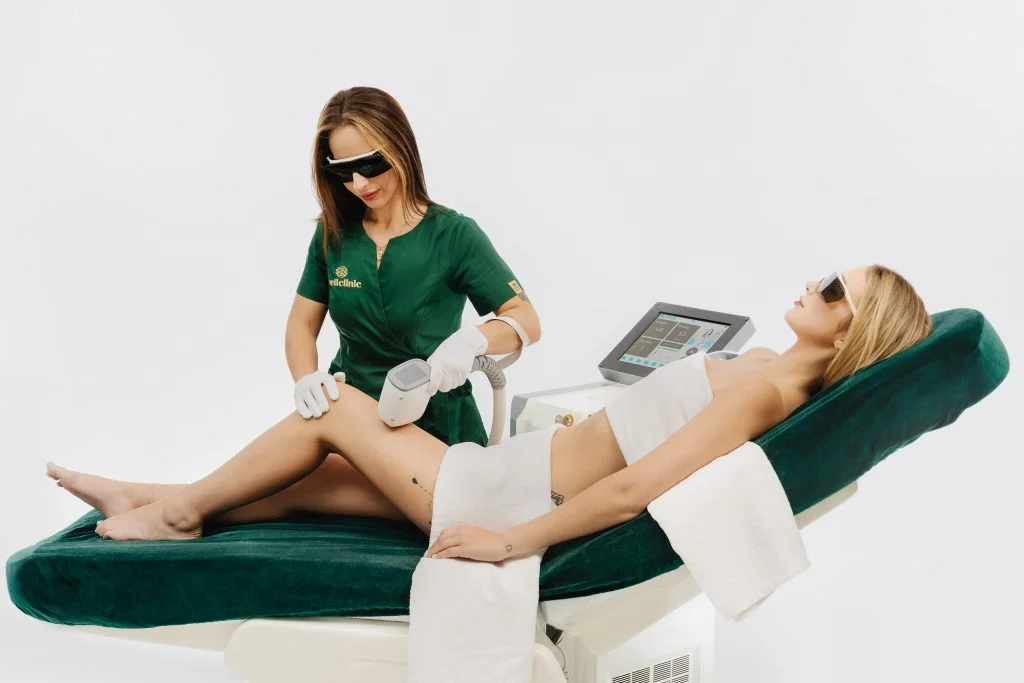
How do I prepare for laser hair removal in summer?
-
- Approximately 24 hours before laser hair removal, general hair with a razor, as recommended by the specialist.
-
- On the day of your clinic visit, do not apply any cosmetics to your skin - creams, lotions, oils or deodorants.
-
- Give up self-tanners, scrubs a few days before your appointment, and keep your skin properly moisturised.
-
- On the day of your clinic appointment, choose loose, airy clothing that will not irritate your skin after epilation.
-
- Avoid the sun for the first 2 weeks after treatment, if exposed to the sun, use UVA and UVB protection creams with sunscreen 50+
Sun and sunbathing after laser hair removal
The skin is more sensitive after sun exposure following laser hair removal, so it is important to prepare properly before visiting the clinic. With a regular series of treatments, you can gradually achieve smooth skin, free from unwanted hair and shaving irritation. Laser hair removal treatments during the summer require more caution, but with recommendations, they allow patients to safely achieve satisfactory results. Starting laser hair removal treatments in the summer should be continued in the autumn, so that you can enjoy the the best long-term effects of the therapy.
Want to know more about laser hair removal at Wellclinic? Consult with our medical staff, who tailor the therapy to your needs.
FAQ
Is laser epilation painful?
Laser Prime 3D distinguish the system TEC Thermo Electric Cooling, with which to make painless depilation. It is a system that allows maximum cooling of the laser head. However, the greatest advantages of this laser are 3 waves of different lengths, so it reaches every type of hair.
What should absolutely be avoided before epilation?
Before laser hair reduction treatment, special attention should be paid to the medications you are taking. Contraindications to the procedure include the use of photosensitising drugs and preparations, such as certain antibiotics (e.g. tetracyclines), retinoids, as well as selected anti-inflammatory drugs and herbs, including St. John's wort.
How long is the skin sensitive after epilation?
Most often from a few hours to a few days, depending on the individual skin response and the area treated.
Can hair be shaved between treatments?
Yes, shaving with a razor is safe and recommended throughout the treatment series. It does not affect the hair root, so it does not interfere with the effects of the laser therapy. The use of depilatory creams and wax patches is not recommended as it reduces the effectiveness of the treatment.
Is an SPF cream enough after treatment?
Sunscreen is the basis of protection, but should not be the only element of care. After treatment, it is additionally worth avoiding direct exposure to the sun and using soothing and moisturising cosmetics to promote skin regeneration.
Can you go to the pool after laser hair removal?
It is better to wait 24-48 hours to avoid skin contact with chlorinated water, which can further irritate it. During this time, the skin is more susceptible to external factors and requires regeneration.
Can you exercise after laser epilation?
It is advisable to avoid intense exercise for about 24 hours. Sweat, elevated body temperature and friction can exacerbate skin irritation and prolong skin recovery.
Why is a series of treatments needed?
The laser only works on hair in the active growth phase, so one treatment cannot remove all hair. A series allows successive portions of hair follicles in different growth phases to be gradually covered.
Sources:
-
American Academy of Dermatology „Laser hair removal: Preparation”
https://www.aad.org/public/cosmetic/hair-removal/laser-hair-removal-preparation -
American Academy of Dermatology „Laser hair removal: FAQs”
https://www.aad.org/public/cosmetic/hair-removal/laser-hair-removal-faqs -
Mayo Clinic „Laser hair removal: About”
https://www.mayoclinic.org/tests-procedures/laser-hair-removal/about/pac-20394555 -
NHS – Leeds Teaching Hospitals „Laser Hair Reduction”
https://www.leedsth.nhs.uk/patients/resources/laser-hair-reduction/ -
PubMed „Guidelines for laser hair removal”
https://pubmed.ncbi.nlm.nih.gov/18330795/ -
PubMed „Adverse Events of Light-Assisted Hair Removal: An Updated Review”
https://pubmed.ncbi.nlm.nih.gov/37272371/ -
ScienceDirect „Laser hair removal”
https://www.sciencedirect.com/science/article/abs/pii/S0190962299700435



 +48 600 100 177