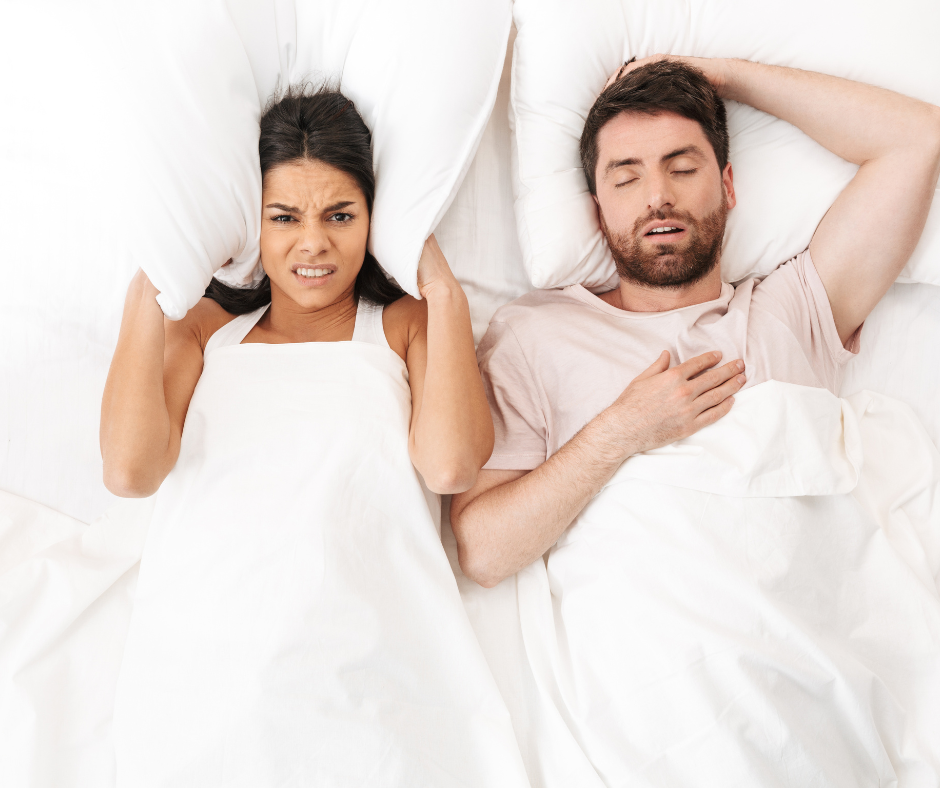
Causes of snoring are caused by restricted airflow through upper respiratory tract whilst sleeping. When they become narrowed, air flows more quickly and causes the soft tissues in the throat to vibrate. These are most commonly soft palate, tongue and the back of the throat. It is the vibrations of these tissues that produce the characteristic sound of snoring.
Under normal conditions, the airways remain open throughout the night. During sleep, muscle tone naturally decreases, which in some people can lead to partial collapse of the airways. If there are also anatomical or environmental factors at play, airflow becomes impeded, and causes of snoring are beginning to emerge.
Snoring as a symptom of sleep-related breathing disorders
Many people regard snoring simply as an annoying noise that disturbs their partner’s sleep. In fact, it may be the first sign that the airways are narrowing during sleep upper respiratory tract. In some patients, it is one of the symptoms obstructive sleep apnoea, in which the air flow stops periodically.
Each such episode leads to a temporary hypoxia, micro-awakenings and disruptions to the natural sleep pattern. Patients are often unaware of these, but sleep ceases to fulfil its restorative function. Over time, this can lead to chronic fatigue, a decline in concentration and impaired daytime functioning.
Therefore, effective treatment for snoring is not simply a matter of silencing the sound. Its aim is to improve airway patency upper respiratory tract and restoring the normal functioning of the throat tissues during sleep. Only by addressing the root cause of the problem can a lasting improvement in sleep quality be achieved.
Causes of snoring – why the problem takes various forms
In most cases causes of snoring There is no single cause. It is usually a combination of several factors that reinforce one another. For some people, snoring occurs only in certain situations, for example when sleeping on their back, when the structures of the throat collapse under the influence of gravity and partially restrict the flow of air.
Alcohol consumed in the evening also plays a role, as it relaxes the muscles responsible for keeping the airways open. Certain sedatives and severe fatigue can have a similar effect. In such cases causes of snoring are temporary in nature and depend on sleeping conditions.
In other patients, the problem is persistent and stems from anatomical structure or chronic changes in the tissues of the throat, which lose their elasticity over time and collapse more easily during sleep.
Causes and symptoms of snoring – when the problem goes beyond just the sound
Causes and symptoms of snoring They often present a consistent clinical picture. In addition to snoring itself, there is a dry mouth in the morning, resulting from breathing through the mouth at night. There is also often a feeling of not having had enough sleep, despite having slept for a sufficient length of time, as well as daytime sleepiness.
In some people, these are accompanied by morning headaches, which may result from impaired oxygenation of the body during sleep. These symptoms are not always associated with snoring, which means the problem often goes undiagnosed for a long time.
Primary snoring versus obstructive sleep apnoea
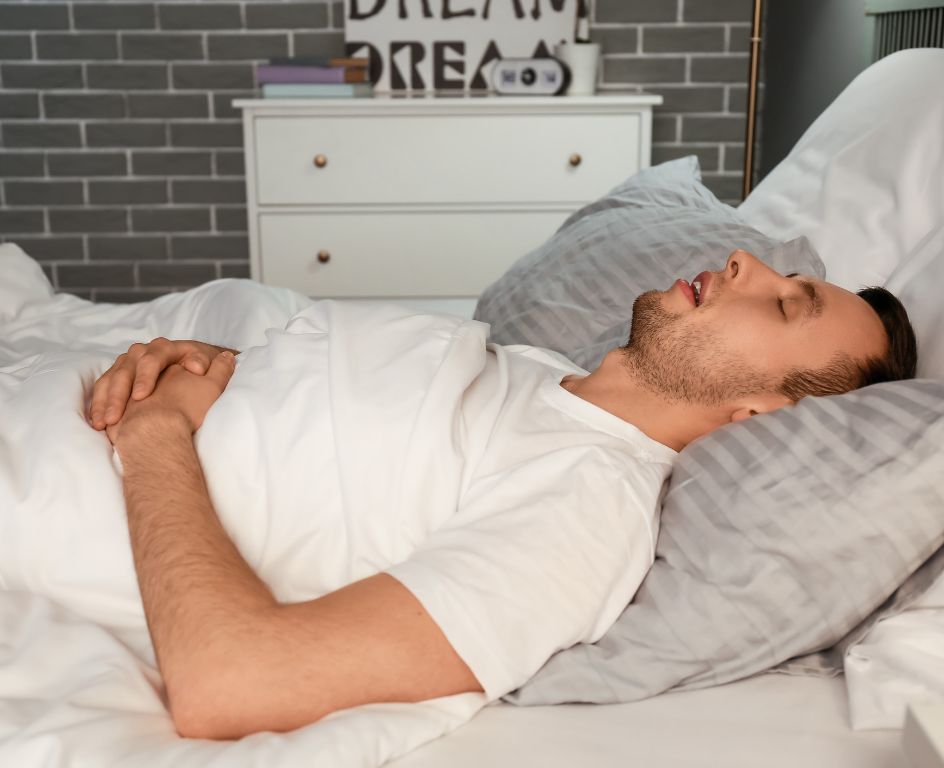
It is important to distinguish between primary snoring and snoring associated with obstructive sleep apnoea. In primary snoring, the problem is limited to the sound and does not cause any significant breathing difficulties.
In the case of sleep apnoea, however, there are periodic interruptions in the flow of air, which lead to hypoxia and numerous micro-awakenings during sleep. Sleep becomes fragmented and less restorative, even though the patient is not always aware of this.
Causes of snoring and lifestyle
The development and escalation of the problem are greatly influenced by lifestyle. One of the most important factors is excess body weight, particularly around the neck. The increased amount of tissue in this area mechanically narrows the airway and contributes to its collapse during sleep.
Drinking alcohol in the evening also plays a role, as it reduces the tension in the throat muscles. Sleeping on your back has a similar effect, as gravity further exacerbates the sagging of the tissues.
In some patients, smoking is a significant factor, as it chronically irritates the mucous membranes and causes them to swell, thereby impairing airway patency upper respiratory tract.
It is worth noting that the impact of lifestyle on causes of snoring It is not always immediate. For some people, even minor changes – such as losing weight, cutting down on alcohol or changing their sleeping position – can bring about a noticeable improvement.
Another important, yet often overlooked, factor is nasal patency. Chronic nasal obstruction, a deviated nasal septum or enlarged turbinates can lead to mouth breathing during sleep, which increases the risk of the throat structures collapsing.
Snoring: causes and the patient’s age
In clinical practice, it is often observed that symptoms of snoring They become more pronounced with age. This is due to a natural decline in muscle tone and a reduction in the elasticity of the throat tissues. As a result, the structures responsible for keeping the airways open are more prone to collapsing during sleep.
This process can be further accelerated by being overweight, a lack of physical activity and metabolic disorders. As a result, snoring often begins or becomes more severe after the age of 40, even if it was not noticeable before.
However, for some patients, lifestyle changes do not bring about sufficient improvement. In such situations causes of snoring are usually anatomical in nature or are linked to breathing disorders during sleep. This means that the problem is not solely due to habits, but to the structure and function upper respiratory tract, which requires further investigation.
When snoring requires medical assessment
Not all cases of snoring require treatment, but there are situations in which a diagnosis is advisable. This applies in particular to cases where snoring is accompanied by marked daytime sleepiness, morning headaches, a feeling of not having had enough sleep despite having slept for a sufficient length of time, or pauses in breathing during sleep observed by those around the person.
Such symptoms may indicate the presence of obstructive sleep apnoea, which requires thorough diagnosis and treatment, rather than merely treating the symptoms. In such cases causes of snoring are of significant clinical importance and should not be overlooked.
Modern treatment for snoring – laser therapy
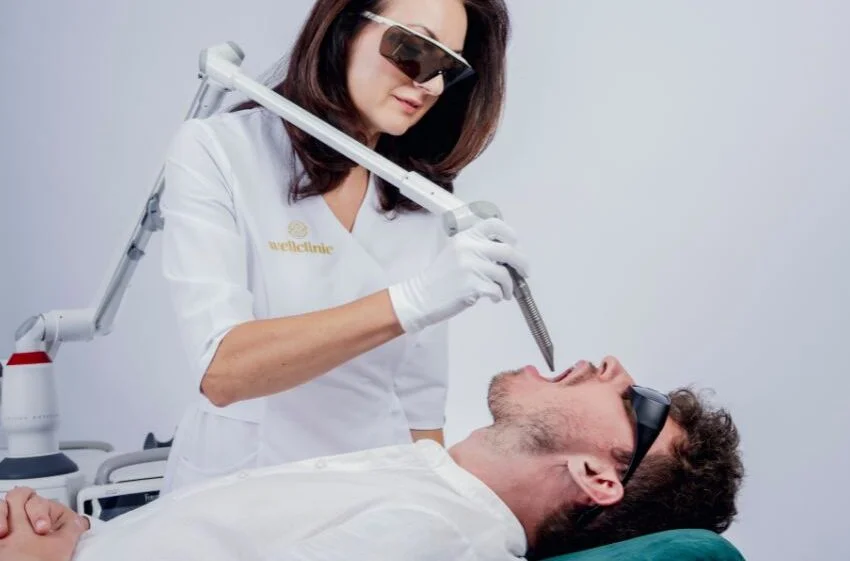
Modern treatments for snoring They are increasingly using non-invasive techniques that do not require traditional surgery. One such technique is a procedure carried out using a laser Er:YAG Fotona Dynamis SP Pro.
During the procedure, the laser energy heats the tissue in a controlled manner soft palate and the back of the throat. This leads to the contraction of collagen fibres, followed by the initiation of remodelling processes. The body begins to produce new collagen, which makes the tissues firmer and less likely to sag whilst you sleep.
This mechanism differs from surgical methods in that it does not involve the removal of tissue, but rather improves its function through natural regenerative processes.
Why do we use the Fotona laser?
At Wellclinic, we use the platform Fotona Dynamis SP Pro with a laser Er:YAG, which allows for precise manipulation within the soft tissues of the throat without the need to make an incision or remove any anatomical structures.
However, the effectiveness of the treatment depends not only on the technology, but also on an accurate diagnosis, the patient’s suitability and the experience of the person performing the procedure. It is only the combination of these factors that yields predictable treatment outcomes.
How does snoring treatment work?
Laser treatment for snoring It takes the form of a series of treatments carried out at specific intervals. This is due to the natural process of tissue regeneration – collagen remodelling occurs gradually, which is why subsequent sessions reinforce the effects of the previous ones.
The procedure usually lasts several dozen minutes and does not require hospitalisation. The patient can resume their daily activities immediately afterwards.
The effects of the therapy
The aim of treatment is to improve patency upper respiratory tract by increasing the tension in the throat tissues and preventing them from collapsing during sleep. In many patients, this leads to a reduction in or cessation of snoring and an improvement in sleep quality.
A reduction in night-time awakenings, less tiredness upon waking and improved concentration during the day are also frequently observed. However, the effects depend on individual causes of snoring.
The importance of diagnostics
Any case of snoring should be preceded by a medical consultation to determine the cause and rule out obstructive sleep apnoea. It is only on this basis that the appropriate treatment method is selected. This approach not only increases the effectiveness of the treatment, but, above all, brings about a real improvement in the quality of sleep and daytime functioning.
Would you like to find out more about snoring treatment at Wellclinic? Make an appointment for a consultation – our experts draw up a personalised treatment plan, tailored to the patient’s specific condition. We carry out laser treatments for snoring at our clinics in Warsaw, Gdansk i Krakow.