
 Katarzyna Pawłowska
  08.07.2026
 Table of contents
Hair loss This is a problem faced by both women and men – regardless of age. Every day, we naturally lose around 50–100 hairs, as this is part of the normal hair growth cycle. However, a marked increase in hair loss, the appearance of thinning patches, a reduction in hair volume or localised bald patches are cause for concern.
Treatment for hair loss should be preceded by a thorough diagnosis, as effective treatment depends primarily on the cause of the problem. Excessive hair loss may be caused by, amongst other things, genetic predisposition, hormonal imbalances, chronic stress, nutrient deficiencies, scalp conditions or past infections.
In summer, many people notice that their hair starts to fall out more than usual. Several factors that we encounter at this time of year can affect the condition of our hair. UV radiation, high temperatures, and frequent contact with salt water or chlorine can weaken the hair’s structure and make it drier. Other factors that play a part include washing your hair more frequently, increased sweating of the scalp, and changes to your daily hair care routine whilst on holiday.
It is worth bearing in mind that seasonal hair loss does not always indicate developing baldness. It is often linked to natural changes in the hair’s life cycle and tends to subside on its own over time. However, if excessive hair loss persists for several weeks or months, the hair becomes noticeably thinner and patches of scalp become visible, it is worth consulting a specialist about the problem. Proper diagnosis allows the cause to be identified and a treatment plan tailored to individual needs to be selected.
Causes of increased hair loss in summer
Effective treatment for hair loss First and foremost, it is necessary to identify the cause of the problem. The symptom itself may have various underlying causes, which is why it is essential to carry out a thorough assessment of the scalp and the condition of the hair follicles before starting treatment.
In men, the most common cause of chronic hair loss is androgenetic alopecia, resulting from a combination of genetic predisposition and the hair follicles’ hypersensitivity to androgens. As this process progresses, the hair follicles gradually become less active, and the hair becomes finer, shorter and more prone to falling out.
Treatment for androgenetic alopecia requires a specialised approach, as it is linked to genetic predisposition and the hair follicles’ hypersensitivity to androgens. The choice of appropriate treatment depends, amongst other things, on the severity of the condition, the patient’s age and the current condition of the scalp and hair.
In women hair loss It is often linked to a złożone background. This may be linked, amongst other things, to hormonal changes during pregnancy and after childbirth, the menopause, thyroid disorders, polycystic ovary syndrome, chronic stress, and deficiencies in iron, vitamin D or other substances necessary for the proper functioning of the hair follicles.
Environmental factors also play a role in summer. UV radiation can damage the hair’s structure and increase oxidative stress in the scalp. Salt water and chlorine can cause the hair to become dry and lose its elasticity, whilst high temperatures encourage increased activity of the sebaceous glands and more frequent sweating of the scalp.
Effective ways to stop hair loss
Preventing hair loss It is possible, but the effectiveness of treatment depends primarily on the cause of the problem and the severity of the condition. The approach differs in cases of temporary hair thinning following stress, illness or nutritional deficiencies, compared with chronic conditions such as androgenetic alopecia or problems related to the condition of the scalp.
If the hair follicles remain active, an appropriately tailored treatment plan can support their function, improve hair quality and reduce excessive hair loss. For this reason, you should not wait until thinning becomes clearly visible. Early signs, such as more hair left on the brush, a weakening of the hair’s structure or a reduction in hair density, are an indication that it is worth seeking a diagnosis.
It is crucial to identify the source of the problem. Diagnosis of hair loss includes a detailed medical history, an assessment of the scalp and trichological examination, which allows the condition of the hair follicles to be assessed and the nature of any changes to be determined. On this basis, a treatment plan can be selected to suit the patient’s individual needs.
The importance of a trichological examination in the diagnosis of hair loss
Treatment for hair loss should be preceded by a thorough diagnosis. Symptoms such as excessive hair loss or a deterioration in hair quality can have many different causes, which is why it is crucial to identify the root of the problem.
One of the basic tests is trichological examination carried out using a trichoscope. This allows for the assessment of, amongst other things, hair density, the appearance of the hair follicles, the condition of the scalp, the presence of inflammation, excessive oiliness and the characteristic changes associated with androgenetic alopecia.
The results of the examination help the specialist to identify the cause of the problem and plan a course of action. This ensures that treatment is tailored to the actual condition of the scalp and hair, rather than being based solely on the symptoms present.
During the assessment, the specialist looks not only at the amount of hair loss, but also at the hair growth cycle, hair thickness, the condition of the hair follicles and the condition of the scalp. This approach makes it possible to distinguish between, amongst other things, androgenetic alopecia, hormonal alopecia or telogenetic alopecia from seasonal hair loss.
shortcode
Treatment for hair loss – available therapies
Treatment for hair loss It involves a range of methods, the choice of which depends primarily on the cause of the problem, the severity of the condition and the results of diagnostic tests. Effective treatment should take into account not only the symptoms, but also the condition scalp and activity hair follicles. An approach combining several methods that complement one another is becoming increasingly common.
One of the popular methods is scalp mesotherapy, which involves administering active ingredients directly to the area requiring treatment. Depending on the product used, the treatment supplies the scalp with, amongst other things, vitamins, amino acids, minerals and biomimetic peptides which support the proper functioning of the hair follicles.
In therapy hair loss the following are also used platelet-rich plasma (PRP). The treatment is based on the use of growth factors contained in the patient’s blood, which support the natural regenerative processes taking place within the scalp and hair follicles.
For certain patients, the doctor may also consider pharmacological treatment, including, amongst others, preparations containing minoxidil or finasteride. This type of treatment requires individual assessment and regular monitoring by a specialist.
In cases of significant and persistent hair loss, it is possible to undergo hair transplant. This is a procedure that involves transferring hair follicles from a donor area to areas where hair loss has occurred.
Not every patient struggling with hair loss However, it requires surgical treatment. If hair follicles have remained active; a suitably tailored treatment programme can support their function and improve the condition of the hair. For this reason, before deciding on a hair transplant, it is worth carrying out a thorough assessment and exploring the options conservative treatment.
Combination therapy for the treatment of hair loss – laser therapy, biostimulators and exosomes
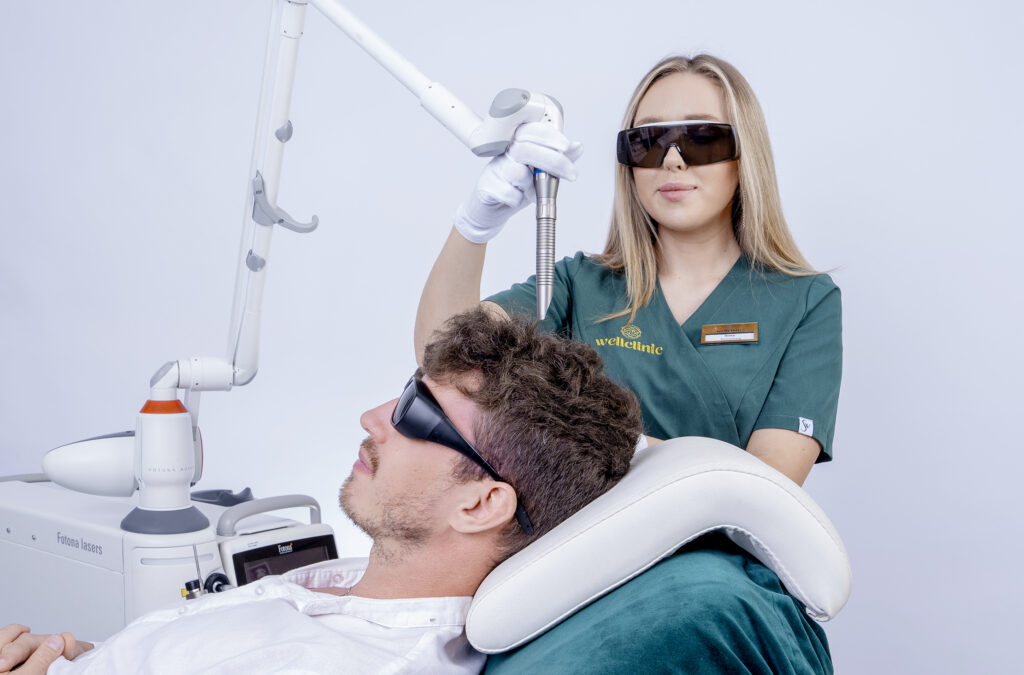
Laser hair loss treatment It is one of the modern methods used to treat hair loss without the need for surgery. The laser energy used during the treatment acts on the scalp, promoting microcirculation and stimulating activity hair follicles. This helps to create the right conditions for stronger and healthier hair to grow.
The treatment is complemented by modern regenerative methods, such as the use of exosomes. These are small structures derived from cells which contain biologically active components, including, amongst others, proteins, lipids and RNA molecules. Exosomes play a role in intercellular communication and support the natural regenerative processes that take place in tissues.
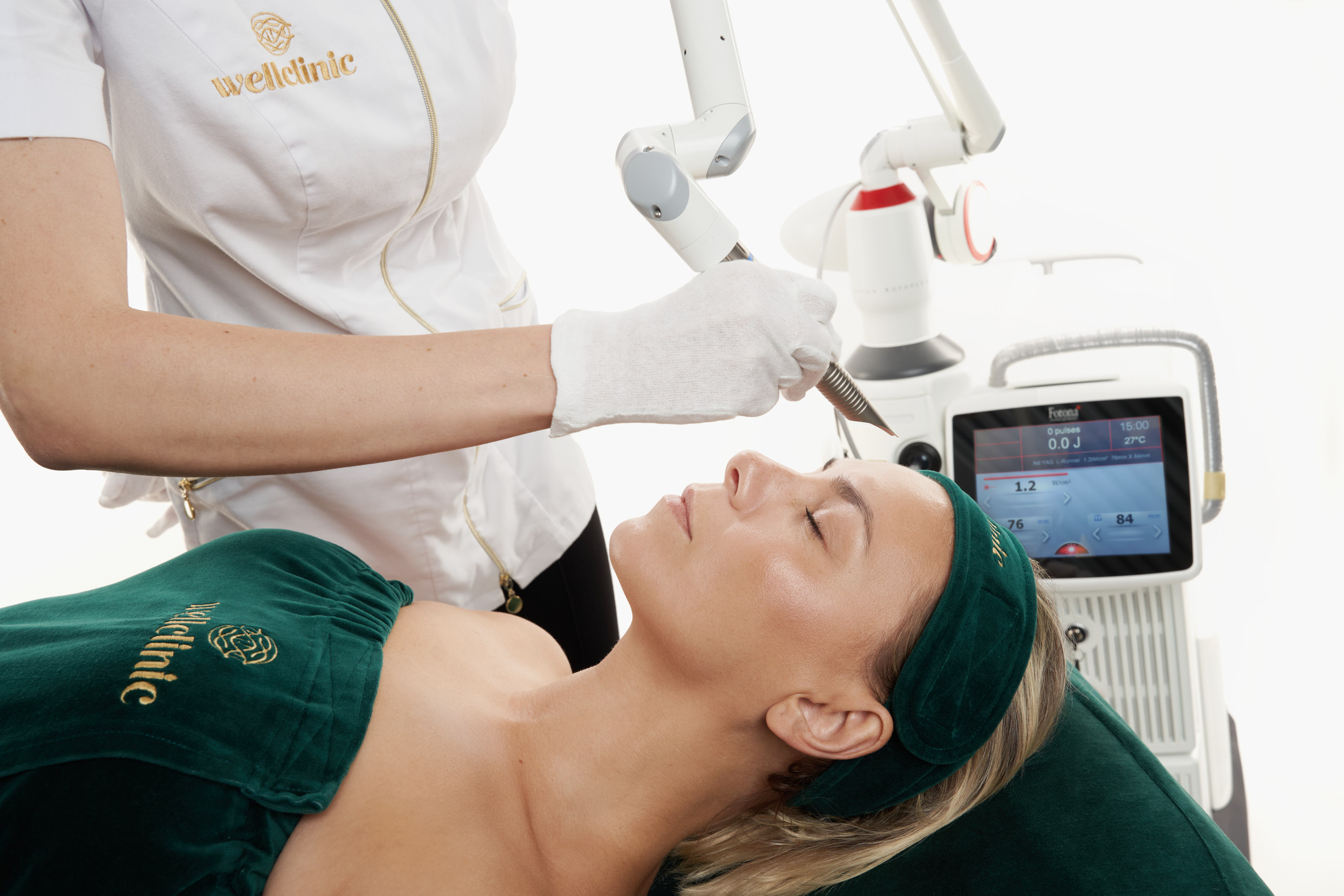
At Wellclinic laser hair loss treatment is based on a combination therapy that utilises the effects of several complementary methods. The combination Fotona Dynamis SP PRO laser therapy, tissue biostimulators and exosomes It provides comprehensive support for the scalp and hair follicles. This approach makes it possible to address various aspects of hair health and growth simultaneously.
Compared with individual treatments, combination therapy offers a more comprehensive approach to the problem of hair loss, as it combines technologies that support microcirculation, tissue regeneration and the functioning of hair follicles.
Before starting treatment, the patient undergoes a consultation and trichological diagnosis. The test helps to identify the cause hair loss, assess the condition of the scalp and select a treatment plan appropriate to the type of alopecia and the severity of the problem.
Would you like to find out more about the hair loss treatment options available at Wellclinic? Make an appointment for a consultation – Our specialists will carry out a diagnosis and select a treatment tailored to the cause of the problem and the condition of your hair. Treatment for alopecia and hair loss We carry out these procedures at clinics in Warsaw, Gdańsk and Cracow.
Sources:
- Seasonal patterns of hair shedding in healthy women complaining of hair loss – https://pubmed.ncbi.nlm.nih.gov/19407435/
- LiveScience – Summer Shedding: „Hair Loss” Searches Peak in the Warmer Months – https://www.livescience.com/60763-hair-loss-searches-peak-in-summer.html
- Verywell Health – Why Seasonal Hair Shedding Happens and How to Manage It – https://www.verywellhealth.com/seasonal-hair-loss-8675563
- British Journal of Dermatology – Seasonality of hair loss: a time series analysis of Google Trends data (2004–2016) – https://onlinelibrary.wiley.com/doi/full/10.1111/bjd.16075
- Mount Sinai – Seasonal Hair Loss and How to Keep Your Hair Healthy – https://health.mountsinai.org/blog/seasonal-hair-loss-and-how-to-keep-your-hair-healthy/


 +48 600 100 177