
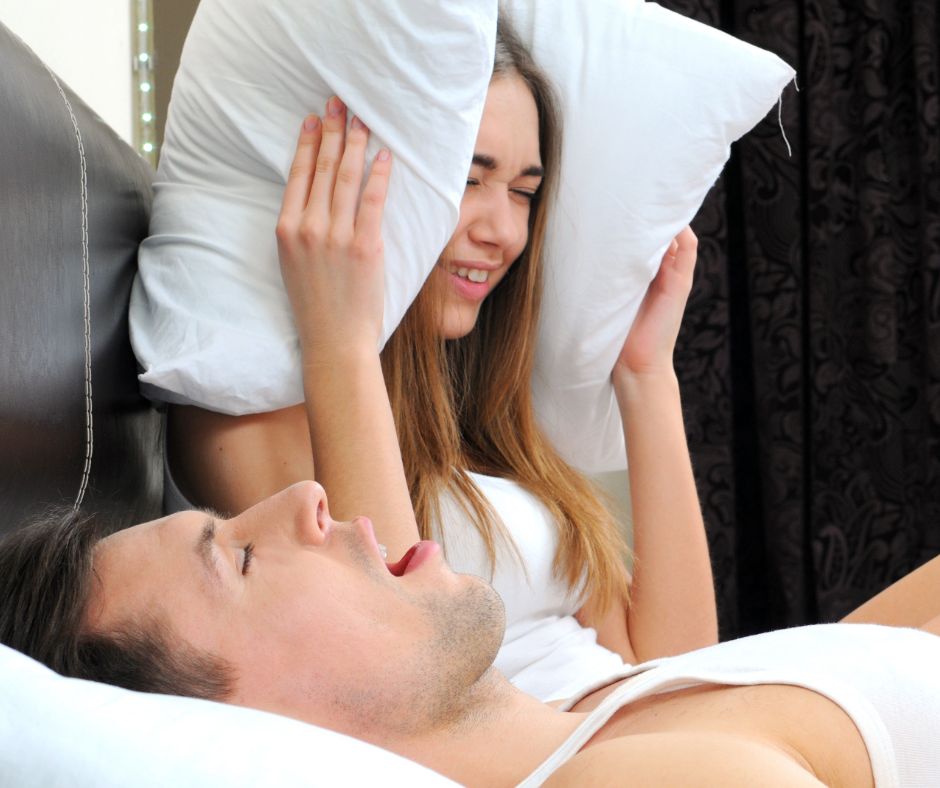
Snoring whilst sleeping is often seen as a harmless problem that one can simply put up with. However, regular night-time snoring may be a sign that there are disturbances in the flow of air through the upper airways during sleep. In some cases, it may also be accompanied by sleep apnoea.
Therefore snoring at night It is not always just an annoying noise that disturbs the person sleeping next to you. It can affect the quality of your sleep, your energy levels during the day and your general well-being. If the problem occurs regularly, it is worth identifying the cause and checking whether it requires treatment of snoring.
The mechanism behind snoring during sleep
Snoring occurs when the flow of air through the upper airways is obstructed. During sleep, the throat muscles relax, and the narrowing of the space through which air flows can cause the tissues to vibrate. It is this vibration that produces the characteristic sound snoring.
A number of factors can contribute to the development of this problem. These include, amongst others, the anatomical structure of the airways, nasal patency, body weight, sleeping position and lifestyle.
Snoring It may also be exacerbated by smoking, alcohol consumption, being overweight or obese, inhalant allergies, asthma, fatigue or sleeping on one’s back. The problem may also occur in people with enlarged tonsils or structural abnormalities of the nose, such as a deviated nasal septum.
Snoring in women and men
Snoring It is often associated primarily with men, but the problem can also affect women. Its frequency may increase with age, but ageing itself is not a direct cause of snoring.
In some people, the tone of the tissues in the throat and larynx decreases with age. This may contribute to airway narrowing during sleep and a worsening of symptoms.
That is why regular snoring at night It is worth treating this as a sign that warrants closer attention, regardless of age or gender.
Symptoms associated with night-time snoring
Samo snoring whilst sleeping It does not always indicate an illness. A problem arises when it is frequent, very intense or accompanied by other symptoms.
Particular attention should be paid to situations where breathing pauses, sudden awakenings, a feeling of breathlessness or characteristic gasping for air occur during sleep.
Symptoms that occur during the day, such as chronic fatigue, feeling sleep-deprived despite getting enough sleep, difficulty concentrating, daytime drowsiness, irritability or morning headaches, may also be cause for concern.
In such cases snoring may be one of the symptoms of sleep-related breathing disorders, including sleep apnoea.
Snoring and sleep apnoea
Regular Snoring and sleep apnoea They may occur simultaneously. Obstructive sleep apnoea is a condition in which there are repeated episodes of restricted or blocked airflow during sleep.
That is why, before you start treatment for night-time snoring It’s worth checking whether the problem might be caused by sleep apnoea.
If breathing difficulties during sleep are suspected, a doctor may recommend appropriate diagnostic tests, including a polysomnography. Depending on the situation, nasal patency and the structure of the airways may also be assessed.
This is an important stage, because effective treatment of snoring It should address the actual cause of the problem, rather than merely alleviating its symptoms.
Diagnosis prior to treatment
Treatment for night-time snoring This should be preceded by an assessment of the patient’s condition and a determination of what is causing the airway to narrow during sleep.
There is no single method that suits everyone. Depending on the cause and the anatomical structure of the airways, a doctor may recommend an appropriate course of action.
For some patients, changing their sleeping position, losing weight, cutting down on alcohol or giving up smoking may help. However, if the problem is primarily due to laxity of the throat tissues, appropriately selected treatments for snoring.
Laser treatment for night-time snoring
Modern technologies make it possible to use lasers in the treatment of snoring. Laser treatment of snoring involves the controlled application of energy to specific structures in the throat.
Heating the tissues can lead to their contraction and improved firmness. At the same time, the laser energy can stimulate collagen fibres, promoting tissue remodelling and improving tissue elasticity.
The aim of this procedure is to reduce the laxity of the structures responsible for the production of snoring sounds and to improve airflow.
Laser therapy for snoring It is a minimally invasive procedure and does not usually require a long recovery period. However, the final choice of method should always be based on an individual assessment of the patient.
Comfort during surgical treatment for snoring
One of the concerns of people considering treatment of snoring there is pain and it takes longer to return to normal functioning.
Modern treatments for snoring are designed to minimise patient discomfort. Laser treatments They do not require traditional surgical preparation or a long recovery period.
Depending on individual sensitivity, you may experience some temporary discomfort, but the procedure is usually well tolerated.
The importance of early diagnosis of snoring
It’s not worth waiting until snoring at night begins to seriously affect day-to-day life. If the problem occurs regularly, disturbs the sleep of the person sleeping next to you, or is accompanied by symptoms such as tiredness, drowsiness or pauses in breathing, it is worth consulting a specialist about the problem.
It is particularly important to rule out sleep apnoea. Simply silencing the sound of snoring does not always mean the problem has been solved.
Diagnostic tests can determine whether the cause is primarily soft tissue in the throat, nasal obstruction, anatomical abnormalities or sleep-related breathing disorders.
Treatment for night-time snoring and improving sleep quality
Night-time snoring It does not have to be a constant feature of one’s sleep. In many cases, it is possible to identify the cause of the problem and choose an appropriate course of action.
The most important thing, however, is not to treat snoring simply as an annoying sound. Regular snoring may be linked to impaired airflow through the airways, and sometimes also to sleep apnoea.
Therefore treatment of nocturnal snoring It should start with a proper diagnosis. Only on that basis can a decision be made as to whether the appropriate solution is to change habits, treat the anatomical cause, or undergo a procedure using modern laser technology.
If snoring whilst sleeping If it regularly disrupts your sleep or affects your quality of life, it is worth consulting a specialist about the problem to find out which method would be suitable for you.
Please fill in the contact form and our team will get in touch with you to arrange a convenient time for your appointment.