Laser liposuction - what does it involve and what are the results?
Laser liposuction - find out what the procedure involves, which areas of the body can be contoured, and what results you can expect from the treatment.
Your body may not look the way you want it to, despite dieting, training and regular exercise. It isn’t always a question of body weight - sometimes it’s about one specific area where excess body fat stubbornly remains. Laser liposuction It allows you to precisely sculpt selected areas of the body whilst helping to improve skin firmness.
This is not a weight-loss treatment. Its aim is to remove localised fat deposits which can disrupt the body’s proportions and be difficult to reduce through diet or exercise alone. The abdomen, thighs, arms, the area under the chin or the waist - these are precisely the areas where problems most commonly arise.
What does the treatment involve, how does the laser affect fat tissue, and when can you see the first results? Find out what you can really expect from this method and whether it will be suitable for you.
When are diet and exercise not enough?
The stomach, waist, love handles, thighs and arms can store fat even in people who lead an active lifestyle. It is these localised deposits that often pose the greatest obstacle to achieving a well-proportioned figure.
The problem is that the body doesn’t let us decide where it will start burning fat first. So you can consistently lose weight and still have a bit of a roll on your tummy or excess body fat around your thighs.
In such situations laser liposuction It may be a way of precisely sculpting a specific part of the body.
It is not a substitute for a healthy diet or physical activity. It complements these when the problem mainly concerns localised fat deposits.
What is laser liposuction?
Laser liposuction It is a minimally invasive medical procedure used to reduce localised fat deposits. The procedure is carried out under local anaesthetic.
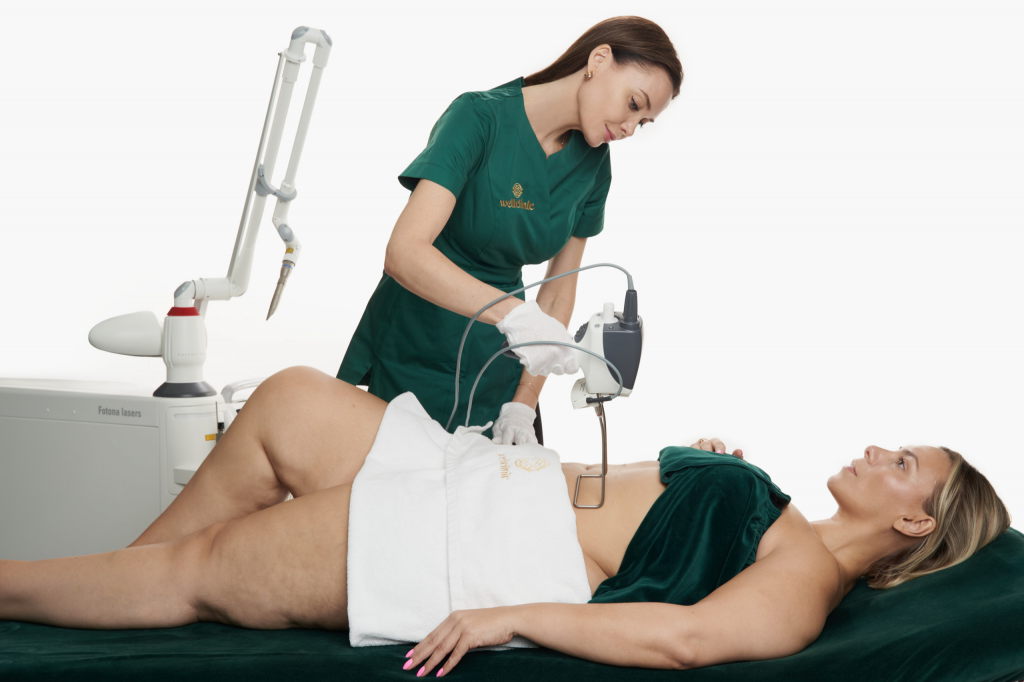
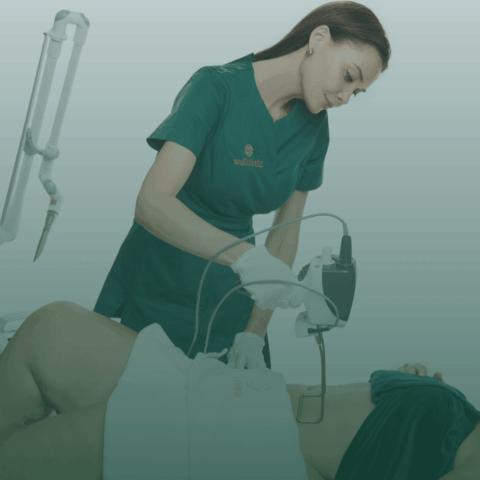
During the procedure, the doctor inserts a thin laser fibre under the skin through a small incision. The laser energy acts on adipocytes, i.e. fat-storing cells. At the same time, the energy affects the tissues and may stimulate processes associated with collagen remodelling.
It is precisely this combination of fat reduction and skin stimulation that sets this method apart.
It is not just a question of reducing volume. It is also important how the skin behaves following a change in tissue volume.
How does the procedure work?
It all starts with a consultation. The doctor assesses distribution of body fat, the quality and elasticity of the skin, and the patient’s general state of health. On this basis, they determine whether the treatment will be the appropriate course of action in a given case.
The procedure itself usually takes several dozen minutes, although the duration depends primarily on the size and number of areas being treated.
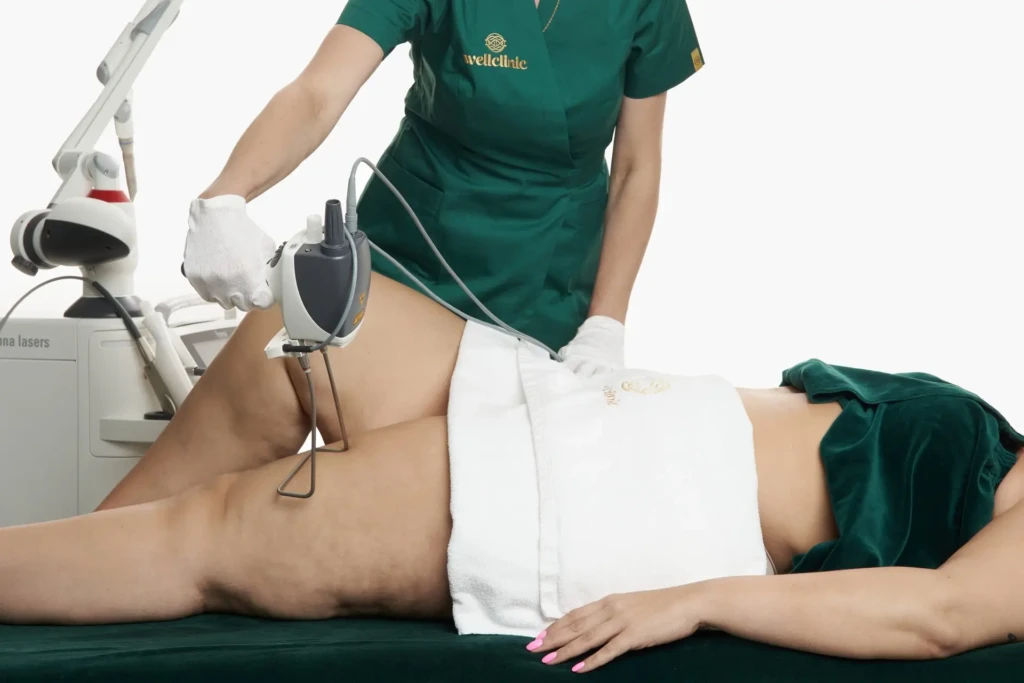
Wellclinic uses laser technologies designed to treat adipose tissue and the skin. The laser energy can cause controlled heating of the tissues, supporting collagen remodelling and improving skin firmness.
The extent of the procedure should always be tailored to the patient’s anatomy. The approach to contouring the abdomen differs from that for the thighs, and is different again for the arms or the waist area.
Adipose tissue consists primarily of adipocytes. During the procedure, the laser energy acts on these cells, causing them to be damaged and their contents to be released.
The body then gradually metabolises and eliminates the breakdown products.
The process does not, therefore, end the moment you leave the clinic. In the weeks that follow, further changes take place within the treated area, and the results gradually become more noticeable.
At the same time, the energy from the plna laser can affect the collagen fibres. Skin treated with the laser may, over time, become tighter and firmer.
This is particularly important for people in whom a reduction in body fat could highlight pre-existing skin laxity.
For whom is laser liposuction intended?
The best candidates are those who have a stable body weight, lead a healthy lifestyle, but despite this, they struggle with localised fat deposits.
It is precisely this localised accumulation of fat that is the main indication for the procedure.
However, it is not a treatment for obesity, nor is it a way to lose weight quickly. If excessive body weight is the main problem, the first step should be to lose weight and have your health assessed.
Only then can you start thinking about sculpting your figure in detail.
Mounjaro versus laser liposuction following weight loss
Rapid weight loss can change your figure more than you might initially expect. This also applies to people who are following Mounjaro, for whom weight loss may be significant. The amount of body fat decreases and body proportions change, but not all parts of the body respond to weight loss in the same way.
Once the reduction process has finished or stabilised, there may still be localised fat tissue, which cannot be reduced through diet or physical activity. Sometimes excess or sagging skin is also an issue, which is why it is essential to assess the entire area - and not just the amount of fat - before choosing a treatment.
In such a situation laser liposuction following weight loss It can form part of further body contouring. The treatment allows you to focus on specific areas, such as the abdomen, love handles, thighs, arms or back, where disproportionate fat deposits remain.
Is laser liposuction following Mounjaro treatment worthwhile?
Yes, but it is best to consider it once your weight has stabilised. Undergoing the procedure whilst you are losing weight rapidly may make it difficult to assess the actual results, as your body is still changing.
Once your weight has stabilised, your doctor will be able to assess more accurately where excess body fat actually remains, and where the problem is primarily due to sagging skin.
That is an important distinction.
If, after losing a dozen or so or several dozen kilograms, the main issue is loose skin, fat reduction alone will not solve the problem. If, on the other hand, the skin has retained sufficient elasticity and the problem lies in small, localised fat deposits, laser liposuction can help improve the contours of the figure.
What are the benefits of liposuction following significant weight loss?
After losing a significant amount of weight, patients often no longer want to „lose any more weight”. They simply want to look better in their new figure.
That’s a completely different objective.
The treatment can help to contour areas that have retained more body fat than other parts of the body. These include, amongst others, the abdomen, waist, love handles, thighs, arms and back.
Where the skin is of sufficient quality, an additional advantage of laser technology is its ability to affect tissues through thermal energy, which supports processes associated with collagen remodelling. This does not, however, mean that laser treatment can replace surgery to remove a large excess of skin. Eligibility is always determined by an assessment of the individual case.
During intensive weight loss, the body loses fat from various areas, but the rate of these changes is not necessarily the same throughout the body. Therefore, once you have reached your target weight, there may still be areas that look fuller.
Laser liposuction following weight loss It can then be used as the final stage in body contouring.
It is not a substitute for weight loss. Nor should it be regarded as a means of losing further weight. Its purpose is to make precise adjustments to body proportions once body weight has already been reduced and the problem relates to specific areas.
Which parts of the body can be treated?
Laser liposuction for the body It can be used in many areas where there are localised deposits of fat.
Belly
Laser liposuction of the abdomen This is one of the most commonly chosen areas. Excess body fat can accumulate in both the lower and upper parts of the abdomen. The problem often affects the sides as well, which can throw off the proportions of the waist.
The aim of contouring this area is to reduce localised volume and achieve a more harmonious body contour.
Love handles and waist
Adipose tissue around the waist can be particularly resistant to diet and exercise. Even after losing a few kilograms, the proportions of the figure do not always change as the patient would expect.
Reducing fat from the sides can help to define the waist more clearly and improve the proportions between the upper and lower body.
Thighs
The thighs are another area where localised fat deposits often occur. The treatment may include both the inner thighs, as well as other areas requiring modelling.
The aim is not to reduce the volume of the legs as much as possible, but to achieve a more proportionate shape.
Arms
Flabby or fuller arms can be a source of discomfort even for people of a healthy weight. Assessing the condition of the skin in this area is particularly important.
Reducing body fat alone is not always enough. That is why, during the assessment, the doctor also takes into account the skin’s firmness and elasticity.
Back
Adipose tissue can also accumulate on the back, particularly beneath the shoulder blades and around the waist. Pleats at the back they can be visible even on a slim figure. Diet and exercise do not always help to get rid of the fat accumulated in this area, which is why laser liposuction It may be a way of shaping the back and improving its contour.
Shaping these areas helps to improve the line of the back and make the figure look more proportionate.
The area around the knees
Small, localised deposits of fat may also appear on the inside of the knees. Although this is a small area, its appearance can affect the proportions of the whole leg.
In such cases, the procedure involves highly precise modelling.
The buttocks and hip area
In the case of the hips and buttocks, the procedure may form part of a wider body contouring plan. It is crucial to plan the extent of the reduction carefully in order to maintain the body’s natural proportions.
It’s not about removing as much fat as possible. It’s about getting the proportions right.
The effects of laser liposuction - when do the results become apparent?
It is difficult to assess the final result immediately after the procedure. In the first few days, there may be swelling, redness, tenderness or temporary unevenness of the tissue.
This is the body’s normal reaction to the procedure.
Over the following weeks, the swelling gradually subsides, whilst the body continues the processes involved in tissue remodelling. The results therefore become apparent gradually.
Patients may notice a reduction in localised fat deposits, an improvement in body proportions, more defined contours in selected areas of the body, improved skin firmness and a smoother surface in the treated area.
The final result depends, amongst other things, on the amount of body fat, age, skin quality, lifestyle and the body’s individual ability to regenerate.
Why might the effect look natural?
Well-executed body contouring should not alter the body in a drastic way.
Proportion is the greatest value.
Fat reduction It is carried out in a specific area, which is why the doctor can plan the procedure to preserve the natural transitions between different parts of the body. At the same time, the skin remodelling that takes place after the procedure allows for a gradual change in the appearance of the treated area.
The result shouldn’t be the impression of a „cut-out” section of the figure. The aim is for the body to look slimmer, but still like your own.
What do patients say?
Patient reviews following laser liposuction They often relate not only to the number of centimetres lost, but also to a noticeable improvement in the appearance of a specific part of the body.
Patients note a more defined body contour, clothes that fit better and improved body proportions. For many people, it is also important that the treatment allows them to target an area that had previously been resistant to diet and exercise.
It is worth bearing in mind, however, that patients’ experiences vary from person to person. The outcome depends on body type, the amount of body fat, the condition of the skin and how the recovery period is managed.
„Patients often come to us not because they want to lose a significant amount of weight, but because, despite dieting and physical activity, there remains one specific area that disrupts the proportions of their figure. In such cases, the most important thing is to plan the treatment precisely and preserve the body’s natural appearance. It is not about changing one’s figure at any cost, but about sculpting it harmoniously.” Sara Suszek, Beautician at Wellclinic
Recovery - what can you expect?
After the procedure, the body needs time to recover. The following may occur in the treated area: swelling, tenderness, redness or a feeling of tightness in the skin.
The duration of these symptoms varies from person to person.
During the initial period, you should follow your doctor’s advice. Depending on the extent of the procedure, you may be advised to wear compression garments, which help to reduce swelling and promote proper tissue healing.
It is also important to stay properly hydrated, follow a healthy diet and temporarily limit intense physical activity.
It is not worth trying to speed up this process on your own. The body needs time to regenerate its tissues.
Are the effects of laser liposuction permanent?
The effect of fat reduction is long-lasting. However, this does not mean that you can completely forget about your diet and physical activity after the procedure.
The remaining fat cells may still increase in volume if there is a significant gain in body weight.
That is why the best way to maintain the results is a stable body weight, physical activity and a balanced diet.
The treatment helps to sculpt the figure. It does not prevent subsequent weight gain.
Is laser liposuction safe?
Like any medical procedure, laser liposuction involves certain risks and requires appropriate qualifications.
Before the procedure, the doctor takes a medical history, assesses the condition of the skin and the amount and distribution of adipose tissue. Contraindications and factors that may affect the recovery process are also analysed.
Safety depends not only on the technology used, but also on the appropriate qualifications and experience of the person performing the procedure, and on adherence to post-treatment recommendations.
The cost of laser liposuction depends primarily on the area being treated, its size and the scope of the planned procedure.
A treatment targeting a small area is different from comprehensive body contouring of several areas - such as the abdomen, love handles and back.
During the consultation, the doctor assesses the distribution of body fat, the condition of the skin and the expected outcome. Only on this basis can the individual treatment plan be determined.
Is laser liposuction worth considering?
If your problem is local excess body fat in specific areas, which cannot be reduced despite diet and exercise, laser liposuction may be a method worth considering.
It’s not about a dramatic change in weight.
It’s about something more specific - improving the proportions.
The stomach, love handles, thighs, arms, back, hips and knees may each require a completely different approach. That is why, rather than choosing a treatment based solely on photos of other people’s results, it is worth first finding out what is actually causing the problem in your case.
During the consultation, the doctor will assess body fat percentage, skin quality, body proportions and treatment options. On this basis, it is possible to determine whether laser liposuction is a suitable method and what results can realistically be achieved.
If there’s one specific part of your body that’s been bothering you for a long time, you don’t have to wonder whether it’s possible to shape it effectively.
Book a consultation at Wellclinic and find out which option is best suited to your body shape. Laser liposuction procedures are carried out Warsaw, Gdańsk and Cracow.
PubMed „Impact of Laser Lipolysis With and Without Liposuction on Arm Circumference: A Systematic Review and Meta-Analysis" https://pubmed.ncbi.nlm.nih.gov/40927670/
Certain parts of the body are particularly resistant to diet and exercise, even with regular physical activity and a healthy diet. This is due to the body’s natural tendency to store fat in specific areas.
The most difficult areas include the stomach, love handles, the inner thighs and the area under the chin. For many people, this is precisely where fat deposits persist, despite them generally having a slim figure.
In such cases, laser liposuction may be helpful, as it allows precise body contouring, reduction in localised fat and body contouring of problem areas.
The treatment works selectively, which means it allows you to target specific areas without affecting the whole body. This makes it possible to balance out your proportions and improve the appearance of your figure.
Fat cells removed during laser liposuction do not regenerate, which means that the slimming effect is permanent. However, this does not mean that your figure will remain unchanged regardless of your lifestyle.
The remaining fat cells can still increase in size if there is a calorie surplus. Therefore, maintaining the results depends on diet, physical activity and a stable body weight.
The most important thing is to understand that the procedure ensures a permanent reduction in fat cells, but it does not completely halt the process of weight gain. That is precisely why it is referred to as a method of body sculpting rather than weight loss.
Patients who maintain a healthy lifestyle can enjoy long-lasting results and a stable improvement in their body proportions.
The results of laser liposuction are not the same for all patients, as they depend on several key biological and lifestyle factors.
The most important factors are the quality of the skin, its elasticity and the amount of fat tissue in the area in question. The patient’s age and metabolic rate also play a significant role.
Post-operative factors are also important, such as wearing compression garments, ensuring adequate hydration and avoiding excessive physical exertion during the recovery period.
The effects include individual body contouring, variations in the rate of fat reduction and the quality of the skin following the treatment, all of which contribute to the final result.
That is why each treatment plan is tailored to the individual by a specialist.
Laser liposuction is particularly effective for so-called ‘stubborn fat’ - that is, fat which does not respond to diet or exercise. This most commonly affects the abdomen, love handles, thighs and double chin.
The laser energy enables selective action on fat cells, leading to their breakdown and gradual elimination from the body. This makes it possible to reduction of stubborn fat, sculpting difficult areas of the body and precise body contouring.
The treatment does not have a systemic effect, which is why it is ideal for slim people who want to improve specific body proportions rather than lose weight.
The end result looks natural, as fat is reduced gradually whilst the skin becomes firmer.
One of the biggest the advantages of laser liposuction jThe recovery period is short, meaning that most patients can return to work after just a few days. In many cases, it is possible to resume light activity after as little as 24-72 hours.
Immediately after the treatment, you may experience swelling, slight bruising and tenderness at the treated site. These symptoms are normal and will gradually subside over the course of a few days or weeks.
The following are of key importance short recovery period following laser liposuction, a swift return to work and the minimally invasive nature of the procedure, which distinguish this method from conventional surgery.
The time it takes to return to full activity depends on the extent of the procedure and the individual’s physical condition; however, in most cases, patients do not require a long period of sick leave.
Wearing compression garments and following post-treatment advice speeds up the healing process and improves the final body-contouring result.
Yes, in most cases, it is recommended to wear compression garments after laser liposuction, as they support the healing process and help to achieve an even body-contouring result. Tissue compression is crucial in the first few weeks after the procedure, when the body is actively removing broken-down fat cells and restructuring the skin.
Compression garments help to reduce swelling, minimise the formation of unevenness and support the skin’s natural adaptation to the body’s new contours. As a result, the results are more harmonious and predictable.
The key benefits are stabilisation of the results following laser liposuction, reduction of post-operative swelling and improving the quality of body contouring. The length of time you need to wear the garments depends on the extent of the procedure and your doctor’s advice, but is usually between a few days and a few weeks.
Following these recommendations has a direct impact on the final aesthetic result and the comfort of your recovery.
The results of laser liposuction can be long-lasting, although their durability depends on the patient’s lifestyle and adherence to post-treatment recommendations. The most common factor that undermines the results is weight regain resulting from a calorie surplus.
Any remaining fat cells that were not removed during the procedure may continue to grow, which can alter the proportions of the body. It is therefore vital to maintain a stable weight.
Risk factors also include a lack of physical activity, an unhealthy diet and failure to follow post-treatment advice. Hormonal imbalances and the skin’s natural ageing process may also play a role.
The key elements are maintaining the results of laser liposuction, weight management after surgery and lifestyle after body sculpting, which determine the long-term outcome.
Patients who maintain healthy habits can enjoy stable and natural results for many years to come.
Yes, one of the key advantages of laser liposuction is that it simultaneously improves the quality of the skin in the treated area. Unlike traditional fat-removal methods, laser technology acts not only on adipose tissue but also on the skin’s structures.
The laser energy stimulates fibroblasts to produce new collagen and elastin, leading to a gradual thickening and firming of the tissues. As a result, the skin may appear tighter and more elastic after the treatment, and the risk of sagging is reduced.
Key outcomes include improved skin firmness following laser liposuction, stimulation of collagen production and reduction in skin laxity following fat loss. It is precisely this mechanism that distinguishes the laser method from traditional liposuction, where the skin does not always adapt to the body’s new contours.
The firming effect is not immediate - it develops gradually over the course of several weeks following the treatment, as the tissue remodelling process takes place.

 Katarzyna Pawłowska

 08.10.2026




 +48 600 100 177