
 Katarzyna Pawłowska
 14.10.2026
 Table of contents
Itchy blisters appear suddenly and disappear after a few hours. The next day, the skin looks different, but the problem returns. Is it hives, an allergic reaction, or perhaps another skin condition? Not every rash has the same cause, and confusing different changes can lead to inappropriate treatment.
Urticaria It is a skin condition that primarily manifests as raised, often itchy blisters. It can occur on the face, neck, trunk and limbs. It is sometimes accompanied by swelling of the deeper layers of the skin.
The causes of urticaria vary. These changes may occur as a result of an allergic reaction, an infection, the use of certain medicines, or exposure to physical stimuli. In some cases, it is not possible to identify a single factor responsible for the symptoms.
In this article, we explain, What does urticaria look like?, how long it lasts, how to tell it apart from a rash, eczema and spots, and when it is advisable to see a doctor.
What does urticaria look like? Characteristic symptoms
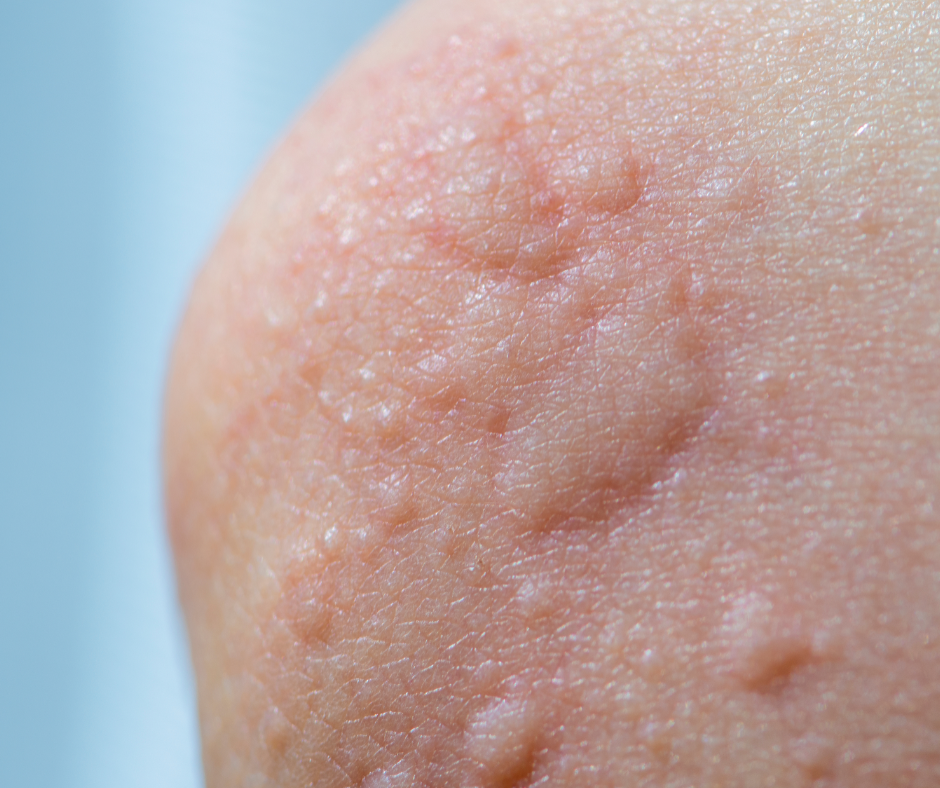
The most common symptoms of urticaria are convex blisters of various sizes. They may be skin-coloured or surrounded by distinct redness. Their shape varies, and individual lesions may merge to form larger areas.
The most common symptoms of urticaria are:
- itchy, raised blisters on the skin;
- redness and localised swelling;
- a burning sensation or a feeling of irritation;
- the rapid emergence of new changes in other places;
- the intermittent remission and recurrence of symptoms.
What is characteristic is that A single hive usually disappears within 24 hours, without leaving a trace. At the same time, however, new lesions may appear, which is why hives may seem to persist for several days.
Some people also experience angioedema, affecting the deeper layers of the skin and the subcutaneous tissue. It may affect the lips, eyelids, hands or feet. Swelling of the tongue or throat, particularly when accompanied by difficulty breathing or swallowing, requires immediate medical attention.
Hives on the face – what causes them?
Hives may appear on the cheeks, forehead, eyelids and neck. These changes can be particularly worrying when they occur in visible areas or are accompanied by swelling.
Among the possible factors that trigger urticaria These include certain foods, medicines, infections and physical stimuli such as cold, heat or pressure. However, it is not always possible to identify a specific cause.
It is worth noting when the changes appear, how long they last and whether they are accompanied by any other symptoms. It may also be helpful to take photographs of the skin, especially if the blisters disappear before your appointment with the doctor.
Not every case of facial redness is urticaria. Some contact reactions may look similar, eczema, rosacea, acne vulgaris or others skin conditions. If the changes persist in one area for several days, flake or leave marks, it is worth considering other causes.
What causes hives?
Urticaria is caused by the activation of mast cells and the release of inflammatory mediators, primarily histamines. It increases the permeability of blood vessels, leading to the formation of oedema and characteristic blisters.
The most commonly considered causes and triggers include:
Allergic reactions. Hives may occur following contact with an allergen, such as a particular food or insect venom. However, not all cases of hives are caused by an allergic reaction.
Medicines. Certain medicines, including certain antibiotics and non-steroidal anti-inflammatory drugs, may cause or exacerbate symptoms.
Infections. Hives can occur alongside viral infections, and sometimes bacterial infections too. This is particularly common in children.
Physical stimuli. In some people, blisters appear as a result of exposure to cold, heat, pressure, friction, physical exertion or a rise in body temperature.
Chronic spontaneous urticaria. In this form, symptoms recur without any clearly identifiable external trigger. In some patients, autoimmune mechanisms play a role.
Determining the cause is not always straightforward. The scope of diagnostic tests should depend on the course of symptoms, the patient’s medical history and the clinical examination. Carrying out extensive allergy tests without specific indications is not always beneficial.
Acute versus chronic urticaria – how do they differ?
Urticaria is classified, amongst other things, according to the duration of the symptoms.
Acute urticaria
Acute urticaria lasts up to 6 weeks. It can appear suddenly, for example during an infection, following contact with an allergen, or as a result of taking a particular medicine.
For many people, the symptoms resolve on their own. However, if they are severe, recur or are accompanied by other worrying symptoms, you should consult a doctor.
Chronic urticaria
Chronic urticaria is diagnosed when hives or swelling recur or persist for longer than 6 weeks.
Symptoms may occur every day or come and go. They often make it difficult to sleep, concentrate and carry out daily activities.
Chronic urticaria does not necessarily have to be associated with allergy. If the symptoms persist for several weeks, it is advisable to consult a doctor, who will assess the nature of the changes and plan the appropriate course of action.
Hives versus a rash – how can you tell the difference?
Rash This is a general term for skin lesions. It can take the form of patches, papules, vesicles or pustules. It occurs in the course of many different conditions, including infections, allergic reactions, irritations and dermatological conditions.
Urticaria It has a more characteristic presentation: raised blisters form, often accompanied by itching, and individual lesions usually resolve within 24 hours.
With other types of rash, the lesions may persist in the same place for much longer. Sometimes there is flaking, blisters, oozing or pain.
The appearance of the skin alone does not always allow a diagnosis to be made. The timing of the onset of symptoms, any medication being taken, recent infections and any general health problems are also important.
Hives versus eczema – what should you look out for?
Eczema, also known as eczema, may cause redness, itching, dryness and flaking of the skin. In the more acute phase, small blisters may appear, and occasionally there may also be oozing.
Unlike typical urticaria blisters Eczema lesions usually persist for several days or weeks. They may also recur in the same areas.
The cause of eczema may include, amongst other things atopic dermatitis, contact with an irritant or allergic contact dermatitis. The diagnosis is important because the treatment depends on the type of problem.
If the symptoms are persistent, worsen after using cosmetics or are accompanied by noticeable dryness, it is advisable to consult a specialist rather than using random products.
Hives versus acne – how can you tell the difference?
Hives and acne They may cause visible changes to the face, but the mechanism behind their formation is different.
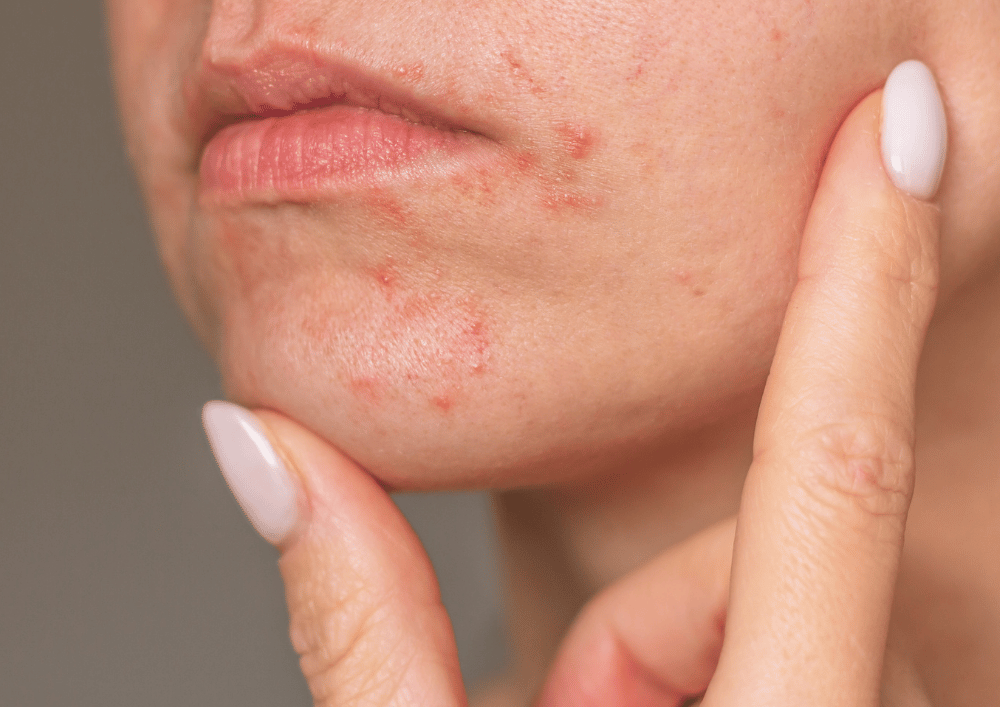
Acne It is associated, amongst other things, with abnormalities in the keratinisation of the hair follicle openings, sebaceous gland activity and inflammation. It may manifest itself as blackheads, in lumps, pimples, and, in more severe cases, also deep, painful lesions.
Urticaria whereas it manifests itself primarily transient blisters and itching. It does not cause typical blackheads, and individual lesions usually clear up much more quickly than acne lesions.
If you regularly get blackheads, papules or pustules on your face, it is worth considering a consultation regarding acne treatment. If the changes occur suddenly, are intensely itchy or are accompanied by swelling, the first step is to determine the cause.
Not every spot is a spot. Similar changes may also occur during the course of folliculitis, perioral dermatitis or other skin conditions. An accurate diagnosis helps to determine the appropriate course of action.
How is hives treated?
Treatment of urticaria depends on the severity of the symptoms, their duration and any possible triggers.
The proceedings are usually based on second-generation antihistamines. In chronic urticaria, which does not respond adequately to standard treatment, the doctor may consider alternative methods in accordance with current guidelines.
It is also important to identify the factors that exacerbate symptoms. If there is a reasonable suspicion of a reaction to a specific medicine or substance, the next steps should be discussed with a doctor. You should not stop taking medicines or start extensive elimination diets on your own without medical advice.
In the case of recurring symptoms, it is worth noting down when the changes occur, how long they last, and whether they appear following specific activities or exposures. Such information can help with diagnosis.
If hives persist for more than 6 weeks, significantly interfere with day-to-day life, or are accompanied by unusual symptoms, it is advisable to seek medical advice.
Does hives leave scars or discolouration?
Typical urticarial blisters They clear up without leaving scars or permanent discolouration. However, if the lesions persist in one place for longer than 24 hours, are painful or leave bruises, they require medical assessment. Such a course may indicate another cause, such as urticarial vasculitis.
General symptoms, such as, should not be ignored either, such as fever, joint pain or a marked deterioration in one’s general well-being.
Urgent medical attention is required in the event of sudden swelling of the tongue or throat, difficulty breathing, problems swallowing or fainting. These symptoms may indicate a severe allergic reaction. In this case, you should immediately call the emergency services on 112.
Skin changes on the face – when should you seek advice about acne?
Recurring skin problems on the face can affect not only your appearance but also your well-being. Blackheads, spots and inflamed papules can be difficult to manage, particularly if they appear despite regular skincare.
In such a situation, it is worth determining whether we are actually dealing with acne and what type of treatment would be appropriate. The choice of treatment should take into account the nature of the lesions, the condition of the skin, its sensitivity and any possible contraindications.
Wellclinic offers treatments designed to improve the condition of acne-prone skin. A consultation provides an opportunity to discuss the problem and explore treatment options tailored to your individual needs.
Cosmetic treatments are no substitute for the diagnosis of skin conditions. If lesions have appeared suddenly, are intensely itchy or are accompanied by swelling, their cause must first be determined.
Do you struggle with recurring blackheads, spots or pimples? Find out more about our acne skin treatments at Wellclinic and find out which treatments might be suitable for your skin.
Sources:
- Zuberbier T. et al., „The international EAACI/GA²LEN/EuroGuiDerm/APAAACI guideline for the definition, classification, diagnosis and management of urticaria, Allergy, 2022.” https://pubmed.ncbi.nlm.nih.gov/34536239/
- European Academy of Allergy and Clinical Immunology (EAACI), International guidelines on urticaria. https://eaaci.org/guidelines-position-papers/the-international-eaaci-ga²len-euroguiderm-apaaaci-guideline-for-the-definition-classification-diagnosis-and-management-of-urticaria/
- American Academy of Dermatology (AAD), Acne: Diagnosis and treatment. https://www.aad.org/public/diseases/acne/derm-treat/treat
- American Academy of Dermatology (AAD), Acne: Overview. https://www.aad.org/public/diseases/acne/really-acne/overview


 +48 600 100 177