
 Katarzyna Pawłowska
 14.10.2026
 Table of contents
Dry body brushing, litres of nettle tea and yet more firming lotions, and yet by the evening your legs still feel like leaden pillars. Many people put this down to a slow metabolism or genetics, but the reality in the salon is simple: your lymphatic system It has come to a standstill. The body stores retained fluid and metabolic waste in the intercellular spaces, creating chronic oedema that you cannot sweat out on a treadmill. You can either carry on waiting for the retained fluids to solidify into a hard, painful shell, or force your tissues to clear the blockages immediately.
Lymphatic congestion: what causes that feeling of heaviness and spongy skin?
The lymphatic system does not have its own pump. Unlike blood, lymph has no heart to pump it at a constant pressure - it only moves when muscles are working or when stimulated from outside. With a sedentary lifestyle, this flow comes to a standstill.
When the circulation slows down, interstitial fluid It no longer drains away efficiently and accumulates in the body’s tissues. This leads to the formation of subcutaneous oedema, which relentlessly constricts the small blood vessels and cuts off the cells’ supply of oxygen and nutrients. It is at this point that the skin loses its elasticity and becomes spongy. If left untreated, the swelling does not subside. Over time, proteins accumulate in the retained fluid, the tissue begins to fibrose and hard lumps cellulite, against which home remedies are completely powerless.
What is endermology and how does it affect deep tissues?
Endermologie in practice, this is an advanced vacuum massage, which works much deeper than any manual drainage technique. No massage therapist can maintain perfectly consistent pressure, suction and rhythm for several dozen minutes of continuous work. The device does this without any fluctuations.
A specialised treatment head draws a fold of skin into the treatment chamber using an adjustable vacuum, whilst rotating rollers intensively knead and stretch it in several directions simultaneously. This movement mechanically loosens stiffened fascia, stimulates fibroblasts to produce new collagen and elastin, and pushes stagnant lymph directly towards the main lymph nodes.
To protect the tissues, the procedure is carried out in a flexible endermology suit. This is not a matter of aesthetics, but of protecting the skin. The cover protects the tiny blood vessels from bursting, eliminates the risk of bruising and allows the head to operate at full power without causing painful friction against the skin.
The procedure and the treatment areas
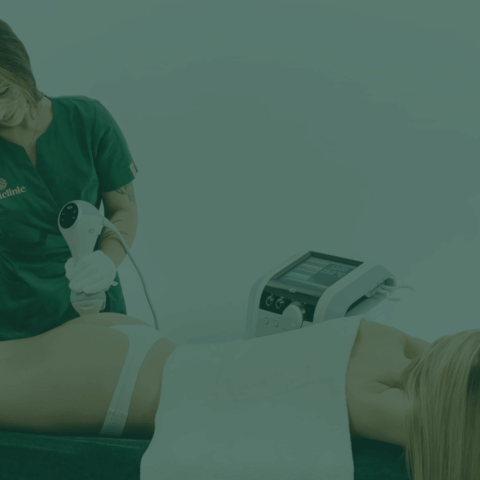
The session usually lasts between 35 and 45 minutes and requires no recovery time. After initially ruling out any contraindications and putting on the suit, the beautician manually stimulates the main lymphatic nodes in the groin, behind the knees and under the arms. Only then does the treatment head begin to operate smoothly on the selected areas of the body, with the vacuum settings adjusted directly to the thickness and density of the tissue.
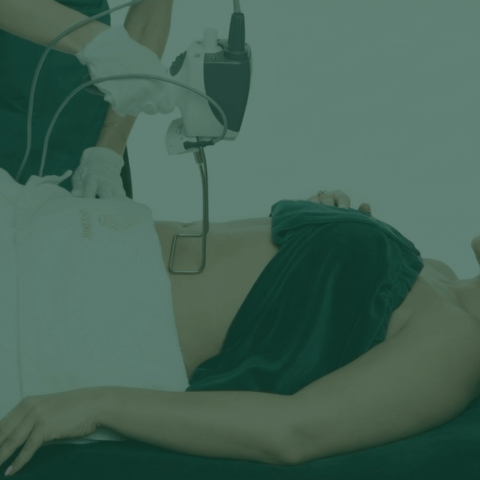
On the thighs and buttocks, the treatment focuses on breaking down persistent water retention, smoothing out unevenness and lifting the tissues through myofascial stimulation. In the abdominal and flanking areas, endermology helps to reduce swelling around the waist, stimulates bowel peristalsis and firms up loose skin following pregnancy or sudden weight loss. On the arms and back, meanwhile, it relieves stiff fascial bands and reduces skin laxity, allowing the body to immediately regain a feeling of lightness.
The real effects of endermology: where are the limits?
Let’s put it plainly: Endermology does not help you lose weight. It does not destroy fat cells thermally or chemically, and it cannot replace a calorie deficit. If anyone promises that you will burn off excess fat simply by lying on the treatment table, they are ignoring biological reality.
The power of vacuum massage lies in the immediate relief it provides to the circulatory system. The treatment relieves heaviness in the legs even whilst walking from the clinic to the car, smooths out dimpling caused by water retention, and is excellent for post-workout recovery or smoothing out scar tissue following liposuction procedures. However, it is important to bear in mind the limitations of this method.
A single visit provides relief for just a few dozen hours. A lasting improvement in blood flow requires discipline in the form of a course of 10-15 treatments carried out 2-3 times a week, followed by maintenance sessions once a month, and ensuring you drink at least 2-2.5 litres of water a day. Without adequate hydration, the kidneys will not be able to keep up with filtering the released metabolites, and the swelling will return with a vengeance.
When should you avoid a vacuum massage?
Despite its non-invasive nature, intense negative pressure provides a strong mechanical stimulus to the circulatory system. Active cancer, deep vein thrombosis, phlebitis, advanced varicose veins and extreme fragility of the blood vessels are absolute contraindications for the procedure.
Other contraindications include acute viral and bacterial infections, the use of anticoagulants, hernias in the treatment area, and recently administered dermal fillers or tissue biostimulators, the deposits of which could be mechanically displaced.
Is Endermologie not enough? How we effectively remove stubborn cellulite at Wellclinic
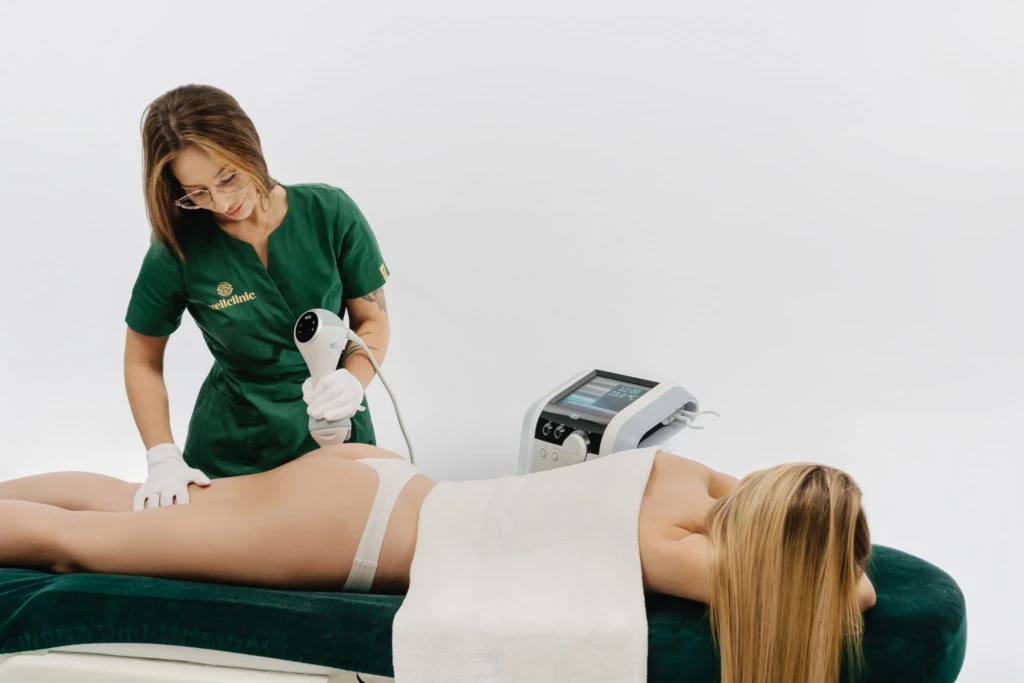
Endermologie It drains stagnant water very effectively, but if your problem is a serious one adipose cellulite or fibrotic, vacuum massage alone cannot penetrate hardened connective tissue. At Wellclinic, we do not waste your time on a series of twenty treatments that only provide a temporary illusion of smoothness. Instead of merely moving fluids around superficially, we tackle the biological causes of cellulite using advanced hi-tech technologies.
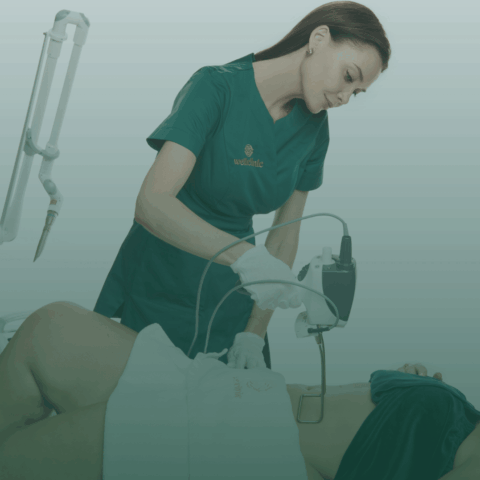
The basis for the treatment of established lesions at Wellclinic is BTL UNISON therapy - a technology which is the only one in the world to combine two powerful stimuli in a single applicator: monopolar radio wave and a directional sound wave. During a single, painless treatment, radiofrequency waves heat the subcutaneous tissue to a temperature of 40-45°C, causing the collagen fibres to contract and leading to the thermal reduction of fat cells.
At the same time, the acoustic wave generates powerful mechanical vibrations which ruthlessly break down the stiffened, fibrotic strands that cause the dimpled appearance of ‘orange peel’ skin. The result? Instead of a marathon of 15 vacuum massage sessions, we achieve deep tissue remodelling, firmer skin and a visible reduction in circumference in just 4 short sessions. In the case of difficult, stubborn fat deposits, we supplement the treatment with selective microwave technology or medical biostimulation of the skin.
Don’t buy treatments blindly and don’t just copy regimens from online forums. Your body may need lymphatic drainage, but it may just as well need immediate treatment to break up fibrosis using shockwave therapy.
During a one-to-one consultation at Wellclinic Our medical team will assess the severity of your cellulite, check the thickness of your body fat and the elasticity of your fascia, and precisely identify which treatment will work fastest for you.
Sources:
- PubMed „Treatment of cellulite: a prospective clinical, histological and immunohistochemical study” https://pubmed.ncbi.nlm.nih.gov/18489601/
- PubMed „Cellulite: A review of its physiology and treatment”
https://pubmed.ncbi.nlm.nih.gov/16020201/ - PubMed „Non-invasive mechanical body contouring: (Endermologie) - an update on a one-year clinical outcome study”
https://pubmed.ncbi.nlm.nih.gov/9413289/ - ScienceDirect „Physical forces in the biological regulation of connective tissue remodelling and lymphatic flow”
https://www.sciencedirect.com/science/article/pii/S0945053X1930128X - SpringerLink „Clinical and Ultrasonographic Evaluation of Mechanical Vacuum-Assisted Massage in Subcutaneous Tissue Remodelling”
https://link.springer.com/article/10.1007/s00266-015-0582-y - Wiley Online Library „A prospective randomised study on mechanical stimulation of the skin and subcutaneous tissue in the management of cellulite”
https://onlinelibrary.wiley.com/doi/10.1111/jocd.13258


 +48 600 100 177