
 Katarzyna Pawłowska
  08.07.2026
 Table of contents
Hair loss This is a problem faced by both women and men – regardless of age. Every day, we naturally lose around 50–100 hairs, as this is part of the normal hair growth cycle. However, a marked increase in hair loss, the appearance of thinning patches, a reduction in hair volume or localised bald patches are cause for concern.
Treatment for hair loss should be preceded by a thorough diagnosis, as effective treatment depends primarily on the cause of the problem. Excessive hair loss may be caused by, amongst other things, genetic predisposition, hormonal imbalances, chronic stress, nutrient deficiencies, scalp conditions or past infections.
In summer, many people notice that their hair starts to fall out more than usual. Several factors that we encounter at this time of year can affect the condition of our hair. UV radiation, high temperatures, and frequent contact with salt water or chlorine can weaken the hair’s structure and make it drier. Other factors that play a part include washing your hair more frequently, increased sweating of the scalp, and changes to your daily hair care routine whilst on holiday.
It is worth bearing in mind that seasonal hair loss does not always indicate developing baldness. It is often linked to natural changes in the hair’s life cycle and tends to subside on its own over time. However, if excessive hair loss persists for several weeks or months, the hair becomes noticeably thinner and patches of scalp become visible, it is worth consulting a specialist about the problem. Proper diagnosis allows the cause to be identified and a treatment plan tailored to individual needs to be selected.
Causes of hair loss in summer – why might the problem get worse?
Effective treatment for hair loss First and foremost, it is necessary to identify the cause of the problem. The symptom itself may have various underlying causes, which is why it is essential to carry out a thorough assessment of the scalp and the condition of the hair follicles before starting treatment.
In men, the most common cause of chronic hair loss is androgenetic alopecia, resulting from a combination of genetic predisposition and the hair follicles’ hypersensitivity to androgens. As this process progresses, the hair follicles gradually become less active, and the hair becomes finer, shorter and more prone to falling out.
Treatment for androgenetic alopecia requires a specialised approach, as it is linked to genetic predisposition and the hair follicles’ hypersensitivity to androgens. The choice of appropriate treatment depends, amongst other things, on the severity of the condition, the patient’s age and the current condition of the scalp and hair.
In women hair loss It is often linked to a złożone background. This may be linked, amongst other things, to hormonal changes during pregnancy and after childbirth, the menopause, thyroid disorders, polycystic ovary syndrome, chronic stress, and deficiencies in iron, vitamin D or other substances necessary for the proper functioning of the hair follicles.
Environmental factors also play a role in summer. UV radiation can damage the hair’s structure and increase oxidative stress in the scalp. Salt water and chlorine can cause the hair to become dry and lose its elasticity, whilst high temperatures encourage increased activity of the sebaceous glands and more frequent sweating of the scalp.
Diagnosing hair loss – why is it worth having a trichological examination?
Treatment for hair loss should be preceded by a thorough diagnosis. Symptoms such as excessive hair loss or a deterioration in hair quality can have many different causes, which is why it is crucial to identify the root of the problem.
One of the basic tests is trichological examination carried out using a trichoscope. This allows for the assessment of, amongst other things, hair density, the appearance of the hair follicles, the condition of the scalp, the presence of inflammation, excessive oiliness and the characteristic changes associated with androgenetic alopecia.
The results of the examination help the specialist to identify the cause of the problem and plan a course of action. This ensures that treatment is tailored to the actual condition of the scalp and hair, rather than being based solely on the symptoms present.
During the assessment, the specialist looks not only at the amount of hair loss, but also at the hair growth cycle, hair thickness, the condition of the hair follicles and the condition of the scalp. This approach makes it possible to distinguish between, amongst other things, androgenetic alopecia, telogen hair loss or a temporary decline caused by external factors.
Can hair loss be stopped?
The possibility of halting hair loss depends primarily on the cause of the problem and when treatment begins. In the case of active hair follicles, a suitably chosen treatment can support their function and improve the condition of the hair. That is why it is so important not to wait until significant hair loss has occurred, but to begin diagnostic tests as soon as the first worrying symptoms appear.
What does hair loss treatment involve?
Contemporary treatment for hair loss It involves a range of methods, the choice of which depends primarily on the cause of the problem, the severity of the condition and the results of diagnostic tests. Effective treatment should take into account not only the symptoms, but also the condition scalp and activity hair follicles. An approach combining several methods that complement one another is becoming increasingly common.
One of the popular methods is scalp mesotherapy, which involves administering active ingredients directly to the area requiring treatment. Depending on the product used, the treatment supplies the scalp with, amongst other things, vitamins, amino acids, minerals and biomimetic peptides which support the proper functioning of the hair follicles.
In therapy hair loss the following are also used platelet-rich plasma (PRP). The treatment is based on the use of growth factors contained in the patient’s blood, which support the natural regenerative processes taking place within the scalp and hair follicles.
For certain patients, the doctor may also consider pharmacological treatment, including, amongst others, preparations containing minoxidil or finasteride. This type of treatment requires individual assessment and regular monitoring by a specialist.
In cases of significant and persistent hair loss, it is possible to undergo hair transplant. This is a procedure that involves transferring hair follicles from a donor area to areas where hair loss has occurred.
Not every patient struggling with hair loss However, it requires surgical treatment. If hair follicles have remained active; a suitably tailored treatment programme can support their function and improve the condition of the hair. For this reason, before deciding on a hair transplant, it is worth carrying out a thorough assessment and exploring the options conservative treatment.
Combination therapy for the treatment of hair loss – laser therapy, biostimulators and exosomes
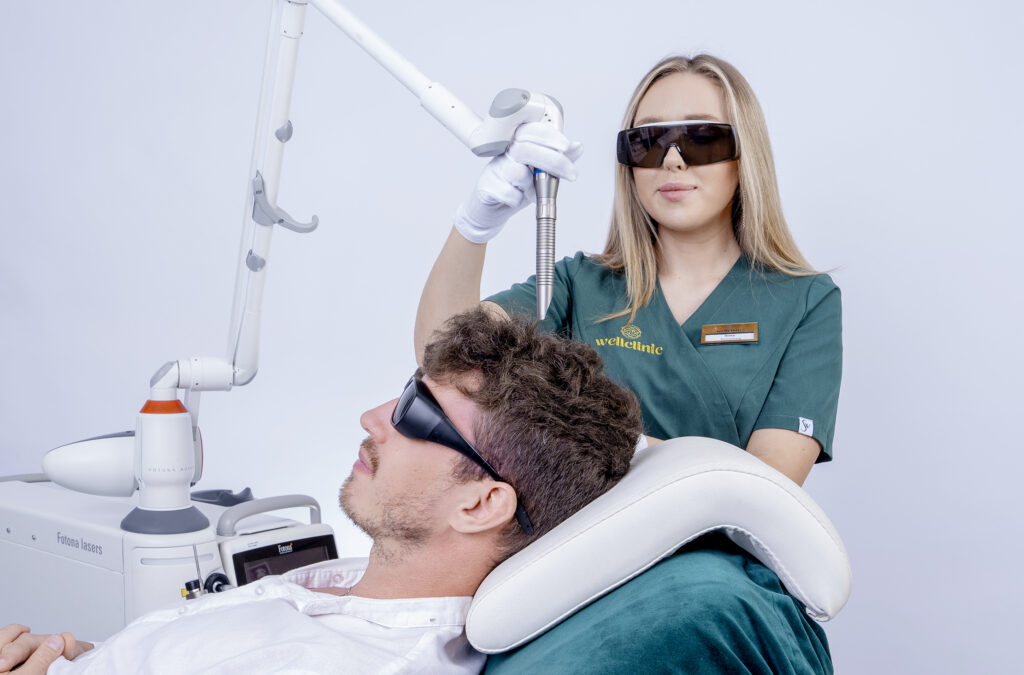
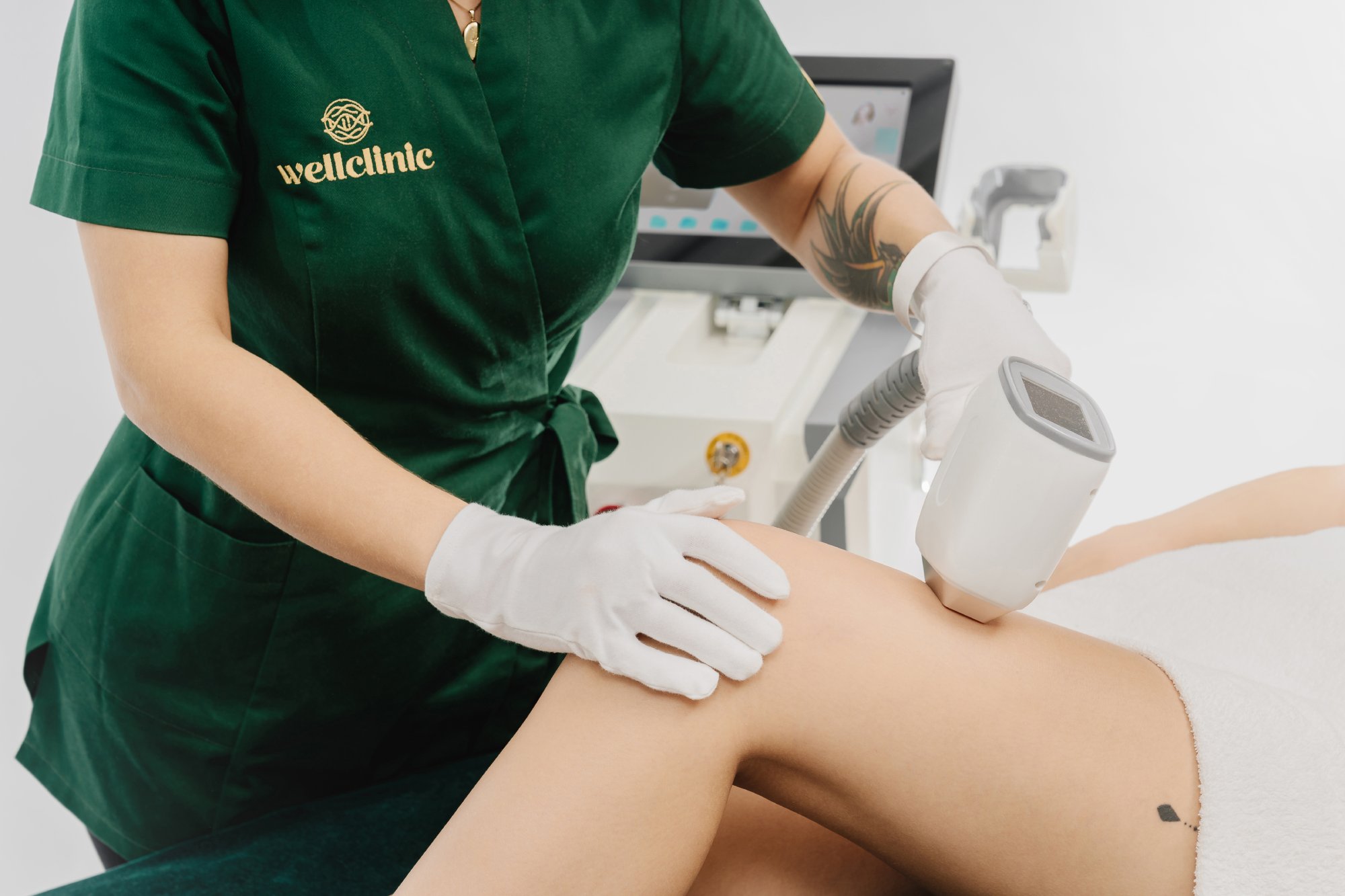
Laser hair loss treatment It is one of the modern methods used to treat hair loss without the need for surgery. The laser energy used during the treatment acts on the scalp, promoting microcirculation and stimulating activity hair follicles. This helps to create the right conditions for stronger and healthier hair to grow.
The treatment is complemented by modern regenerative methods, such as the use of exosomes. These are small structures derived from cells which contain biologically active components, including, amongst others, proteins, lipids and RNA molecules. Exosomes play a role in intercellular communication and support the natural regenerative processes that take place in tissues.
At Wellclinic laser hair loss treatment is based on a combination therapy that utilises the effects of several complementary methods. The combination Fotona Dynamis SP PRO laser therapy, tissue biostimulators and exosomes It provides comprehensive support for the scalp and hair follicles. This approach makes it possible to address various aspects of hair health and growth simultaneously.
Compared with individual treatments, combination therapy offers a more comprehensive approach to the problem of hair loss, as it combines technologies that support microcirculation, tissue regeneration and the functioning of hair follicles.
Before starting treatment, the patient undergoes a consultation and trichological diagnosis. The test helps to identify the cause hair loss, assess the condition of the scalp and select a treatment plan appropriate to the type of alopecia and the severity of the problem.
Would you like to find out more about the hair loss treatment options available at Wellclinic? Make an appointment for a consultation – Our specialists will carry out a diagnosis and select a treatment tailored to the cause of the problem and the condition of your hair. Treatment for alopecia and hair loss We carry out these procedures at clinics in Warsaw, Gdańsk and Cracow.
Sources:
- Seasonal patterns of hair shedding in healthy women complaining of hair loss – https://pubmed.ncbi.nlm.nih.gov/19407435/
- LiveScience – Summer Shedding: „Hair Loss” Searches Peak in the Warmer Months – https://www.livescience.com/60763-hair-loss-searches-peak-in-summer.html
- Verywell Health – Why Seasonal Hair Shedding Happens and How to Manage It – https://www.verywellhealth.com/seasonal-hair-loss-8675563
- British Journal of Dermatology – Seasonality of hair loss: a time series analysis of Google Trends data (2004–2016) – https://onlinelibrary.wiley.com/doi/full/10.1111/bjd.16075
- Mount Sinai – Seasonal Hair Loss and How to Keep Your Hair Healthy – https://health.mountsinai.org/blog/seasonal-hair-loss-and-how-to-keep-your-hair-healthy/

Frequently asked questions
Finding more hair on your brush, on your clothes or in the shower can be a cause for concern, especially if the problem wasn’t noticeable before. However, it is worth knowing that seasonal hair loss It is a phenomenon observed in many people and does not always signify the onset of a condition or permanent hair loss.
Hair does not grow continuously throughout a person’s life. Each hair follicle goes through specific phases – growth, rest and natural shedding. In some people, at certain times of the year, a larger number of hairs enter the final phase of the cycle at the same time, which can cause a temporary increase in hair loss.
Environmental factors also play a role in summer. Prolonged exposure to the sun, frequent contact with chlorinated water or swimming in the sea can affect the condition of the hair. The hair shaft itself becomes drier and more prone to damage, which can lead to increased breakage.
However, prolonged periods of heightened anxiety should be a cause for concern hair loss, visible thinning, a widening parting or localised hair loss. In such situations, it is advisable to consult a specialist to determine the cause of the problem.
Summer is a time when hair is particularly vulnerable to external factors. The sun, high temperatures, wind and frequent contact with sea or swimming pool water can affect its structure and appearance.
UV radiation can weaken keratin which damages the hair, causing a loss of elasticity, dryness and increased susceptibility to breakage. Chlorine and salt, on the other hand, can disrupt moisture levels, making the hair coarse and more difficult to style.
The key to summer hair care should be protecting your hair from becoming excessively dry. It is helpful to use regenerating hair care products, moisturising masks and products that protect your hair from the effects of UV radiation. After swimming in the sea or a swimming pool, it’s a good idea to rinse your hair with clean water so that limit exposure to salt and chlorine.
It is also good practice to limit treatments that put additional strain on the hair – such as frequent straightening, intense lightening or styling using high temperatures. This helps the hair stay in better condition and makes it less prone to damage.
A temporary increase in hair loss may be linked to natural changes taking place in the body. However, there are situations where simply monitoring the situation yourself is not enough, and it is worth seeking a professional assessment.
A consultation is recommended when your hair begins to noticeably lose its thickness, patches of scalp become visible, your hairline changes, or the problem persists despite following a suitable hair care routine. Particular attention should be paid to sudden changes, localised hair loss and symptoms such as itching, a burning sensation or an excessively oily scalp.
During the diagnostic examination, the specialist assesses not only the appearance of the hair itself, but also the condition of the scalp and hair follicles. Trichological examination It allows for a more precise assessment of the nature of the changes and can help to distinguish between different types of hair loss.
Identifying the cause of the problem at an early stage increases the chances of selecting the appropriate treatment. For many types of hair loss, the timing of the start of treatment is crucial to achieving satisfactory results.
Many people notice an increase in hair loss after the summer holidays, when they return to their daily routine after a period of holiday. This does not always mean a deterioration in the health of the hair or the onset of hair loss. It is often the result of several overlapping factors which have been affecting the scalp and hair follicles over a period of several weeks.
During the holidays, hair is more frequently exposed to intense sunlight, high temperatures and contact with sea or swimming pool water. In addition, many people change their daily routines – washing their hair more often, using less nourishing haircare products or cutting back on their regular haircare routine.
Diet may also play a role. When travelling, we often eat less regularly, and the body may not be getting enough of the nutrients it needs for the hair follicles to function properly. An insufficient intake of protein, iron or vitamins can affect the condition of your hair.
If increased hair loss occurs after the summer holidays and gradually subsides, it is usually a temporary reaction by the body. However, if the problem persists, it is worth having diagnosis of hair loss, to rule out other causes.
Simply being out in the sun does not directly cause alopecia, however, prolonged exposure to UV radiation can damage the condition of the hair and scalp. The sun’s rays primarily affect the hair shaft, which over time can become drier, duller and more prone to damage.
It is worth remembering that hair outside the scalp is a dead structure and therefore does not regenerate on its own. Excessive exposure to the sun can damage its surface and increase the risk of breakage. As a result, your hair may appear thinner, even though the number of active hair follicles remains unchanged.
UV radiation can also affect the scalp. Prolonged exposure without protection can lead to dryness, irritation or increased oxidative stress.
That is why, in summer, it is a good idea to use sun protection for your hair and scalp as well. Wearing a hat, using suitable skincare products and avoiding spending long hours in direct sunlight can help minimise the harmful effects of UV radiation.
Regular use of the swimming pool does not directly cause hair loss, however, chlorinated water can affect the condition of your hair. Chlorine strips away part of the hair’s natural protective layer, which can make it drier, coarser and less supple.
This problem is particularly common amongst people with bleached, fine or naturally dry hair. This type of hair is more prone to mechanical damage and moisture loss.
After swimming in the pool, it’s a good idea to rinse your hair with clean water and apply a restorative or moisturising product. It’s also a good idea to wet your hair before getting into the water – this helps it absorb less chlorinated water.
If, after the summer season, there is an increase in hair loss, it should not automatically be attributed solely to swimming. The cause may be linked to the hair growth cycle, stress, hormonal changes or other factors requiring further investigation.

 +48 600 100 177