
 Brygida Kasperowicz
 28.10.2026
Table of contents
Despite my diet and regular workouts fat on the stomach, thighs or hips Isn’t it disappearing as quickly as you’d expect? This is a common situation. The body doesn’t lose body fat evenly, and there are many more factors that influence your figure than just your body weight.
Fat reduction It’s not just about losing weight. To understand why certain parts of the body are more resistant to change, it’s worth taking a closer look at what it is adipose tissue, how it is produced and what role it plays in the body.
What is adipose tissue?
Adipose tissue It is not just a layer beneath the skin that we sometimes want to reduce. It is active tissue that performs many important functions: it stores energy, insulates the body against heat loss, cushions the internal organs and helps regulate metabolism.
Its key elements are adipocytes, i.e. fat cells. They store lipids which the body can use as a source of energy when it needs it.
Adipose tissue It also releases signalling substances, including hormones that influence appetite and energy metabolism. One of these is leptin, which plays a part in regulating the feeling of fullness.
The problem, therefore, is not the mere presence of adipose tissue, but rather its excessive amount, unfavourable distribution or impaired function. An appropriate amount of fat is essential for the body to function properly.
How is adipose tissue formed, and why does it accumulate?
The body needs energy for breathing, organ function, maintaining body temperature and day-to-day activities. When we provide it with more energy than it uses over a prolonged period, the surplus can be stored in the form of body fat.
Fat cells They then increase in volume. With prolonged fat accumulation, the number of adipocytes.
At fat accumulation However, it is not just the amount of food that has an impact. Physical activity levels, genetics, hormones, age, sleep quality, certain medicines and general health also play a role.
Why does fat accumulate specifically on the stomach, hips or thighs?
Layout body fat It is partly determined by genetic and hormonal factors. That is why two people of similar weight may have completely different body proportions. One may accumulate more fat around the abdomen, whilst the other may accumulate it on the hips and thighs.
This is also one of the reasons why fat reduction It may vary from person to person.
Subcutaneous and visceral fat – what’s the difference?
Not every adipose tissue is not located in the same place nor does it perform the same function. It is worth distinguishing between the two types.
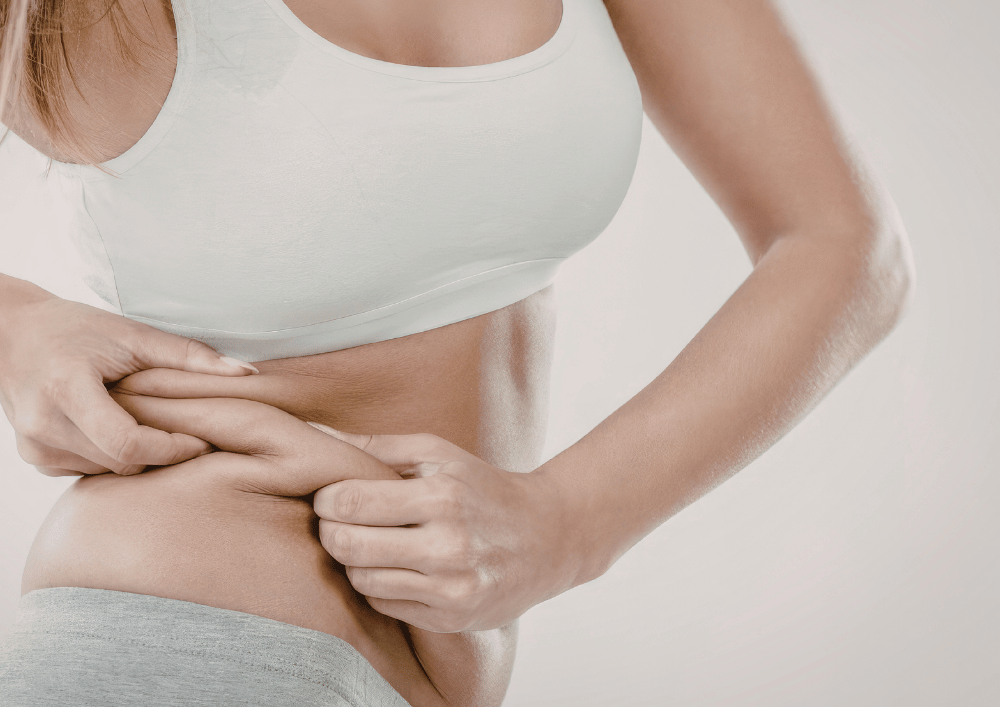
Subcutaneous adipose tissue It is located directly beneath the skin. It is found, amongst other places, on the abdomen, thighs, hips and buttocks. It influences the body’s contours, insulates the body and serves as an energy reserve.
Visceral adipose tissue It accumulates in the abdominal cavity, around the internal organs. Excess fluid is associated with an increased risk of metabolic disorders, of which insulin resistance and cardiovascular diseases.
What does this mean in practice? The appearance of the abdomen does not always allow us to assess the amount of visceral fat. Furthermore, body weight alone does not accurately reflect body composition or the distribution of body fat.
That is why it is worth looking beyond just the number of kilograms or your clothes size.
5 less obvious facts about body fat
1. Adipose tissue functions as an active organ.
It does more than just store energy. It also releases signalling molecules that play a part in regulating appetite, metabolism and inflammatory processes. Its role in the body is far greater than one might think.
2. Fat cells may shrink, but they do not automatically disappear when you lose weight.
During weight reduction Adipocytes can release stored lipids and reduce in volume. However, this does not mean that all fat cells are eliminated. Adipose tissue is dynamic, and its cells can also be replaced by new ones.
3. The body contains fat, which helps it to generate heat.
Most of the body fat in adults is white adipose tissue, which primarily stores energy. However, there is also brown adipose tissue, the cells of which can convert energy into heat. It is also present in adults, although its quantity and activity vary from person to person.
4. You cannot choose which part of the body your body will burn fat from.
Exercises strengthen specific muscles, but they do not guarantee localised fat reduction. Even doing sit-ups regularly does not mean that fat will disappear from your tummy. Factors such as genetics, hormones and individual predispositions all play a part.
5. Two people of the same weight may have completely different body compositions.
Body weight does not accurately reflect the proportions of body fat, muscle and other tissues. Two people weighing the same may differ in terms of their body measurements, body proportions and body fat. Therefore, the number on the scales alone is not enough to fully assess the effects of lifestyle changes.
Fat loss – facts and myths
Many beliefs have arisen around weight loss and body sculpting which sound logical but are not always supported by physiology.
Myth 1: Sit-ups burn belly fat
Fact: Abdominal exercises strengthen the muscles in that area, but they do not guarantee a reduction in fat in that specific area. Fat reduction It depends on the body’s overall energy balance and individual predispositions.
Myth 2: All body fat is harmful
Fact: adipose tissue It performs important functions, including storing energy and playing a part in hormonal regulation. What matters is its quantity, distribution and impact on health, rather than its mere presence.
Myth 3: Losing weight always means a better body shape
Fact: A person’s physical appearance also depends on muscle mass, skin elasticity, the distribution of tissues and individual anatomical structure. Therefore, weight reduction does not always result in exactly the body shape we are hoping for.
Myth 4: You can permanently lose fat from a specific part of the body through diet alone
Fact: A properly balanced diet supports overall fat reduction, but it does not allow us to pinpoint exactly where the body will draw on its reserves. Genetic and hormonal factors influence how different parts of the body change.
Myth 5: Body-contouring treatments are a substitute for weight loss
Fact: methods aimed at localised fat tissue have a different use to the general one weight loss. They are not a substitute for a healthy diet, physical activity or treatment for being overweight or obese. Choosing the right procedure requires an individual assessment.
Why is fat on the stomach, thighs and hips sometimes so stubborn?
Some parts of the body change more slowly than others. This is influenced by factors such as genetics, the endocrine system and individual body composition, amongst others body fat. For this reason, even with regular physical activity and a change in lifestyle, certain areas may still look different from what we expect.
It is also worth bearing in mind that not every unevenness in body shape is caused solely by excess fat. The appearance of the body is also influenced by the firmness and elasticity of the skin, the muscles and natural anatomical structure.
This is an important distinction, because reduction in total body fat, shaping selected parts of the body i improved skin firmness These are different objectives. Each may require a different approach.
How can you help reduce body fat?
The key to overall fat loss is a long-term approach. This involves a well-balanced diet, regular physical activity, sufficient sleep and consistency. If you are overweight or obese, it is advisable to tailor your plan to your health and individual needs.
If, however, the problem relates to a specific area of the body, despite maintaining healthy habits, you may wish to consider seeking advice on body shaping.
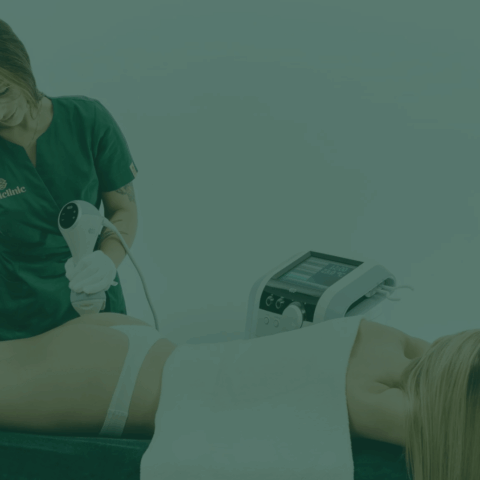
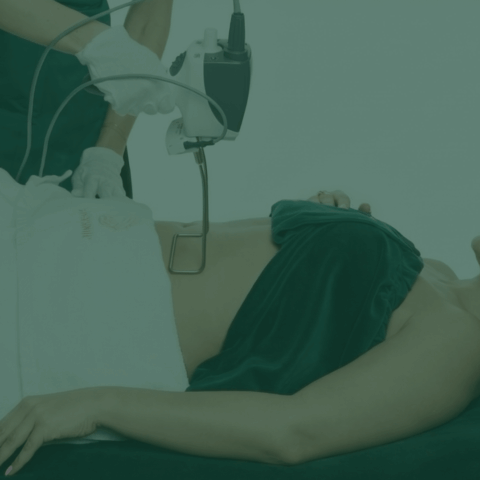
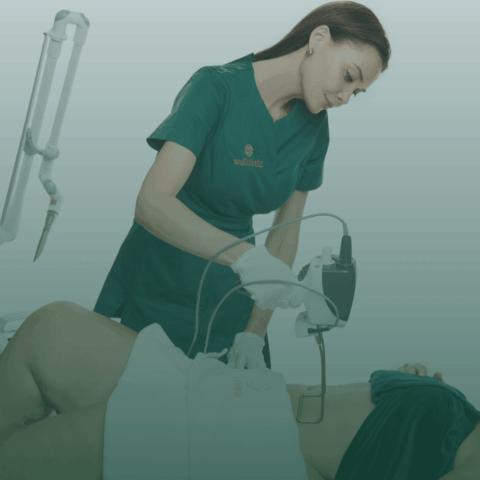
The following are available at Wellclinic body treatments, and one of the methods discussed in the context of reducing localised body fat is laser lipolysis. The platform is also used in procedures relating to body contouring Fotona Dynamis SP PRO.
The choice of method depends on the area to be treated, the amount of body fat, the condition of the skin, the desired outcome and any potential contraindications. During the consultation, it is possible to assess whether a particular procedure is suitable for the patient’s needs and goals.
Reducing body fat – where to start?
Fat reduction It is a process influenced by many factors, so an effective approach should take into account an individual’s physical constitution, diet, physical activity and hormonal balance. It is worth remembering that weight loss and body contouring It’s not the same thing. Even with a healthy diet and regular exercise, certain parts of the body may be more resistant to change, and the distribution of body fat also depends largely on genetics.
The condition of the skin is also important, as it does not always retain the same firmness following a reduction in body fat. Therefore, before choosing the right method, it is worth defining your goal – whether it is general weight loss, reducing localised fat deposits, or improving body proportions. During consultations at Wellclinic You can discuss your expectations, find out about the options available and choose a solution that takes your individual needs and recommendations into account.
Sources:
1. Cleveland Clinic, „Adipose Tissue (Body Fat): Anatomy & Function”
https://my.clevelandclinic.org/health/body/24052-adipose-tissue-body-fat
2. CDC: „Steps for Losing Weight”
https://www.cdc.gov/healthy-weight-growth/losing-weight/index.html
3. NIH „Obesity and Metabolic Health”
https://www.nih.gov/news-events/nih-research-matters/obesity-metabolic-health
4. University of Sydney: „Spot reduction: why targeting weight loss to a specific area is a myth”
https://www.sydney.edu.au/news-opinion/news/2023/11/07/spot-reduction--why-targeting-weight-loss-to-a-specific-area-is-.html
5. New England Journal of Medicine, „Reassessing Human Adipose Tissue”
https://www.nejm.org/doi/full/10.1056/NEJMra2032804
6. NHS „Overweight and obesity”
https://www.nhs.uk/conditions/overweight-and-obesity/




 +48 600 100 177