Scar It may be just a few millimetres. And yet it can be the first thing you see in the mirror.
It’s hard to miss on the face. An acne scar, a surgical scar or a small scar from an injury can alter the appearance of the skin and cause the eye to automatically be drawn to that spot. On the body, a scar may be larger, harder and more noticeable when you move.
It’s no wonder that many people are looking for a way to removal of scars. It is not always a question of the mark disappearing completely. Often, the most important thing is for it to become shallower, smoother and less noticeable.
And this is precisely what therapy most often focuses on - on reducing the appearance of scars and improving skin texture.
Why do scars form?
Scar It is a natural part of the skin’s healing process following damage. When a wound affects the deeper layers of the skin, the body initiates a repair process. New tissue forms at the site of the damage, allowing the wound to close and the damaged area to be rebuilt.
However, it is not identical to healthy skin.
That is why a scar may vary in texture, thickness, elasticity or colour. One may remain a thin, pale line, another may become a distinct thickening, whilst yet another may form a depression.
Its appearance is influenced by a number of factors: the depth of the injury, its location, the healing process, skin tension and the body’s individual predispositions.
Time is also a factor. A fresh scar may be red, hard and more noticeable, whilst after a few months or years it may become lighter in colour and softer.
Types of scars - not every scar requires the same approach
Not all scars are the same. This is important because the course of treatment should be tailored to the type and nature of the lesion.
The treatment for minor acne scars is different from that for a raised post-operative scar, and yet different again from that for an extensive burn lesion.
Atrophic scars
Atrophic scars They lie beneath the surface of the skin. They form when some tissue is lost during the healing process. We most commonly associate them with acneikiem, but they may also be caused by other inflammatory conditions or skin diseases.
On the face, they can take the form of small, deep spots or larger, irregular indentations. Sometimes they appear small up close, but in bright light they become much more visible. This is because the uneven surface of the skin casts shadows. As a result, a scar may attract attention even when its colour differs little from the surrounding skin.
Hypertrophic scars
Hypertrophic scars are of a completely different nature. Instead of forming a depression, they become raised and thickened. They are caused by excessive scar tissue formation, but remain within the boundaries of the original injury. They may be hard, red, pink, purple or darker than the surrounding skin. Over time, some of these scars may flatten out, though they do not always become completely invisible.
Keloids
A keloid, also known as keloid, It is a raised lesion that may extend beyond the area of the original injury. It can develop even following relatively minor damage to the skin, such as a puncture wound. In people prone to keloid formation, particular care must be taken when assessing their suitability for treatment. In the case of such lesions, decisions regarding treatment should not be based solely on the appearance of the scar.
Surgical scars
Surgical scars They can vary greatly in appearance. A minor procedure may leave a thin, pale line. Following a more extensive operation, the scar may be longer, wider or more visible. It can also happen that, over time, it becomes thickened or uneven. Its appearance is influenced by, amongst other things, the location of the incision, the method of wound closure, the healing process and the body’s individual response.
Post-traumatic scars
A cut, a fall, an accident or any other injury to the skin can also leave a permanent mark. Post-traumatic scars They are often irregular in shape, as their appearance depends on the type and depth of the injury. A thin scar from a superficial cut may look different from an extensive scar resulting from a deep wound.
Burn scars
Burns can damage a large area of skin, which is why the resulting scars are often extensive and irregular. In some cases, the skin not only becomes more visible but also less elastic. In cases of extensive lesions, it is therefore particularly important to carry out a thorough assessment of their structure.
Acne scars - why do they remain once the acne has cleared up?
Acne may clear up, but its marks often remain for much longer.
In some people, once the lesions have healed, discolouration is the main residual effect. In others, permanent damage to the skin’s structure occurs and the following appear: acne scars.
They can be shallow or deep, isolated or very numerous. They most commonly appear on the cheeks, but can also affect the temples, forehead or chin. In such cases, simply evening out the skin tone does not solve the problem. If the scar forms a depression, work must also be done on its texture.
Therefore removal of acne scars requires an assessment of their type and depth. It is these two factors that largely determine the choice of the appropriate method.
Removal of facial scars
The face is an area where even a small scar can become very noticeable. It is not just a question of its colour. The uneven surface of the skin reflects light differently, which means that indentations and raised areas can be visible from a greater distance.
Facial scars They are most commonly associated with acne, but can also be the result of injuries, operations, burns or other damage to the skin.
Precision is particularly important when it comes to the face. The skin on the cheeks, forehead, nose and jawline varies in thickness and texture. The face is also constantly in motion - facial muscles are at work, skin tension changes, and a scar may behave differently when smiling or speaking. That is why removal of facial scars It should be planned on a case-by-case basis, rather than according to a single template.
Removal of scars on the body
Scars can form practically anywhere. On the stomach, they may be the result of surgery or a caesarean section. On the knees and elbows, they are often the result of injuries. On the arms, back or chest, they may appear following medical procedures, inflammation or other skin damage.
Scar removal on body This may be considered if the lesion is distinct, thickened, indented or simply causing the patient discomfort.
In the case of scars on the body Their location is also significant. The skin near the joints is regularly stretched during movement. A scar on the abdomen, on the other hand, may be subjected to tension when changing body position.
This is one of the reasons why two similar scars may look completely different over time.
Can an old scar be reduced in size?
Just because a scar is several or a dozen or so years old doesn’t automatically mean there’s nothing that can be done about it. Scars dripe They are usually lighter in colour, softer and more stable than fresh lesions. Their appearance is already largely established, but in certain cases it is still possible to work on improving the texture and visibility of the scar.
However, the age at which the change takes place is only one of the factors that are taken into account.
Equally important are its depth, thickness, size, location and the way the skin around it behaves.
What does scar removal involve?
Scar removal It does not refer to a single specific procedure. The term encompasses several methods aimed at improving the appearance of damaged tissue.
Depending on the type of scar, the following can be used, amongst others:. laser therapy, microneedle radiofrequency, chemical peels or other treatments that promote skin renewal.
Some methods involve inducing a controlled stimulus to which the skin responds by initiating regenerative processes. Over time, this can lead to an improvement in the skin’s structure and a smoother surface. This is not a process that ends the moment you leave the clinic. The skin needs time to respond to the treatment.
Laser scar removal
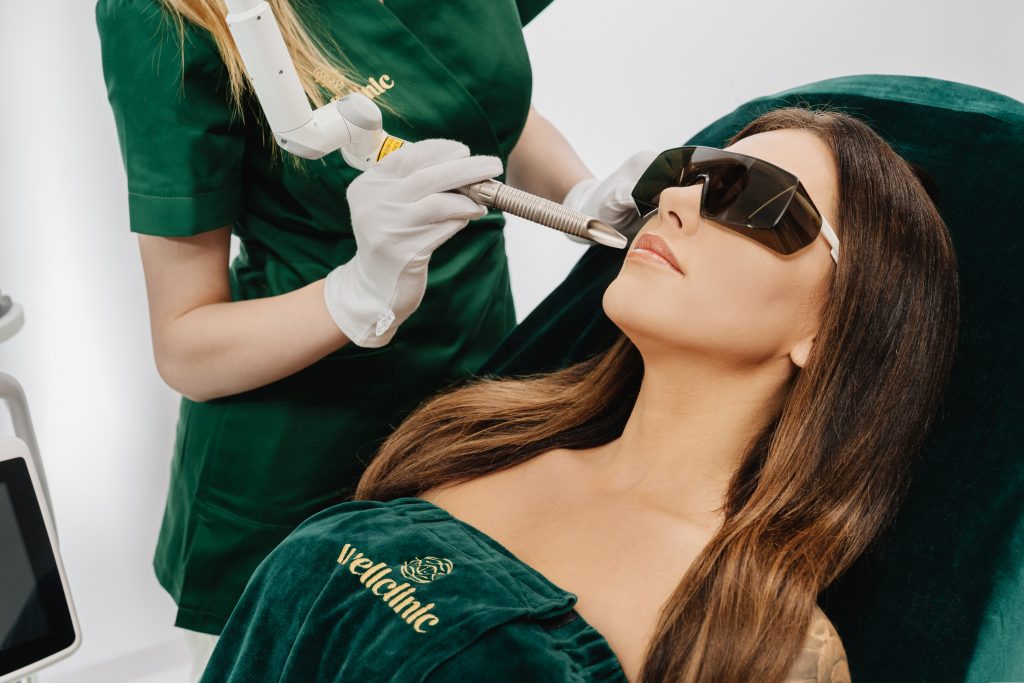
One of the methods used in the treatment of certain types of lesions is laser scar removal. The laser can target specific skin structures and trigger a controlled reaction that promotes tissue remodelling.
In the case of atrophic scars, the aim may be to improve the unevenness of the skin’s surface. With other skin conditions, reducing their visibility or improving the structure of the tissue may also be important.
Laser therapy is used to treat certain types of acne scars, post-operative scars and trauma-related scars. However, this does not mean that every scar requires the same treatment.
First, you need to assess the lesion, and only then select the appropriate method and treatment parameters.
Microneedle radiofrequency versus scarring
Microneedle radiofrequency is also used in the treatment of certain types of scars. The method combines micro-punctures with the delivery of energy to specific layers of the skin. The resulting stimulus can support tissue remodelling processes and stimulate the production of collagen and elastin.
In the case of acne scars, it is particularly important to adjust the parameters precisely to suit their depth and structure.
However, not every scar will be suitable for the same type of treatment. That is why a skin assessment is required before the procedure.
Does scar removal hurt?
How the treatment feels depends on the method used, the area being treated and individual sensitivity.
For some procedures, local anaesthesia or other measures to improve patient comfort are used. After the treatment, the skin may be red, more sensitive or slightly swollen for a while.
The exact procedure and post-treatment recommendations depend on the method chosen, so these should be discussed before treatment begins.
How many treatments are needed?
There is no single number of treatments that is suitable for every scar.
A small, shallow scar and an extensive burn lesion are two completely different cases. The situation is similar when it comes to an acne scar and a thickened post-operative scar.
The number of treatments depends on the type, depth, size and location of the scar, as well as on the skin’s reaction to the method used.
Sometimes a series of treatments carried out at appropriate intervals is required. This is particularly important when the aim is to gradually rejuvenate the skin.
The results should not be assessed solely immediately after the treatment. The regeneration and remodelling process takes considerably longer.
Is it possible to remove a scar completely?
This is one of the most common questions - and it’s worth answering it without making any promises.
It is not always possible to remove a scar completely. A scar is the result of the healing process, which is why the realistic aim of treatment is usually to minimise its visibility as much as possible.
Depending on the type of lesion, the aim may be to reduce its depth, smooth the surface, reduce the thickening, or improve the appearance of the skin around the scar.
Sometimes a slight change in structure can make a huge visual difference. On the face in particular, a depth of just a few millimetres can determine how light falls on the skin.
Where should you start with scar treatment?
It is best to start with a consultation and a thorough assessment of the lesion. It is worth establishing when the scar formed, what caused it to appear, and whether it has changed over time. Its size, depth, colour, texture and location are also taken into account.
Two scars may look similar but require a completely different approach. That is why choosing a treatment based solely on a photo found on the internet is not a good idea.
Only after the assessment has been carried out can a decision be made, Which method of scar removal will be the most suitable? and what results are realistically achievable.
Scar removal - choosing the right treatment is key
A scar does not need to disappear completely for the difference to be clearly visible. Sometimes, the greatest improvement comes from reducing the depth of the indentation. At other times, it is more important to reduce the thickness of the scar, improve its elasticity or even out the skin’s surface.
Therefore removal of scars It is worth viewing this as a process tailored to a specific change, rather than a single, universal approach.
The first step is to assess the scar. Only then can a decision be made as to whether it is worth starting treatment, which method to choose, and what results can realistically be expected.
If you’re wondering, how to make a scar less noticeable To find out which method is right for you, please book a consultation at Wellclinic. During the appointment, a specialist will assess the type, structure and location of the scar, and then select the appropriate treatment. Consultation with a specialist It enables us to assess the realistic potential for improving the appearance of a scar and to plan a personalised treatment programme.