Acne may clear up, but the marks it leaves behind can last for years. And that is precisely when the problem begins – one that cannot be solved by yet another skincare product designed to tackle blemishes. Indentations, unevenness and changes in skin texture remain visible even when no new blemishes appear on the face. Over time, they may become even more noticeable, particularly as the skin loses its firmness.
Acne scars They do not disappear on their own simply because the acne has cleared up. Their appearance depends, amongst other things, on the type, depth and location of the lesions, so attempting to treat all scars in the same way may result in only a slight improvement. What’s more, the longer the problem remains untreated with a suitably tailored therapy, the longer you will have to put up with its visibility.
Is Can old acne scars be removed years later? Complete removal is not always possible, but carefully selected treatments can significantly improve the skin’s texture, smooth out unevenness and reduce the visibility of scars. It is crucial to identify the type of scar and choose a treatment tailored to the skin’s actual needs.
What are acne scars?
Acne scars They develop as a result of skin damage, which can occur during the severe inflammation associated with acne. The risk of them developing is also increased by mechanically squeezing lesions, picking at them and improper skin care. That is why it is so important to act early enough acne treatment and avoiding activities that may cause further damage to the skin.
However, not every mark left behind by acne is a scar. Some people struggle with post-inflammatory hyperpigmentation, whilst others experience a permanent change in skin structure. In the case of atrophic scars, small or deeper indentations visible on the skin’s surface are characteristic. A particular type of such lesion is acne scars, which can vary in depth and shape.
The type and appearance of scars are very important when choosing a treatment. Shallow irregularities may require a different approach to deep lesions. It is therefore advisable to assess the condition of the skin carefully and determine the type of scar involved before beginning any treatment.
What types of acne scars are there?
Acne scars They can look completely different from person to person. In some people, they take the form of small indentations; in others, they are deep and clearly visible, particularly on the cheeks and temples. They most commonly occur atrophic scars, which occur when tissue is lost during the skin’s healing process. They can take the form of narrow, deep pits, rounded depressions or uneven areas with distinct edges. There are also hypertrophic scars and keloids, which, rather than sinking into the skin, form raised lumps.
Why is it so important to identify the type of scar? Because removal of acne scars requires the method to be tailored to the specific problem. Shallow irregularities may require a different approach to deep ones acne scars. It is also worth distinguishing between scars and post-inflammatory hyperpigmentation. Red or brown marks left by spots alter the colour of the skin, but do not cause any permanent indentation. A correct assessment of the lesions helps to choose the appropriate treatment and determine what improvement can be expected.
Can acne scars be reduced years later?
Just because a scar is old doesn’t mean you can’t work on it. Even acne scars that have persisted for several or more than a dozen years, can be treated. However, the treatment options depend on the type of scars, their depth, location and the individual characteristics of the skin.
It is worth bearing in mind that the aim of treatment is not always to completely remove the scar. In the case of deep lesions, a more realistic outcome may be to exfoliation, smoothing and evening out the skin’s surface. The extent of improvement varies from person to person and may require several stages of treatment.
It is therefore advisable to have your skin assessed by a specialist before starting any treatments. This enables the type of scar to be identified and a method to be chosen that is appropriate for its appearance and the condition of your skin. In the case of lesions covering a larger area of the face, you may also wish to consider a suitably selected treatments for facial scars.
Are old acne scars harder to reduce?
Old acne scars They can persist for many years, even if the acne cleared up a long time ago. However, this does not mean that the appearance of the skin cannot be improved. The depth of the indentations, their shape and whether the scars are connected to the subcutaneous tissue are all important factors. Therefore, reduction of acne scars It requires a personalised approach, and the treatment may result in the reduction of indentations, the smoothing of the skin and a reduction in the appearance of unevenness.
Depending on the nature of the changes, you may wish to consider laser treatment for acne scars, fractional microneedle radiofrequency or other methods used in scar treatment. Not every method will be suitable for every person. With deep scars, a combination of different procedures is sometimes required, and improvement occurs gradually. During a consultation, a specialist assesses the condition of the skin, discusses the available options and helps to draw up a treatment plan tailored to the type of scar and the patient’s expectations.
Exion fractional radiofrequency treatment for acne scars
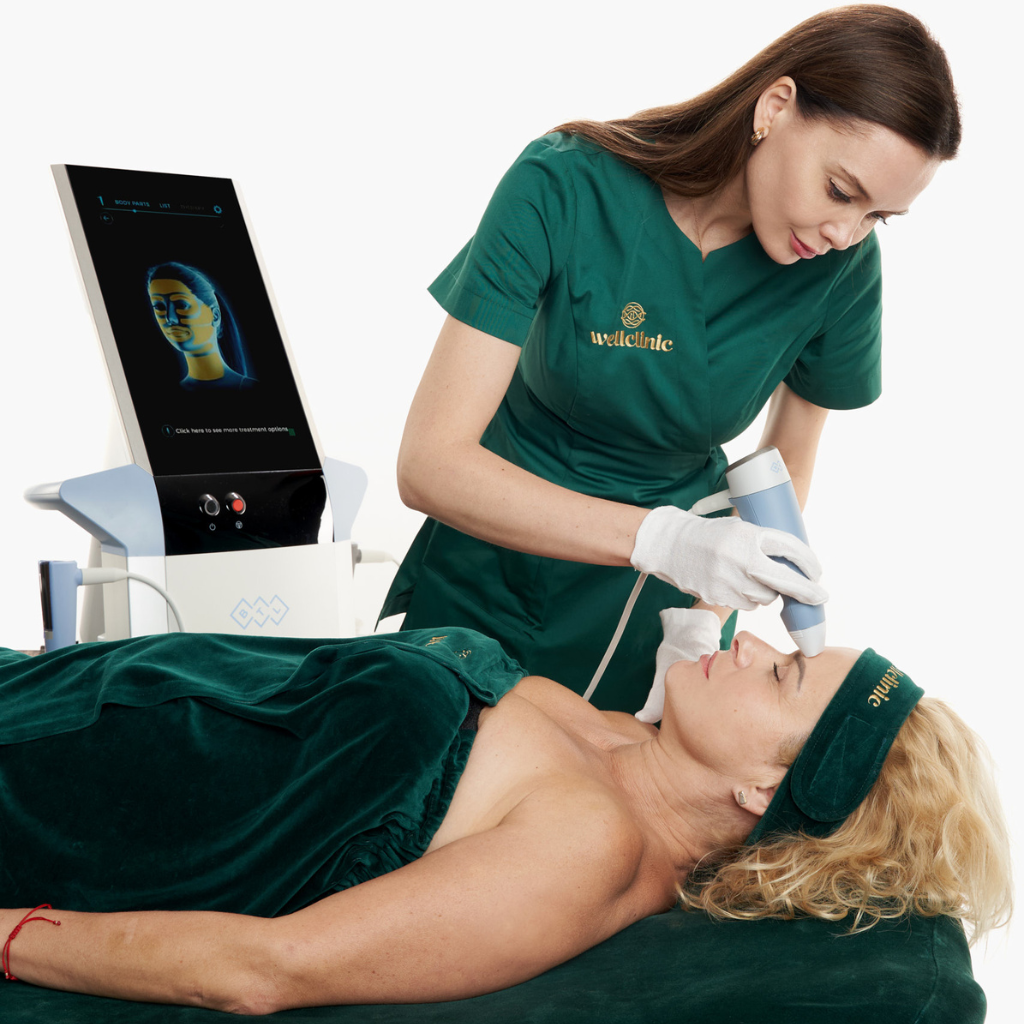
Exion Fractional Radiofrequency It can be one of the methods used in the treatment of acne scars, particularly where unevenness and changes to the skin’s structure are a problem. The technology combines the effects of RF energy with controlled microneedling, enabling it to reach deeper layers of the skin. The heat generated in the tissues stimulates regenerative processes and the production of collagen and elastin, which are responsible, amongst other things, for the skin’s proper structure, firmness and elasticity.
As a result of the gradual redevelopment acne scars may become less noticeable, and the skin’s surface becomes more even. The treatment may be considered for various types of scars, including acne fissures, although its effectiveness and the extent to which improvement is possible depend, amongst other things, on the depth of the lesions, their extent, their location and the individual characteristics of the skin. The following also plays a significant role in the process of skin remodelling: collagen, the production of which can be stimulated during certain treatments.
During the treatment, a special applicator is used, fitted with 36 fine microneedles, which deliver RF energy in a controlled manner to selected layers of the skin. Application AI system It enables the energy parameters to be adjusted to the conditions prevailing in the tissues, thereby allowing the procedure to be carried out with greater precision.
Link micro-punctures and thermal effects It is designed to stimulate the skin to undergo intensive remodelling; therefore, the effects of the treatment become apparent gradually as the regenerative processes take place. Depending on the appearance of scars and to achieve the desired result, it may be necessary to undergo several treatments at appropriate intervals. Fractional RF It can also be used to treat other skin-related conditions; therefore, before starting treatment, a specialist assesses the condition of the skin and selects the appropriate treatment
Laser treatment for acne scars
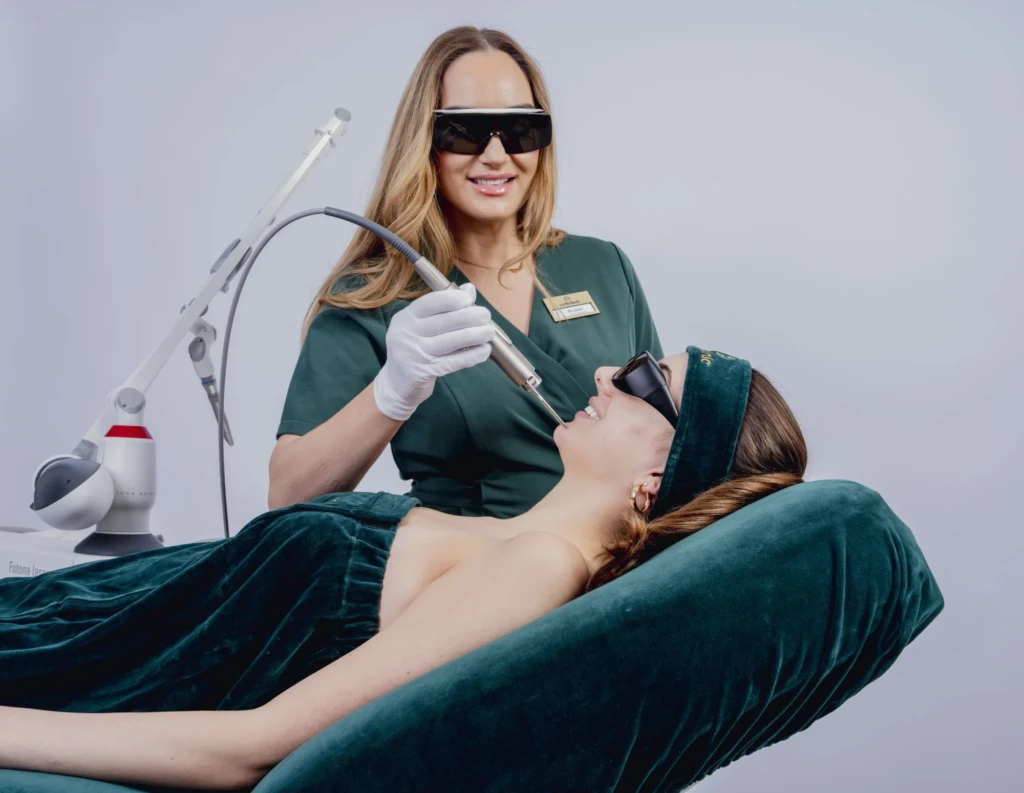
One of the methods used in the treatment of acne scars is laser therapy. The laser energy can target specific layers of the skin and stimulate the skin’s regenerative processes. As a result, the skin may gradually take on a more even texture, and scars may become less visible.
Depending on the type of lesion, different laser technologies are used. In scar treatment, the following may be used, amongst others:. fractional laser, which works by exerting a controlled effect on the skin and stimulating its natural regenerative processes. Certain therapies also make use of Fotona Dynamis SP platform, enabling the selection of a treatment tailored to a specific skin problem.
Laser therapy for acne scars It can be considered for both recent and older lesions. However, the appropriate method and treatment parameters should be selected on a case-by-case basis, as the appearance and depth of scars can vary considerably.
What does laser treatment for acne scars involve?
Before the treatment, a specialist assesses the condition of the skin, the type of scars and their depth. Based on this, the appropriate technology and treatment parameters are selected. This approach allows for the treatment to be tailored removal of acne scars to suit the individual needs of the skin.
During the treatment, laser energy is directed at areas of the skin requiring remodelling. The controlled interaction with the tissues stimulates regenerative processes and may support collagen production and remodelling.
After the treatment, the skin may be red and more sensitive. The recovery time depends on the method used and the intensity of the treatment. It is very important to follow the recommendations regarding skincare and sun protection.
Depending on the type of scar, various treatments may be used. The choice of a specific procedure should be preceded by a skin assessment and a consultation with a specialist.
How many treatments are needed for acne scars?
There is no single number of treatments that will be suitable for everyone. The number of sessions depends primarily on the type and depth of the scars, the condition of the skin and the chosen treatment method.
With some treatments, the first results may be noticeable after a single session; however, improving the skin’s structure often requires a course of treatments. Subsequent sessions are carried out at appropriate intervals to allow the skin time to regenerate and rebuild itself.
During the consultation, the specialist can outline the expected course of treatment and discuss what results can realistically be expected. This is particularly important in the case of deeper or numerous scars, as their remodelling is a gradual process
Other treatments for acne scars
Laser therapy is not the only method used to improve the appearance of scarred skin. Depending on the type and depth of the scars, other procedures may also be considered.
One of them is Dermapen, which may stimulate the body’s natural regenerative processes and support skin remodelling. This method can be used, amongst other things, in cases of irregularities on its surface.
In some cases, it may also be beneficial to combine several methods. However, the scope of treatment should be determined on a case-by-case basis, as different types of scars may require different approaches. When choosing a treatment, it is also important to consider whether there is still an active acne vulgaris.
How can you prevent new scars from forming?
In the case of acne-prone skin, it is important to treat lesions early on and to look after your skin properly. You should not squeeze or pick at spots, as mechanical damage to the skin can increase the risk of scarring.
Daily sun protection is also important. UV radiation can contribute to the persistence of discolouration, which often remains on the skin once the inflammation has subsided.
If blackheads are your main problem, it’s worth ensuring you cleanse your skin properly and look after it appropriately. It may be useful to know about blackheads and clogged pores, as both problems often occur alongside acne-prone skin.
The spots have gone, but the scars remain – what can you do about them?
Acne may now be a thing of the past, but its traces can still serve as a daily reminder when you look in the mirror. Deeper creases, an uneven surface and changes in the skin’s texture do not simply disappear just because the years have passed. What is more, as the skin loses its firmness over time, existing irregularities may become more noticeable. If acne scars If they are still a source of dissatisfaction, it is worth checking whether you can effectively improve their appearance.
There is no single treatment suitable for every type of scar. Shallow irregularities, deep atrophic scars or lesions of various shapes each require a different approach. That is why, during the consultation, the specialist assesses the type, depth and extent of the scars, and the condition of the skin, in order to identify possible courses of treatment and the realistic extent of improvement.
If acne scars They still affect the appearance of your skin, but you don’t have to spend years trying to hide them. Book a consultation at Wellclinic and find out which treatment options are suitable for you. Depending on the type of skin changes, a specialist may recommend, amongst other things, laser therapy, fractional radiofrequency or microneedling. We carry out these treatments at Wellclinic clinics in Warsaw, Gdańsk and Cracow.
Sources:
- PubMed – „Acne Scarring: Pathogenesis, Classification and Treatment”:
https://pubmed.ncbi.nlm.nih.gov/30827398/ - PubMed – „Acne Scarring: A Review of Pathogenesis and Treatment”:
https://pubmed.ncbi.nlm.nih.gov/25763901/ - PubMed – „Management of acne scars: a review”:
https://pubmed.ncbi.nlm.nih.gov/22747767/ - PubMed – „Treatment of acne scars: a review of the evidence”:
https://pubmed.ncbi.nlm.nih.gov/23619429/ - American Academy of Dermatology – „Acne scars: Diagnosis and treatment”:
https://www.aad.org/public/diseases/acne/derm-treat/scars/treatment - American Society for Dermatologic Surgery – „Acne Scars”:
https://www.asds.net/skin-experts/skin-conditions/acne-scars - DermNet – „Acne scars”:
https://dermnetnz.org/topics/acne-scars