
 Katarzyna Pawłowska
 02.09.2026
 Table of contents
Botox For years, it has been one of the terms most commonly associated with aesthetic medicine. Although it is commonly referred to as „botulinum toxin”, the treatment involves the use of a properly prepared and purified botulinum toxin, administered in a strictly defined dose. Its effect does not consist of filling in wrinkles, but by temporarily restricting the activity of certain muscles. As a result, the skin is subjected to less intense wrinkling, and expression lines may become less visible.
It is precisely this mechanism of action that sets it apart botulinum toxin from hyaluronic acid or other preparations used in aesthetic medicine. Toxin It affects muscle function, which is why its effectiveness depends not only on the type of preparation, but above all on a correct assessment of facial anatomy, facial expressions and proportions. The modern approach increasingly involves not completely immobilising the muscle, but rather a controlled reduction in its activity, so as to preserve natural facial expression.
What is botulism?
Botulism this is a colloquial name botulinum toxin - a substance produced by bacteria Clostridium botulinum. In medicine, appropriately purified botulinum toxin preparations are used; their effects have been thoroughly researched and they are utilised both in the treatment of various medical conditions and in aesthetic medicine.
Botulinum toxin operates on neuromuscular junction. When administered to a specific muscle, it reduces the release of acetylcholine, i.e. the neurotransmitter responsible for transmitting the signal that causes muscle contraction. As a result, its activity is temporarily reduced. It is precisely this mechanism that is responsible for smoothing expression lines, particularly those that arise as a result of repeated frowns, squinting or intense muscle contraction between the eyebrows.
The effect does not appear immediately. The action of the toxin It develops gradually, and its extent depends, amongst other things, on the site of injection, the preparation used, the dose, individual anatomy and muscle activity. For this reason botulinum toxin It should not be regarded as a universal solution for all types of wrinkles.
It is also important to distinguish between the terms „Botox” and „botulinum toxin”. Botox is the trade name of a specific product, whereas botulinum toxin ta broader definition of the substance used in various medicinal products. Individual products may differ from one another in terms of, amongst other things, their properties, dosage units and indications; therefore, their doses should not be converted using a simple, universal conversion factor.
How does botulinum toxin work on wrinkles?
Facial wrinkles They are caused primarily by the repeated movements of the facial muscles. Over time, the skin may set these creases, which were initially only visible during certain facial expressions.
Botulinum toxin It restricts the activity of certain muscles, resulting in less pronounced wrinkles. However, this does not mean that a correctly performed treatment should completely eliminate facial expressions. In modern aesthetic medicine, maintaining facial proportions and individual features is becoming increasingly important.
What treatments can be carried out using botulinum toxin?
Botulinum toxinIt is primarily used in areas where excessive or repetitive muscle activity affects the appearance of the face. The best-known applications relate to the upper part of the face - the area between the eyebrows, the forehead and the outer corners of the eyes.
Wrinkles between the eyebrows
Wrinkles in the smooth surface, also known as „lion’s wrinkles”, are primarily caused by the activity of the muscles responsible for furrowing the brow. Botulinum toxin reduces their activity, allowing the skin in this area to appear more rested.
This is one of the most thoroughly researched aesthetic applications of botulinum toxin. Clinical trials have shown a reduction in the appearance of wrinkles and an improvement in patients’ assessment of their appearance. At the same time, the result depends on the correct choice of dose and the precise identification of the injection sites.
Forehead wrinkles
Horizontal lines on the forehead are primarily linked to the activity of the frontalis muscle. In this case, it is particularly important to maintain a balance between the muscles responsible for raising the eyebrows and the structures that act in opposition to them.
Excessively restricting the activity of the frontalis muscle may affect the position of the eyebrows or facial expressions. Therefore, the aim should not be to mechanically „switch off” the entire area, but to reduce its activity to an appropriate level.
Wrinkles around the eyes
The so-called crow's feet They appear at the outer corners of the eyes and are associated with the activity of the orbicularis oculi muscle. In this area, precision is particularly important due to the delicate anatomy and the proximity of the structures responsible for eyelid movement.
When administered correctly, botulinum toxin can reduce the depth of wrinkles when smiling, whilst allowing you to retain a natural facial expression.
Other areas of the face
The range of applications for botulinum toxin extends beyond the traditional treatment of wrinkles in the upper face. Depending on the indications and the practitioner’s experience, it may also be used, amongst other areas, around the nose, chin, lips or masseter muscles.
In certain cases, botulinum toxin is also used to reduce the tone of the masseter muscles and to create the optical illusion of a slimmer lower face. In such cases, its effect is not to remove fat tissue or reduce bone mass, but to reduce the volume of the muscle where its hypertrophy is linked to excessive muscle activity.
Research from 2026 shows that the cosmetic applications of botulinum toxin extend beyond the traditional reduction of wrinkles. In a systematic review and meta-analysis covering 38 studies and 1,903 patients were analysed, including modelling of the lower part of the face, correction of a gummy smile, reducing the visibility of the nostrils, chin contouring or reducing the volume of selected muscle groups. The authors emphasised, however, that many of these uses are off-label and require appropriate qualifications.
Botulinum toxin It also has a wide range of applications in medicine. Depending on the specific preparation and indication, it is used, amongst other things, in the treatment of certain muscle tone disorders, ddystonia, chronic migraine or hyperhidrosis. However, this does not mean that every botulinum toxin preparation is authorised for all the uses listed - indications must always be considered in relation to the specific product and clinical situation.
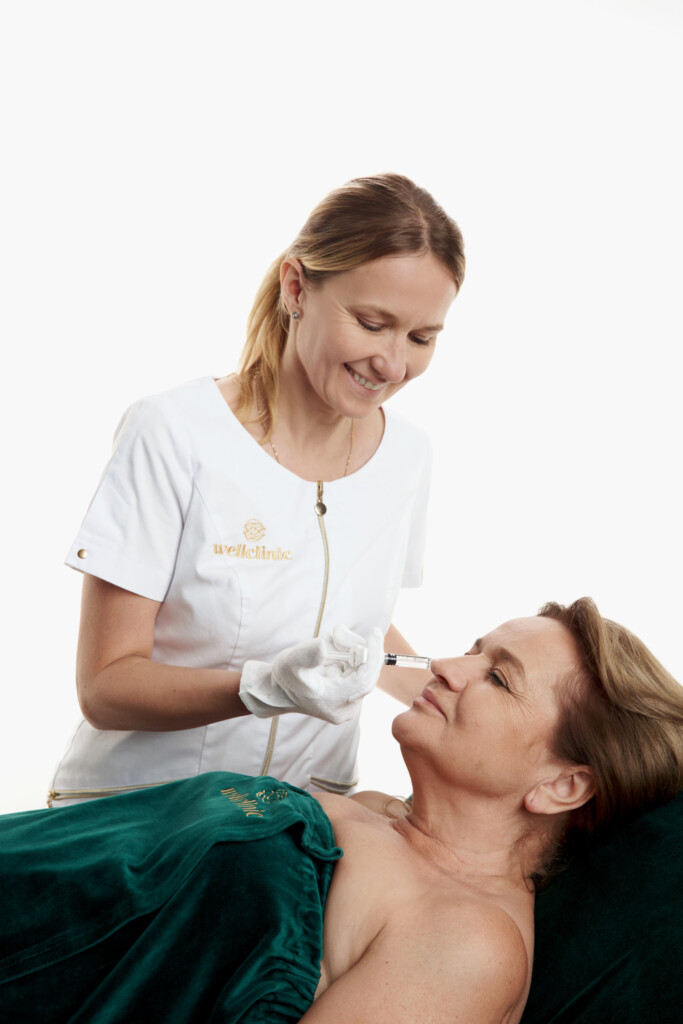
Botulinum toxin - contraindications for the use of botulinum toxin
Although botulinum toxin has been in use for many years, this does not mean that the treatment is suitable for everyone. Before the treatment is administered, a pre-treatment assessment is required, during which the patient’s state of health, any medication they are taking, any chronic conditions, previous reactions to the toxin and the area where the treatment is to be administered must be taken into account.
Situations which may rule out the use of botulinum toxin or require particular caution; these include, first and foremost:
- hypersensitivity to the active substance or to any of the ingredients of a particular medicinal product,
- an infection or inflammation at the intended injection site,
- certain conditions associated with neuromuscular conduction disorders,
- specific muscle dysfunction,
- pregnancy and the breastfeeding period, due to the limited safety data available,
- taking certain medicines which may affect neuromuscular transmission or increase the risk of side effects.
Coagulation disorders and the use of anticoagulants also require separate assessment. They do not always mean that treatment must be discontinued, but they may increase the risk of bruising or bleeding at the injection site. The final decision should rest with the person responsible for assessing the patient’s suitability.
It is worth bearing in mind that safety depends not only on the substance itself. The correct identification of the indication, knowledge of facial anatomy, the appropriate dose, the injection site and the injection technique are also important.
Is botulinum toxin safe?
Botulinum toxin Its mechanism of action is well understood, but - like any medical procedure - it may cause side effects. These are usually localised and temporary. They may include, amongst other things, slight swelling, redness, tenderness or bruising at the injection site.
Depending on the area being treated, side effects relating to temporary weakness of neighbouring muscles may also occur. In the case of the forehead and eyebrow area, this may include, amongst other things, a change in their position, whilst injections near the eyes may result in temporary eyelid dysfunction. The risk of such events is linked, amongst other factors, to the patient’s anatomy, the dose and the administration technique.
That is why a properly carried out assessment is just as important as the injection itself. It is not just a matter of determining where the wrinkle is, but of assessing whether, why it developed, which muscles are responsible for it, and how a change in their activity will affect the whole face.
How long do the effects of botulinum toxin last?
The effects of botulinum toxin are temporary. The effect develops gradually, and its duration depends, amongst other things, on the preparation used, the area being treated, the dose, individual muscle activity and the patient’s physiological characteristics.
As time goes by, neuromuscular conduction gradually recovers and muscle activity returns. Expression lines may therefore become more visible again.
There is no single, universal frequency for carrying out subsequent treatment sessions. The decision on whether to repeat a session should be based on the results achieved, the patient’s anatomy and the practitioner’s assessment, rather than being guided solely by a rigid schedule.
Importantly, contemporary research focuses not only on the reduction of wrinkles itself, but also on long-term satisfaction with the results and the preservation of the face’s natural dynamics.
What determines the results of Botox?
The outcome of treatment depends on far more factors than the mere presence of wrinkles. Among other things, age, facial structure, the strength of individual muscles, the way emotions are expressed, asymmetries, the condition of the skin and the patient’s expectations all play a role.
Therefore, the same dose will not be suitable for everyone. Furthermore, the approach to treating the forehead, the area around the eyes and the masseter muscles is completely different.
In aesthetic medicine, an approach based on personalised planning is becoming increasingly important. Rather than focusing solely on a single wrinkle, the relationships between muscles and their impact on the appearance of the entire face are assessed. In practice, this means that the aim is not to „freeze” facial expressions, but to achieve a controlled effect whilst maintaining a natural appearance.
Botox and a natural-looking face
One of the most common concerns about the treatment is the possibility of ending up with an unnatural appearance. However, this largely depends on how the treatment is planned. Excessively restricting muscle activity can alter facial expressions, which is why the correct dosage, precision and knowledge of anatomy are particularly important.
A well-planned treatment does not necessarily mean completely smoothing out every line. A natural-looking face should still respond to emotions and retain its own expressiveness.
That is precisely why, before administering botulinum toxin, it is worth discussing not only this, what the patient wants to get rid of, but also the result they wish to achieve. This approach allows the treatment to be better tailored to facial features and expectations.
Is it worth having Botox?
Botulinum toxin may be an effective way of reduction in the appearance of expression lines and the modification of the activity of selected muscles. However, it is not a one-size-fits-all solution, nor is it suitable for every type of wrinkle.
The most important stage is the assessment. During the consultation, the facial anatomy, muscle activity, skin condition and expectations regarding the results can be assessed. Only on this basis can a decision be made as to whether botulinum toxin is the right solution and which method of administration will be most appropriate.
In the field of aesthetic medicine, precision is more important than the name of the product itself. The final result depends on a combination of medical knowledge, an understanding of anatomy, the correct choice of dosage and careful planning of the treatment.
If you want to check whether Botox would be a suitable solution for your wrinkles, make an appointment for a consultation. The doctor will assess the condition of your skin, your facial expressions and the areas you wish to have treated, and will then select the appropriate course of treatment. Botox for wrinkles We carry out these procedures at Wellclinic clinics in Warsaw, Gdańsk and Cracow.
Sources:
- PubMed „Beyond Wrinkles: A Systematic Review and Meta-analysis of Off-Label Aesthetic Uses of Botulinum Neurotoxin”
https://pubmed.ncbi.nlm.nih.gov/41604510/ - U.S. Food and Drug Administration (FDA) „BOTOX (onabotulinumtoxinA) - Prescribing Information”
https://www.accessdata.fda.gov/drugsatfda_docs/label/ - PubMed „Safety and tolerability of onabotulinumtoxinA in the treatment of upper facial lines: findings from global registration studies involving 5,298 participants - a meta-analysis”
https://pubmed.ncbi.nlm.nih.gov/38035126/ - PubMed „SAMCEP Society consensus on the treatment of upper facial lines with botulinum neurotoxin type A: A tailored approach”
https://pubmed.ncbi.nlm.nih.gov/37408173/ - American Society of Plastic Surgeons (ASPS) „Botulinum Toxin”
https://www.plasticsurgery.org/cosmetic-procedures/botulinum-toxin - PubMed Central (PMC) „Beyond Wrinkles: A Systematic Review and Meta-analysis of Off-label Aesthetic Uses of Botulinum Neurotoxin”
https://pmc.ncbi.nlm.nih.gov/articles/PMC12076700/




 +48 600 100 177