
 Katarzyna Pawłowska

 01.10.2026
Cellulite It doesn’t have to be visible at first glance to already be developing. Sometimes you’ll only notice slight unevenness on your thighs; at other times, your skin will start to resemble orange peel, and its surface will become less smooth. That is precisely why it is worth knowing what signs to look out for.
Cellulite affects women of all body types. It may occur both in cases of greater the amount of body fat, as well as in slim, physically active people who exercise regularly. Its visibility depends not only on body weight, but also on the structure of connective tissue, skin elasticity, hormonal balance and microcirculation.
How can you recognise the first signs of cellulite? Do the irregularities visible on the thighs always indicate advanced changes? And when should you consider professional treatment? Take a look at these 10 signs to help you better understand the appearance of your skin.
Table of contents
What does cellulite look like in its early stages?
At first, the changes may be almost imperceptible. The skin appears smooth during everyday activities, but when pinched, small indentations appear. Sometimes the unevenness can only be seen in certain light or when changing body position.
Over time, cellulite may become more noticeable. Indentations, small bumps and areas with an uneven texture appear on the skin’s surface. In some women, these are also accompanied by a loss of skin firmness.
However, not every change means the same thing. The appearance of the skin depends on the type of cellulite and its severity. It is therefore worth looking at the specific symptoms, rather than judging the condition of the skin solely on the basis of a single dimple.
Cellulite – 10 symptoms to look out for
1. Uneven skin texture
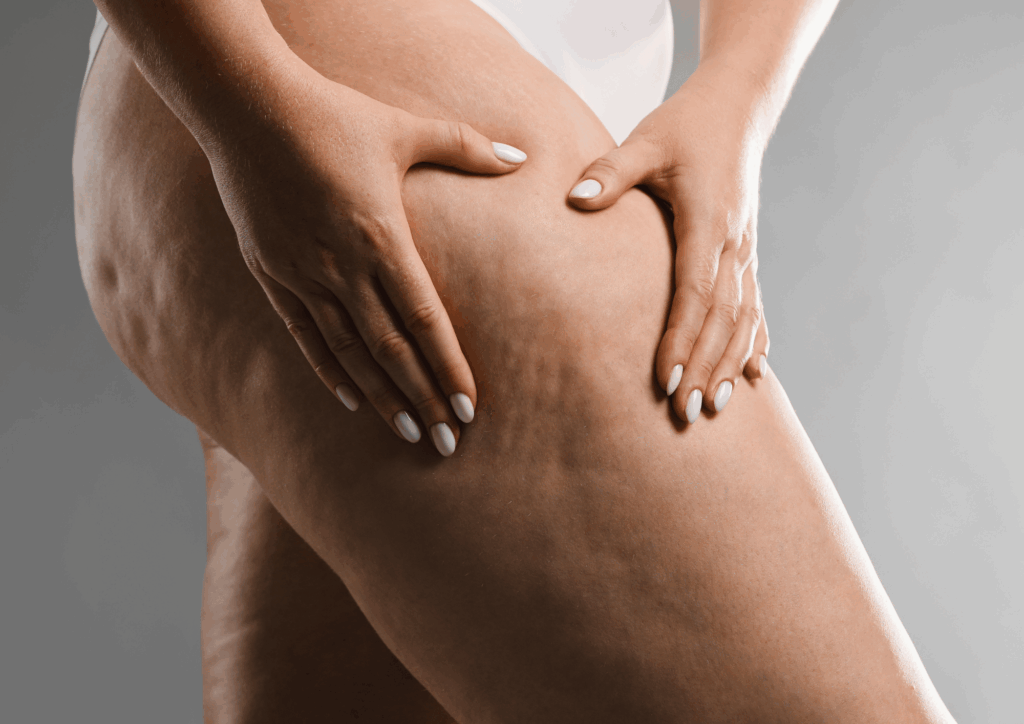
It is one of the most distinctive symptoms of cellulite. The skin is no longer perfectly smooth, and tiny dimples and bumps appear on its surface. These are most commonly seen on the thighs, buttocks and hips.
2. Orange peel effect
The skin resembles the surface of an orange peel - it becomes uneven, with visible pores and small indentations. This symptom may be subtle or pronounced, depending on the structure of the tissues and the severity of the changes.
3. Lumps visible when the skin is pinched
At cellulite in its early stages It often only becomes apparent after gently pinching the skin between your fingers. You can then see small irregularities that are not visible whilst standing or walking. Over time, they may also become visible without applying pressure.
4. Indentations visible when standing
If the unevenness is noticeable when standing naturally, cellulite It can be more pronounced. The dimples are often particularly noticeable on the back and sides of the thighs and on the buttocks.
5. Reduced skin firmness
The skin may feel less taut and firm. This is not always a direct signs of cellulite - Its appearance is also influenced by age, natural ageing processes, changes in body weight and the elasticity of the tissues. However, sagging can further accentuate any unevenness.
6. Visible dimpling on the thighs and buttocks
These are the areas where cellulite is particularly common. You may notice that the skin on one part of the thigh is smooth, whilst a few centimetres further on there are small dimples. Such changes are caused, amongst other things, by the distribution of adipose tissue and the structure of connective tissue septa.
7. Irregularities visible in certain light
Sometimes, your skin looks smooth in the mirror, but from a different angle, it appears distinctly dimpled. Light coming from the side highlights even slight indentations, which is why cellulite may be more noticeable, for example, in a brightly lit bathroom.
8. Changes in the appearance of the skin following a change in body weight
Cellulite does not always disappear after losing weight. In some people, it becomes even more noticeable, as a reduction in body fat may be accompanied by a loss of skin firmness. Conversely, when body weight increases, these irregularities may become more pronounced as a result of changes in the volume and distribution of subcutaneous tissue.
9. A feeling of heaviness and swelling of the tissues
Some women notice swelling or a feeling of heaviness in their legs, particularly after sitting or standing for a long time. Such symptoms may be linked, amongst other things, to fluid retention and circulatory problems, but they are not specific to a symptom of cellulite. If they occur regularly, get worse or affect only one leg, it is worth consulting a doctor about them.
10. Tenderness or pain on palpation
For some people areas affected by cellulite They may be tender to the touch. However, pain is not a typical symptom of ordinary cellulite. If the tissues are noticeably painful, or if bruising or swelling occurs, it is advisable to consult a specialist to determine the cause of the symptoms.
How can you reduce the appearance of cellulite? Discover the treatment options
If cellulite is a source of discomfort for you, you can start by taking regular exercise, following a balanced diet and using skincare products that help keep your skin moisturised and supple. These measures help to maintain the overall condition of the tissues, although they do not guarantee the complete elimination of dimpling.
Where the changes remain noticeable, it is worth considering a professional consultation and an assessment of the available treatment options. The choice of treatment should take into account the nature of the cellulite, the firmness of the skin, the condition of the tissues and the expected results.
Don’t guess what your skin needs
Cellulite It does not always indicate excess body fat, and its visibility does not depend solely on body weight. Therefore, an effective plan of action should begin with an assessment of the skin and an identification of the factors that influence its appearance.
If you’d like to reduce the appearance of dimpling on your thighs, buttocks or hips, book a consultation at Wellclinic. During your appointment, you can discuss your needs, find out about the treatment options available and see whether Unison technology is the right solution for you.
Cellulite treatment at Wellclinic – Unison technology
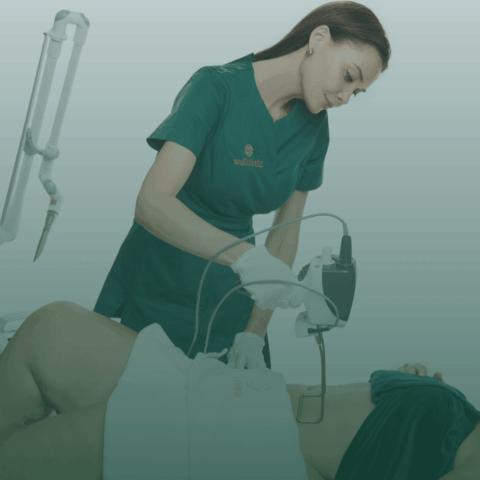
At the Wellclinic in Unison technology is used in cellulite treatment, which combines the effects of monopolar radio waves combined with directed acoustic waves. The combination of these energies is designed to improve the skin’s appearance, firmness and elasticity, and to reduce the appearance of unevenness.
The treatment is non-invasive, and the treatment plan is tailored to the individual patient’s needs and skin condition. The number of sessions depends on the indications and the tissues’ response. Identical results cannot be guaranteed for every person; therefore, before starting treatment, it is advisable to discuss the possible outcomes and limitations of the method with a specialist.
Would you like to find out how to effectively reduce cellulite and improve skin firmness? Book a consultation with a specialist at Wellclinic. During the consultation, we will assess the condition of your skin so that we can take your needs into account and draw up a treatment plan.
Sources:
- PubMed „A Clinical Guide to the Treatment of Cellulite and a Comprehensive Review of the Aetiology, Pathophysiology and Utility of Intervention”
https://pubmed.ncbi.nlm.nih.gov/38057600/ - PubMed „Insights into the Pathophysiology of Cellulite: A Review” https://pubmed.ncbi.nlm.nih.gov/32976174/
- PubMed „Treatment of Cellulite: Part I. Pathophysiology”
https://pubmed.ncbi.nlm.nih.gov/20159304/ - PubMed „Cellulite: Presentation and Management”
https://pubmed.ncbi.nlm.nih.gov/35104044/ - PubMed „Cellulite: An Update on Pathogenesis and Management” https://pubmed.ncbi.nlm.nih.gov/37977679/
- PubMed „Cellulite: Current Understanding and Treatment”
https://pubmed.ncbi.nlm.nih.gov/37424836/ - PubMed „Cellulite – Causes, Prevention, Treatment”
https://pubmed.ncbi.nlm.nih.gov/25518090/
Book a consultation




 +48 600 100 177