
 Katarzyna Pawłowska
 06.10.2026
 Table of contents
Fasting until the evening; at work, just water with lemon and telling myself that it’s plenty kebab pizza It will easily fit within your daily limit. Since your daily requirement is 2,200 kcal and your calorie balance has been zero throughout the day, your weight shouldn’t budge. However, in our practice we regularly see patients who, through such experiments, have ruined not only their metabolism but, above all, the firmness of their skin and the proportions of their figure. The body is not a laboratory coal-fired furnace, but a complex system controlled by hormones.
See what happens beneath the skin just a few dozen minutes after eating this combination of fat, salt and processed flour.
How many calories are there in a kebab pizza? Let’s break down the ingredients
Standard pizza with kebab meat with a diameter of 32-35 cm yields an average of 1,800 to as much as 2,600 kcal. The final result depends on the thickness of the dough, the quality of the meat on the grill and the amount of mayonnaise sauce.
The real problem lies in the poor composition of the ingredients from which these calories are derived:
- Wheat dough (300-400 g): around 750-900 kcal in the form of refined flour, which instantly sends blood sugar levels soaring to dangerous levels.
- Kebab meat (poultry or beef, minced): Ready-made meat mixtures with a high proportion of tallow and firming agents provide between 500 and 750 kcal.
- Grated cheese (cheese-like mix): a substantial amount of saturated fatty acids and salt - a further 450-600 kcal.
- Garlic or chilli sauce: usually made using the cheapest mayonnaise; two or three generous spoonfuls add an extra 250-400 kcal of pure fat.
A single meal of this kind meets the body’s energy requirements for a full 24 hours, whilst providing almost no high-quality protein, minerals or fibre.
Here is a summary of the calorie content and macronutrient content depending on portion size and accompaniments - to be pasted into the section on calories:
How many calories are there in a kebab pizza? A breakdown by size
| Format / Variant | Estimated weight | Calories (kcal) | Fats | Carbohydrates | Salt content | Effects on tissues |
| 1 slice (1/8 of a medium-sized pizza) | approx. 130-150 g | 260-340 kcal | 12-18 g | 25-35 g | ~1.0 g | A temporary spike in blood sugar |
| Small pizza (28-30 cm, thin base) | approx. 650-750 g | 1,400 - 1,700 kcal | 55-75 g | 140-170 g | ~4.5 g | Noticeable water retention |
| Medium pizza (32-35 cm, classic base) | approx. 850-1000 g | 1,900 - 2,400 kcal | 80-110 g | 190-240 g | ~7.0 g | Severe subcutaneous oedema |
| Large pizza (40-45 cm, thick base) | approx. 1,200-1,400 g | 2,700 - 3,400 kcal | 120-155 g | 270-330 g | ~10.0 g | Severe lymphatic stasis |
| A tub of garlic sauce (80 g) | 80 g | + 320-420 kcal | 35-45 g | 3-6 g | + 1.2 g | An extra dose of trans fats |
These figures show why even „splitting a large pizza in half” with a friend means immediately consuming over 1,500 kcal and a dose of salt that is guaranteed to cause the body to retain as much as 1-1.5 litres of water in the intercellular spaces for the next 48 hours.
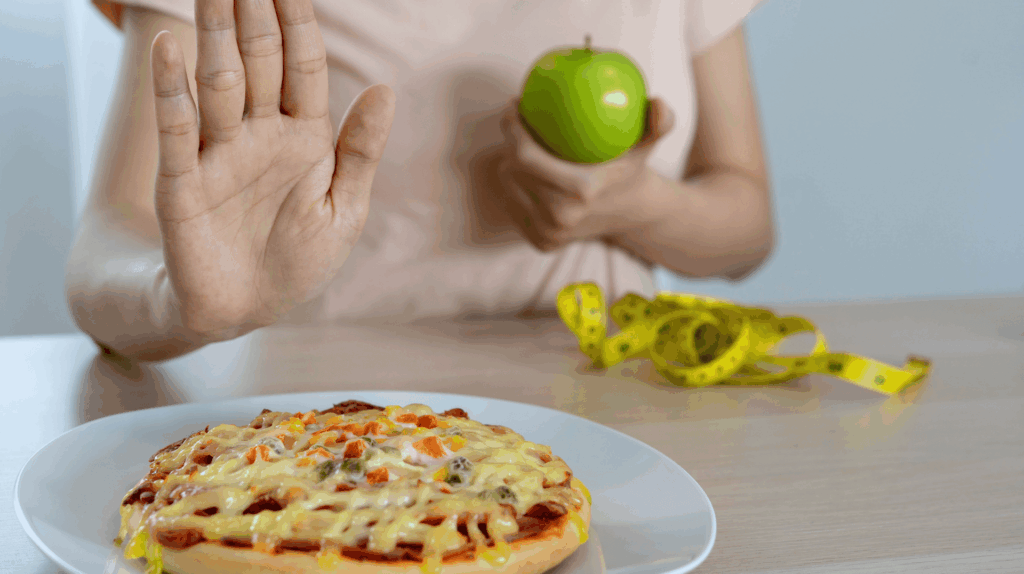
Fast food whilst on a weight-loss diet - why is calorie counting not enough?
The trendy idea of eating anything, provided you maintain a calorie deficit, comes up against the limits of physiology. Such a quantity of fat combined with refined flour triggers an immediate, powerful insulin release.
Insulin It acts in the tissues like a one-way valve: it immediately pushes fatty acids into the subcutaneous cells, whilst at the same time completely blocking the enzymes responsible for burning fat reserves. When blood sugar levels plummet following a sharp spike, the brain immediately responds with an alarm signal. Binge-eating episodes set in, energy levels drop, and the body, in search of fuel, begins to break down muscle instead of fat.
The result? You might weigh the same, but when you look in the mirror, you see a figure of the skinny fat - soft, limp and lacking any body.
The day after eating fast food: why do I have a bloated stomach and heavy legs?
Eating a kebab pizza It doesn’t turn into fresh fat in five minutes. What you see in the mirror in the morning is high water retention.
One portion of this dish often provides 7 to 10 grams of salt, which is several times the safe daily intake. Sodium traps fluids in the intercellular spaces like a sponge. The next day, you wake up with a swollen face, a hard, bloated stomach and a leaden heaviness in your calves.
The accumulated interstitial fluid exerts relentless pressure on the small blood vessels, cuts off the cells’ oxygen supply and exacerbates water cellulite. Regularly treating yourself to such spikes in sodium stretches the cell membranes, whilst an excess of simple sugars fuels glycation - a process in which glucose breaks down natural collagen fibres, causing the skin to become spongy and lose its firmness.
Why does a diet stop working on the tummy and love handles?
Even if you throw it away fast food outlets and switch to a perfectly balanced diet, your body does not lose weight evenly. In areas such as the lower abdomen, hips and thighs, alpha-adrenergic receptors predominate, which effectively block fat breakdown even under a strict calorie deficit.
A calorie deficit It can only reduce the volume of fat cells throughout the body. A diet does not reduce their actual number. The cells simply sit there empty, and at the first sign of a weekend slip-up in your diet, they immediately fill up again. At this point, what you can achieve through diet and exercise alone simply comes to an end.
No more dietary experiments - have your body tissue analysed
If, after experiencing weight fluctuations, you find yourself struggling with stubborn belly fat, love handles or sagging skin on the thighs, cutting calories any further will only make the problem worse.
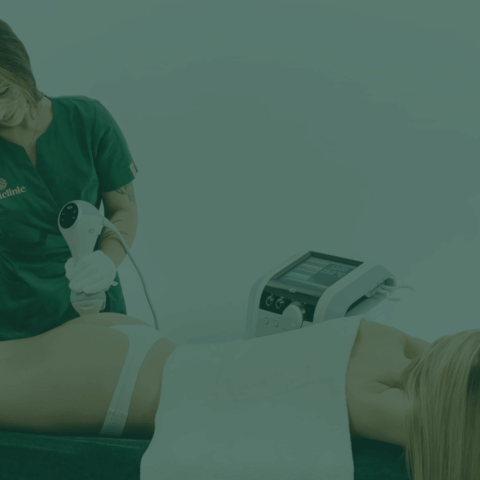
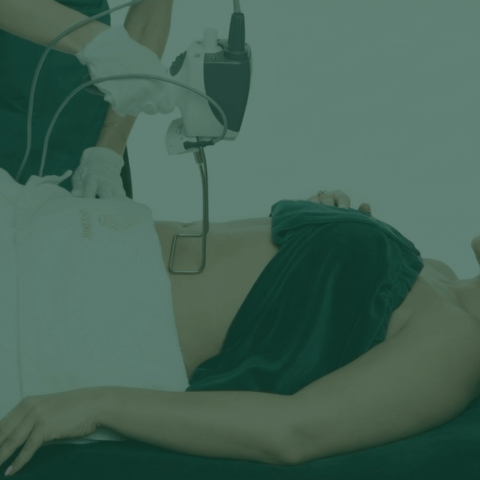
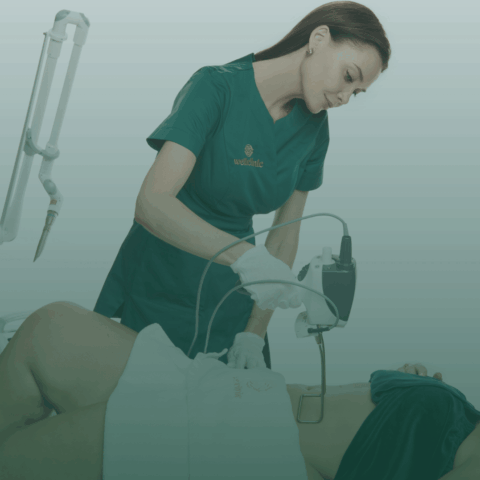
At Wellclinic, we assess the actual condition of the tissues: the thickness of the subcutaneous fat layer, the level of water retention and the condition of the collagen fibres. Where the body’s metabolism has ceased to function effectively, we employ hi-tech medical technologies that act directly on the deep structures of the body’s tissues. Discover our approach to safe body contouring: check out our programme weight loss and stubborn abdominal fat.
Book a consultation. We’ll analyse your body composition, tell you straight up what can be done about it, and put together a treatment plan that works without you having to torture yourself with starvation diets.
Sources:
- PubMed „Lipid metabolism in adipose tissue: lipolysis”
https://pubmed.ncbi.nlm.nih.gov/37738733/ - PubMed „The effects of insulin on muscle and adipose tissue”
https://pubmed.ncbi.nlm.nih.gov/21864752/ - PubMed „Lipolysis in human fat cells: biochemistry, regulation and clinical role”
https://pubmed.ncbi.nlm.nih.gov/16311212/ - PubMed „Muscle Glycogen Assessment and Its Relationship with Body Hydration Status: A Narrative Review”
https://pubmed.ncbi.nlm.nih.gov/36615811/ - PubMed „Glycogen storage: illusions of easy weight loss, excessive weight regain, and distortions in estimates of body composition”
https://pubmed.ncbi.nlm.nih.gov/1615908/ - World Health Organisation (WHO) „Reducing sodium intake to lower blood pressure and reduce the risk of cardiovascular disease in adults”
https://www.who.int/tools/elena/interventions/sodium-cvd-adults






 +48 600 100 177