First, you lose a few more hairs. Then you notice that your hair no longer has the same volume. And by the time thinning becomes noticeable in the mirror, the problem may be far more advanced than you realise. It’s easy to downplay hair loss because it doesn’t happen overnight. That’s precisely why many people wait too long, hoping the situation will sort itself out.
However, excessive hair loss can have various causes, and simply changing your shampoo, hair treatment or dietary supplement is not always enough. The longer you ignore excessive hair loss, the longer you leave its cause without proper assessment. Therefore, if you are experiencing noticeable thinning, a widening parting, receding hairline or persistent hair loss, it is advisable to start with a consultation and a thorough assessment of your scalp.
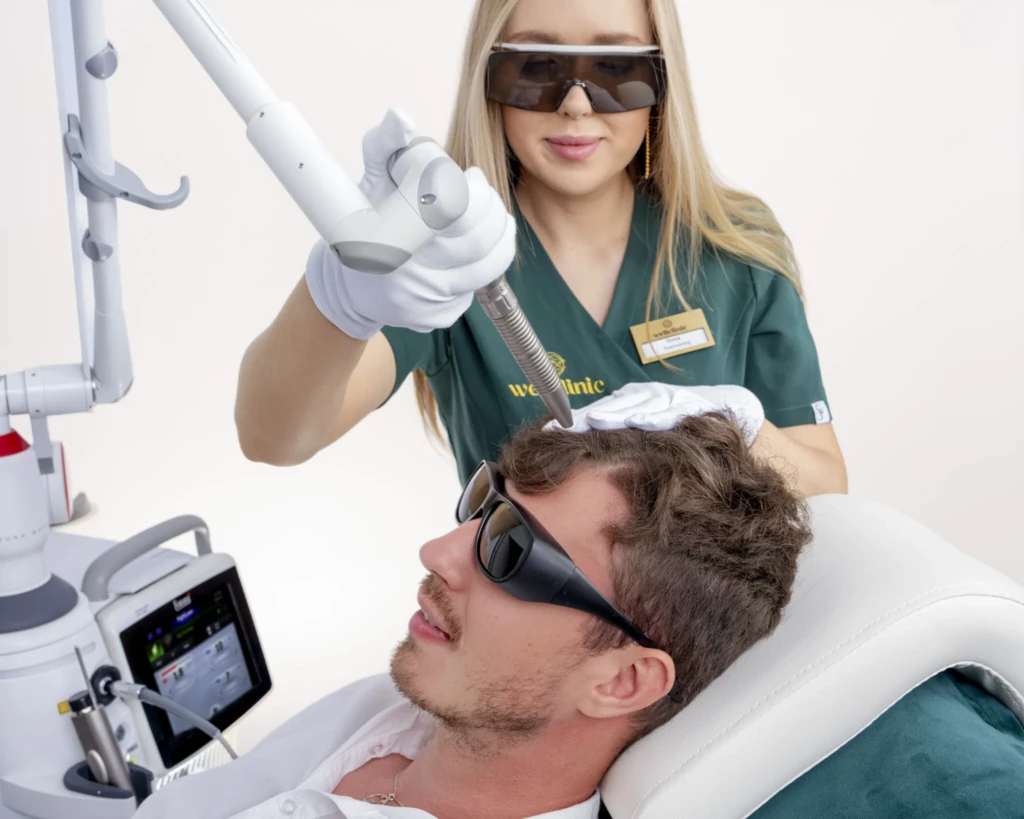
One of the methods used to treat this problem is laser treatment for hair loss, which may support the activity of the hair follicles and improve their condition. The choice of treatment should, however, depend on the cause and severity of the problem.
Why does hair fall out?
Hair loss can have many causes. Importantly, the problem often only becomes apparent several weeks or months after the factor that disrupted the hair growth cycle has taken effect. This is due to the characteristics of individual stages of hair growth.
The most common causes of excessive hair loss include:
- hormonal disorders, including thyroid disorders;
- autoimmune diseases;
- chronic stress and physical exhaustion;
- infections and systemic diseases;
- deficiencies in iron, ferritin, vitamin D and other nutrients;
- rapid weight loss and restrictive diets;
- certain medicines;
- scalp conditions;
- inappropriate hair care and mechanical damage to the hair;
- genetic predisposition.
It is worth bearing in mind that hair thinning can also be caused by hormonal imbalances linked, amongst other things, to Hashimoto's disease or other thyroid conditions. Therefore, diagnosis should take into account not only the appearance of the hair, but also the body’s general condition.
Telogenetic alopecia
One of the most common causes of sudden, severe hair loss is telogenetic alopecia. It is characterised by increased hair loss, which may occur following a period of severe stress, an infection, surgery, childbirth or rapid weight loss.
In the case of telogen effluvium Hair prematurely transitions from the growth phase to the resting phase, and then falls out. Therefore, increased hair loss may only become apparent some time after the triggering factor has occurred.
It is important to identify the cause of the problem. Depending on the situation, the doctor may recommend, amongst other things, hormone tests and an assessment of iron and ferritin levels. Appropriately selected hair tests.
Androgenetic alopecia
If your hair is gradually becoming thinner and its density is decreasing, particularly in certain areas of the head, the cause may be androgenetic alopecia.
This is one of the most common forms of hair loss, linked to genetic predisposition and the sensitivity of hair follicles to androgens. In men, characteristic features include, amongst others, a receding hairline and thinning at the crown. In women, a gradual widening of the parting and a reduction in hair density at the crown are often observed.
In this case, the problem is not limited to the hair itself. Over time, the hair follicles become smaller, which is why simply changing your hair care products may not bring about the expected improvement.
Other, less common types of hair loss include, amongst others,. alopecia areata and cicatricial alopecia. Their treatment requires an accurate diagnosis and a course of action tailored to the cause.
Laser treatment for hair loss - how does it work?
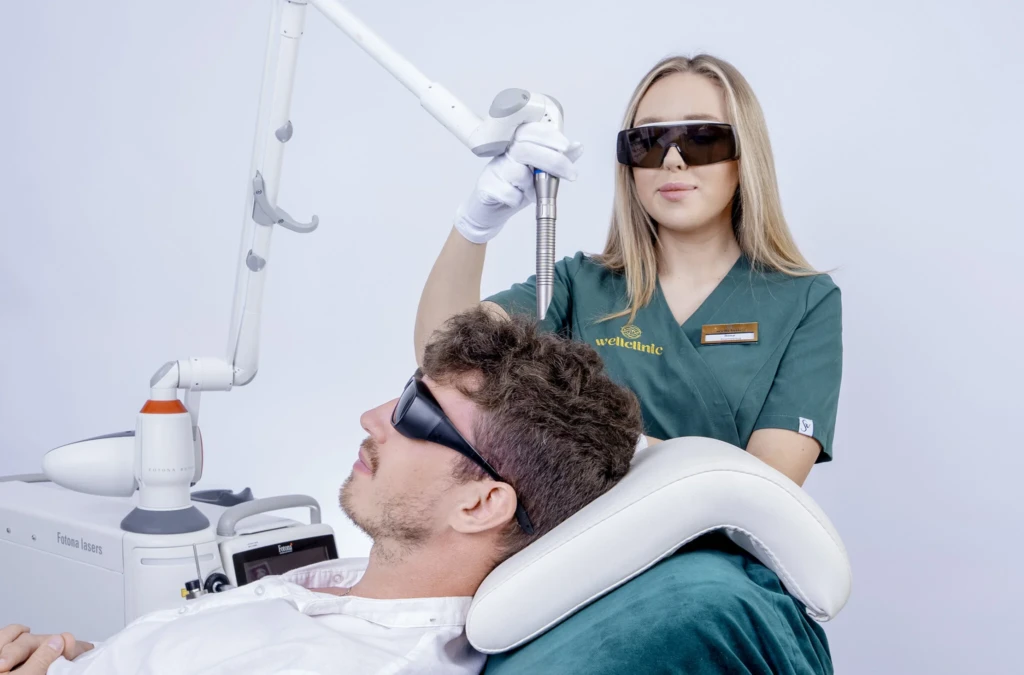
Laser treatment for hair loss It is used as part of a treatment to support the health of the scalp and hair follicles. The light energy acts on the tissues, supporting processes related to microcirculation and hair follicle activity.
Laser hair loss treatment It can be used as a stand-alone form of therapy or as part of a combined treatment programme. The final scope of treatment should be determined following an assessment of the nature and severity of the problem.
Laser therapy is no substitute for diagnosing the causes of hair loss. If the problem is caused by hormonal imbalances, nutrient deficiencies, a scalp condition or another medical condition, appropriate treatment targeting the underlying cause is also necessary.
Trichoscopy - the first step towards the right treatment
Before it is selected laser treatment for hair loss, it is worth carefully assessing the condition of the scalp and hair follicles. Trichoscopy - a non-invasive examination that allows the scalp and hair to be viewed under magnification - is helpful in this regard.
During the consultation, the specialist also gathers information on, amongst other things, any medication and supplements being taken, diet, past illnesses and when the increased hair loss began. Depending on the situation, they may recommend further diagnostic tests.
The examination can assess, amongst other things, the condition of the hair follicle openings, the thickness and structure of the hair, the degree of miniaturisation, the presence of regrowing hair, and the condition of the scalp. This makes it possible to better identify the nature of the problem and plan the next steps.
If necessary, the consultation may also include an assessment by trichologist and a referral for further tests.
Laser treatment for hair loss as part of a combined therapy programme
In cases of severe hair loss, a combination of different methods may be beneficial. At Wellclinic, we use combination therapy, in which laser treatment for hair loss It can be carried out alternately with treatments designed to support the health of the scalp.
One of the complementary methods is needle mesotherapy of the scalp. The treatment involves administering carefully selected ingredients directly into the area requiring treatment.
Depending on the indications, the following, amongst others, may be used in treatment:. polynucleotides, vitamins, amino acids and other ingredients tailored to the individual needs of the scalp. In certain cases, preparations containing ASCE exosomes.
The objective exosome therapy The aim is to create the right conditions to improve the condition of the scalp, strengthen the hair and reduce excessive hair loss. The number and frequency of treatments depend on the diagnosis, the condition of the hair and the individual’s response.
Do diet and supplements make a difference?
The condition of your hair is partly linked to your diet and the availability of the nutrients essential for the body to function properly. Iron, zinc, vitamin D and protein, amongst others, may be particularly important.
However, this does not mean that every case of hair loss requires supplementation. Taking high doses of certain vitamins and minerals without a confirmed deficiency may not only be ineffective but also harmful.
Therefore, rather than randomly trying out one „hair” product after another, it is better to start by identifying the cause of the problem. Only then can you decide whether you need supplements, a change in diet, dermatological treatment or treatments to support the health of your scalp.
Laser treatment for hair loss - when should you start treatment?
If you notice that you’re losing significantly more hair than before, your hair is losing its thickness, your parting is widening or you’re developing a receding hairline, it’s not worth waiting until the problem becomes more serious.
Laser treatment for hair loss It can form part of a personalised treatment plan aimed at reducing excessive hair loss and improving the condition of the hair. However, it is essential to identify the cause of the problem first.
At Wellclinic, treatment begins with a consultation and an assessment of the condition of the scalp. On this basis, the appropriate treatment methods can be selected and a treatment plan tailored to the patient’s needs can be drawn up.
Is your hair falling out? Don’t wait for it to thin out any further
Don’t wait until thinning hair becomes the first thing you notice when you look in the mirror. If your hair has been falling out more heavily for weeks and its volume has noticeably decreased, continuing to ignore the problem won’t make the cause go away. Excessive hair loss should be treated as a warning sign that needs investigating, rather than something that can be endlessly masked with cosmetics.
During consultations at Wellclinic A specialist will assess the condition of your scalp and hair, and then select the appropriate treatment steps, including laser treatment for hair loss, if that is the right course of action. Book a consultation and find out how we can look after your hair. We carry out these treatments at our clinics in Warsaw, Gdańsk and Cracow.
Sources:
- PubMed: "Evidence-based (S3) guideline for the treatment of androgenetic alopecia in women and men"
https://pubmed.ncbi.nlm.nih.gov/29178529/ - PubMed: "Telogen Effluvium: A Review of the Literature"
https://pubmed.ncbi.nlm.nih.gov/32833729/ - PubMed "Comparative effectiveness of low-level laser therapy for androgenetic alopecia in adults: a systematic review and meta-analysis of randomised controlled trials"
https://pubmed.ncbi.nlm.nih.gov/30706177/ - PubMed "Low-Level Laser and LED Therapy for Alopecia: A Systematic Review and Meta-Analysis"
https://pubmed.ncbi.nlm.nih.gov/39404126/ - PubMed "Trichoscopy in Alopecia: Diagnosis and Follow-up"
https://pubmed.ncbi.nlm.nih.gov/28348964/ - American Academy of Dermatology (AAD) "Hair loss: Diagnosis and treatment"
https://www.aad.org/public/diseases/hair-loss/treatment/diagnosis-treat - Cleveland Clinic: "Hair Loss: Causes, Treatment and Prevention"
https://my.clevelandclinic.org/health/diseases/16920-hair-loss