Have you lost weight? Your figure looks better, but does your face suddenly look older and more tired? Instead of fuller cheeks, you see hollows; your facial contours lose their definition, and your skin appears thinner and less firm. This is one of those effects of weight loss that people rarely think about before starting a weight-loss programme - you may reach your target weight, yet still be unhappy with the way your face looks.
A gaunt face after losing weight It is most often the result of a loss of tissue volume. Adipose tissue is responsible not only for energy storage, but also for the face’s natural volume and support. When this tissue is lost during rapid or significant weight loss, the cheeks, temples or jawline may become less full, and wrinkles and furrows that were previously barely visible may become more noticeable.
However, this does not mean that facial skin after weight loss It must remain in this condition. Depending on the cause of the change in appearance, one can work on the skin’s firmness and quality or consider restoring lost volume.
A gaunt face after losing weight - causes
When losing weight, the body uses up its reserves body fat. This process affects the whole body, including the face. The fatty tissue found, amongst other places, in the cheeks, temples and jawline is responsible for the natural volume of the tissues and influences the proportions of the face.
When it diminishes, the cheeks may become less full, the temples more sunken, and the facial contours more pronounced. That is precisely why sunken cheeks after losing weight may be associated with more pronounced nasolabial folds, a change in the shape of the face and a tired appearance.
The severity of these changes is influenced, amongst other factors, by the rate of weight loss, the number of kilograms lost, age and the initial condition of the skin. In people over the age of 40, the skin produces less collagen and elastin, which is why it may be less able to adapt to rapidly changing tissue volume.
Individual predispositions also play a role. People who naturally have less subcutaneous tissue in the facial area may notice a change in the volume of their cheeks or temples even after a relatively small amount of weight loss.
It is worth bearing in mind that changes to the appearance of the face may occur following significant weight loss, regardless of the method used. The extent and rate of fat loss, as well as the individual structure of the face, are the most important factors.
Loss of facial volume following weight loss
One of the most common reasons for changes in facial appearance following weight loss is a loss of volume. This primarily affects areas where there is naturally a layer of fat tissue that provides support for the skin.
A reduction in cheek volume can make the face appear more gaunt. A loss of volume around the temples can further accentuate the facial features, whilst a change in the proportions of the lower face can affect the appearance of the facial contour.
However, not everyone who has lost weight needs volume restoration. In some cases, the main problem is primarily a loss of skin firmness. It is therefore worth assessing, before choosing a treatment, whether the change in appearance is due to a loss of volume, sagging skin, or a combination of both.
Sagging facial skin following weight loss
Rapid weight loss can mean that the skin is unable to keep pace with the change in volume of the underlying tissues. As a result, it may become less taut, and Facial contours after weight loss it may lose its former clarity.
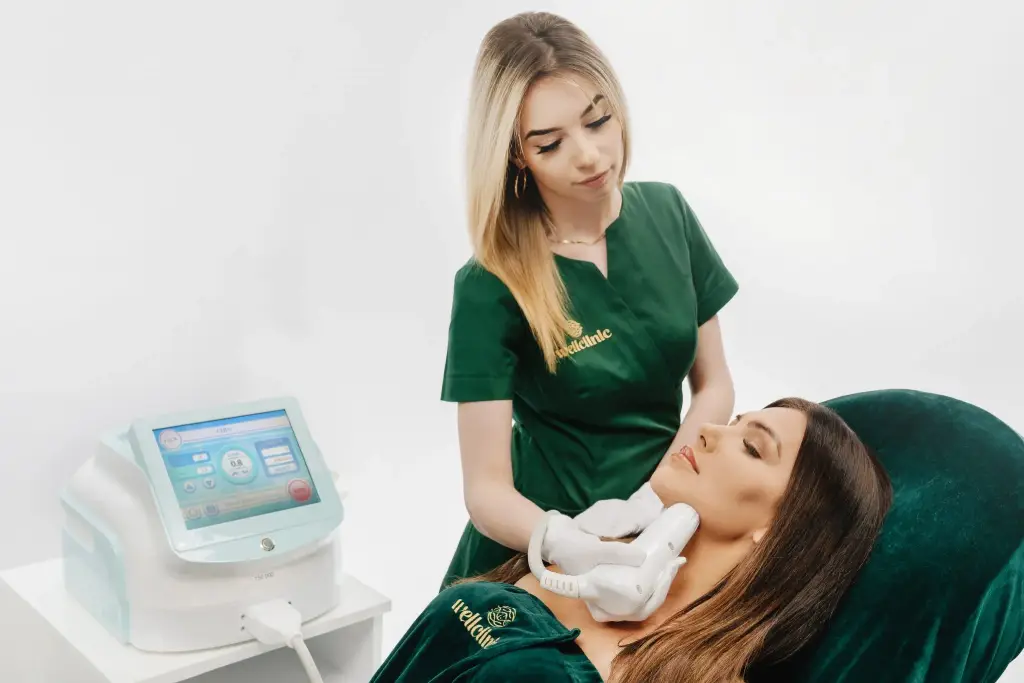
Sagging skin after weight loss requires a different approach to that used for volume loss alone. In this case, the primary aim of treatment is to improve the quality and firmness of the skin and to stimulate the processes responsible for its remodelling.
Collagen It is one of the skin’s most important structural proteins. Among other things, it is responsible for the skin’s firmness, density and elasticity. Its natural production decreases with age, which is why older skin may find it more difficult to adapt to changes in tissue volume.
Skin regeneration after weight loss It does not involve restoring lost body fat. Its aim is to improve the quality of the skin, increase its elasticity and support natural remodelling processes.
An adequate amount of protein in the diet, proper hydration, the body’s recovery and daily sun protection all help to maintain healthy skin. Aesthetic medicine treatments may be an additional part of the treatment plan if the doctor considers them appropriate.
Improving the appearance of the face after losing weight
The course of action depends primarily on what has caused the change in facial appearance. For one person, the main issue may be a loss of volume in the cheeks or temples; for another, it may be sagging skin; and for yet another, it may be both of these at the same time.
Therefore how to improve the appearance of your face after losing weight It cannot be determined using a single, universal method. The treatment plan should take into account facial anatomy, the degree of volume loss, skin quality and the desired outcome.
At Wellclinic, every treatment begins with a medical consultation. The doctor assesses the proportions of the face, skin tone and the extent of volume loss. On this basis, they can recommend procedures tailored to the actual needs of the tissues.
The aim is not to completely alter facial features. In many cases, the main objective is to restore proportions, improve skin firmness and achieve a more rested appearance.
Facial treatments following weight loss at Wellclinic
The changes visible on the face following significant weight loss can have various causes. For one person, this may primarily involve a loss of volume around the cheeks or temples; for another, it may be reduced skin tone and a deterioration in skin quality. Often, both problems occur at the same time. That is precisely why facial treatments following weight loss should be selected on a case-by-case basis, following an assessment of the skin’s condition and the anatomy of the face.
In cases of visible volume loss, one of the methods used in aesthetic medicine is facial volumetrics. The treatment helps to restore natural proportions and replenish areas where tissue volume has decreased. This most commonly affects the cheeks, temples or lower face. When performed correctly, facial volume after weight loss It should not alter distinctive facial features, but it can help restore a harmonious contour and a more rested appearance.
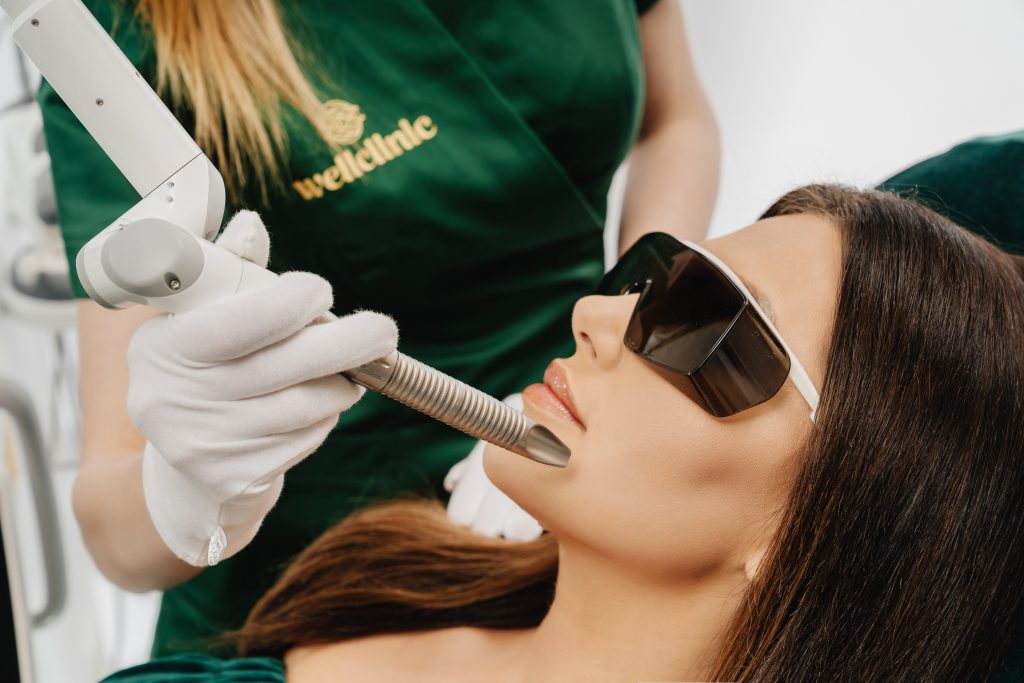
If the problem is primarily sagging skin after weight loss, it is worth focusing on methods that improve its tone and quality. One of the solutions used for this purpose is HIFU II - a technology based on the use of focused ultrasound. The energy reaches the deeper layers of tissue, where it supports skin remodelling processes and the production of collagen and elastin.
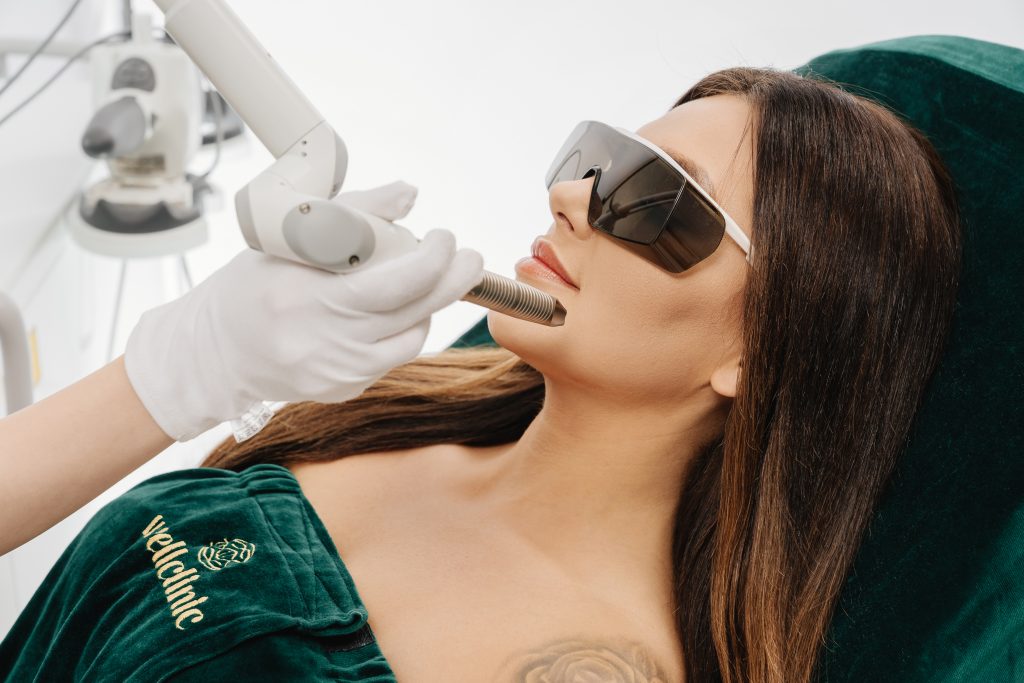
Quantum Face This is a treatment designed to improve the condition of the facial skin. It may be considered for people who, following weight loss, notice a loss of firmness, a deterioration in skin texture or a more tired appearance. The treatment supports the skin’s natural regeneration and improves its quality without altering one’s natural features.
Depending on your needs, it is possible to combine different methods. Facial volumetrics It is primarily responsible for restoring lost volume and rebalancing facial contours, whilst HIFU II and Quantum Face focus on improving skin firmness and quality.
At Wellclinic, every treatment begins with a medical consultation. The doctor assesses the extent of the changes, the condition of the skin and the patient’s individual needs in order to plan a course of treatment suited to the anatomy of the face.
Ways to deal with a gaunt face after losing weight
Not everyone who loses weight will notice noticeable changes in the appearance of their face. The extent of these changes depends, amongst other things, on the rate of weight loss, the number of kilograms lost, age and individual predispositions.
When losing weight, it is not only important to reach your target weight, but also the way in which the weight loss takes place. Gradual weight loss gives the body more time to adapt to the changing proportions of its tissues.
It is also worth adopting daily habits that support the health of your skin. An adequate intake of protein, staying hydrated, physical activity, rest and sun protection all help to keep your skin in good condition.
However, the risk of losing facial volume cannot be completely eliminated. Adipose tissue is a natural component of the face’s structure, so a reduction in its volume during weight loss may affect the appearance of the cheeks, temples and facial contours.
Natural facial proportions following weight loss
A gaunt face after losing weight It can be a source of dissatisfaction with one’s appearance, particularly if the change has occurred rapidly and is noticeable. However, this does not mean that it is necessary to restore the previous volume in all areas of the face.
Aesthetic medicine allows us to work on both skin quality and facial proportions. Depending on individual needs, it is possible to focus treatment on improving skin firmness, restoring volume, or a combination of both.
The aim should not be to completely restore the appearance you had before losing weight, but to achieve a balanced and natural result that takes into account your current facial anatomy.
A personalised approach to facial care after weight loss
At Wellclinic, we know that a gaunt face following weight loss It may vary from one patient to another. The extent of the changes depends, amongst other things, on the rate of weight loss, age, skin quality, natural facial structure and individual predispositions.
For this reason, every treatment begins with a medical consultation. The doctor assesses the degree of volume loss, skin tone, facial proportions and the quality of the tissues. It is only on this basis that the appropriate procedures are selected.
In some cases, treatment aimed at improving skin quality is sufficient. If there is a marked loss of volume, the doctor may consider volume restoration. In cases of more advanced changes, it is possible to combine several methods.
The aim of the treatment is to preserve the natural contours of the face and improve its appearance without creating an overly plumped-up effect. The skin should look healthier and be firmer, whilst the facial proportions should be harmoniously tailored to the patient’s current facial structure.
What should you do if losing weight has changed your face?
Losing weight was supposed to improve your appearance, not make you unable to recognise your own face in the mirror. Sunken cheeks, a less defined facial contour, and wrinkles that have suddenly become more noticeable - changes like these can rob your face of its freshness and make you look older than you feel.
A gaunt face after losing weight However, this does not necessarily mean a permanent change. Depending on the cause, it is possible to improve the firmness and quality of the skin and, in certain cases, to restore lost volume.
The most important thing is to diagnose the problem correctly. Volume loss itself requires a different approach to sagging skin, which is why a medical consultation should precede the selection of treatments. The doctor will assess the facial anatomy, the condition of the skin and the extent of the changes to determine what the face actually needs following weight loss.
You don’t have to accept that your face will look older once you’ve lost weight. If you notice a loss of volume, sagging skin or a change in your facial contours, consult the medical staff at Wellclinic. During the consultation, we will assess your skin’s needs and select the appropriate technologies and procedures, taking into account your natural features and the desired outcome. We carry out aesthetic medicine treatments at Wellclinic clinics in Warsaw, Gdańsk and Cracow.
Sources:
- PubMed „Facial adipose tissue and the ageing face”
https://pubmed.ncbi.nlm.nih.gov/26618461/ - PubMed „Age-related changes in midface volume and facial fat compartments”: https://pubmed.ncbi.nlm.nih.gov/33165293/
- PubMed „Changes in facial fat and their impact on the ageing face”: https://pubmed.ncbi.nlm.nih.gov/21915077/
- PubMed „Facial fat compartments: anatomy and clinical relevance in aesthetic medicine”: https://pubmed.ncbi.nlm.nih.gov/28033645/
- PubMed „Facial volume loss, adipose tissue and the ageing process”: https://pubmed.ncbi.nlm.nih.gov/18987910/
- PubMed „Changes in collagen and elastin during skin ageing”
https://pubmed.ncbi.nlm.nih.gov/18404866/ - PubMed „Changes in the superficial facial fat compartments of the midface”: https://pubmed.ncbi.nlm.nih.gov/32804897/
- PubMed „Autologous fat grafting for the restoration of facial volume”: https://pubmed.ncbi.nlm.nih.gov/37159906/