
 Katarzyna Pawłowska
 29.09.2026
 Table of contents
Injecting medical gas under the skin stimulates the blood vessels, but it also involves a painful ordeal of a dozen or so appointments, as well as haematomas and bruises that take weeks to heal. Carboxytherapy For years, it was regarded as the primary method for removal of cellulite and skin laxity. Today, beauty clinics take a much more sceptical view of it: carbon dioxide itself oxygenates the tissues, but it will not break down the hard, fibrotic adhesions that create visible indentations in the skin.
Hypoxia and oedema: why do tissues develop cellulite?
When microcirculation In the subcutaneous tissue, blood flow slows down and the capillaries cease to supply the cells with oxygen and nutrients. Water, toxins and metabolic waste products accumulate in the intercellular spaces.
Adipocytes (fat cells) They increase in volume and clump together into bundles. The collagen fibres surrounding them harden, lose their elasticity and pull the skin downwards. This is how fibrous cellulite - dense, painful when pressed, and completely resistant to the effects of lotions or home treatments. Without oxygenation and the mechanical breaking up of the stiffened strands, the tissue remains blocked.
What is carboxytherapy? Carbon dioxide and the Bohr effect
Carboxytherapy treatment involves the intradermal or subcutaneous administration of pure, medical-grade carbon dioxide (CO2) using a fine needle. The procedure is based on a physiological reaction known as the Bohr effect.
The body treats a sudden build-up of CO₂ in the tissues as a state of acute hypoxia. In response, the blood vessels dilate rapidly, and the blood releases its stored oxygen directly to the surrounding cells. The micro-punctures caused by the needle and the presence of gas induce a controlled inflammatory response, which stimulates fibroblasts to production of new collagen and the formation of a new network of blood vessels (neovascularisation). The expanding gas also causes partial mechanical damage to the walls of fat cells.
In this way body carboxytherapy It is used on areas such as the thighs, buttocks, stomach and arms.
Pain, haematomas and a set of 15 repetitions: the limitations of carboxytherapy
The injection of pressurised gas causes a strong, burning sensation of dull tissue distension. The procedure is carried out without anaesthetic, and a single visit to the clinic involves several dozen painful injections in one area.
Following a session, bruising, haematomas and localised swelling regularly appear on the skin. The second limitation is the time-consuming nature of the treatment. A single session does not alter the structure of the connective tissue - a visible reduction cellulite requires a course of 10-15 treatments carried out at weekly intervals. This means several months of constant discomfort and having to cover up a bruised body, whilst deep fibrosis often remains unaffected anyway.
Carboxytherapy and BTL UNISON - a non-invasive alternative for cellulite
Carboxytherapy It works well on the thin skin under the eyes or as a complementary treatment for hair loss. When it comes to cellulite on the thighs, buttocks or stomach, the poszła technology goes one step further.
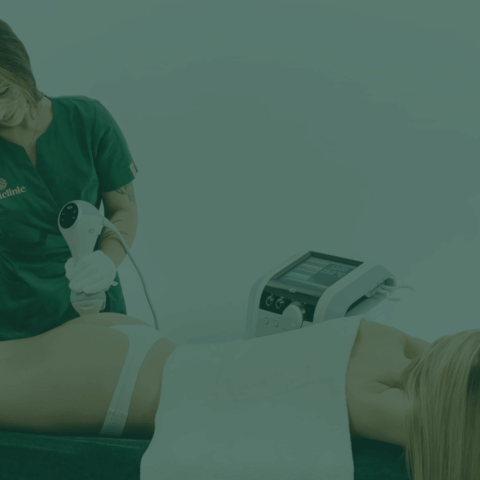
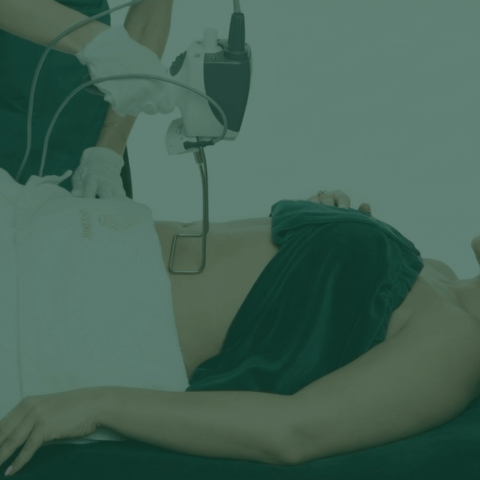
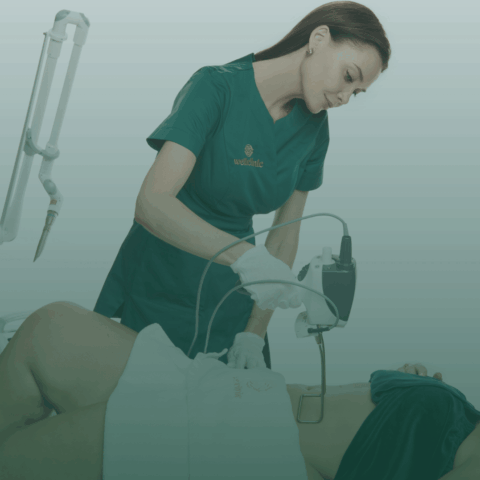
The current standard in state-of-the-art clinics is BTL UNISON. The device eliminates the need for needles by combining the following in a single head monopolar radio wave and a directional sound wave.
| Treatment parameter | Carboxytherapy | BTL UNISON (Wellclinic) |
|---|---|---|
| Method of administration | Needle injection (breach of the skin’s integrity) | Non-invasive gel-based transducer |
| Pain sensations | Stinging, burning, painful tightness | Heat comparable to a relaxing massage |
| Number of treatments in a course | 10-15 visits | 4 treatments |
| Marks on the body | Petechiae, haematomas, bruises | No traces and an immediate return to normal activity |
| Key action | Tissue oxygenation via CO₂ | Thermal reduction of fat and mechanical breakdown of fibrosis |
| Scope of operations | Improved microcirculation | A multi-pronged approach to tackling the 5 causes of cellulite |
During the procedure BTL UNISON The radiofrequency wave heats the tissue to a temperature of 40-45°C, triggering the remodelling of collagen fibres and a reduction in the volume of adipocytes. At the same time, acoustic wave pulses mechanically break down stiffened connective tissue septa. The whole process is summarised in 4 pain-free sessions lasting between 15 and 45 minutes.
Cellulite removal at Wellclinic - selecting the right technology for the tissue structure
Flaccid skin with water retention requires a different form of stimulation to firm, entrenched thickening of adipose tissue. Applying a single method to every type of problem simply leads to a waste of time and money.
At Wellclinic, treatment begins one-to-one medical consultation. We assess the degree of fibrosis, the thickness of subcutaneous fat and the efficiency of the vascular system. If the tissues require deep remodelling without pain or bruising, we implement a certified protocol BTL UNISON, which, in just four sessions, delivers results that cannot be achieved with gas injections.
Make an appointment a consultation at Wellclinic and have your tissue examined. We’ll draw up a treatment plan based on your body’s biology before any subcutaneous changes become permanent.
Sources:
- PubMed „Carbon dioxide therapy in the treatment of cellulite: an audit of clinical practice” https://pubmed.ncbi.nlm.nih.gov/20111965/
- PubMed „Effectiveness of carboxytherapy in the treatment of cellulite in healthy women: a pilot study” https://pubmed.ncbi.nlm.nih.gov/27578994/
- PubMed „Effects of carboxytherapy on skin laxity”
https://pubmed.ncbi.nlm.nih.gov/32091181/ - PubMed „Carbon dioxide therapy in the treatment of localised adiposity: a clinical study and histopathological correlations”
https://pubmed.ncbi.nlm.nih.gov/11426306/ - PubMed „Clinical evaluation of simultaneously applied monopolar radiofrequency and targeted pressure energy as a new method for the non-invasive treatment of cellulite in post-pubertal women” https://pubmed.ncbi.nlm.nih.gov/29524305/
- U.S. Food and Drug Administration (FDA) „510(k) Premarket Notification K171911: BTL-899 System for Cellulite Reduction and Pain Relief” https://www.accessdata.fda.gov/scripts/cdrh/cfdocs/cfpmn/pmn.cfm?ID=K171911





 +48 600 100 177