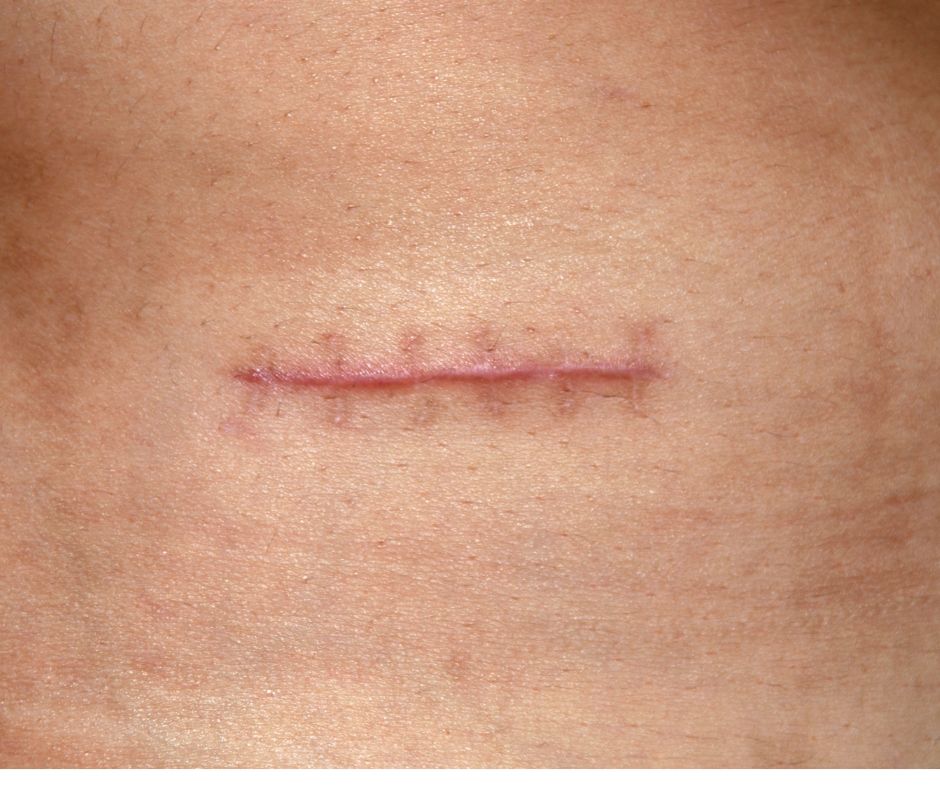
The operation may be over, but its effects may stay with you for years to come. Surgical scars They form during the wound-healing process, and their subsequent appearance depends, amongst other things, on how the skin regenerates. Irritating a healing wound, inadequate care or a delayed response to worrying changes can hinder proper healing.
A post-operative wound, and subsequently the scar that forms, require appropriate management. Care should be tailored to the type of operation, the site of the incision and the stage of healing. Proper wound care can support skin regeneration and help minimise the visibility of the scar.
It is worth remembering that scar It is a natural part of the healing process and it is not always possible to make it disappear completely. However, you can influence its appearance – over time, the scar may become lighter, softer and less visible. It is therefore worth monitoring the healing process and consulting a specialist early on if you notice any worrying changes.
How to care for the scar before the stitches are removed?
Until the stitches are removed or dissolve on their own wound requires particular care. It is essential to follow your doctor’s advice regarding dressing changes, hygiene and physical activity. The wound should be protected from dirt and unnecessary irritation.
Dressing It should be changed in accordance with medical advice, and also if it becomes wet or soiled. In the first few days after the operation, it is particularly important to monitor the surgical site. If you experience increasing pain, swelling, redness, pus or a fever, you should contact your doctor.
Until wound healing You should also avoid situations that could cause the wound to open. Restrictions on bathing, showering, physical activity and lifting should be determined on a case-by-case basis, depending on the type of operation performed.
How to care for the scar after the stitches have been removed?
Once it has been completely closed and wound healing You can then begin proper scar care. It is advisable to consult a doctor or specialist beforehand about when to start massage or using scar treatments. Treating a fresh wound too early may, in fact, disrupt the healing process.
At a later stage, care may include gentle moisturising of the skin and the use of products designed for scar care. Regular skincare helps to reduce feelings of tightness and dryness, whilst a massage carried out correctly can help maintain the skin’s elasticity.
It is also very important that protecting the scar from UV radiation. A fresh scar is particularly prone to discolouration, so you should limit its exposure to the sun and use suitable sun protection.
7 tips for looking after a post-operative scar
1. Follow your doctor’s advice. How the wound is cared for depends on the type of operation, the location of the incision and the healing process.
2. Practise good hygiene. The wound should be kept clean and dressings changed as recommended.
3. Do not put any weight on a fresh wound. Intense physical exertion, lifting heavy objects or stretching the skin too much may have a negative impact on the healing process.
4. Don’t start the massage too early. Scar massage should only be carried out once the wound has healed properly and the doctor has deemed it safe to do so.
5. Moisturise your skin. Once the wound has healed, you can use products designed for scar care, which help to keep the skin in good condition.
6. Protect the scar from the sun. Sun protection reduces the risk of permanent discolouration within the scar.
7. Keep an eye on how the scar looks. If it becomes hard, raised, excessively red, itchy or starts to extend noticeably beyond the area of the original wound, it is advisable to consult a specialist. This may indicate the development of scars or a keloid.
What can I do to make a post-operative scar less noticeable?
Not every post-operative scar requires treatment. In many cases, it fades naturally over time and becomes less noticeable. This process can take several months, so the appearance of a fresh scar should not be taken as its final appearance.
However, if the scar is clearly visible, uneven, thickened or causes discomfort, professional scar reduction methods may be considered. The choice of treatment depends primarily on the age of the scar, its structure, colour, depth and location. A flat, light-coloured scar may require a different approach to a raised or thickened one.
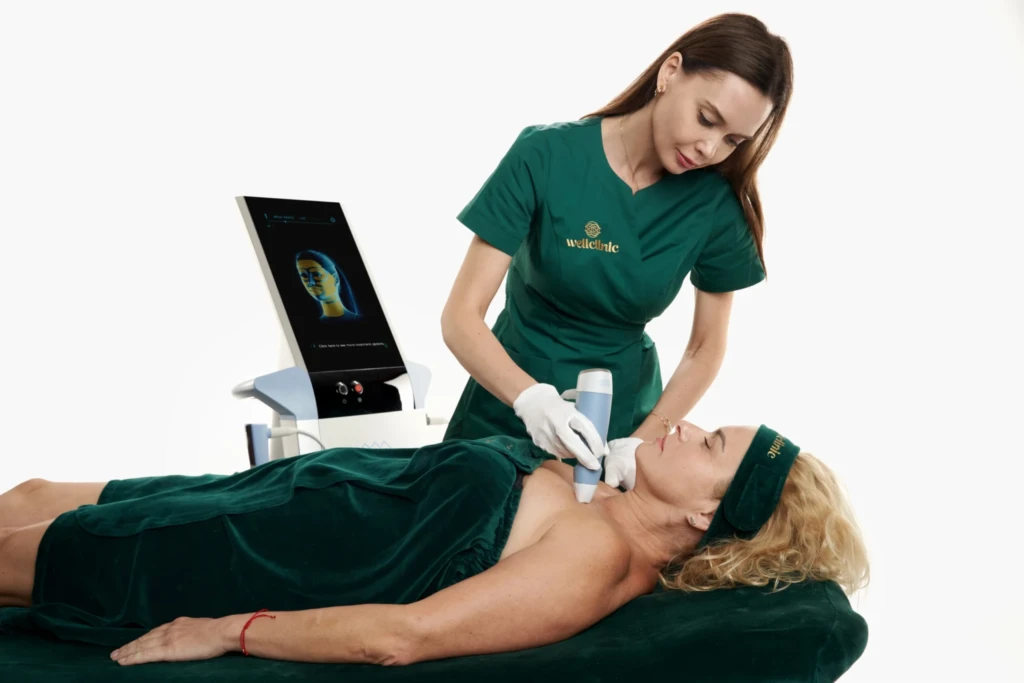
In the case of permanent changes, one possible solution could be laser therapy. Carefully selected laser energy can promote skin remodelling and improve its structure. Various technologies are used in scar treatment, which is why it is essential to assess the specific lesion before the procedure.
Post-operative scars following a caesarean section and other operations – what affects their appearance?
Scars following surgery may vary in appearance depending on the location of the incision, skin tension and an individual’s predisposition to scar tissue formation. Caesarean section scar It is often located in the lower abdomen, where movement and tissue tension can affect its appearance. Conversely, scars from orthopaedic operations, appendectomies or facial surgery may require different care due to the location and nature of the incision. Some scars become flatter and lighter in colour over time, whilst others remain visible as thickened areas, uneven patches or discolouration.
The appearance of a scar is also influenced by age, the way the wound heals and a tendency to develop hypertrophic scars. Therefore, care of a post-operative scar It should take into account not only the skin’s current appearance, but also the time that has elapsed since the operation. In the case of persistent changes, it is worth assessing whether home care will be sufficient or whether additional methods are needed to improve the skin’s appearance.
Laser removal of post-operative scars
One of the methods used to reduce visibility Laser therapy is used to treat permanent scars. Depending on the type and appearance of the lesion, various techniques can be used, including laser treatment Er:YAG. It may stimulate skin renewal processes and support the production of new collagen.
At Wellclinic, the Fotona platform is used to treat selected types of scars. The choice of treatment parameters depends on the characteristics of the scar and the condition of the skin. The main aim of the treatment is to improve the structure of the scar, smooth its surface and reduce its visibility.
Further information on the use of lasers in scar treatment can be found in the material on laser scar removal. In the case of lesions located in different parts of the body, it is also possible to tailor the treatment to their specific location.
Can every post-operative scar be removed?
It is not always possible to remove a scar completely. However, modern treatment methods can, in many cases, significantly reduce its visibility and improve the skin’s texture. The outcome depends, amongst other things, on the type of scar, the time elapsed since the operation, its extent, and an individual’s predisposition to forming scar tissue.
The following require particular attention hypertrophic scars and keloids, which may require a different approach to flat post-operative scars. It is therefore advisable to seek a consultation and assess the nature of the lesion before starting treatment.
Even if a scar is already mature and has been present for a long time, this does not mean that all treatment options have been exhausted. Depending on its appearance, various methods of improving its structure may be considered. You can also find information on established changes in the article on mature scars.
Does your scar look different from how it should?
A scar does not always simply fade away over time. If it starts to harden, become raised, itch or hurt, waiting for it to improve may mean missing out on the opportunity to take action sooner. Not every change in a scar is a cause for concern, but it is worth keeping an eye on its appearance and behaviour, particularly in the first few months after the operation.
A consultation is particularly recommended when surgical scar becomes increasingly raised, hard, painful or itchy, or if its appearance does not improve over time. A specialist can assess what type of scar it is and whether further treatment is required.
It is also not worth starting an intensive programme on your own treatment of a fresh scar. First, you should make sure that the wound has healed properly. Only then should you consider using skincare products, massage or treatments to improve the appearance of your skin.
You should not expect a single cosmetic product or a single treatment to completely remove post-operative scar. Its appearance depends, amongst other things, on the type of scar, the time that has elapsed since the operation, and individual skin characteristics. During consultationa consultation with a Wellclinic specialist You can discuss the condition of your scar and find out about the options for reducing it, choosing the appropriate treatment method to suit its appearance and the condition of your skin. We carry out these treatments at our clinics in Warsaw, Gdańsk and Cracow.
Sources:
- PubMed „Postoperative scar treatment modalities: a systematic review of randomised controlled trials”
https://pubmed.ncbi.nlm.nih.gov/41420298/ - PubMed „Scar treatment after surgery – evidence and recommendations. A systematic review”
https://pubmed.ncbi.nlm.nih.gov/41361134/ - PubMed „A systematic review of the management of post-operative scars using silicone gel-based products in randomised controlled trials”
https://pubmed.ncbi.nlm.nih.gov/37921811/ - PubMed „Management of scars: updated practical guidelines and the use of silicones”
https://pubmed.ncbi.nlm.nih.gov/25141160/ - American Academy of Dermatology „Scars: Overview”
https://www.aad.org/public/diseases/a-z/scars-overview - PubMed „Mitigation of Post-surgical Scars Using Lasers: A Review”
https://pubmed.ncbi.nlm.nih.gov/32440416/ - PubMed „Efficacy of topical silicone gel in scar management: A systematic review and meta-analysis of randomised controlled trials”
https://pubmed.ncbi.nlm.nih.gov/32119763/ - PubMed „Efficacy and Safety of Silicone Gel Plus Laser Therapy for Scars: A Systematic Review and Meta-analysis”
https://pubmed.ncbi.nlm.nih.gov/42603050/