
 Katarzyna Pawłowska

 11.11.2026
You’ve lost 20 kilograms. Your clothes fit better, your fitness has improved, and yet you’re not entirely happy with the results of your weight loss. The reason? Loose skin on your tummy, arms or thighs, left over after losing weight.
This is a factor that many people don’t take into account when they start losing weight. The kilos disappear, but the skin doesn’t always manage to adapt to the new figure. Instead of a firm stomach, a fold of excess skin appears. The arms lose their firmness, and the thighs look different from before the weight loss.
Excess skin after weight loss It is not a question of a lack of exercise or improper aftercare. The cause lies in changes to the structure of tissues that have been stretched over a long period of time. The greater the weight loss, the more difficult it may be for them to shrink back to their original size.
A voucher for you
Wellclinic gift vouchers from just 1,000 zł – treat yourself or your loved ones to health and beauty. Order by the end of November!
Collect your voucherIs there anything that can be done about it? Yes, but not every method will produce the same result. Find out how to improve skin firmness, when aesthetic medicine treatments can help, and in what circumstances surgical removal of excess tissue may be necessary.
Table of contents
Why is there excess skin left over after losing weight?
Imagine a balloon that remains fully inflated for a long time. When the air is let out, it does not always return to its original shape. It is similar with the skin, although the mechanism behind this phenomenon is far more complex.
During weight gain The skin gradually adapts to the body’s increasing volume. Its supporting fibres are stretching, whilst structural changes take place within the dermis.
Two proteins play a particular role:
- Collagen - is responsible for the skin’s strength, density and support.
- Elastin - gives it elasticity and enables it to return to its original shape after being stretched.
Both proteins form part of the dermis. The problem arises when this persists for a long time excess body weighta. Support fibres They may become damaged, and their ability to regenerate properly gradually diminishes. When adipose tissue begins to atrophy, the skin does not always keep pace with the change in volume.
As a result, it remains loose, less elastic and may form visible folds.
It is not just the number of kilograms that determines how loose the skin is
Why is it that one person, having lost 15 kilograms, doesn’t notice any major changes, whilst another, after a similar weight loss, is left with a noticeable excess of skin?
Several factors are important:
- Age - As we get older, the skin’s ability to regenerate diminishes and natural collagen production decreases.
- Amount of weight lost - A large reduction indicates a greater change in tissue volume.
- Duration of being overweight or obese - Long-term stretching of the skin can lead to more permanent changes.
- The rate of weight loss - Rapid reduction leaves less time for the tissues to adapt.
- Genetics - The individual quality of collagen and elastin fibres affects the skin’s elasticity.
- Exposure to UV radiation - may cause further damage to the supporting fibres.
Nor should we overlook muscle loss. During intensive weight loss It is not only … that may be reduced adipose tissueand, but also muscle mass. The figure then loses some of its volume, and the sagging of the skin becomes more noticeable.
That is why simply reaching your target weight does not always mean you have finished working on your physique.
How can you firm up your skin after losing weight? Start by reshaping your figure
The first step shouldn’t be to buy yet another firming cream. If your skin has lost its firmness following significant weight loss, you also need to look after the tissue underneath it.
Resistance training It helps to rebuild and maintain muscle mass. Exercises that target the abdomen, buttocks, thighs and arms can improve your body proportions and make your figure look more toned.
However, this does not mean that the muscles will remove the excess skin. If a noticeable fold remains, exercise cannot replace a procedure to remove the excess tissue.
Nutrition is also important. The body needs adequate amounts of protein, vitamin C, zinc and other nutrients involved in regenerative processes.
It’s worth making sure that:
- high-quality sources of protein;
- fruit and vegetables rich in vitamin C;
- healthy fats;
- adequate hydration;
- maintaining a stable body weight.
Home care also has its place. Ceramides, hyaluronic acid and retinoids They can help maintain the skin’s condition and improve its hydration and texture. However, they will not remove large folds or restore the skin’s original firmness if the tissues have been significantly stretched.
Treatments for excess skin following weight loss – what options does aesthetic medicine offer?
When exercise and skincare aren’t enough, you might want to consider professional treatments to improve skin firmness.
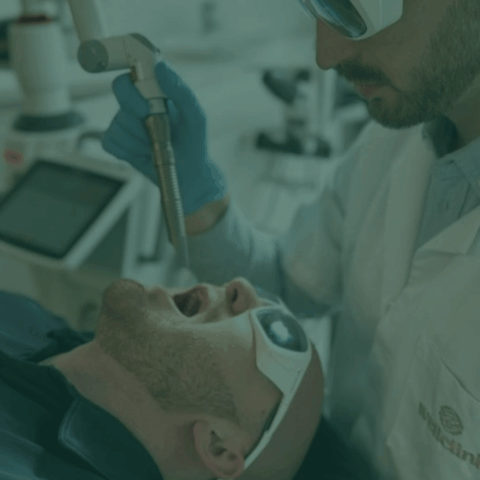
Not every case of sagging requires surgery. At For moderate loss of firmness, technologies utilising laser therapy are used, which stimulates fibroblasts to stimulate collagen production and initiate tissue remodelling. One such method is HIFU II.
HIPRO – 2nd-generation HIFU at Wellclinic
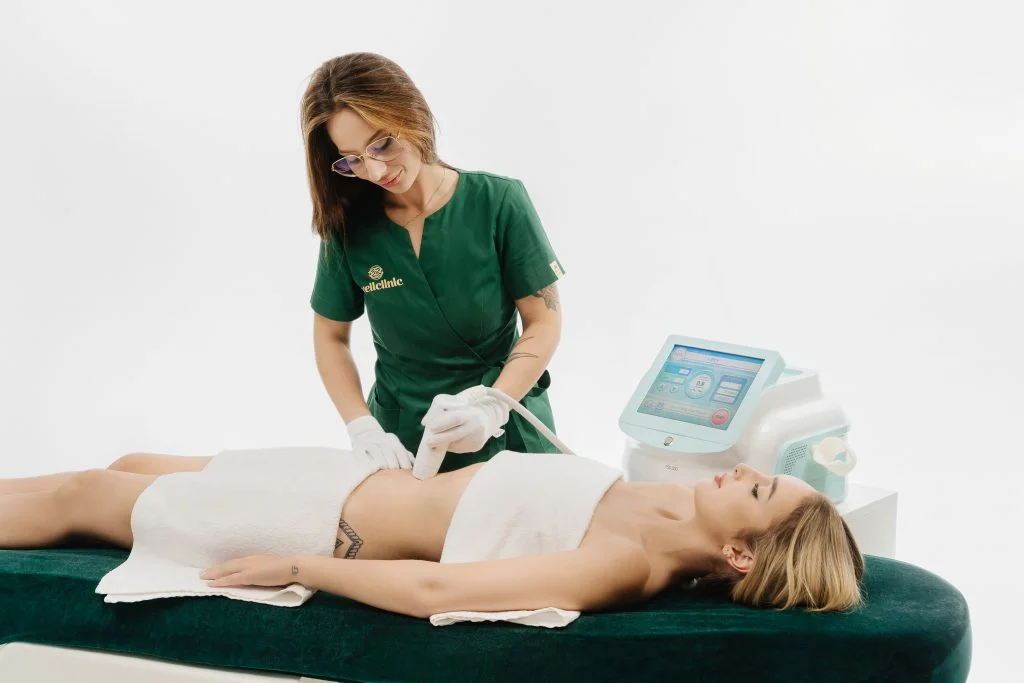
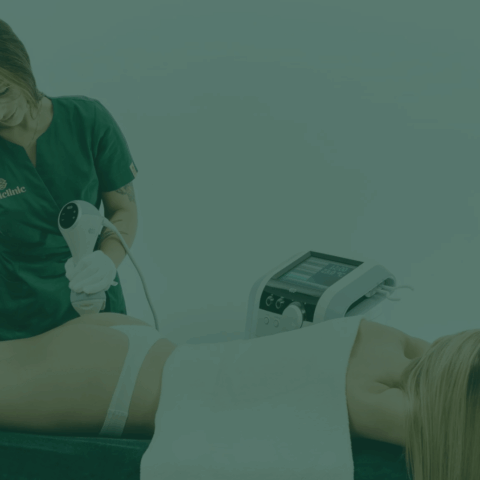
W Wellclinic we use HIPRO technology based on HIFU (High-Intensity Focused Ultrasound).
The treatment is designed to provide energy to specific layers of tissue. Its aim is to stimulate the skin’s regenerative processes and improve its firmness.
For people who, after slimming If you notice a slight loss of firmness in your stomach or other parts of your body, this could be an interesting option.
However, not every patient will be a suitable candidate for such a procedure. Factors such as skin thickness, the amount of excess tissue, the patient’s state of health and the area requiring improvement are all important.
The effects are not immediate. The collagen remodelling process It takes time, and the result achieved depends on individual aptitude.
What if the problem isn’t just sagging skin, but also excess body fat?
The second-generation HIPRO-V HIFU is one of the methods used to improve skin firmness. However, sagging is not always the only problem following weight loss. In some people, despite losing weight, localised deposits of fat remain, particularly around the abdomen, love handles or thighs. The skin may be less firm, and the figure may still not have the desired proportions.
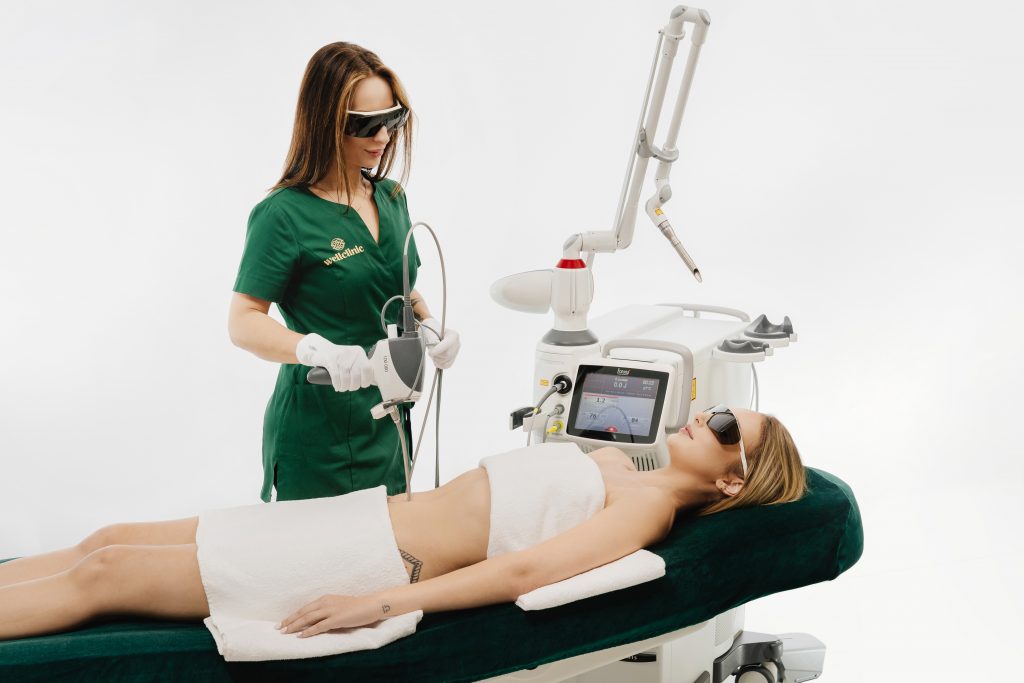
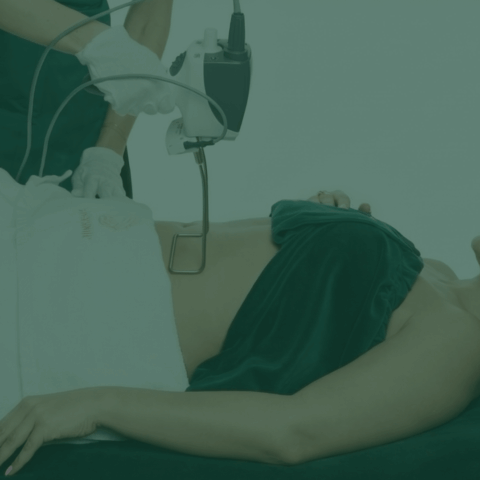
In such a situation, one might consider TightSculpting laser liposuction. It is a method that combines the effects of localised fat tissue with improved skin firmness. It utilises a laser platform Fotona Dynamis SP, operating at two wavelengths: Nd:YAG i Er:YAG.
The first stage of the procedure uses a laser Nd:YAG, which delivers thermal energy to deeper tissues. The second stage, using a laser Er:YAG, focuses on improving skin firmness and texture by stimulating collagen remodelling processes.
TightSculpting™ is an effective method for contouring specific areas of the body, where, in addition to a loss of firmness, there is also localised fat accumulation. The treatment may target the abdomen, love handles, thighs and arms. However, it is not a substitute for the surgical removal of a large fold of excess skin.
Before treatment begins, a medical consultation is carried out to assess the condition of the skin, the amount of body fat and the likelihood of achieving the desired result. This makes it possible to choose a method tailored to the actual problem, rather than simply to the number of kilograms lost during weight loss.
Excess skin after weight loss – when should you book a consultation?
You don’t have to wait until the problem becomes very noticeable. If, once the weight loss is complete, you notice a loss of skin firmness, you can discuss the options available to improve its appearance.
During the consultation, the specialist assesses:
- degree of skin laxity;
- amount of excess tissue;
- the quality and thickness of the leather;
- areas requiring improvement;
- current body weight and its stability;
- any contraindications to the procedures.
On this basis, it is possible to determine whether the patient is eligible for HIFU treatment or whether a surgical consultation would be a better option.
At Wellclinic, the personalised selection of treatments forms the basis of our proprietary WellEffect Formula. It is not about carrying out as many treatments as possible, but about selecting the right technology to address the actual problem.
Your transformation doesn’t have to stop at losing a few kilograms
You’ve managed to lose weight. Don’t let this achievement go to waste just because your skin doesn’t look the way you’d hoped.
Excess skin following weight loss can be assessed, and an appropriate course of action chosen. Sometimes, all that is needed is to improve the condition of the skin and rebuild muscle mass. At other times, medical technologies or a surgical consultation are required.
At Wellclinic, you can discuss options for improving skin firmness following weight loss. Our medical team will assess the condition of your skin, determine whether HIPRO technology can be used, and TightSculpting and will help you decide on the next steps.
Book a consultation at Wellclinic and find out which products are best suited to your skin.
Sources:
1. PubMed: "Thigh lifts in post-bariatric patients – A systematic review" (2024). https://pubmed.ncbi.nlm.nih.gov/39341177/
2. PubMed: "Obesity as a Risk Factor in Cosmetic Abdominal Body Contouring: A Systematic Review and Meta-Analysis" (2024). https://pubmed.ncbi.nlm.nih.gov/37644187/
3. PubMed: "Contemporary Lower Body Lift" (2023). https://pubmed.ncbi.nlm.nih.gov/36729409/
4. PubMed: "Arm and thigh plastic surgery following massive weight loss" (2023).
https://pubmed.ncbi.nlm.nih.gov/37114589/

 +48 600 100 177