
 Katarzyna Pawłowska

 20.11.2026
Do you ever look tired, even after a good night’s sleep? Drooping eyelids They can make the eyes appear smaller and cause the gaze to lose its clarity. Make-up doesn’t sit as well as it used to, and the skin above the upper eyelid increasingly obscures the movable part of the eyelid.
It is not always purely a matter of appearance. For some people, the problem stems from a loss of skin firmness. For others, the cause is a malfunction of the muscle that lifts the eyelid. It also happens that drooping eyelid has a neurological or ophthalmological cause.
Is it necessary in every case to blepharoplasty? No. If the indications are appropriate, one might also consider non-surgical treatment for drooping eyelids. Find out what causes the problem and what methods can improve the appearance of the eye area.
A voucher for you
Wellclinic gift vouchers from just 1,000 zł – treat yourself or your loved ones to health and beauty. Order by the end of November!
Collect your voucherTable of contents
Why do eyelids droop?
The skin around the eyes is exceptionally thin. As we age, it gradually loses collagen and elastin, making it less elastic. It begins to sag, and any excess skin may overlap the mobile part of the upper eyelid.
However, that is not the only reason. It is worth distinguishing between drooping of the eyelids from ptosis. Ptosis refers to the drooping of the upper eyelid, most commonly associated with a malfunction of the muscle responsible for lifting it or with disorders of its innervation.
Where do they come from? drooping eyelids?
- Skin ageing - A decrease in collagen and elastin levels contributes to a loss of firmness and the formation of excess skin.
- Weakness of the levator muscle - it may cause the edge of the pupil to drop and partially obscure the pupil.
- Genetic predisposition - For some people, the problem arises at a young age.
- Injuries and previous treatments - may damage the structures responsible for the correct positioning of the eyelid.
- Neurological and systemic diseases - Conditions such as myasthenia gravis and Horner’s syndrome, amongst others, can affect muscle and nerve function.
It is therefore not advisable to assume on your own that age is the sole cause. An accurate diagnosis enables the appropriate course of action to be chosen.
Important: A sudden drooping of one eyelid, particularly if accompanied by double vision, unequal pupil size, a severe headache or other neurological symptoms, requires urgent medical attention.
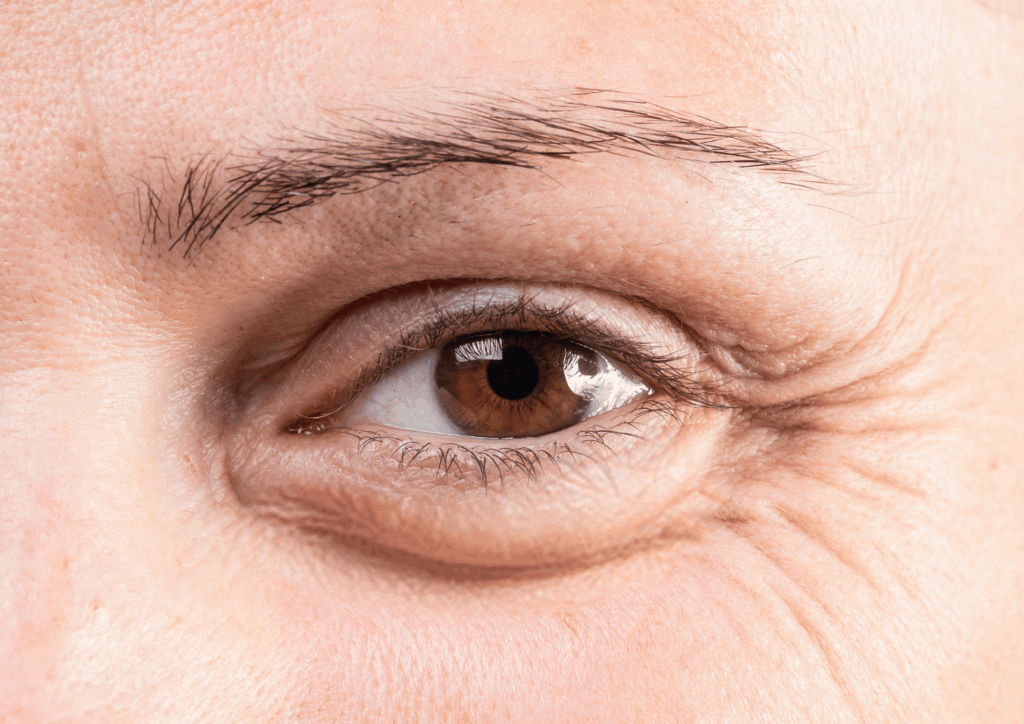
How can you recognise a drooping eyelid?
The first signs may be subtle. You may notice that your eyes appear smaller and the skin above them is becoming increasingly visible. Over time, this problem may make applying make-up a daily struggle and, in advanced cases, may even restrict your field of vision.
Typical symptoms include:
- excess skin on the upper eyelid,
- less visibility of the moving part of the eyelid,
- a feeling of heaviness above the eyes,
- asymmetry of the eyelids,
- a tired look in their eyes,
- difficulties with applying make-up,
- restricted upper field of vision.
Not all symptoms need to be present at the same time. It is also significant whether the change occurred gradually or suddenly. This is an important clue when determining its cause.
Can drooping eyelids be corrected without surgery?
Many people are looking for a way to drooping eyelids without surgery. However, the options available depend on the cause of the problem.
If the skin has lost its firmness and begun to sag, you may wish to consider treatments to improve its tone and texture. The situation is different in the case of true ptosis, i.e. drooping of the eyelid margin. In such cases, cosmetic treatment cannot replace treatment of the underlying cause.
What about home remedies? Cold compresses can temporarily reduce swelling. Proper skincare helps to maintain the skin’s condition, but will not remove excess skin. Facial exercises, however, are not a proven method of treating ptosis.
If drooping eyelids are affecting your vision or are getting worse quickly, do not delay seeking medical advice.
Blepharoplasty or non-surgical treatment for drooping eyelids?
Blepharoplasty This is a surgical procedure to correct the eyelids. It involves, amongst other things, the removal of excess skin and, in certain cases, the removal of fatty tissue. The doctor assesses whether a patient is suitable for the procedure, based on their anatomical structure and the extent of the changes.
Like any surgical procedure, blepharoplasty involves a recovery period and carries a risk of complications. Haematomas, healing problems, asymmetry or difficulty closing the eyelids completely may occur.
However, not every case requires surgery. Where there is only slight skin laxity, one might consider non-surgical methods for improving the appearance of the eyelids. It is important to bear in mind, however, that they are not a substitute for blepharoplasty and do not correct every type of ptosis.
How can I improve the appearance of drooping eyelids at Wellclinic?
At Wellclinic, the selection of a treatment begins with an assessment of the eye area. It is important to determine whether the problem is excess skin, sagging skin or a change in the position of the eyelid margin.
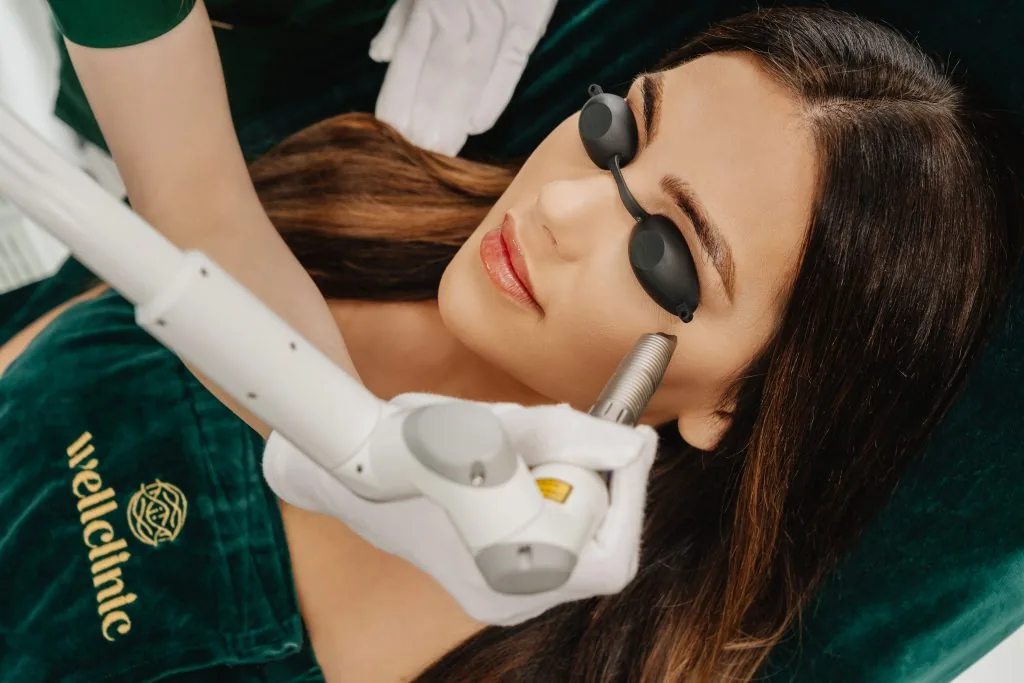
If the reasons are purely aesthetic, one might consider laser befaloplasty. The treatment uses a laser platform Fotona Dynamis SP Pro and focuses on improving the quality and firmness of the skin.
Depending on your needs, you can also treat the area around the eyebrows and the upper part of the face. This allows you to work on the appearance of the entire eye area, rather than just one section of skin.
Laser methods However, they are not a substitute for treatment of ptosis or surgical correction of the eyelids, if such procedures are indicated. A specialist’s assessment determines whether this treatment is suitable. It is an option for people who wish to improve the appearance of the eye area without surgical incisions. The possible results depend on the initial condition of the tissues and the nature of the problem.
Asymmetry of the eyelids – what causes it and how can it be corrected?
One eyelid may droop more than the other. Slight asymmetry It is natural and often results from the structure of the face. However, a marked difference may indicate changes in skin tone, abnormal muscle function or another health problem.
If asymmetry If it has appeared suddenly, it requires urgent medical assessment. In the case of gradually developing changes, it is advisable to determine their cause before choosing a course of treatment.
When the issue is sagging skin, methods to improve skin firmness may be considered. The aim is not perfect symmetry at any cost, but to preserve the face’s natural proportions and harmonious appearance.
Drooping eyelids – when should you consult a specialist?
If your upper eyelids are becoming increasingly heavy, your eyes appear smaller and your gaze loses its clarity, it is worth finding out what is causing these changes.
During the consultation, the specialist will assess the condition of your skin, the position of your eyelids and the extent of any excess tissue. This will help to determine whether it is possible to consider non-surgical treatment for drooping eyelids, whether an ophthalmology or surgical consultation is required.
At Wellclinic, we tailor our treatments to the patient’s anatomy and needs. If you’d like to improve the appearance of the area around your eyes without surgery, book a consultation and find out whether laser blepharoplasty will be the right solution.
Sources:
1. PubMed, "Topical Review: An Update on Diagnostic and Management Algorithms for Acquired Blepharoptosis" (2022).
https://pubmed.ncbi.nlm.nih.gov/35058403/
2. American Academy of Ophthalmology (AAO), ""Acquired Ptosis: Evaluation and Management."
https://www.aao.org/eyenet/article/acquired-ptosis-evaluation-management
3. American Academy of Ophthalmology (AAO), "Upper Eyelid Blepharoplasty."
https://www.aao.org/eye-health/treatments/upper-eyelid-blepharoplasty
4. NCBI Bookshelf, "Blepharoptosis (Ptosis): Classification, Assessment and Surgical Management" (updated: 2026).
https://www.ncbi.nlm.nih.gov/books/NBK539828/
5. PubMed, "Periocular Rejuvenation: Current Concepts and Evidence-Based Management" (2026).
https://pmc.ncbi.nlm.nih.gov/articles/PMC13697260/




 +48 600 100 177