
 Katarzyna Pawłowska

 10.11.2026
Laser depilation It is one of the most popular methods of long-term hair reduction. It works by using light energy, which is absorbed by the melanin in the hair. The heat generated in this way affects the structures of the hair follicle, gradually reducing the growth of new hair.
There are several technologies available on the market that are used for hair removal. Among the most popular are diode, alexandrite and Nd:YAG lasers. Individual devices differ in terms of the wavelength emitted, the depth of penetration into the skin and the way they interact with melanin.
Devices that combine several wavelengths in a single system are also becoming increasingly popular. An example of this is Prime 3D laser, which combines three wavelengths: 755 nm, 808 nm and 1064 nm. This approach allows for a more versatile adjustment of treatment parameters to suit the type of hair and skin phototype.
A voucher for you
Wellclinic gift vouchers from just 1,000 zł – treat yourself or your loved ones to health and beauty. Order by the end of November!
Collect your voucherTable of contents
Diode laser (approx. 810 nm)
Diode laser It is one of the most popular technologies currently used in permanent hair removal treatments. It emits a beam of light with a wavelength of approximately 800–810 nm, which is effectively absorbed by the melanin in the hair. The light penetrates to relatively deep layers of the skin, enabling it to affect the hair follicles.
One of the greatest advantages of this technology is its versatility. Diode lasers are suitable for people with fair to medium skin tones. Modern devices, when the parameters are set correctly and effective cooling is used, can also be used on patients with darker skin tones.
Achieving a noticeable and long-lasting reduction in hair growth usually requires a series of treatments. The number of treatments depends on the patient’s individual characteristics, hair type and the area being treated.
Another important aspect is the safety of the treatment. The appropriate wavelength, combined with modern cooling technologies such as contact cooling of the treatment head, helps to minimise discomfort and reduce the risk of the epidermis overheating.
The main advantages of the diode laser are its high efficacy, suitability for use on people with different skin phototypes, the relatively short duration of the treatment, and the generally moderate level of discomfort.
However, one of its limitations is that it is less effective on very light, red and grey hair, which contain only small amounts of melanin.
Alexandrite laser (755 nm)
Alexandrite laser It uses radiation with a wavelength of 755 nm, which has a very strong affinity for melanin. For this reason, this technology is particularly effective at removing dark hair in people with fair skin.
The large amount of energy absorbed by the hair pigment enables the treatment to effectively target the structures responsible for hair growth.
A major advantage of alexandrite devices is the speed at which treatments can be carried out. Many models feature treatment heads with a large spot diameter and the ability to emit pulses at short intervals. This allows for the efficient treatment of large areas of the body, such as the legs, back or arms.
Despite its numerous advantages, the alexandrite laser also has certain limitations. Due to the intense absorption of its energy by melanin, it is not recommended for people with dark skin, particularly those with skin phototypes IV–VI. In such cases, there is a greater risk of irritation, burns and post-treatment discolouration.
A similar risk may apply to tanned skin, as the radiation may be absorbed not only by the hair pigment but also by the melanin present in the epidermis.
The key advantages of this technology include its high effectiveness in people with fair skin and dark hair, and the ability to carry out treatments quickly over large areas.
Nd:YAG laser (1064 nm)
Nd:YAG laser, namely the neodymium-YAG laser, stands out amongst the technologies discussed for having the longest wavelength, at 1064 nm.
Radiation with these characteristics is absorbed to a lesser extent by the melanin in the epidermis, whilst at the same time having a high ability to penetrate tissues. This allows the energy to reach deeper skin structures, including the hair follicles.
The greatest advantage of the Nd:YAG laser is that it can be used on people with dark skin. This technology is regarded as one of the safer methods of laser hair removal for patients with skin types V–VI, provided that they are properly assessed and the treatment parameters are selected appropriately.
The Nd:YAG laser can also be used to treat hair located in the deeper layers of the skin. Examples include the chin area in men and the deeper parts of the bikini line.
One limitation of this technology, however, is that it may be less effective at reducing hair growth than diode and alexandrite lasers, particularly in the case of light-coloured and fine hair.
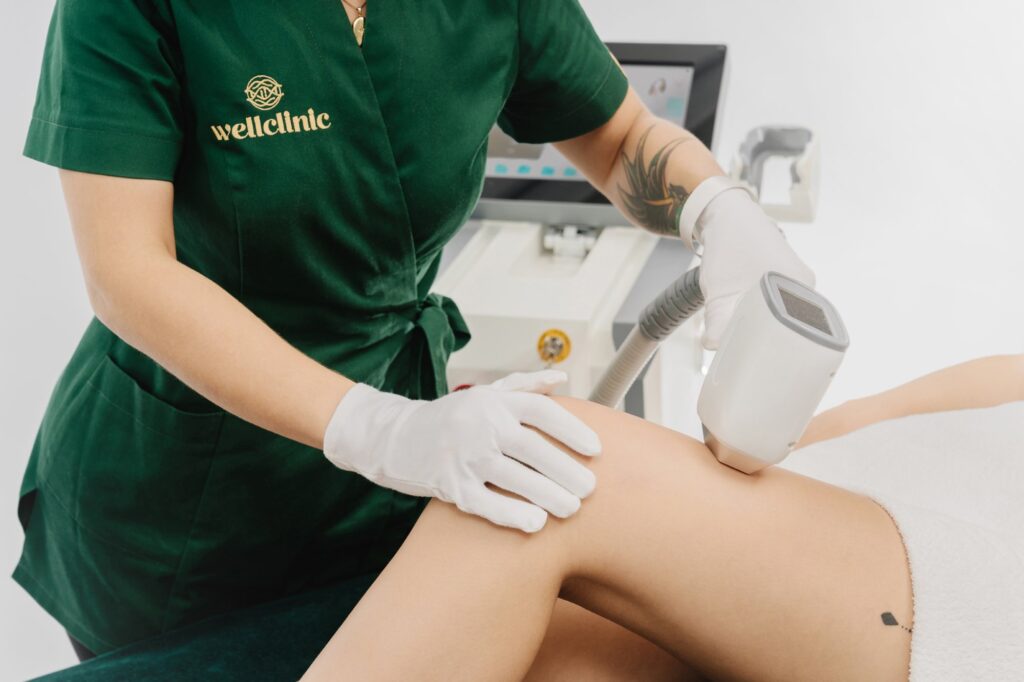
Laser Prime 3D – a combination of three wavelengths in a single device
A modern solution in the field of laser hair removal is Prime 3D, i.e. a technology that combines three laser wavelengths in a single device: 755 nm, 808 nm and 1064 nm.
Unlike standard devices that use a single wavelength, Prime 3D allows for the simultaneous use of three radiation bands. Each of these has a slightly different effect on melanin and a different depth of penetration into the skin.
How do the different waves work?
- 755 nm – alexandrite wavelength: It is characterised by a high affinity for melanin. As a result, it acts effectively on the pigment in the hair, particularly in people with fairer complexions and dark hair.
- 808 nm – LED wavelength: It ensures the right balance between energy absorption by melanin and the depth of penetration. It is often used for hair reduction on various parts of the body.
- 1064 nm – Nd:YAG wavelength: It is characterised by lower absorption by the melanin in the epidermis and greater penetration depth. This is particularly important when treating darker skin phototypes and deeper hair follicles.
The combination of three wavelengths allows for a more versatile approach to treating hair of different characteristics. It is worth bearing in mind, however, that the effectiveness of the treatment also depends on the correct selection of parameters, the colour and thickness of the hair, and individual skin characteristics.
Prime 3D at Wellclinic It utilises three wavelengths operating simultaneously, meaning there is no need to limit treatment to a single wavelength. This approach allows the treatment to be tailored to patients’ varying needs.
In Motion technology – smooth head operation
An important element Prime 3D devices there is also technology In Motion. It involves performing the treatment by smoothly moving the treatment head across the skin’s surface, rather than using only individual pulses at successive points.
This solution enables the selected area to be treated evenly and allows treatments to be carried out efficiently on larger areas of the body. In Motion technology also enhances patient comfort during the procedure.
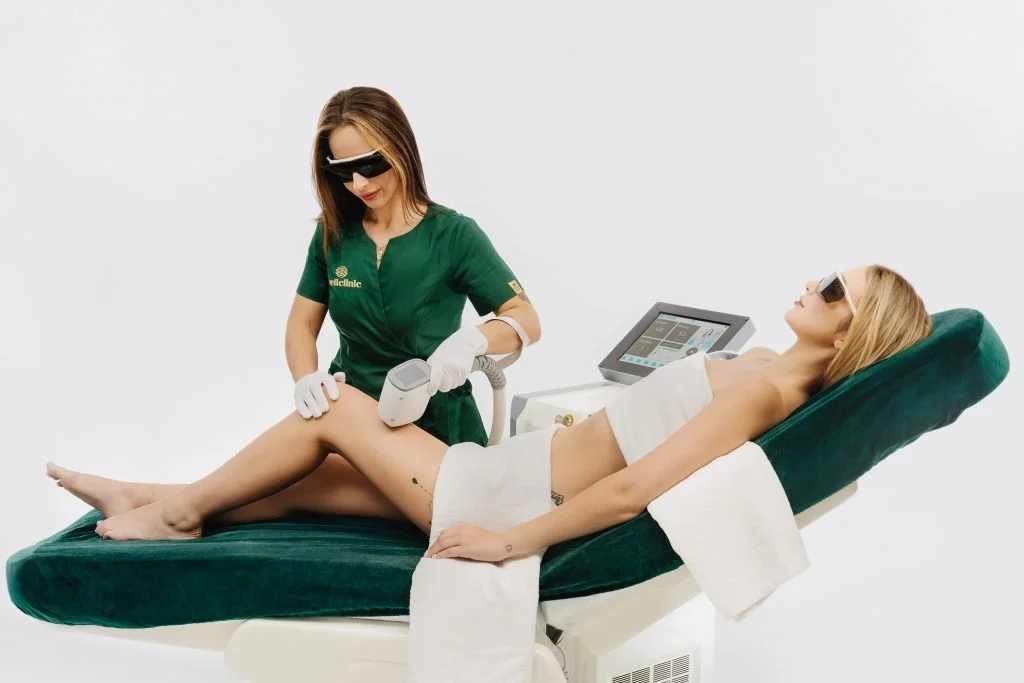
TEC System – Thermo-Electric Cooling
Another important element is TEC (Thermo-Electric Cooling), i.e. a thermoelectric cooling system.
In the device Prime 3D A handpiece with a sapphire window was used, which can be cooled to as low as -8°C. Cooling the skin’s surface reduces the sensation of heat during laser pulse emission and helps to protect the epidermis from excessive heating.
Link In Motion and TEC technologies is particularly important for the comfort of the treatment. As a result, hair removal can be considerably more comfortable than with devices that lack advanced cooling systems.
At Wellclinic, treatment parameters are selected taking into account skin phototype, hair colour and thickness. The area to be treated is also assessed. This allows the device settings to be tailored to the patient’s individual needs.
Which hair removal laser is the most effective?
There is no single technology that will be the best solution for every patient. When choosing the right device, the following should be taken into account above all else skin phototype, hair colour, hair thickness and the depth of the hair follicles.
The alexandrite laser is particularly effective for dark hair and fair skin. The diode laser offers a wide range of applications, whilst the Nd:YAG laser is often chosen for darker skin phototypes.
Prime 3D is a solution that combines the benefits of three wavelengths in a single device. This makes it possible to tailor the treatment more comprehensively to the individual characteristics of the skin and hair.
When choosing where to have the procedure carried out, it is worth paying attention not only to the name of the device, but also to its technical specifications, the cooling systems used, the staff’s experience and the patient selection process.
How many laser hair removal sessions are needed to see results?
Laser hair removal requires a series of treatments, because the laser energy is most effective on hairs in the active growth phase, known as the anagen phase. Not all hairs are in the same phase at any given time, which is why a single session does not allow for the removal of all body hair at once.
Depending on the technology used, the treatment area and the patient’s individual circumstances, it is usually recommended that several sessions be carried out at appropriate intervals.
In the case of the Prime 3D technology used at Wellclinic, the recommended schedule usually includes 4-6 treatments, carried out approximately every 5–8 weeks. The final number of sessions is determined on a case-by-case basis.
The first results may be noticeable after just the initial treatments. Hair gradually becomes sparser and finer, and the skin may remain smoother for longer.
Modern laser hair removal at Wellclinic
Development laser technologies has meant that modern laser hair removal offers ever-greater possibilities for hair reduction. Individual devices differ in terms of wavelength, penetration depth and the way they interact with melanin.
Prime 3D used at Wellclinic It combines three wavelengths: 755 nm, 808 nm and 1064 nm, complemented by In Motion technology and a TEC cooling system. This combination enables a comprehensive approach to hair reduction and enhances comfort during the treatment.
Are you wondering whether Prime 3D laser hair removal will be suitable for your skin and hair type? Book a consultation at Wellclinic, during which our specialists will assess your needs, answer your questions and help you choose the right treatment method.
Sources:
1. Termedia – „Lasers in dermatology – Polish recommendations” (2022). Recommendations concerning laser technologies, including alexandrite, diode and Nd:YAG lasers. https://www.termedia.pl/doi_ft/10.5114/dr.2022.120176
2. CMP Medical Centre – „Laser hair removal – how it works”. Information on how the laser works, melanin and the safety of the treatment. https://cmp.med.pl/aktualnosci/2013/07/10/depilacja-laserowa-zasady-dzialania/
3. Polish Cosmetology and Cosmetics - „Modern hair removal methods – laser or IPL?”. A comparison of laser and IPL technologies and the principle of selective photothermolysis.
https://pkik24.pl/kosmetologia-i-kosmetyka/nowoczesne-metody-usuwania-owlosienia-laser-czy-ipl
Book a consultation






 +48 600 100 177