
 Katarzyna Pawłowska

 28.10.2026
Table of contents
Redness, persistent itching, dry skin that starts to crack. Eczema can make everyday life more difficult than you might think. Sometimes the rash affects a small area of the hands. At other times, it appears on the face, neck or in the crooks of the elbows and knees, and rather than bringing relief, ordinary cream causes a burning sensation.
However, not every itchy rash means the same thing. Eczema is a term that covers various inflammatory skin conditions. It may be caused by contact with an irritant, an allergic reaction or atopic dermatitis (AD). The treatment depends on the cause.
How can you recognise eczema, what might trigger flare-ups, and how can you look after irritated skin? We explain what to look out for and when it is worth consulting a dermatologist.
Eczema – what are the most common symptoms?
Eczema It can occur in various parts of the body, and its appearance varies depending on the type and stage of the inflammatory lesions. In some people, dryness and redness are the predominant symptoms, whilst in others, blisters, oozing or painful cracks in the skin may appear.
The most common symptoms of eczema include:
- redness and irritation of the skin;
- persistent itching, sometimes accompanied by a burning sensation;
- dryness, roughness and flaking of the skin;
- swelling and small blisters;
- drainage of lesions during a flare-up;
- skin cracks, which can cause pain.
Not all symptoms need to be present at the same time. The symptoms may be mild, but sometimes they become so severe that they interfere with sleep, work and everyday activities.
It can be particularly troublesome itching. Scratching provides temporary relief, but at the same time damages the skin’s surface and can exacerbate the inflammation. If the skin starts to crack, the risk of infection also increases.
What causes eczema? The most common causes
The causes of eczema vary. In some people, the lesions appear following contact with detergents or cosmetics. In others, they are associated with contact allergy or atopic dermatitis. It also happens that several factors come into play at the same time.
Among the most common are:
Irritants. Frequent hand washing, cleaning products, detergents and prolonged contact with water can weaken the skin’s protective barrier. The skin then becomes more prone to dryness and irritation.
Contact allergens. Certain ingredients in cosmetics, fragrances, preservatives or metals can cause allergic contact dermatitis. In such cases, it is important to identify which substance the skin has come into contact with.
Atopic dermatitis. In people with AZS The skin barrier is compromised, and the skin is more prone to dryness, itching and inflammation.
Environmental factors. Dry air, changes in temperature, sweat and friction can exacerbate symptoms in people prone to eczema.
Not every eczema is caused by an allergic reaction. The appearance of the lesions alone is not enough to determine the cause. If the problem recurs regularly, a dermatologist may recommend further tests, such as patch tests, if there is a suspicion of allergies contact.
Eczema on the face and hands – why can it be so troublesome?
The location of the changes is important both for day-to-day comfort and for choosing the right skincare routine.
Eczema on the face It may manifest as redness, dryness, flaking and a stinging sensation. The skin in this area is particularly vulnerable to contact with cosmetics, which is why certain products may further exacerbate the irritation. It is advisable to avoid randomly trying out different products, especially those containing fragrances or potent active ingredients.
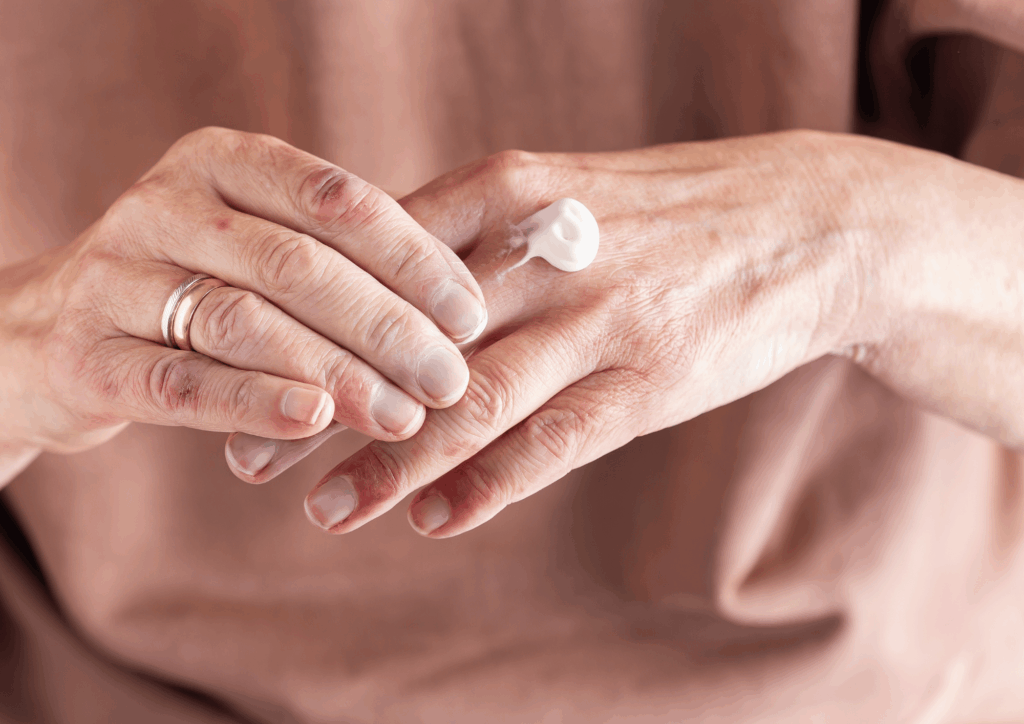
Eczema on the hands It can make washing, cleaning, preparing meals and carrying out work duties more difficult. Frequent contact with water and detergents can weaken the skin’s protective barrier, and cracks in the skin can be painful.
In both cases, the key is to minimise irritants, use appropriately selected emollients regularly, and follow a treatment plan tailored to the cause of the skin changes. If symptoms persist or recur, it is advisable to consult a dermatologist.
Why does eczema itch, and why shouldn’t you scratch the affected areas?
Itching It is one of the most troublesome symptoms of eczema. It can worsen in the evening, making it difficult to fall asleep and leading to involuntary scratching.
The problem is that scratching damages the epidermis. The skin becomes more sensitive, reacts more readily to irritants, and the inflammation may persist or worsen. A vicious circle ensues: itching leads to scratching, and the damaged skin may itch even more.
To limit irritation, it is advisable to use emollients regularly and to avoid hot water and cosmetics that cause a stinging sensation. A cool compress may provide short-term relief. If the itching is severe, the affected areas are spreading or cracks are appearing, you may need to see a doctor.
Rapidly worsening pain, pus, a fever or a sudden deterioration in the condition of the skin require urgent medical assessment, as they may indicate an infection.
How to treat eczema? Skincare and dermatological treatment
There is no single treatment that is suitable for everyone with eczema. Treatment of eczema It depends on the type of lesions, their location, severity and cause. In many cases, daily skincare plays an important role, but in cases of severe inflammation, medication may also be required.
Emollients and restoration of the protective barrier
Emollients They help to minimise water loss, reduce dryness and support the skin’s protective barrier. It is best to choose products designed for sensitive skin, which are fragrance-free, and to use them regularly.
It is also worth limiting long, hot baths, avoiding harsh detergents and being mindful of any cosmetics that cause a stinging sensation.
Skincare remains important even after the symptoms have subsided. Regular use of emollients can help keep the skin in better condition and reduce the likelihood of flare-ups in some forms of eczema.
Anti-inflammatory medicines
If the symptoms become more severe, your doctor may recommend topical corticosteroids or other treatments anti-inflammatory drugs. The choice of treatment depends on the diagnosis, the location of the lesions and the severity of the inflammation.
You should not start treatment with strong preparations on your own, nor should you continue using them for longer than recommended without appropriate advice. Particular care is required when treating the skin on the face and around the eyes.
Identifying the cause of relapses
If the changes occur after using a particular cosmetic product, coming into contact with a detergent or carrying out certain activities, it is worth taking note of these correlations.
If a contact allergy is suspected, a dermatologist may recommend patch tests. The results help to identify which substances should be avoided. If the cause is an irritant, limiting exposure to it can be an important part of treatment.
Eczema and atopic dermatitis – are they the same thing?
Eczema and atopic dermatitis They are related, but they do not mean exactly the same thing.
Eczema is a broad term for inflammatory skin conditions. Atopic dermatitis (AD) It is a specific, chronic inflammatory condition, often accompanied by dryness, itching and periodic flare-ups.
W Atopic dermatitis andDisorders of the skin barrier and an abnormal immune response play a significant role. The condition often begins in childhood, but can also persist into adulthood.
Similar lesions may be seen in both allergic and non-allergic contact dermatitis. Therefore, the diagnosis should take into account not only the appearance of the lesions, but also their location, course and possible triggering factors.
Eczema versus acne – how can you tell the difference between these skin conditions?
Redness and bumps on the face do not always mean acne. Some inflammatory conditions may look similar, but their causes and treatments are different.
The most common symptoms of eczema are dryness, itching, flaking and irritation. The skin may sting when cosmetics are applied, and during a flare-up, small blisters or oozing may appear.
Acne It most commonly manifests as blackheads, papules and pustules. In more severe forms, deep, painful inflammatory lesions may also occur. Factors contributing to its development include, amongst others, excessive sebum production, keratinisation disorders at the hair follicle openings and inflammatory processes.
Distinguishing between these problems is important when choosing a skincare routine. Retinoids and exfoliating acids, used in the treatment of acne, They may further irritate skin affected by active eczema. This does not mean that you always have to avoid them, but their use should be tailored to the condition of your skin and the advice of a specialist.
If the spots on your face are itchy, get worse after using cosmetics, or do not respond to standard anti-acne treatments, it is worth consulting a dermatologist. Experimenting with different products on your own may make the irritation worse rather than solving the problem.
When should you see a dermatologist?
Mild irritation may subside once the irritant has been removed and appropriate skincare measures have been taken. However, if the symptoms persist, recur or worsen, it is worth identifying the cause.
A dermatology consultation is recommended when:
- the changes persist despite regular care;
- itching makes it difficult to sleep or carry out daily activities;
- the eczema recurs regularly or spreads to cover an increasingly larger area of skin;
- painful cracks, oozing or erosions appear;
- It is not known whether the cause is an allergy, irritation or another skin condition.
If you develop a fever, pus, rapidly spreading redness or severe pain, do not delay seeking medical advice.
Eczema – from diagnosis to appropriate treatment
Eczema It can have various causes, which is why effective treatment begins with identifying what triggers the inflammation and perpetuates the symptoms. Simply changing your skincare products is not always enough. Sometimes a change in daily habits is needed, sometimes dermatological treatment, and if an allergy is suspected – further diagnostic tests.
If redness, dryness and itching keep coming back, you don’t need to go through trial and error to find another cream. Discuss the changes with a dermatologist and find out what might be causing them. An accurate diagnosis enables you to choose the right treatment for a specific problem and to look after your skin better on a day-to-day basis.
Sources:
1. American Academy of Dermatology (AAD), „Clinical guideline on atopic dermatitis”.
https://www.aad.org/member/clinical-quality/guidelines/atopic-dermatitis
2. Sidbury R. et al., „Guidelines for the management of atopic dermatitis in adults using topical therapies”, Journal of the American Academy of Dermatology, 2023.
https://pubmed.ncbi.nlm.nih.gov/36641009/
3. National Health Service (NHS), „Atopic eczema”.
https://www.nhs.uk/conditions/atopic-eczema/
4. Chu D. K. et al., „Atopic dermatitis (eczema) guidelines: 2023 American Academy of Allergy, Asthma and Immunology/American College of Allergy, Asthma and Immunology Joint Task Force on Practice Parameters”, Annals of Allergy, Asthma & Immunology, 2024.
https://pubmed.ncbi.nlm.nih.gov/38108679/




 +48 600 100 177