
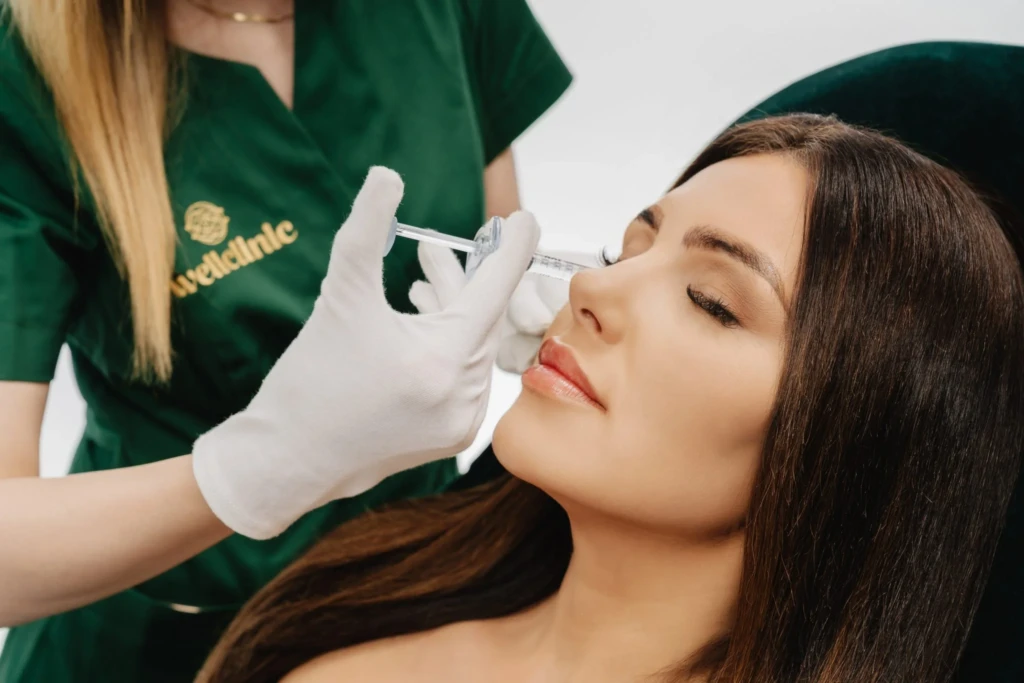
Wrinkles are becoming increasingly visible, so you do what seems simplest - you look for a treatment that will smooth them out. And this is precisely where it’s easy to make a mistake. Not every wrinkle should be treated in the same way. If you choose a method that isn’t suited to the cause of the problem, you may not achieve the result you were hoping for.
Both Botoxas well as hyaluronic acid are used in aesthetic medicine, but they work in completely different ways. Botox reduces the activity of specific muscles responsible for the formation of expression lines, whilst hyaluronic acid can be used, amongst other things, to restore volume and correct specific depressions. Therefore, the question should not simply be: „Botox or hyaluronic acid?”, but above all: What causes wrinkles, and what does your face really need?
Removal of expression lines This should be preceded by an assessment of the facial anatomy, the type of wrinkles, the condition of the skin and the expected outcome. Only on this basis can the appropriate method be chosen responsibly.
Botox for expression lines
Botox, i.e. botulinum toxin, temporarily inhibits neuromuscular transmission. As a result, the muscles responsible for the formation of expression lines are relaxed. This means that Botox is primarily used in the upper part of the face.
Correction of facial wrinkles Treatments using botulinum toxin include, amongst others,. forehead wrinkles, crow's feet or a lion’s wrinkle. This method is particularly effective when wrinkles are caused by muscle movement.
The results of the treatment are not permanent. Over time the action of botulinum toxin It gradually subsides, so the treatment can be repeated if necessary, following an assessment by a specialist.
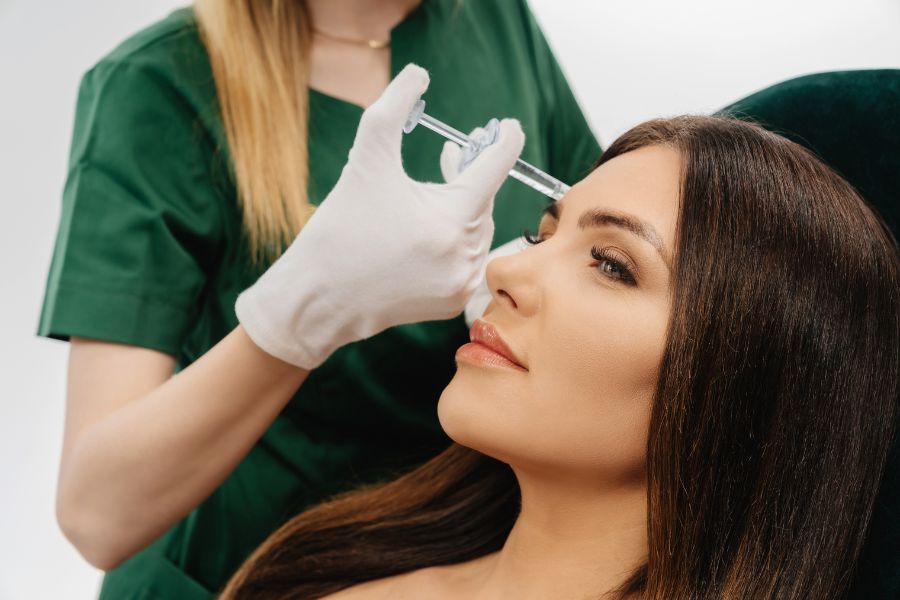
Hyaluronic acid in wrinkle treatment
Hyaluronic acid It occurs naturally in the body and has the ability to bind water. As we age, its levels in the skin decrease, which can affect the skin’s hydration, firmness and volume. Over time, the following also become more noticeable: wrinkles and furrows.
In aesthetic medicine, hyaluronic acid is primarily used to restore tissue volume and correct more pronounced wrinkles on the face. Depending on the indications, it can be used, amongst other things, to treat smoker’s lines, marionette lines and nasolabial folds.
Hyaluronic acid-based treatments can also be used to improve facial proportions. To achieve this, the following procedure is carried out: facial volumetrics, which allows you to add volume to specific areas. Another possible application is also cheekbone volume.
Hyaluronic acid is also used in lip augmentation. Mouth filling It can help to improve their shape, correct any asymmetry or gently add volume.

Botox and hyaluronic acid - different uses
Botox and hyaluronic acid They are not products that can simply be compared to see which one is „better”. They are used for different purposes. Botox It is primarily used to reduce the activity of the muscles responsible for the formation of expression lines. Hyaluronic acid It, on the other hand, helps to restore tissue volume, reduce the depth of furrows and correct specific facial proportions.
Therefore, the choice of treatment should depend on the specific problem at hand. For expression lines, botulinum toxin may be the more appropriate solution, whilst hyaluronic acid may be used for volume loss and pronounced furrows. It is best to leave the final decision to a specialist, who will assess your facial anatomy, skin condition and the expected outcome during a consultation.
In some cases, both methods may also be used as part of a personalised treatment plan. However, this does not mean that they should be combined for every patient.
How long do the effects of Botox and hyaluronic acid last?
The duration of the effects depends on the type of preparation, the site of administration and individual physiological characteristics. Botox It lasts for several months, which is why the treatment is carried out periodically, once muscle activity returns and expression lines reappear. Hyaluronic acid may last considerably longer - depending on the product used and the area treated, the effects may be visible for several months. With both methods, the duration of the results varies from person to person.
Not every wrinkle requires the same treatment
When choosing a method, the most important factor is type of wrinkle. Botox is most commonly used on forehead wrinkles, frown lines and crow’s feet, i.e. wrinkles caused by muscle movement. Hyaluronic acid is used to treat nasolabial folds, marionette lines, smoker’s lines and a loss of tissue volume. It can also be used for lip, cheek and facial contour modelling. This means that the choice of product can be tailored to a specific problem, rather than applying the same approach to all signs of ageing.
Don’t choose a treatment just because it worked for someone else. The same wrinkle may require a different approach depending on its cause, the anatomy of the face and the condition of the skin. If you want to know what your face really needs, book a consultation. A specialist will assess the type of wrinkles, the condition of your skin and the proportions of your face, and then select the appropriate treatment. We carry out these treatments at our clinics in Warsaw, Gdańsk and Cracow.
Sources:
- PubMed „OnabotulinumtoxinA and Hyaluronic Acid in Facial Wrinkles and Folds: A Prospective, Open-Label Comparison”
https://pubmed.ncbi.nlm.nih.gov/29762642/ - PubMed „Global Aesthetics Consensus: Hyaluronic Acid Fillers and Botulinum Toxin Type A-Recommendations for Combined Treatment and Optimising Outcomes in Diverse Patient Populations”
https://pubmed.ncbi.nlm.nih.gov/27119917/ - PubMed „Advances in facial rejuvenation: botulinum toxin type A, hyaluronic acid dermal fillers, and combination therapies-consensus recommendations”
https://pubmed.ncbi.nlm.nih.gov/18449026/ - FDA „Dermal Fillers (Soft Tissue Fillers)”
https://www.fda.gov/medical-devices/aesthetic-cosmetic-devices/dermal-fillers-soft-tissue-fillers - FDA „Dermal Filler Do’s and Don’ts for Wrinkles, Lips and More”
https://www.fda.gov/consumers/consumer-updates/dermal-filler-dos-and-donts-wrinkles-lips-and-more - American Academy of Dermatology „Botulinum toxin therapy: FAQs”
https://www.aad.org/public/cosmetic/wrinkles/botulinum-toxin-faqs - American Academy of Dermatology „Fillers: An Overview”
https://www.aad.org/public/cosmetic/wrinkles/fillers-overview